Most maintenance plans are built for template sites: update the plugins, run a backup, send a report. That is not what a custom e-commerce platform, a trilingual corporate site or a system with integrations needs.
We look after sites the way we build them: as business systems, with a senior team that knows the code, keeps it documented, and answers when it matters. Your site stays secure, fast and current in every language, and it never depends on one person's memory.
Website Maintenance & Support
Senior maintenance for custom and multilingual websites that the business depends on: security, backups, performance, content in every language, search and AI visibility, and someone accountable when something breaks.
Plans start at $1,000 per month.
from $1,000 a month
9Years in the market
50+Team & partners
127Projects delivered
12Countries
Up to 700%Revenue growth
48hProject start
What we cover
-
01.
Reliability & Security
Uptime monitoring, daily off-site backups with restore tests, security and framework updates, protection and SSL control.
-
02.
Content in Every Language
Updates to texts, pages and catalogs across every language version of your site, kept consistent.
-
03.
Search & AI Visibility
Search Console monitoring, broken-link checks, and structured data and llms.txt kept current.
-
04.
Ownership & Continuity
Access inventory, documentation and version history, so your site never depends on one person.
Selected Work
Sites we build and keep running.

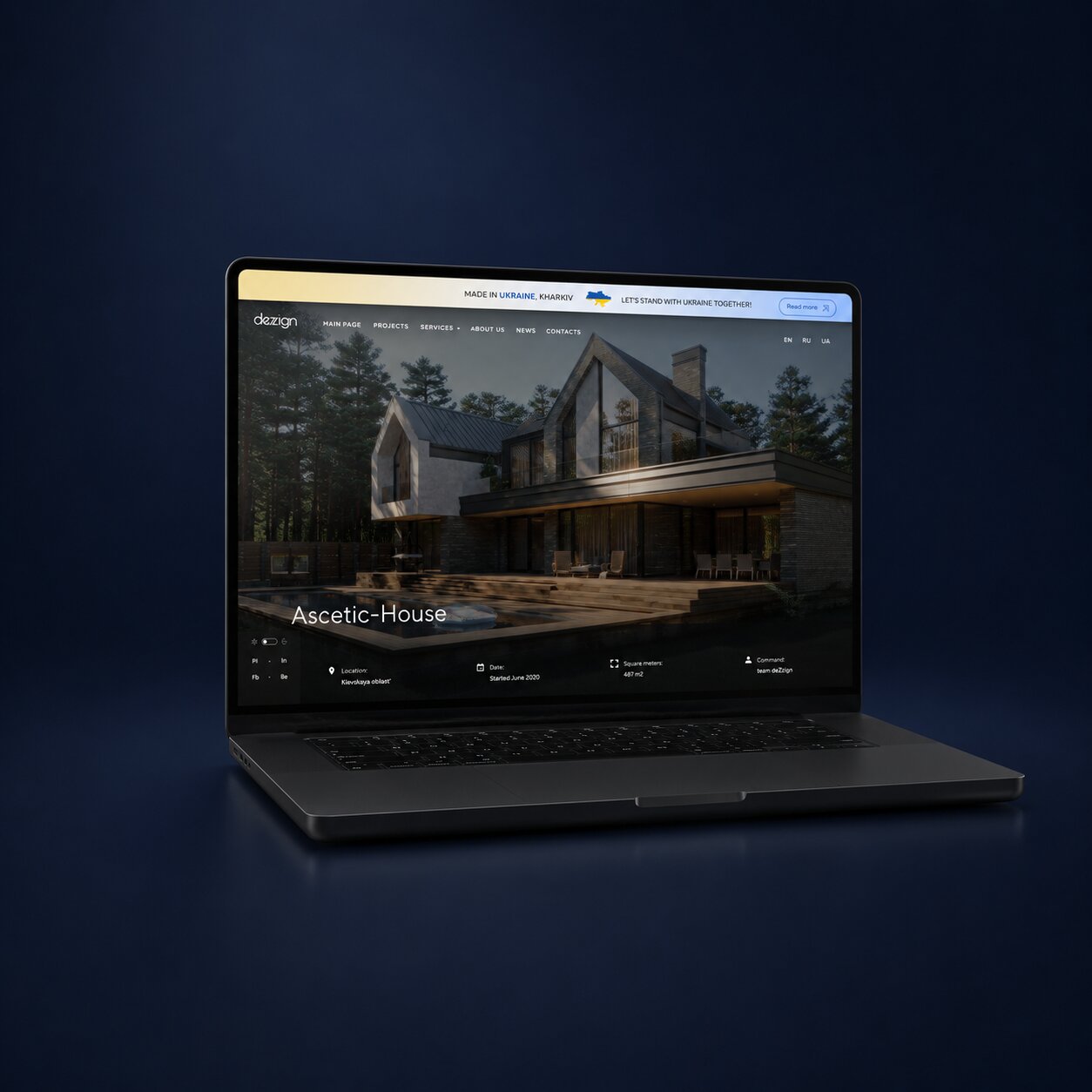


How It Works
01
05
01
05
Onboarding Audit
We review the code, infrastructure, access and risks, including sites built by other developers.
02
05
02
05
Stabilize
We set up backups and monitoring, close urgent security gaps and document how the system works.
03
05
03
05
Plan & Priorities
We agree on response times, monthly scope and a roadmap for what to improve first.
04
05
04
05
Monthly Care
Updates, content changes, checks and fixes, handled by engineers who know your site.
05
05
05
05
Report & Review
A monthly report on what was done and what we found, with a quarterly review on larger plans.
What You'll Walk Away With
A site that stays online, fast and secure, and a team that is accountable for keeping it that way.

A site that stays online, fast and secure
Someone accountable when something breaks
Clear ownership of your digital assets
Onboarding Audit Report
Uptime Monitoring & Alerts
Daily Off-site Backups
Security & Framework Updates
Multilingual Content Updates
Search Console & Broken-Link Checks
Structured Data & llms.txt Upkeep
Access Inventory & Documentation
Monthly Report

Get a cost and timeline estimate
How you can work with us
Whatever the format, the work is shaped around how your business runs, not a template, and what we build belongs to you. The same people and standards in three formats: choose the one that fits your stage, or combine them.
-
01.
A project with a fixed price
We agree the scope, the price and the timeline, and we are responsible for the result.
All prices → -
02.
A dedicated team
A team assembled for your product works only on it, month to month, and grows with it.
Dedicated team → -
03.
Specialists in your team
Developers, QA, designers or DevOps engineers join your own team and work under your management, by the hour.
Outsourcing and outstaffing →
Pricing
from $1,000 a month
These are starting points. The final price is set after a strategic session, and its $500 is credited toward the project.
All prices →Ask a question
Leave your contacts and we will contact you at a convenient time.
FAQ
What is included in a maintenance plan?
Monitoring, backups, security and framework updates, performance, content updates in every language, Search Console and broken-link checks, structured data upkeep, documentation and a monthly report, with a set number of engineering hours each month.
Why do plans start at $1,000 per month?
Because this is not plugin updates. It is a senior team responsible for a business-critical site: security, performance, multilingual content, search and AI visibility, integrations, documentation and guaranteed response times. Cheaper plans exist for simple template sites; ours is built for sites where downtime or an error costs real money.
Do you take over sites built by other developers?
Yes. We start with an onboarding audit. AI-assisted code analysis lets us understand unfamiliar code much faster than before, and we tell you honestly what we find before taking responsibility for it.
How fast do you respond?
Response times are fixed in your plan, with faster guarantees for critical issues such as downtime or a security incident.
Which platforms do you support?
Laravel, OpenCart, WordPress, Shopify and custom-built sites, including multilingual versions and integrations with CRM, payments and delivery.
Do you only work with Seattle businesses?
We are based in the Seattle area and support sites for businesses across the United States and internationally. The work is done remotely, with a named lead who knows your site.
Who owns the site and the access?
You do. We keep an inventory of domains, hosting and accounts and document the system, so you are never locked in and another team could take over if needed.
What happens in the first month?
The onboarding audit, access inventory, backup and monitoring setup, urgent fixes and a baseline report, so both sides know exactly where the site stands.
Will I be able to track my project?
Yes. Every client gets access to our project portal: stages, approvals, documents and requests in one place.
Are PHP and framework upgrades included in support?
A planned move to the next supported version of PHP, Laravel or the CMS is part of support: we schedule it ahead, run it on a closed copy and release it in a quiet hour. A site that is several versions behind, on PHP or a framework that no longer receives security fixes, starts with a website modernization instead: an audit from $300 for a small site and from $1,000 for a large one, then an upgrade one version at a time. After that, support keeps it current.
Is a redesign or a new feature part of the support plan?
Small changes and fixes are done within the plan's monthly engineering hours. A redesign, a new module, a customer portal or a new integration is a separate project: we estimate it and agree the price before work starts. When a product changes every week, a dedicated development team from $8,000 a month usually fits better than support.
How do you know the backups actually work?
Backups run every day and are stored off the server. We do not stop at checking that the file exists: we restore copies to a separate environment, so both sides know how long a recovery takes and what it brings back. Where the backups live and whether they restore is also one of the first questions of the onboarding audit.
How do I send a request, and in what order are requests handled?
Requests go through our client portal, with the page, what happened and what you expected. Incidents come first: the site is down, a security problem, or payments and leads stop arriving; the response time for them is fixed in your plan. Then faults that break a business flow, then planned work from the roadmap, then improvements, which we estimate before starting.
What do we get if we stop support?
The code, the deployment commands, the server requirements, the rollback procedure and an AGENTS.md file that describes the structure, the rules and the commands, plus the access inventory and the documentation we kept during the work. With them your own developers, another vendor or an AI coding agent can continue. On your side, change the passwords and keys our engineers used and remove their accounts the same day.
Do you also look after the server and the cloud infrastructure?
Support covers what keeps the site itself healthy: PHP and package updates, SSL, backups, uptime monitoring, mail delivery and crawler access. Deeper infrastructure work, such as automated release pipelines, a move to the cloud or an engineer on call outside working hours, is DevOps and cloud work at $50 to $70 an hour, with on-call agreed separately.
Related Reading
-
06. 11. 2026
How Much Does Laravel Development Cost in 2026?

-
06. 11. 2026
Laravel or WordPress for a Business Website: How to Choose in 2026
-
03. 11. 2026
Website Accessibility: What to Fix First, and Why a Widget Will Not Do It
-
02. 11. 2026
Why Is My Website Slow? What to Fix First for Core Web Vitals
-
01. 11. 2026
How Do Business Websites Get Hacked, and What Should You Fix First?
-
31. 10. 2026
Untested Backups and Growing Cloud Bills: Two Risks in a System That Works
-
28. 10. 2026
An AI Project Stuck on a Legacy System? Upgrade First, Then Automate
-
01. 10. 2026
Six Laravel Versions in Three Days
-
29. 09. 2026
Upgrading an Old Laravel or PHP Site in 2026
-
16. 09. 2026
What You Own vs What You're Renting: The Digital Ownership Audit
-
27. 08. 2026
The Website Migration Checklist Most Agencies Skip
-
26. 08. 2026
The Hidden Technical Debt That Makes Website Redesigns More Expensive Than Planned
-
23. 08. 2026
When Does a Business Outgrow WordPress?
-
05. 08. 2026
Your Website Doesn't Fail When Your Developer Leaves. It Fails Years Earlier.
-
30. 07. 2026
Most Companies Don't Own Their Website. They Own a Collection of Dependencies.
-
17. 07. 2026
The Code Remembers Every Version of the Business
-
15. 07. 2026
Everything You Build Starts Aging the Day You Finish It