


Most business owners believe their biggest digital risk begins the day a developer resigns, an agency disappears, or a key employee leaves the company.
It doesn't.
In reality, the failure usually begins years earlier. It starts quietly. A password is saved in someone's personal browser instead of a company password manager. A server is configured, but no one documents why. A production fix is deployed directly on Friday evening because "it's urgent." A sitemap stops updating after a redesign. Search Console starts reporting indexing issues, but nobody checks it. A developer creates a Git repository using a personal account because it's faster. Another team member configures Cloudflare. Someone else purchases the domain. The marketing agency creates Google Analytics. An SEO specialist sets up Tag Manager. Nobody creates a map showing how all these pieces connect.
Everything works. The company grows. Clients arrive. Revenue increases. And because nothing appears broken, everyone assumes the system is healthy.
That assumption is one of the most expensive mistakes a business can make. Most companies don't lose control of their digital infrastructure overnight. They lose it gradually. One undocumented decision at a time. One missing password at a time. One undocumented integration at a time. One emergency deployment at a time.
THE FAILURE BEGINS
I. The Failure Begins Long Before Anyone Notices
The problem isn't that these decisions are wrong. Many of them are completely reasonable. When you're launching a startup, speed matters. When your first customers are waiting, documentation feels like bureaucracy. Founders naturally think: we'll document everything later. Later, we'll organize the repositories. Later, we'll create deployment instructions. Later, we'll write technical documentation. Later, we'll centralize passwords. Later, we'll clean up the architecture.
Later becomes next month. Next month becomes next year. Eventually, the company grows large enough that nobody remembers how everything was assembled. The people who made those decisions move to different projects. Some change jobs. Some leave the industry. Some disappear completely. The knowledge leaves with them.
One of the most memorable examples our team experienced wasn't caused by poor management or internal conflict. It was caused by war.
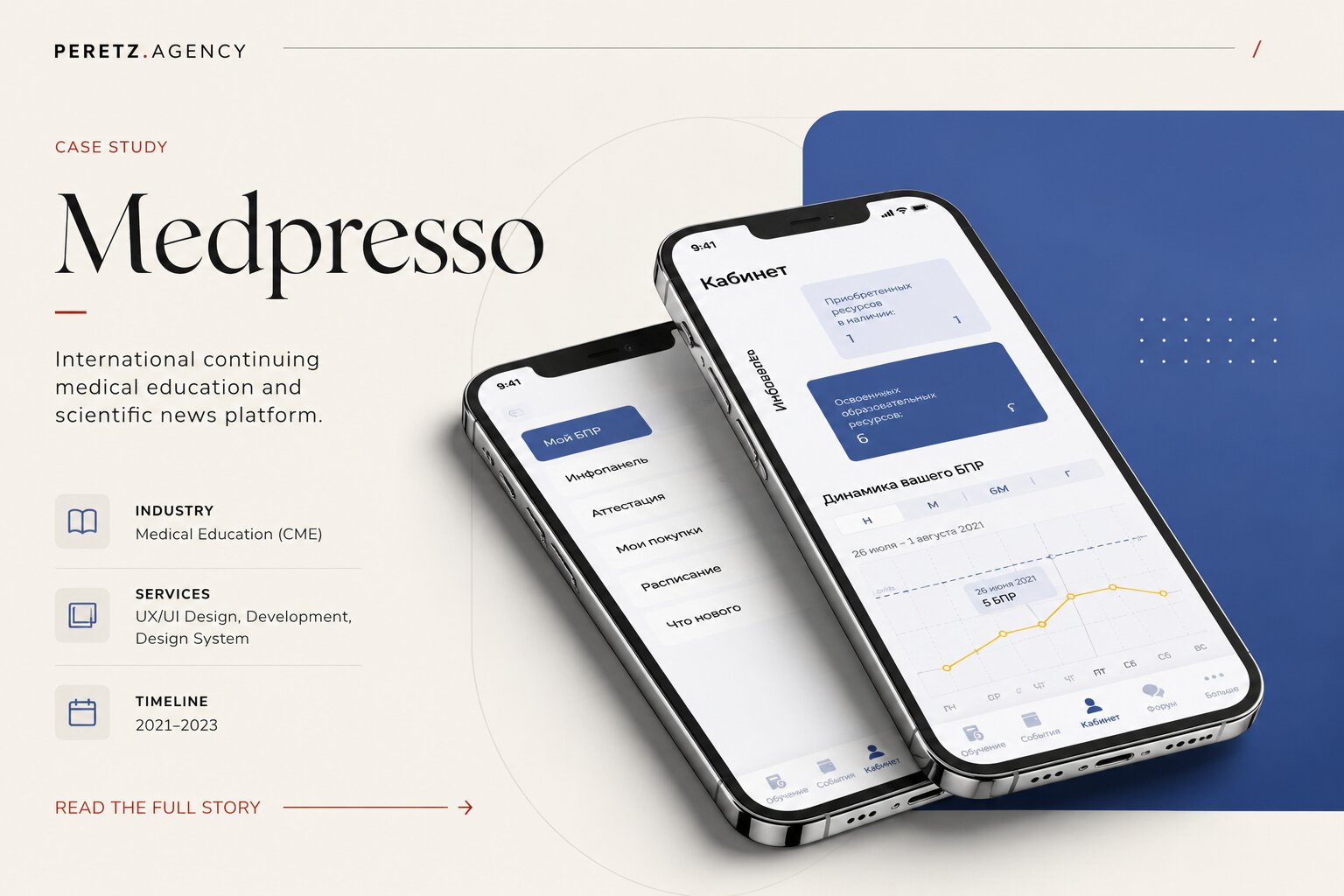
During the development of Medpresso, two key developers left the project almost simultaneously after receiving offers from another company. We were able to continue because other specialists stepped in, and while the new engineering team was getting up to speed, we shifted our focus to UX improvements, interface refinement, and preparing future functionality. The client never experienced a disruption because the work continued from another direction.
Later, another developer who had contributed to the project disappeared entirely after the city where he lived was occupied during the war in Ukraine.
His code remained. His knowledge didn't. There was no opportunity to ask questions. No chance to clarify architectural decisions. No possibility of recovering undocumented information.
You can see the full project in our portfolio: Medpresso.
That experience reinforced a lesson that applies far beyond software development. Businesses should never depend on the permanent availability of any individual. Not because people are unreliable. Because life is.
Ironically, the greatest threat to digital continuity is rarely a catastrophic event. It's success. This pattern isn't unique to any one industry, either. Software developers stay with a given company for roughly two to three years on average, and by most surveys, a majority move on within two. Whatever your team's exact numbers look like, the underlying math is the same: the person who understands why something was built the way it was is, statistically, not going to be the person who's still around when it matters.
THE ECOSYSTEM
Your Website Is Only the Visible Surface
As companies grow, they accumulate tools, integrations, vendors, agencies, freelancers, internal developers, marketers, and consultants. Each adds value. Each leaves behind knowledge. Few leave behind documentation.
Eventually, the website stops being a website. It becomes an ecosystem. A typical modern business may rely on dozens of interconnected systems:
Domain registrar
DNS provider
Hosting infrastructure
CDN
SSL certificates
Email services
CRM
ERP
Payment gateways
Google Analytics
Google Search Console
Tag Manager
Marketing automation
Git repositories
Deployment pipelines
Cloud storage
APIs
Third-party integrations
Most business owners think they own their website. What they actually own is a complex network of digital dependencies. The website is only the visible surface. The real business lives underneath. And that's where continuity is either designed, or quietly abandoned. We've written before about what it actually means to own that whole network, not just the part you can see, in Most Companies Don't Own Their Website. They Own a Collection of Dependencies.
LOST A SYSTEM
II. You Didn't Lose a Developer. You Lost a System.
When companies contact us after losing a developer or changing agencies, the first sentence is almost always the same.
"We need someone to continue supporting our website."
What they actually need is something very different. They need someone to reconstruct years of undocumented decisions. Those are not the same task.
Most business owners assume software development is primarily about writing code. In reality, experienced developers spend far more time understanding existing systems than creating new ones. Before changing a single line of code, they need to answer dozens of questions.
Why was this architecture chosen? Which integrations are still active? Which API keys are still valid? Where are backups stored? How does deployment work? Who owns production? Which scheduled tasks are critical? Which services communicate with each other? Why does this function exist? Which client depends on this undocumented feature?
When documentation is missing, every answer becomes an investigation. And investigations are expensive.
We wrote about what a codebase quietly remembers, and what it doesn't, in The Code Remembers Every Version of the Business.
Onboarding a new developer into an unfamiliar, undocumented codebase typically takes a month or two before they're genuinely productive, and that's the optimistic case. On a well-documented system, that same ramp-up shrinks dramatically, because the answers already exist somewhere other than one person's memory.
A SINGLE PRODUCT?
A Website Isn't a Single Product
One of the biggest misconceptions we encounter is the belief that a website is a single product. It isn't. A modern business website is closer to an operating system. Behind every page are dozens of invisible components working together.
The website itself may only represent a small fraction of the infrastructure. Behind it are domains, hosting providers, DNS records, CDN configurations, SSL certificates, email routing, analytics platforms, CRMs, payment systems, third-party APIs, deployment pipelines, backups, marketing automation, monitoring services, repositories, cloud storage, security policies, scheduled tasks, and countless small integrations accumulated over many years.
Most of these systems work silently. Until one day they don't.
One situation repeats itself surprisingly often. We ask a new client a simple question. "Do you have documentation?" Almost every business confidently answers: "Yes." Then they send us the admin panel manual, an old technical specification, perhaps a PDF explaining how to add blog posts.
None of that is technical documentation.
Documentation explains how the business operates. Why decisions were made. Where systems are connected. How infrastructure is organized. How deployments happen. How recovery works. How another team could continue tomorrow without guessing.
The difference seems small. In practice, it often determines whether a project resumes within hours or remains frozen for weeks. If you're not sure which category your own documentation falls into, that's exactly what a Usability Audit is built to answer.
THE ARCHAEOLOGY PROBLEM
Every New Developer Starts From Zero
The absence of documentation creates another hidden problem. Every new developer starts from zero. Instead of improving the product, they first become archaeologists. They read unfamiliar code. Trace forgotten integrations. Compare production with staging. Guess architectural intentions. Search commit history. Reverse-engineer database structures. Interview employees.
Sometimes the only remaining documentation is the code itself. Sometimes even that tells only half the story.
None of this creates business value. It merely recreates knowledge that once existed but was never preserved. Companies often believe they are paying for new features. In reality, they are paying twice for decisions already made years earlier.
This becomes even more expensive in the age of AI. Many executives assume modern development tools can instantly understand any project. That is rarely true. AI assistants are remarkably effective when a project has clear architecture, consistent naming, documented business rules, and predictable structure. They struggle when a system has evolved for years without discipline. No documentation. Mixed technologies. Inconsistent naming. Legacy libraries. Temporary fixes that became permanent. Business logic hidden inside controllers. Features implemented by five different teams across six years.
Before AI can accelerate development, someone still has to teach it what the system actually is. Poor documentation doesn't only slow developers anymore. It also limits the very technologies companies hope will make development faster. Ironically, businesses that invested the least in documentation often benefit the least from modern AI-assisted engineering.
We cover a closely related problem, AI producing confident-sounding answers nobody actually checked, in The Cost of AI Isn't Generation. It's Verification.
OWNERSHIP ISN'T ACCESS
The Website Belongs to Us. Does It?
Perhaps the most dangerous misconception of all is this: "The website belongs to us." Legally, that may be true. Operationally, it often isn't.
We've seen businesses that couldn't access their own domain. Couldn't log into Google Search Console. Didn't know who managed DNS. Lost access to analytics. Had no Git repository. Didn't know where production was hosted. Had no deployment instructions. No recovery procedures. No infrastructure map.
The website continued to exist. Ownership did not.
A business can possess every invoice, every design file, and every line of code, and still lack operational control over its own digital platform. Those are two very different things.
This is why organizations rarely lose projects because developers leave. They lose projects because critical knowledge leaves with them. Developers can be replaced. Knowledge cannot. At least, not without paying for it twice. If your current website was inherited rather than built with you from day one, Corporate Website Development is where we'd start reclaiming that ownership.
THE FRAMEWORK
III. The Website Continuity Framework™
Every business eventually reaches the same crossroads. Not because something goes wrong. Because every successful company grows more complex over time. More employees. More contractors. More software. More integrations. More marketing platforms. More automation. More dependencies.
Complexity itself isn't the problem. Invisible complexity is.
The question isn't whether your business has technical debt. It does. The real question is whether that debt is visible, documented, and manageable, or quietly accumulating beneath the surface until a single event exposes it.
A developer resigns. An agency closes. A hosting provider changes its policies. A payment gateway updates its API. A server fails. A key employee retires. A war begins. A laptop disappears.
Most companies don't fail because one of these events happens. They fail because no one prepared for the possibility that it could.
Over the years, we've noticed that resilient digital businesses share one common characteristic. They don't depend on people. They depend on systems.
That's an important distinction. People remain essential. But knowledge belongs to the organization. Not to individuals.
Every critical decision can be traced. Every important integration is documented. Every production environment can be reconstructed. Every password has an owner. Every service has a purpose. Every deployment has a process.
If tomorrow an entire team disappeared, another qualified team could continue the work. Not because they know the project. Because the project knows itself.
That idea became the foundation of what we now call the Website Continuity Framework™. It consists of five areas that every growing business should continuously maintain.
1. OWNERSHIP
1. Ownership
Can your company prove operational ownership of every critical digital asset? Not only legally. Practically. Who controls the domain? DNS? Hosting? Git repositories? Cloudflare? Google Analytics? Search Console? Payment providers? Email infrastructure?
Ownership isn't a contract. Ownership is uninterrupted access.
When that access runs through an external team, IT Outsourcing & Outstaffing is worth reading, specifically for how ownership should be structured contractually, not just technically.
2. DOCUMENTATION
2. Documentation
If every current developer disappeared tomorrow, could another team understand how your business works? Not how to edit a page. How the system operates. Architecture. Infrastructure. Deployment. Business logic. Integrations. Recovery procedures.
Without documentation, every future improvement begins by rebuilding yesterday's knowledge.
3. OPERATIONAL RESILIENCE
3. Operational Resilience
Can routine work continue without a specific individual? Can releases happen? Can bugs be fixed? Can backups be restored? Can security incidents be handled? Can infrastructure be migrated?
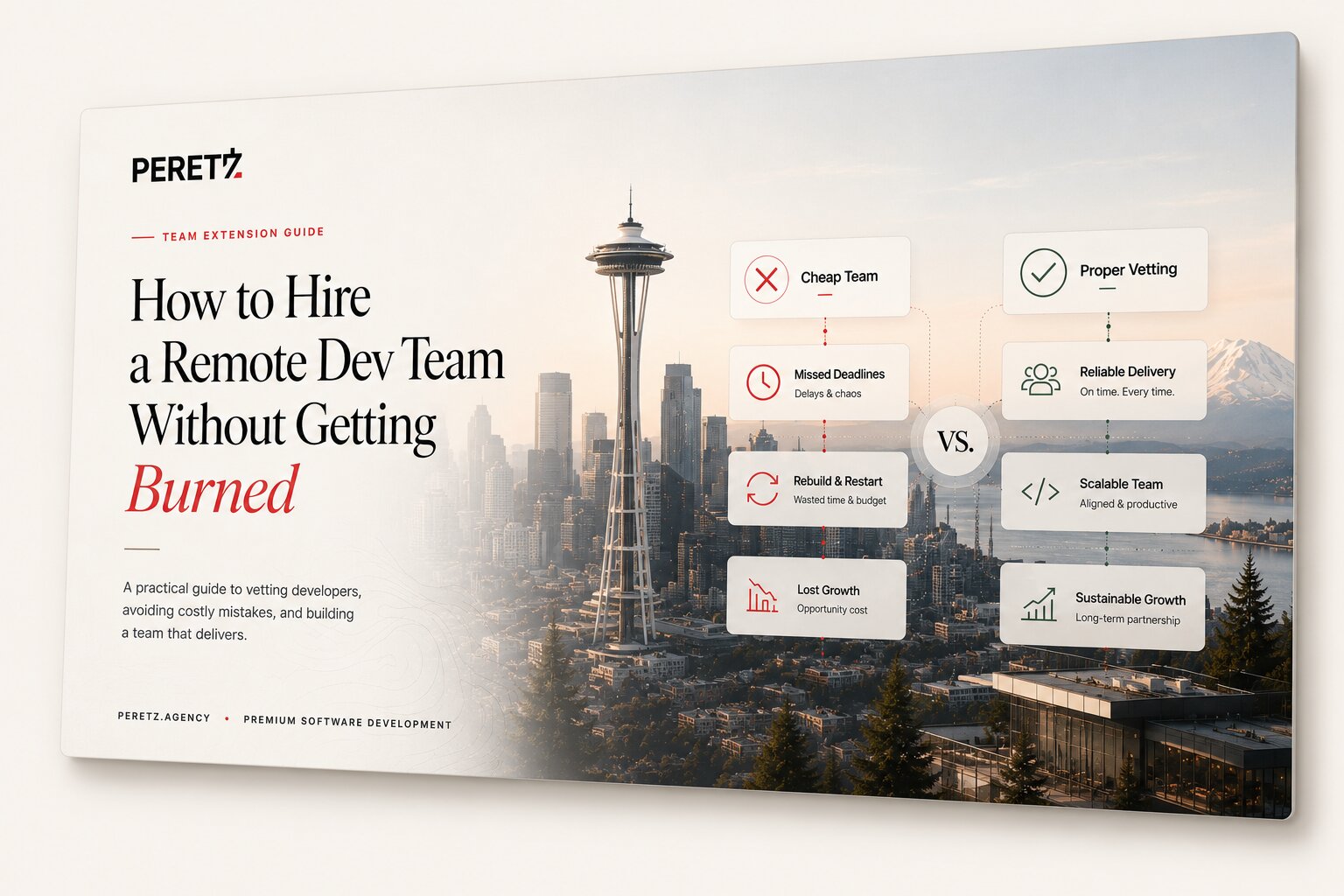
If the answer depends on one person, the business has a continuity risk. We cover how to bring in outside help without creating a new version of the same risk in How to Hire a Remote Dev Team Without Getting Burned.
4. TECH SUSTAINABILITY
4. Technical Sustainability
Technology never stands still. PHP versions reach end-of-life. Frameworks stop receiving security updates. Libraries become unsupported. Browsers evolve. Search engines change. AI development workflows continue to reshape engineering itself.
Every year a project remains untouched, maintaining it becomes more expensive than it was the year before.
Ignoring maintenance doesn't freeze technology. It only delays the invoice.
The framework choice itself is usually the single biggest driver of that invoice years later, something we break down in Laravel vs Symfony: The Most Expensive Technology Decision Is Often the One You Never Make.
5. ORGANIZATIONAL KNOWLEDGE
5. Organizational Knowledge
Perhaps the most underestimated asset inside any company is institutional knowledge. Why was this feature built? Why does this integration exist? Why wasn't another solution chosen?
Those answers rarely exist inside source code. They exist inside people's memories. Unless they're documented.
Organizations that preserve knowledge survive transitions. Organizations that don't are forced to rediscover themselves every time the team changes.
One observation has stayed with us through hundreds of client conversations. Businesses almost never invest too little in development because they don't care. They invest too little in continuity because they don't know continuity exists.
Founders think about launching. Marketing teams think about traffic. Sales teams think about revenue. Developers think about features. Almost nobody is responsible for making sure the business could survive the loss of any single contributor. Until one day, it has to.
THE AI ERA
Continuity Matters Even More in the AI Era
Ironically, continuity has become even more valuable in the AI era. Many organizations assume artificial intelligence will eliminate engineering challenges. In reality, AI amplifies well-structured businesses. It struggles inside poorly documented ones.
The companies that benefit most from AI are not necessarily those with the newest technology. They're the ones with the clearest systems. Structured documentation. Consistent architecture. Clean repositories. Documented business rules. Predictable workflows.
AI doesn't eliminate the need for organizational knowledge. It rewards organizations that preserve it.
We ran into this exact gap ourselves, more directly than we expected, in Four AIs Agreed. We Still Hadn't Verified Anything.
Eventually, every website reaches a point where it asks a simple question. Not "Can this platform scale?" Not "Can we redesign it?" Not "Should we migrate to another framework?"
The real question is much simpler.
Can this business continue to grow if the people who built today's system are no longer here tomorrow?
Everything else is secondary.
FINAL THOUGHT
Final Thought
A website is not a collection of pages. It is not a CMS. It is not a framework. It is not a hosting account. It is not even source code.
A modern website is the operational memory of a business. Every decision. Every integration. Every workflow. Every customer interaction. Every marketing channel. Every automation. Every lesson learned.
The companies that understand this don't merely maintain websites. They protect one of their most valuable business assets.
Because websites rarely fail on the day a developer leaves. They fail years earlier, when the business stops preserving the knowledge that keeps them alive.
Author: Yevhen Borovoi, Founder at Peretz Agency.

If reading this made you realize your business depends heavily on undocumented knowledge, scattered access, or individual team members, don't wait for a crisis to expose those risks. A Website Due Diligence identifies hidden dependencies before they become business interruptions, and helps build a digital foundation that stays resilient as your company grows. If part of what worries you is whether AI tools alone can maintain that resilience, Do I Need a Developer, or Is AI Enough? covers exactly where that gap sits.
Get a Digital Ownership Debt Audit
This is one piece of a bigger picture, see the digital ownership audit.
- Share
-

-

-

-

Related Reading
-
26. 06. 2026
The Story We Never Planned to Tell - Case MEDPRESSO

-
30. 07. 2026

Most Companies Don't Own Their Website. They Own a Collection of Dependencies.
-
17. 07. 2026
The Code Remembers Every Version of the Business
-
19. 07. 2026

The Cost of AI Isn't Generation. It's Verification.
-
15. 07. 2026

Four AIs Agreed. We Still Hadn't Verified Anything.
-
18. 07. 2026

Laravel vs Symfony: The Most Expensive Technology Decision Is Often the One You Never Make
-
18. 06. 2026
How to Hire a Remote Dev Team Without Getting Burned
-
05. 08. 2026

Your Business Doesn't Go Live. It Comes Alive.
-
23. 08. 2026

How Much Does a Custom Website Cost in 2026?
-
04. 09. 2026

Do I Need a Developer, or Is AI Enough?
-
16. 09. 2026

What You Own vs What You're Renting: The Digital Ownership Audit