


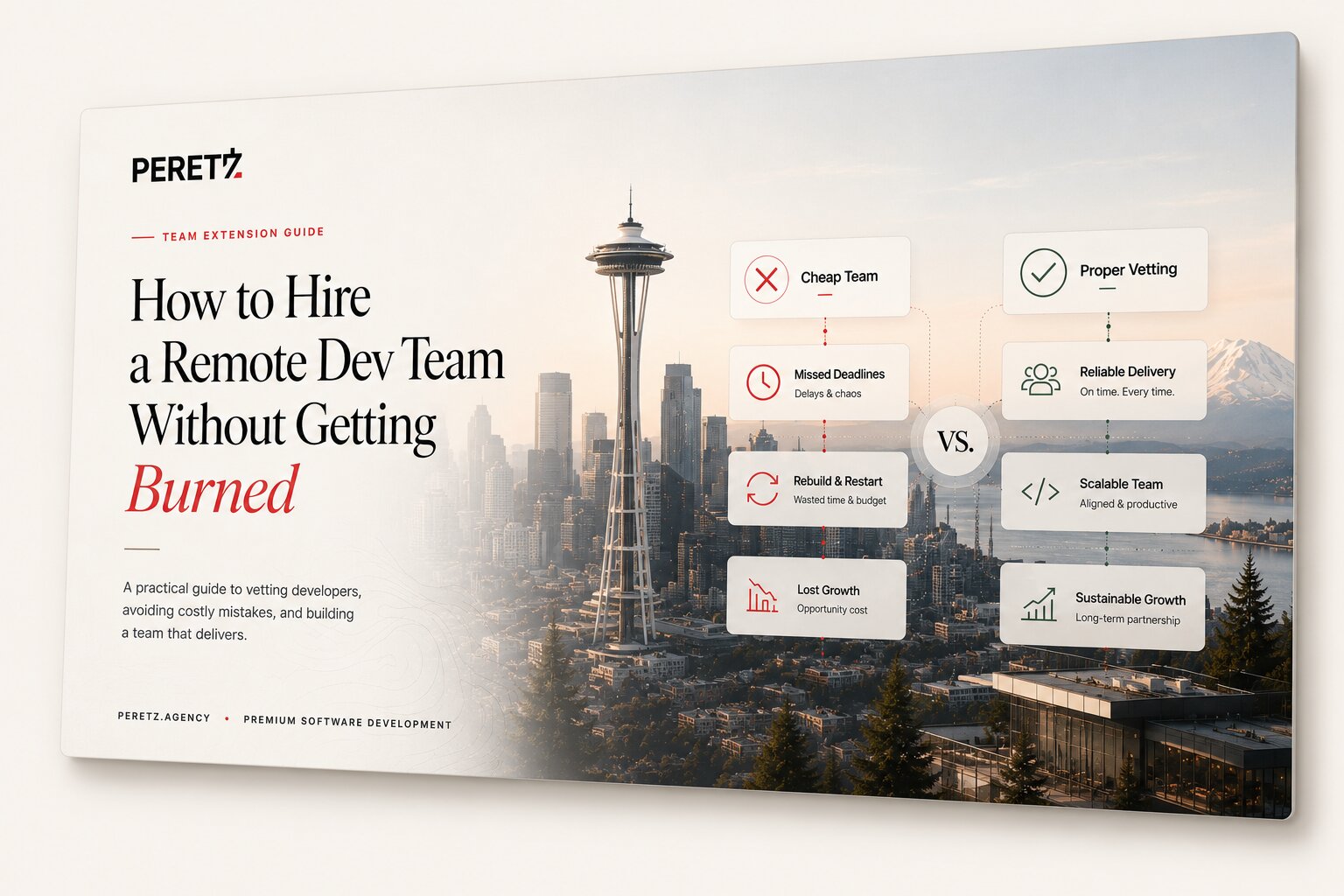
If you've ever outsourced development work, you know the fear. You've heard the horror stories — or lived one yourself. A contractor disappears mid-project. Code that "works" but nobody can maintain. A six-week project that takes six months. An invoice that doesn't match what was delivered.
Here's the good news: outsourcing isn't the problem. Bad vetting is.
Below is what actually separates a successful outsourcing engagement from an expensive mistake — and the questions you should be asking before you sign anything.
Red Flag #1: No Technical Screening Before You Meet Candidates
If an agency sends you a stack of resumes without running their own technical assessment first, they're outsourcing the risk to you. A real vetting process includes a coding assessment, an architecture or system-design conversation, and an English proficiency check — before you ever get on a call.
What to ask: "Walk me through how you screen candidates before presenting them to me."
Red Flag #2: Vague Communication About Time Zones
"We'll make it work" is not an answer. Ukrainian and Eastern European developers typically have 3-5 hours of overlap with Western Europe and 2-4 hours with the US East Coast — which is more than enough for daily standups and real-time collaboration, if the team is set up for it.
What to ask: "What does a typical day of overlap look like between my team and theirs?"
Red Flag #3: Unclear IP Ownership
This should never be a gray area. Every line of code, every design file, every deliverable should belong to you — fully, immediately, contractually — from the moment it's created.
What to ask: "Where in the contract does it state that I own 100% of the IP?"
Red Flag #4: No Trial Period or Easy Exit
Good outsourcing partners are confident enough to let you start small. A 2-4 week trial engagement tells you more about fit than any portfolio ever will.
What to ask: "Can we start with a paid trial period before committing to a long-term contract?"
What Good Outsourcing Actually Looks Like
A well-run engagement feels less like managing a vendor and more like managing a remote employee. You get:
- A pre-vetted shortlist, not a pile of resumes
- Direct access to interview candidates yourself
- Clear, predictable monthly reporting
- A team that integrates into your existing tools — Slack, Jira, GitHub — from day one
- 100% IP ownership, guaranteed in writing
The Real Question Isn't "Should I Outsource"
It's "who am I outsourcing through." The cost savings are real — typically 40-60% lower than hiring locally in Seattle or Bellevue — but only if the partner you choose actually does the vetting work upfront.
If you're evaluating outsourcing or outstaffing for your team, we'd be glad to walk you through how we screen, structure, and manage engagements — no pressure, just a straight conversation.
- Share
-

-

-

-

Related Reading
-
06. 04. 2021
How to Rank Your Google Business Profile Higher in 2026 (Without Paying for Ads)

-
12. 03. 2021

In-House vs Outsourcing in 2026: What Business Owners Actually Need to Know
-
18. 06. 2026

How Much Does a Website Cost in Bellevue WA in 2026?
-
17. 06. 2026
Why Your Business Isn't Getting Leads From Its Website (And How to Fix It in 2026)
-
22. 06. 2026
Website Redesign Seattle: Why Most Business Websites Fail to Generate Leads (And How to Fix It)
-
30. 06. 2026

The Most Expensive Mistake Business Owners Make Before Hiring a Digital Agency
-
04. 07. 2026

What Twenty Years Taught Me About Building Digital Businesses
-
05. 08. 2026

Your Website Doesn't Fail When Your Developer Leaves. It Fails Years Earlier.
-
09. 08. 2026

MVP Isn't a Minimal Product. It's the Cost of Entry.
-
17. 07. 2026

The Build vs. Buy Equation Has Changed. Most Companies Have Not Recalculated It.
-
17. 07. 2026

The Code Remembers Every Version of the Business
-
18. 07. 2026

Laravel vs Symfony: The Most Expensive Technology Decision Is Often the One You Never Make
-
25. 07. 2026

Finding the Right Person Is Harder Than Finding an Investor