
Every redesign starts with a number.
A quote, a timeline, a scope document everyone signs off on.
And almost every redesign ends up costing more than that number, taking longer than that timeline, and touching more than that scope.
Ask most agencies why, and you'll hear about scope creep. A client kept adding pages. A stakeholder changed their mind twice. Nobody could agree on the homepage.
Sometimes that's true.
But the more common reason is quieter, and it's usually already there before the project starts: technical debt nobody accounted for because nobody looked for it.
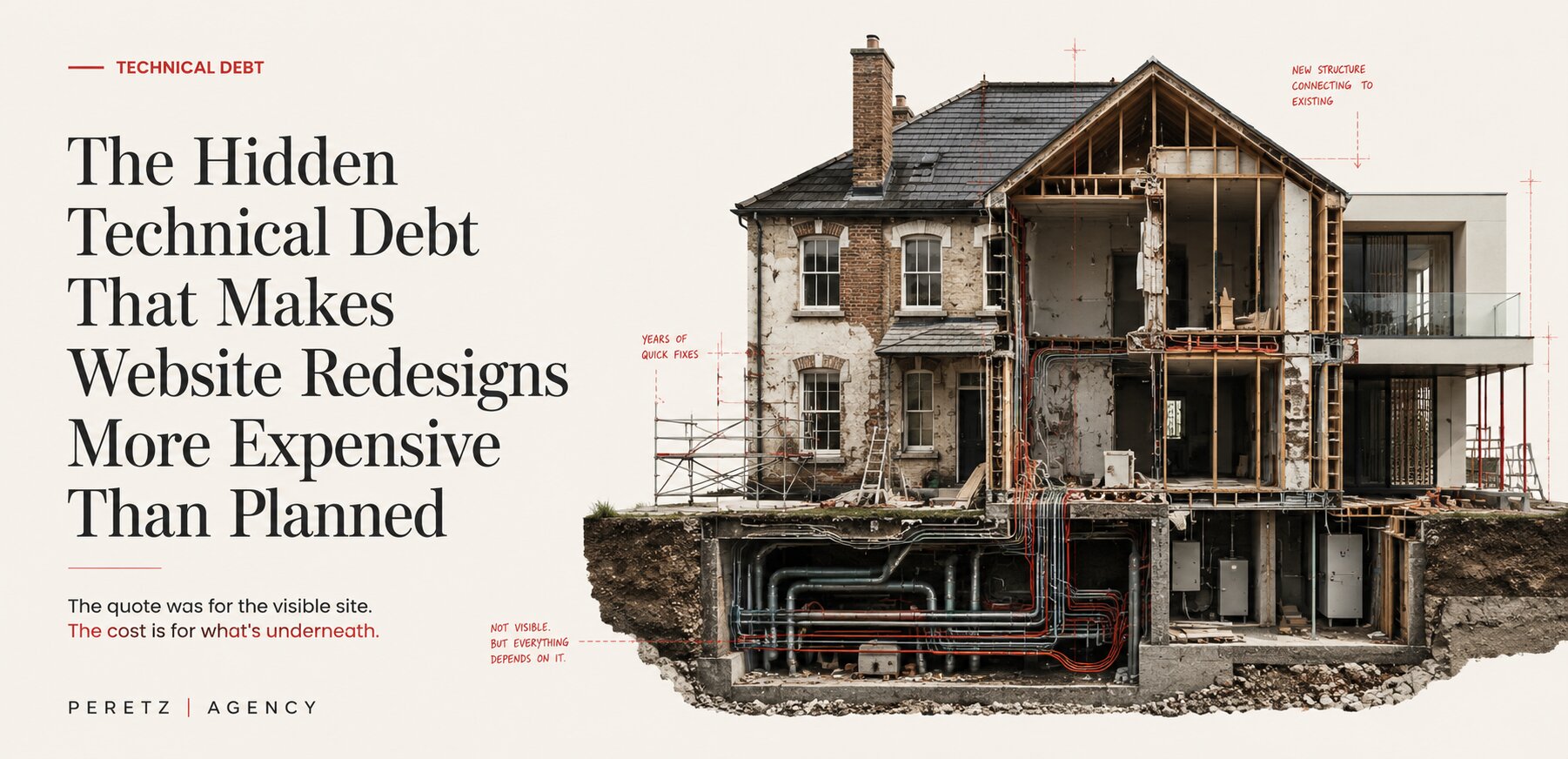
The quote was for the visible site. The cost is for what's underneath.
A Redesign Doesn't Create Technical Debt. It Exposes It.
Technical debt is often invisible precisely because the website still works.
Customers can place orders. The team can publish content. Forms submit. The CMS opens.
Nothing appears urgent.
This creates a dangerous assumption: If the website still works, the technology underneath must still be healthy.
Not necessarily.
A redesign is the moment when that assumption gets tested.
You're no longer asking the existing system to continue doing what it already does. You're asking it to change.
And that is when old decisions suddenly matter.
A plugin installed years ago to hit a launch date may become a blocker.
A custom integration built by someone who has since left may need to be replaced.
A database field that was repurposed for a quick solution may no longer support the new structure.
A collection of copied templates may turn out not to be a reusable design system at all.
The redesign doesn't create those problems. It simply makes them impossible to ignore.
What Technical Debt Is
What Technical Debt Is
Technical debt isn't a bug.
It's a decision, usually a reasonable one at the time, that trades long-term cost for short-term speed.
A plugin installed to hit a launch date.
A page built by copying another page and changing the text.
An integration wired directly into the theme instead of through an API.
A database field repurposed for something it was never designed to hold.
None of these are necessarily mistakes in the moment they're made.
They become debt later, when someone has to touch that part of the site again and discovers it's load-bearing in ways nobody documented.
This is why technical debt is often misunderstood.
It isn't simply old code.
It is the accumulated cost of decisions that make the system harder to change.
And a redesign is exactly when that debt comes due.
You're not just changing what the site looks like. You're touching the foundation it was quietly built on top of.
When It Still Works
When It Still Works
Some of the most technically indebted websites are not broken websites.
They are websites that have been working for years.
The business learns to work around their limitations.
A feature becomes "too complicated."
A new integration gets postponed.
A marketing team stops asking for certain changes because they already know development will be painful.
Eventually, the organization starts treating technical limitations as business rules.
The website is no longer adapting to the business. The business is adapting to the website.
That is where technical debt becomes more than an engineering problem.
It becomes part of the broader Competitive Debt that accumulates when a business continues operating on structures that no longer match what it needs to do. We explore that broader pattern in The Hidden Cost of Standing Still: Why Modern Businesses Lose Competitive Advantage Long Before They Notice.
Why It Stays Invisible
Why It Stays Invisible
The visible part of a website, the layout, colors, copy and interactions, is maybe 20% of what a redesign actually touches.
The other 80% lives underneath:
- CMS structure
- database
- integrations
- redirects
- hosting
- caching
- plugins
- APIs
- content relationships
- authentication
- business logic
- deployment
- backups
A scoping call can walk through the visible 20% in an afternoon.
Nobody can see the other 80% without opening the codebase and the CMS and actually looking.
Most quotes are built on the visible part because that's what a discovery call and a few reference sites can show you.
The invisible part only shows up once someone starts building.
And by then, the price is already agreed.
Five Kinds of Debt
Five Kinds of Debt
Content Debt
Years of pages can be built inconsistently.
Some are hand-coded.
Some are templated.
Some were created by different agencies using different conventions.
Some contain information nobody is sure is still correct.
Others may look irrelevant but still generate organic traffic.
Migrating them isn't copy-paste.
It's untangling which version of the truth is actually correct.
Integration Debt
A CRM connection may have been built by a developer who left the company.
A payment gateway may be wired directly into a template instead of through a documented API.
An inventory system may depend on a custom connection nobody remembers creating.
Nobody needs to think about these things while the website keeps working.
Then the redesign changes the part of the system those integrations depend on.
Suddenly, the "website redesign" is an integration project.
Infrastructure Debt
Server configurations.
DNS settings.
Caching rules.
CDN configuration.
SSL.
Redirect chains.
Cron jobs.
Backups.
Security rules.
Years of small infrastructure fixes can quietly become load-bearing for SEO, performance and uptime.
None of them appears in a homepage screenshot.
And some of them may not be documented anywhere.
Design System Debt
A site can look consistent without having a real design system.
One button was built for one page.
Another was copied six months later.
A third was created for a campaign.
Eventually there are dozens of slightly different components solving essentially the same problem.
A redesign assumes reusable patterns exist.
Then the team discovers they don't.
There was never a system.
There was only a collection of individual decisions.
Data Debt
Database fields get repurposed.
Values acquire different meanings in different parts of the application.
Old product structures remain because something still depends on them.
Relationships that once made sense no longer reflect how the business operates.
The new interface may require a cleaner data model.
But changing that model can affect the entire application.
The problem isn't the new design. The problem is that the old data structure was never designed for the business that exists today.
Migration Debt
Migration Debt
There is another category that becomes particularly important during a redesign: migration debt.
A redesign isn't simply moving one visual interface to another.
You may also be moving:
- URLs
- content
- metadata
- images
- categories
- products
- internal links
- structured data
- redirects
- language versions
- indexed pages
A page that looks unnecessary to a designer may still generate organic traffic.
A URL that looks obsolete may have valuable backlinks.
A category that seems redundant may contain hundreds of indexed pages.
This is why SEO migration should not begin after the new website is already built.
You're not just migrating a website. You're migrating its accumulated history.
And that history has value.
Why Estimates Explode
Why Estimates Explode
This is how a seemingly simple project can change shape:
"We only need a new frontend."
Then someone discovers that the CMS cannot support the new structure.
The CMS needs modification.
That exposes an old database structure.
The database needs to change.
That affects the API.
The API affects the CRM integration.
The URL structure changes.
SEO migration becomes necessary.
Old plugins no longer fit.
Content needs restructuring.
Suddenly, the project is no longer website redesign.
It's:
partial system migration + data restructuring + integration work + SEO migration + new frontend.
Nothing necessarily went wrong.
The project simply became better understood.
That is why a $20,000 redesign can become a $40,000 project without anyone deliberately trying to expand the scope.
The original estimate was based on what could be seen.
The later estimate is based on what was discovered.
Why Agencies Miss It
Why Agencies Miss It
This isn't usually dishonesty.
It's sequencing.
Most agency processes go: discovery call → proposal → contract → technical audit → development.
The problem is obvious.
The price gets fixed before the debt gets discovered.
Once that happens, an agency has two bad options.
Absorb the extra cost themselves, which erodes the project's economics and incentivizes cutting corners elsewhere.
Or go back to the client mid-project asking for more budget.
That's exactly the conversation nobody wants to have three weeks into a redesign.
Both options exist because the audit happened after the price, not before it.
What Should Happen Instead
What Should Happen Instead
The fix isn't complicated.
It's just unpopular because it adds a step before anyone gets to talk about the fun part.
Audit the technical debt before quoting the redesign, not after.
That means actually opening the CMS, not just browsing the live site.
Actually mapping the integrations, not asking the client to list them from memory.
Actually checking what the redirect and SEO history looks like, not assuming it's clean.
Actually reading the database schema, not just looking at the front-end templates.
Actually checking the plugins, dependencies, hosting configuration and deployment process. And, importantly, determining who owns each part of the system and whether anyone actually understands it.
It takes days, not months.
And it turns most of the major unknowns into line items in the original quote. That is the order in which we run website redesigns in Seattle: audit first, quote second.
The audit is cheap. Discovering the debt mid-build never is.
Not every problem calls for a new design, though. Sometimes the interface should stay and only the code beneath it needs work, as we explain in Do You Need a Website Redesign? Start With a Usability Audit.
Redesign, Rebuild, or Audit
Redesign, Rebuild, or Audit
Not every old website needs to be thrown away.
When the audit shows that the debt sits in outdated PHP, an unsupported framework or abandoned packages, the answer is often neither a redesign nor a rebuild, but a step-by-step modernization of what already works.
Sometimes the existing architecture is healthy and the problem really is the front end.
Sometimes the CMS still fits the business.
Sometimes the integrations are clean.
Sometimes the database structure is perfectly adequate.
In those cases, rebuilding everything would be wasteful.
But if the new requirements repeatedly conflict with the existing architecture, the question changes.
You may not need a new design. You may need a new structure.
That's a different problem, and one we explore in Most Companies Don't Need a New Website, They Need a New Structure.
The important thing is to determine which situation you're actually in before development begins.
A redesign quote built after a real technical audit may be slightly higher upfront.
That's not necessarily a problem.
It is often a sign that the quote is based on reality.
The alternative is a low initial estimate that quietly assumes the invisible 80% won't cause problems.
That assumption is frequently wrong.
A project scoped around known debt can include the untangling work from the beginning.
The schedule becomes more realistic.
The budget becomes more predictable.
And the client understands what they are actually buying.
A redesign quote built around the visible website tells you what someone thinks the new interface will cost. A quote built after an audit tells you what it will actually take to change the system underneath it.
The Real Cost
The Real Cost
Technical debt doesn't usually send one large invoice.
It sends smaller ones first.
A feature takes longer.
A developer needs more time.
A migration becomes complicated.
A release requires additional testing.
A new integration becomes "too risky."
A simple change requires investigation before anyone can safely touch it.
Eventually those small costs become a large one.
And the largest cost may still not be development.
It may be the opportunity the business decides not to pursue because the system makes it too difficult.
Technical debt is therefore not simply an engineering problem. It is a constraint on business velocity.
A redesign is simply the moment when that constraint becomes impossible to ignore.
If you're considering a website redesign, the first question shouldn't be: "How much will the new website cost?"
It should be: "What exactly are we rebuilding?"
Before committing to a budget, understand what is already there, what can be preserved, what needs to be migrated, what needs to be rebuilt and what should be removed entirely.
A Strategic Session can start with exactly that question, looking at the business requirements, existing digital structure and the problems the new system actually needs to solve.
Because the cheapest redesign isn't necessarily the one with the lowest initial quote. It's the one where the business knows what it is paying for before the work begins.
A multi-language rebuild carries its own version of this problem, one we explore in Why Multi-Language Websites Need a Different Design Approach.
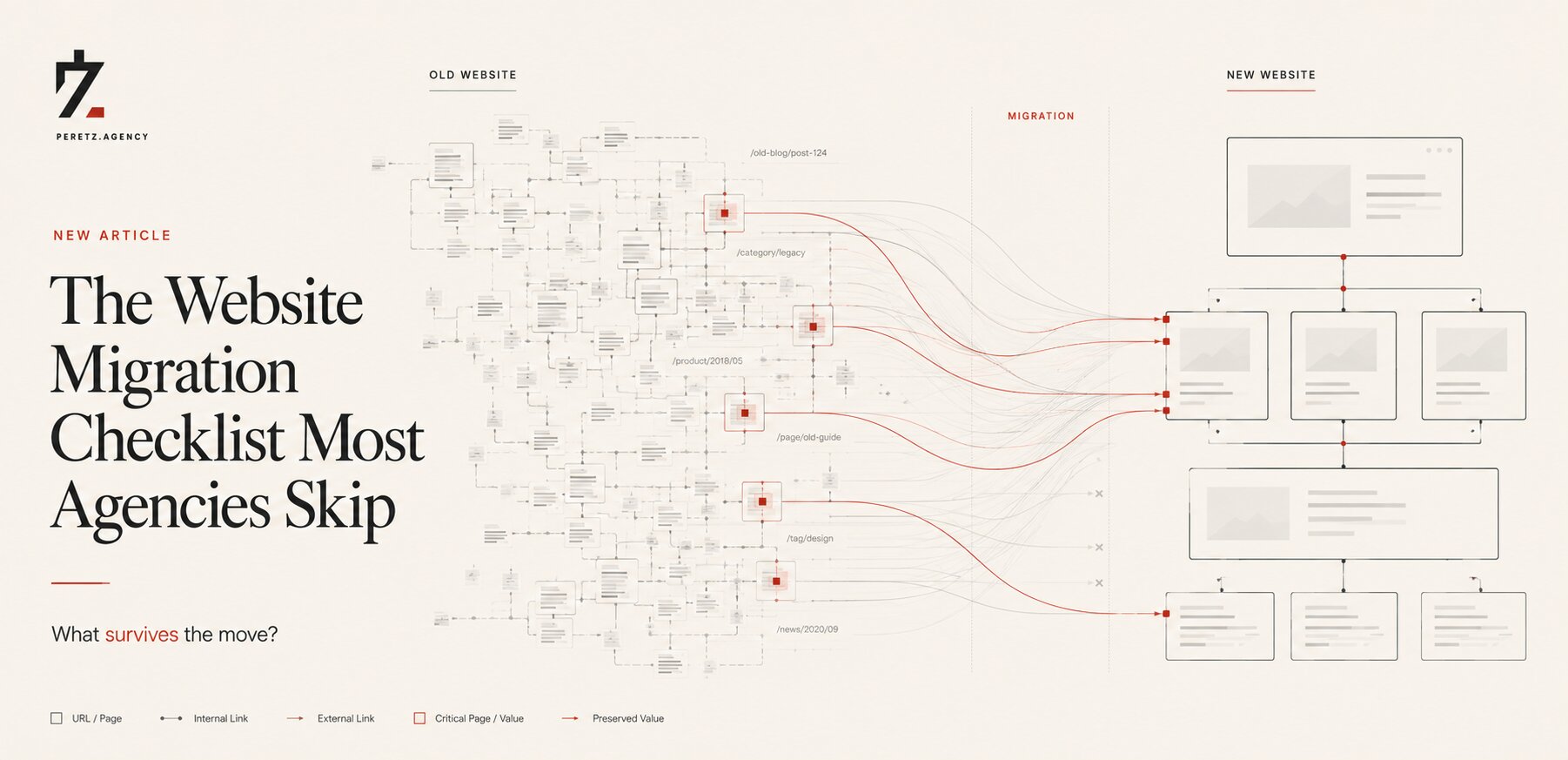
A migration is exactly the moment that debt often surfaces, we wrote a dedicated checklist for it in The Website Migration Checklist Most Agencies Skip.
International architecture accumulates its own form of debt, which we cover in Multilingual SEO: Why Translated Pages Do Not Rank in Their Own Markets.
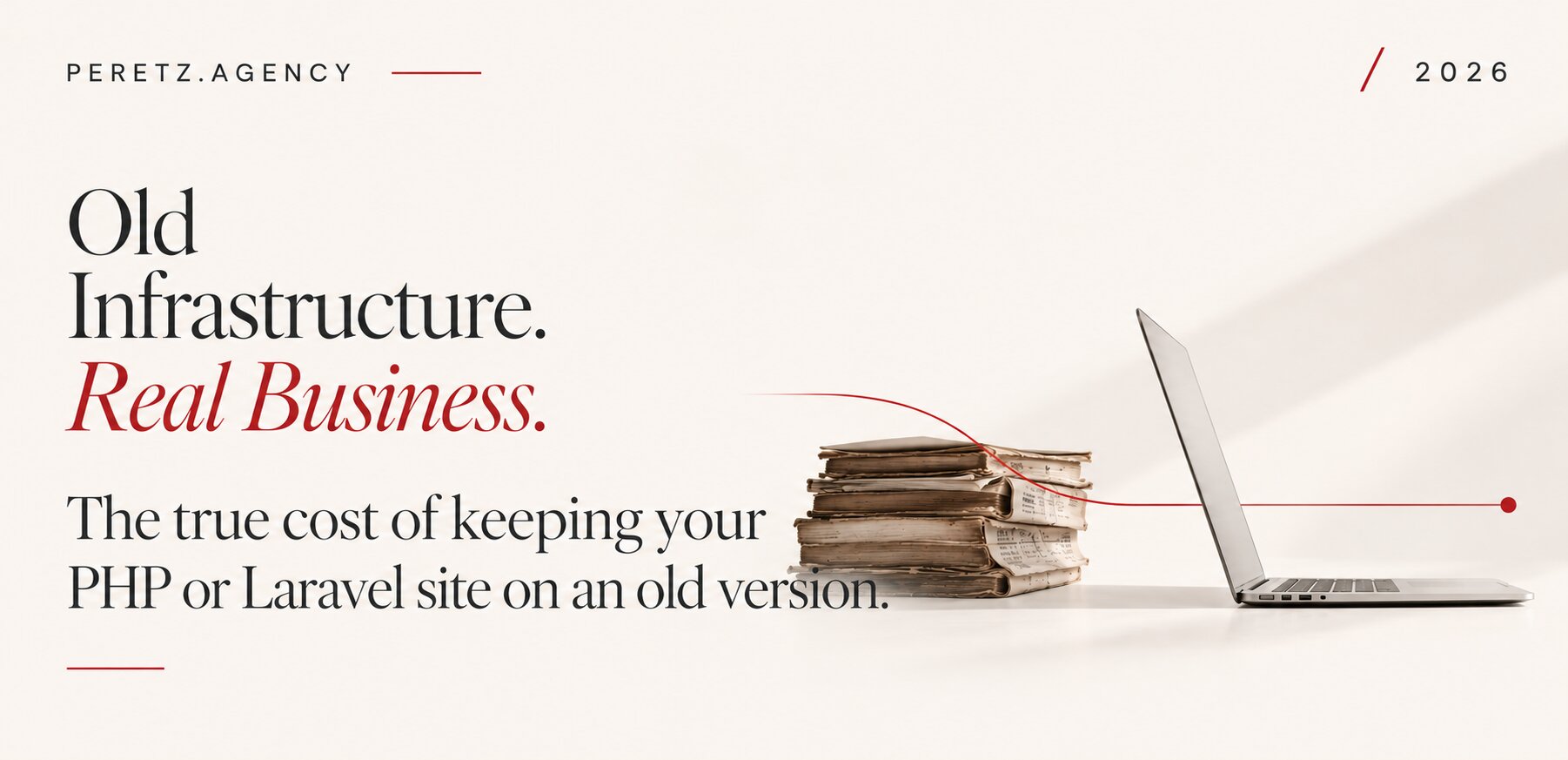
For how this plays out on older PHP and Laravel sites, with real costs and tools, see Upgrading an Old Laravel or PHP Site in 2026.
Considering a redesign and want to know what's actually underneath your current site before committing to a budget? A Strategic Session starts with exactly that question.
- Share
-

-

-

-

Related Reading
-
29. 07. 2026

The Hidden Cost of Standing Still: Why Modern Businesses Lose Competitive Advantage Long Before They Notice

-
20. 07. 2026

Most Companies Don't Need a New Website. They Need a New Structure.
-
26. 08. 2026

Why Multi-Language Websites Need a Different Design Approach
-
27. 08. 2026
The Website Migration Checklist Most Agencies Skip
-
06. 09. 2026

Multilingual SEO: Why Translated Pages Do Not Rank in Their Own Markets
-
04. 09. 2026

What Separates a Premium Laravel or Symfony Build From a Merely Functional One
-
29. 09. 2026
Upgrading an Old Laravel or PHP Site in 2026
-
30. 09. 2026

Your Codebase Needs a Manual for AI
-
01. 10. 2026

Six Laravel Versions in Three Days
-
08. 10. 2026

Do You Need a Website Redesign? Start With a Usability Audit