The Hidden Cost of Standing Still: Why Modern Businesses Lose Competitive Advantage Long Before They Notice
Competitive Debt is the framework for understanding why businesses lose their edge long before revenue shows it. Five forms, real cases, a practical audit.




Most business leaders don't wake up one morning to discover that their company has suddenly become uncompetitive. Competitive decline rarely happens overnight. Instead, it accumulates quietly through dozens of small decisions that seem reasonable at the time.
"We'll update the website next year." "Our current CMS still works." "We don't really need another case study." "Our developers know how everything works." "AI is interesting, but it's mostly hype."
Individually, none of these decisions appear dangerous. Collectively, they create something far more significant: distance. Distance between your business and your competitors. Between your expertise and your customers. Between your technology and modern standards. Between the speed at which your organization operates and the speed at which the market evolves.
Most companies measure revenue, profit, marketing performance, customer acquisition costs, and employee productivity. Very few measure the gradual accumulation of competitive disadvantages. Yet these disadvantages often determine where the business will be three or five years from now.
Standing still doesn't exist in a competitive market. Every day your competitors improve their products, publish new content, optimize their websites, automate internal processes, strengthen customer relationships, adopt new technologies, and expand their digital presence. If your company chooses not to evolve, the gap continues to widen regardless of whether your business itself changes.
This paper introduces a broader framework for understanding this phenomenon. Rather than looking only at technical debt or outdated software, we propose a more comprehensive concept: Competitive Debt.
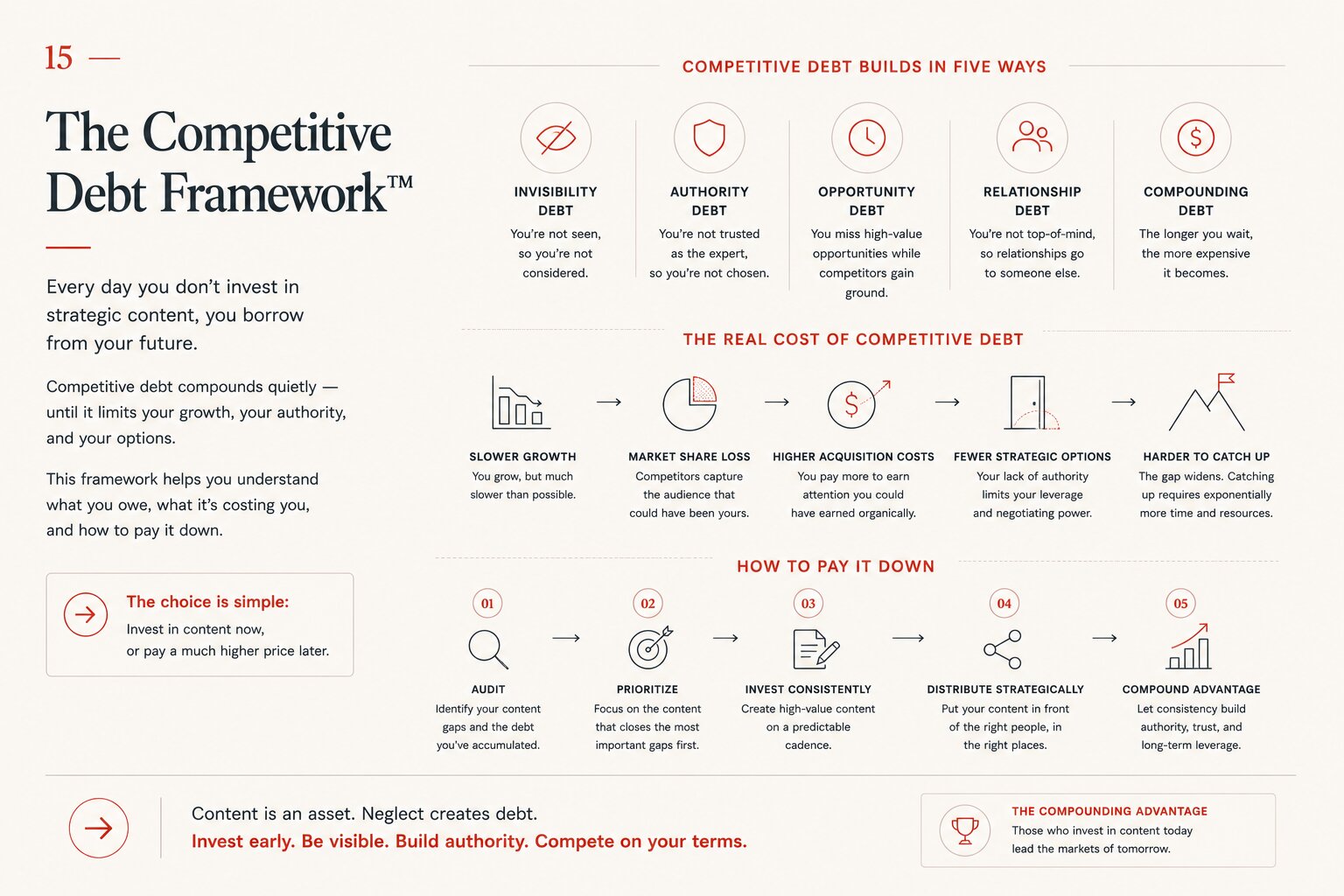
Competitive Debt is the accumulation of decisions, delays, and missed opportunities that gradually reduce an organization's ability to compete effectively. Unlike financial debt, it rarely appears on a balance sheet. Unlike technical failures, it doesn't immediately trigger alarms. Unlike declining revenue, it often remains invisible until competitors have already established a significant lead. By the time many organizations recognize the problem, catching up becomes considerably more expensive than keeping pace would have been.
THE ILLUSION
Standing Still Is an Illusion
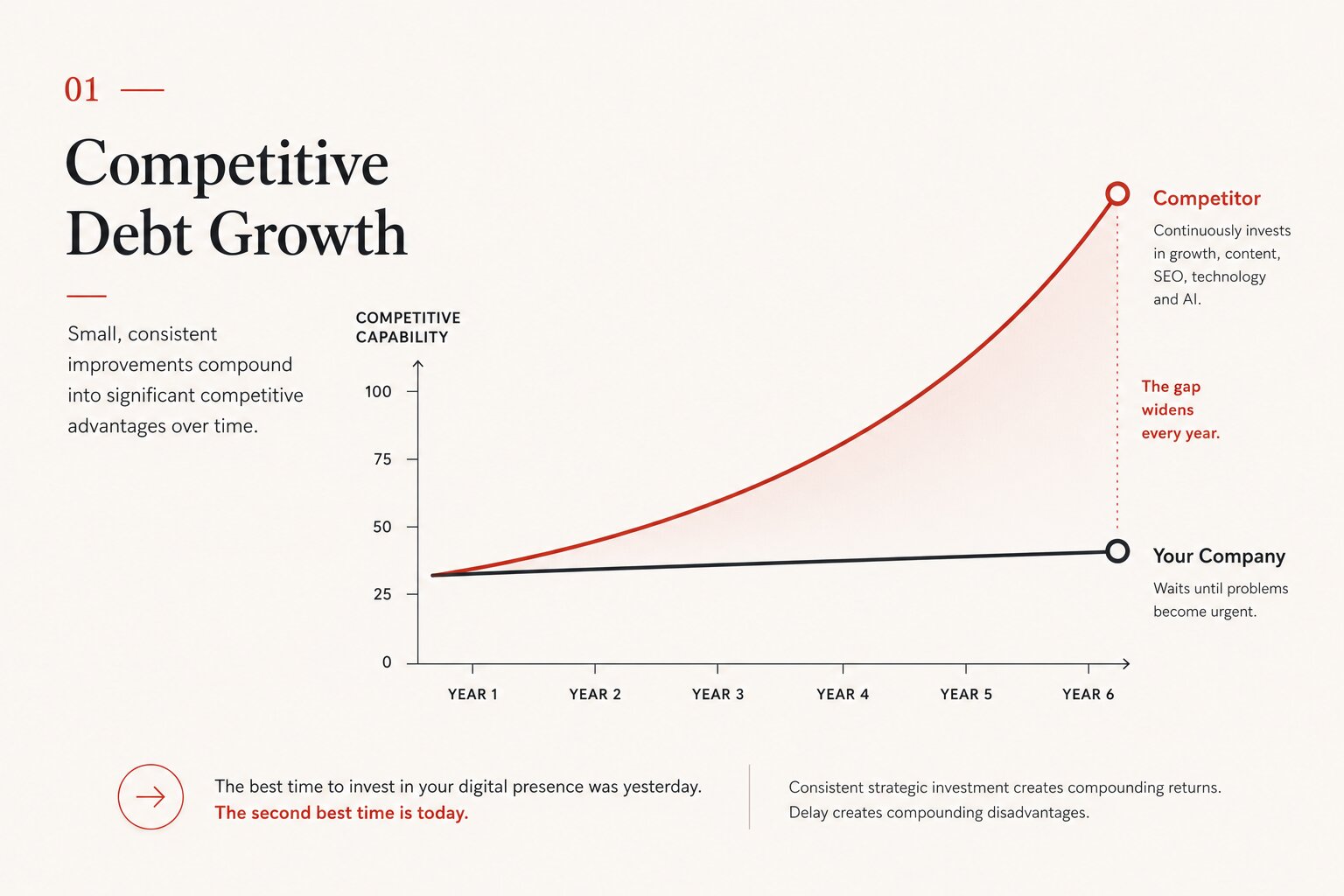
Every technological shift rewards organizations that adapt early, not because early adopters are necessarily smarter, but because they accumulate experience while everyone else waits. Businesses that ignored the internet during the late 1990s didn't disappear immediately. Many remained profitable for years. From the inside, very little appeared to change. Meanwhile, competitors were learning how to sell online, collecting customer data, improving digital experiences, building software. At first, the differences seemed insignificant. Five years later, they became structural. Ten years later, decisive.
The same pattern emerged with smartphones. Many executives believed mobile websites were optional, desktop traffic still dominated, customers could always zoom in. "It works well enough." Until it didn't. As mobile devices became the primary gateway to the internet, businesses that had delayed adaptation discovered they were rebuilding years of neglected work under significantly greater pressure and at considerably higher cost.
One of the most dangerous assumptions in business is believing that doing nothing preserves the current position. It doesn't. Imagine two competing companies entering the same market, similar teams, comparable products, equivalent expertise. For the first year, both perform similarly. Then one company begins making continuous improvements, not revolutionary ones, small improvements: publishing educational content every week, updating its website, improving page speed, documenting internal processes, training employees to use AI tools.
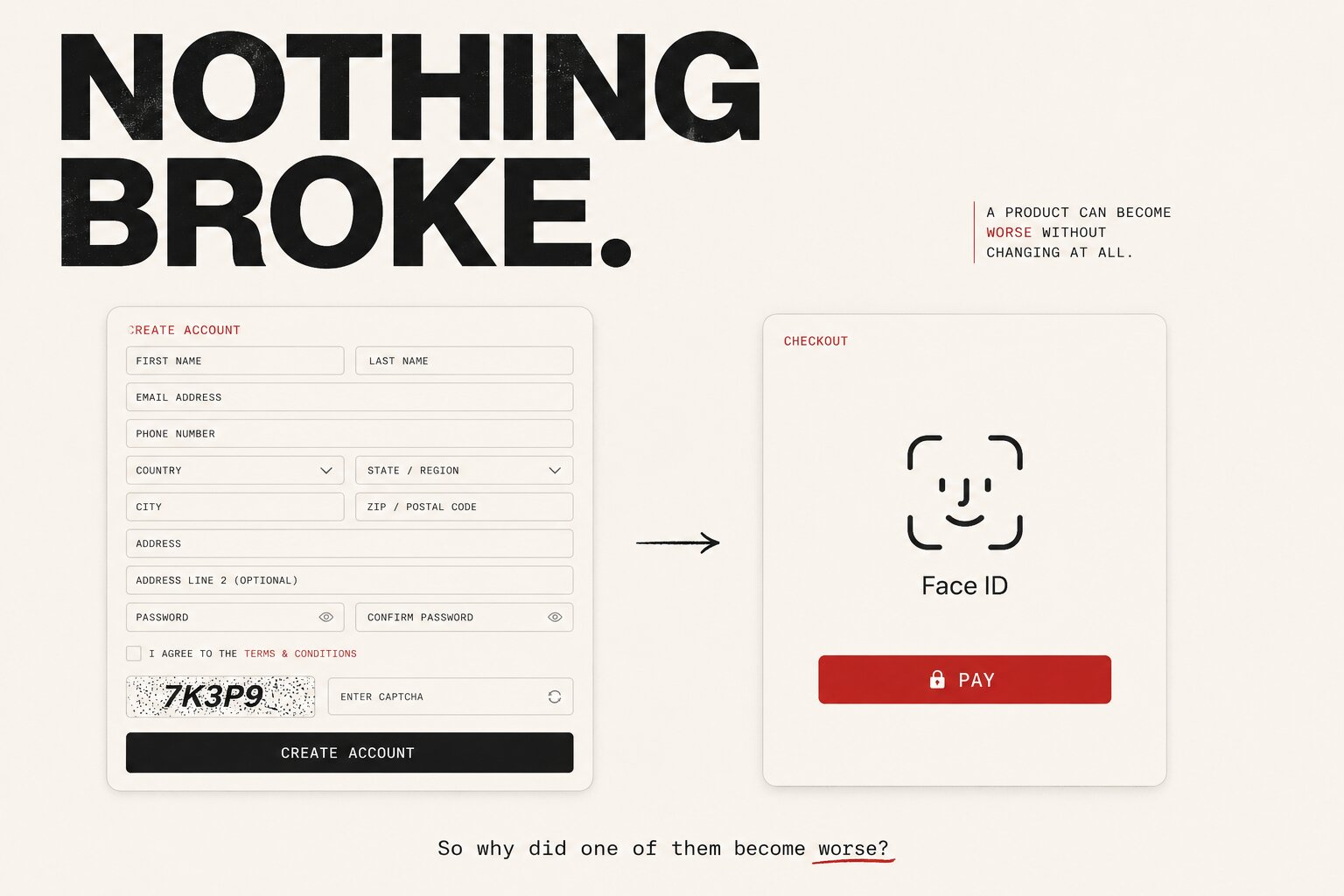
The second company changes very little. Nothing breaks. Customers continue buying. Revenue remains stable. Management concludes that everything is working. From inside the organization, this conclusion appears reasonable. From outside, something entirely different is happening: every month the first company becomes slightly more visible, slightly faster, slightly easier to work with. None of these improvements transform the business overnight, but together they create momentum. Momentum compounds. After several years, the difference no longer appears incremental. It appears inevitable.
COST OF WAITING
Success Compounds. So Does Neglect.
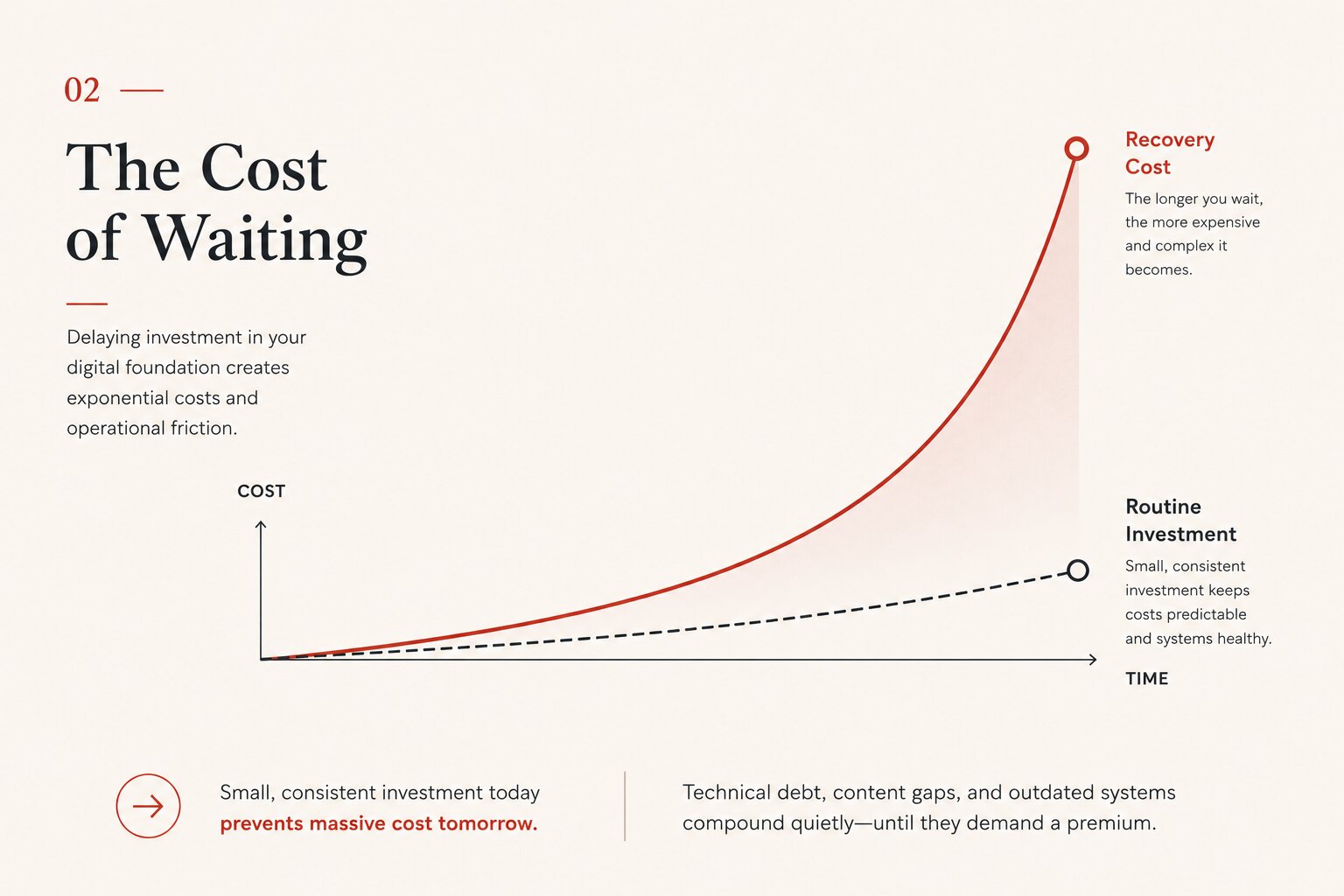
Business leaders understand compound interest in finance. Few recognize compound interest in competitiveness. Every published article becomes another opportunity to be discovered. Every software improvement reduces future maintenance costs. Every documented process reduces organizational dependency on individual employees. Every improvement creates a platform for the next improvement.
The opposite is equally true. Every postponed software update increases future migration complexity. Every undocumented process increases operational risk. Every year without content reduces digital authority. Every delay makes the next delay more expensive. What that cost looks like when the right move simply arrives too late is shown in Wrong Move. Right Move. Too Late.
Competitive advantage is rarely built through one extraordinary decision. It is built through hundreds of ordinary ones. Unfortunately, competitive decline follows exactly the same pattern.
COMPETITIVE DEBT
Introducing Competitive Debt
Most executives have heard the term Technical Debt. Originally introduced to describe the long-term cost of choosing faster or simpler technical solutions today at the expense of future flexibility, the concept has become a standard part of software engineering. But businesses don't compete on technology alone.
A company may have perfectly modern software while slowly disappearing from search results. Another may rank first in Google while relying entirely on undocumented processes that disappear when key employees leave. A third may employ outstanding experts whose knowledge never reaches potential customers because almost none of it is published online. A fourth may maintain an excellent website but ignore AI-assisted workflows while competitors dramatically reduce the time required to produce software, content, documentation, and customer support.
Each problem appears unrelated. Together, they create the same outcome: reduced competitiveness. That is why we propose a broader framework.
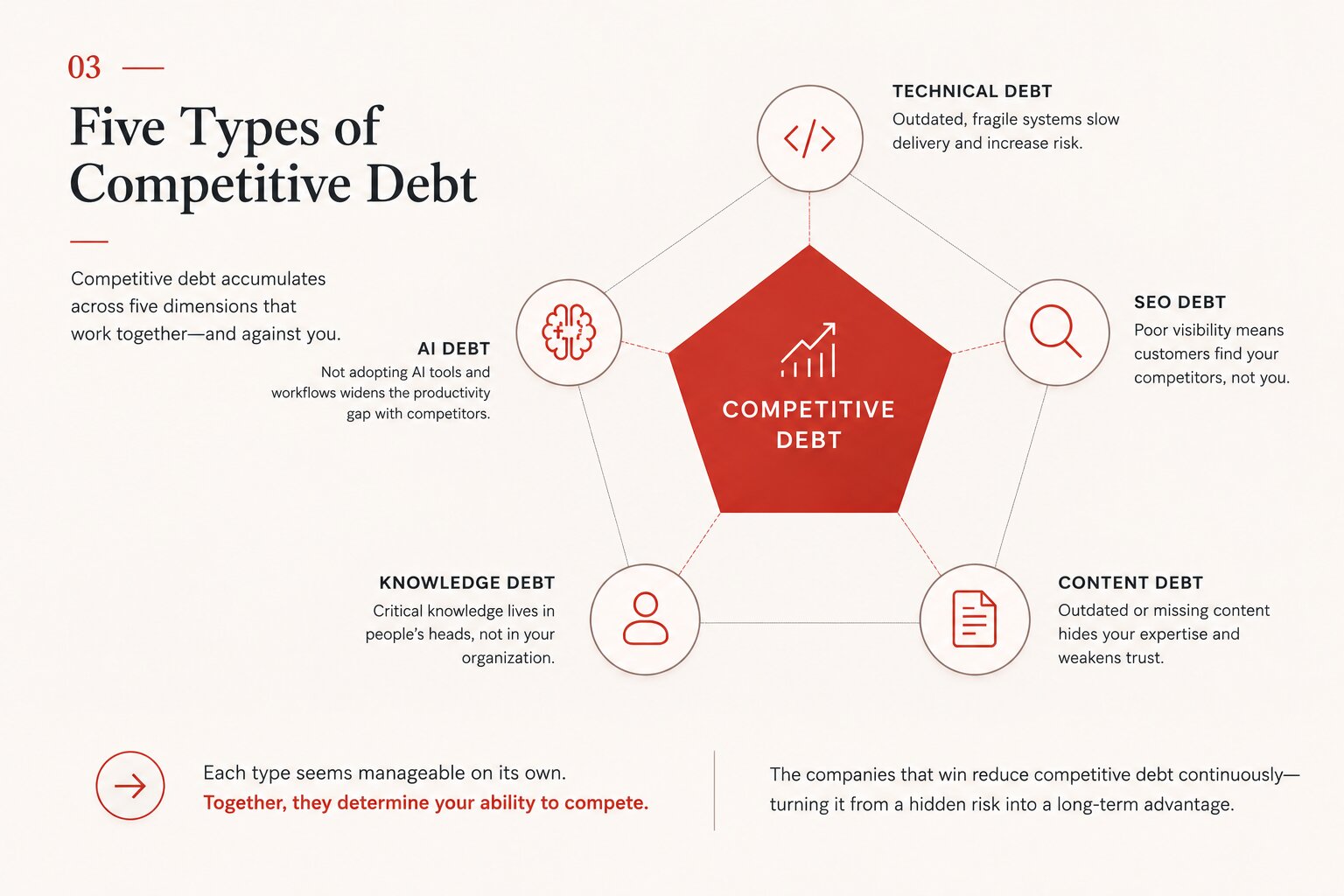
Competitive Debt is the accumulation of strategic, technological, operational, and organizational delays that gradually reduce a company's ability to compete. Unlike technical debt, Competitive Debt extends beyond software. It includes the systems, knowledge, visibility, and capabilities that determine whether a business can continue creating value faster than its competitors.
In the sections that follow, we examine five forms of Competitive Debt that increasingly shape digital markets: Technical Debt, SEO Debt, Content Debt, Knowledge Debt, and AI Debt. Individually, each may appear manageable. Together, they determine whether an organization remains competitive, or slowly becomes invisible.
The Five Forms of Competitive Debt
When executives hear the term technical debt, they often assume it's an engineering problem, something that belongs to developers, something that affects software architecture but has little impact on business strategy. That assumption is becoming increasingly dangerous. For many organizations, technology is the business. Your website is no longer a digital brochure. Your CRM is no longer just a customer database.
This is why Competitive Debt extends beyond software. It accumulates across multiple dimensions of an organization. Each type grows independently. Together, they reinforce one another: a company with outdated technology often struggles to publish content, poor content weakens SEO, weak SEO reduces visibility, reduced visibility lowers lead generation, lower revenue limits future investment. The cycle feeds itself. Understanding these different forms of Competitive Debt is the first step toward breaking that cycle.
TECHNICAL DEBT
1. Technical Debt
Technical debt is the most widely discussed, and the most misunderstood. Many business owners assume it appears only when developers make poor architectural decisions. In reality, every digital product begins accumulating technical debt the moment it goes live. Technology never stands still. Programming languages evolve. Frameworks evolve. Browsers, hosting environments, security standards evolve. Payment providers update APIs. Search engines change their requirements. Third-party integrations become deprecated. Even if your development team never touches the code again, the environment around that code continues changing. Your application ages simply because the world around it changes.
This creates a dangerous illusion. A website that appears to function normally may already be accumulating hidden risks. Performance gradually declines. Maintenance becomes increasingly expensive. Security vulnerabilities increase. Eventually, the business reaches a familiar conclusion: "We need to rebuild everything." In reality, the rebuild was not caused by one catastrophic event. It was caused by years of accumulated neglect. Technical debt rarely announces itself dramatically. It behaves more like corrosion: slow, invisible, progressive.
One of the biggest misconceptions is that technical debt increases maintenance costs. It does. But maintenance isn't the largest expense. The largest expense is lost opportunity. Organizations burdened by significant technical debt often hear the same response to a new idea: "It isn't possible with our current system." Eventually, companies stop asking for improvements because they already expect the answer to be no.
Many executives imagine outdated software as something visibly broken. Reality is usually much quieter. The software continues working, customers continue placing orders, nothing appears urgent. Meanwhile, small compromises accumulate: developers avoid touching older modules, documentation falls behind, temporary fixes become permanent, releases become slower. Over time, the organization begins optimizing around the software's limitations instead of improving the software itself. This transition is rarely intentional. Most organizations don't even notice it happening.
During one project, we inherited a website whose previous development team had disappeared. At first glance, the system appeared stable. Customers could still place orders, and the administration panel remained functional. However, once development resumed, hidden problems surfaced almost immediately. Parts of the codebase were undocumented, dependencies were outdated, and critical business logic existed only in the developers' heads. Even relatively small changes required significantly more time because the team first had to understand how the system worked before they could improve it. The business didn't suffer because the website stopped working. It suffered because the website had become increasingly difficult to evolve. We wrote about this exact pattern in more depth in Everything You Build Starts Aging the Day You Finish It.
SEO DEBT
2. SEO Debt
Unlike technical debt, SEO debt is almost invisible to organizations that don't actively monitor search performance. Revenue may remain stable. Existing customers continue returning. Everything appears healthy. Meanwhile, something fundamental is changing: the company is becoming increasingly difficult to discover. Your website isn't compared with last year's version of itself. It is compared with every competing website available today.
Many organizations treat SEO as a project. They redesign the website, optimize existing pages, publish several articles, improve rankings, celebrate success, then stop. Their competitors don't. Every month another article appears. Another service page. Another case study. None of these individual improvements dramatically changes rankings. Together they reshape the competitive landscape.
The companies consistently appearing at the top of search results aren't always the oldest, the largest, or the most experienced. Frequently, they are simply the organizations that continue investing after everyone else stops. Search engines reward evidence: of expertise, relevance, freshness, trust. Every useful page becomes another signal. The moment publishing slows, that evidence begins shrinking, while competitors continue creating new evidence.
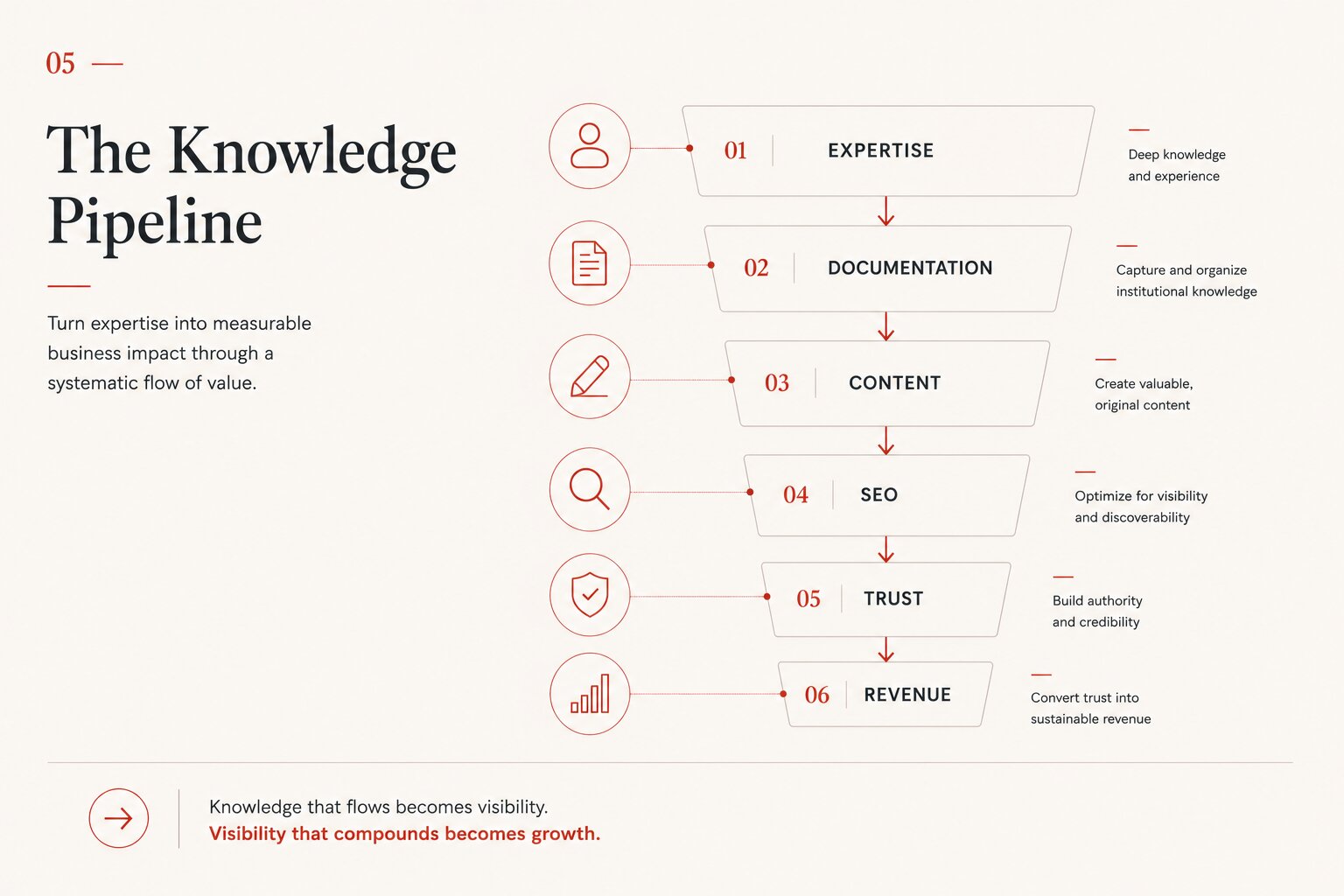
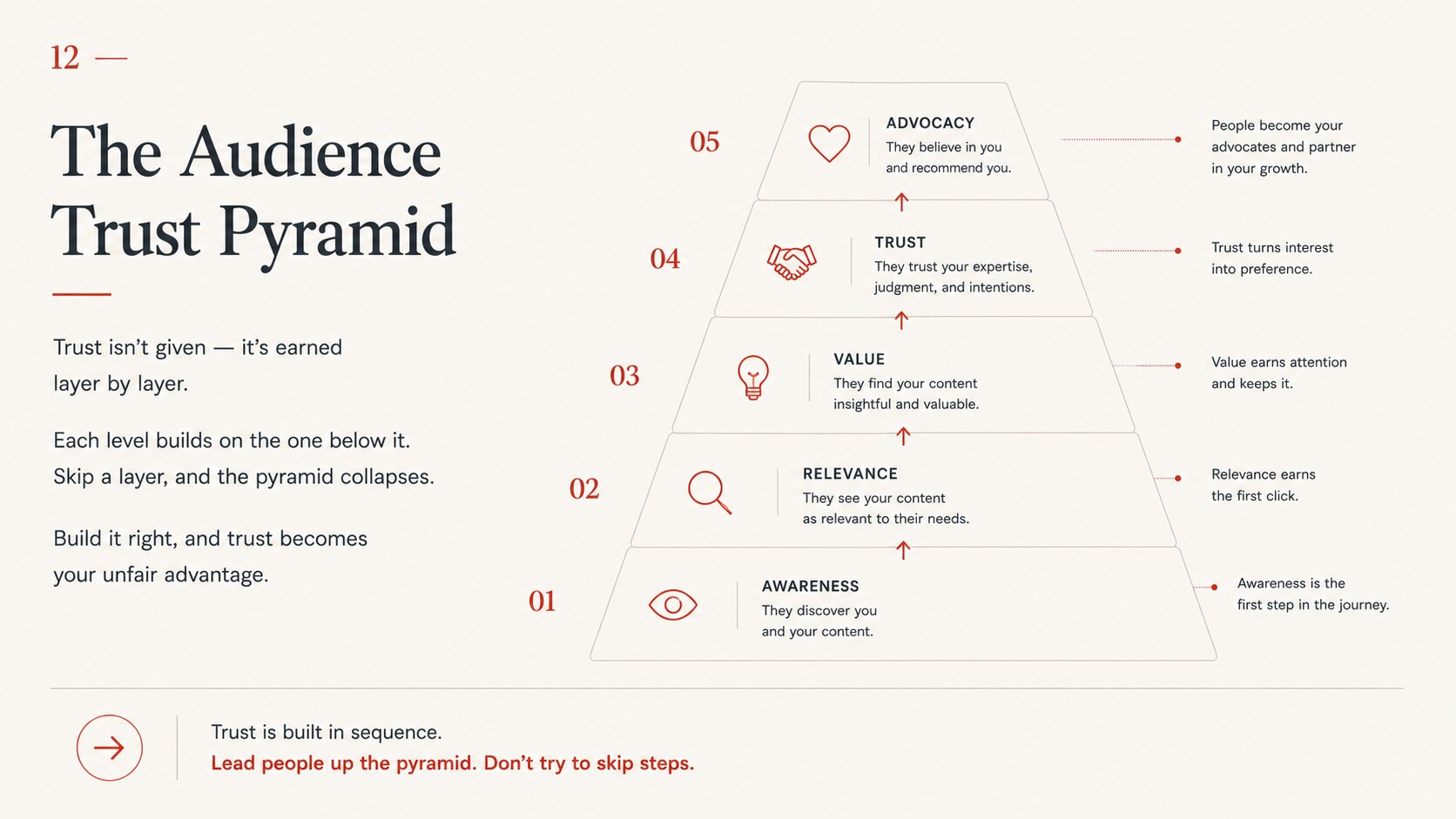
Many businesses underestimate what declining search visibility actually means. They assume losing rankings simply reduces website traffic. In reality, it changes customer behavior. If your business becomes difficult to discover during these research moments, opportunities disappear long before your sales team even knows they existed. Sometimes you lose customers not because they chose a competitor, but because they never discovered you in the first place. That may be the most expensive consequence of SEO debt: not lower rankings, but invisible opportunities.
We once worked with a business that had invested heavily in content, publishing consistently and at real volume. On paper, the activity looked strong. But nobody was watching Search Console or the sitemap closely enough to catch what was actually happening underneath: crawl errors quietly accumulating, pages slipping out of the index, technical issues piling up page by page. The company was doing more work than ever, and becoming less visible to search engines because of it. Once we diagnosed the gap and fixed the underlying sitemap and indexing issues, visibility recovered, but only after months of published effort had gone largely unseen. The lesson wasn't "publish less." It was that publishing without watching the technical side is a debt of its own, one that doesn't show up until you go looking for it. If your own link profile and technical foundation haven't been audited in a while, Link Building in 2026: Why It Still Matters and How to Do It Right is a good place to start.
CONTENT DEBT
3. Content Debt
Perhaps no form of Competitive Debt has accelerated more rapidly in recent years than Content Debt. Historically, producing high-quality content was expensive: research took time, writing required specialists, editing required multiple reviews. As a result, businesses naturally published less. That limitation no longer exists. The expectation, however, has changed. Customers now expect answers before conversations, educational resources before sales calls, transparent pricing guidance, implementation examples, comparisons, case studies.
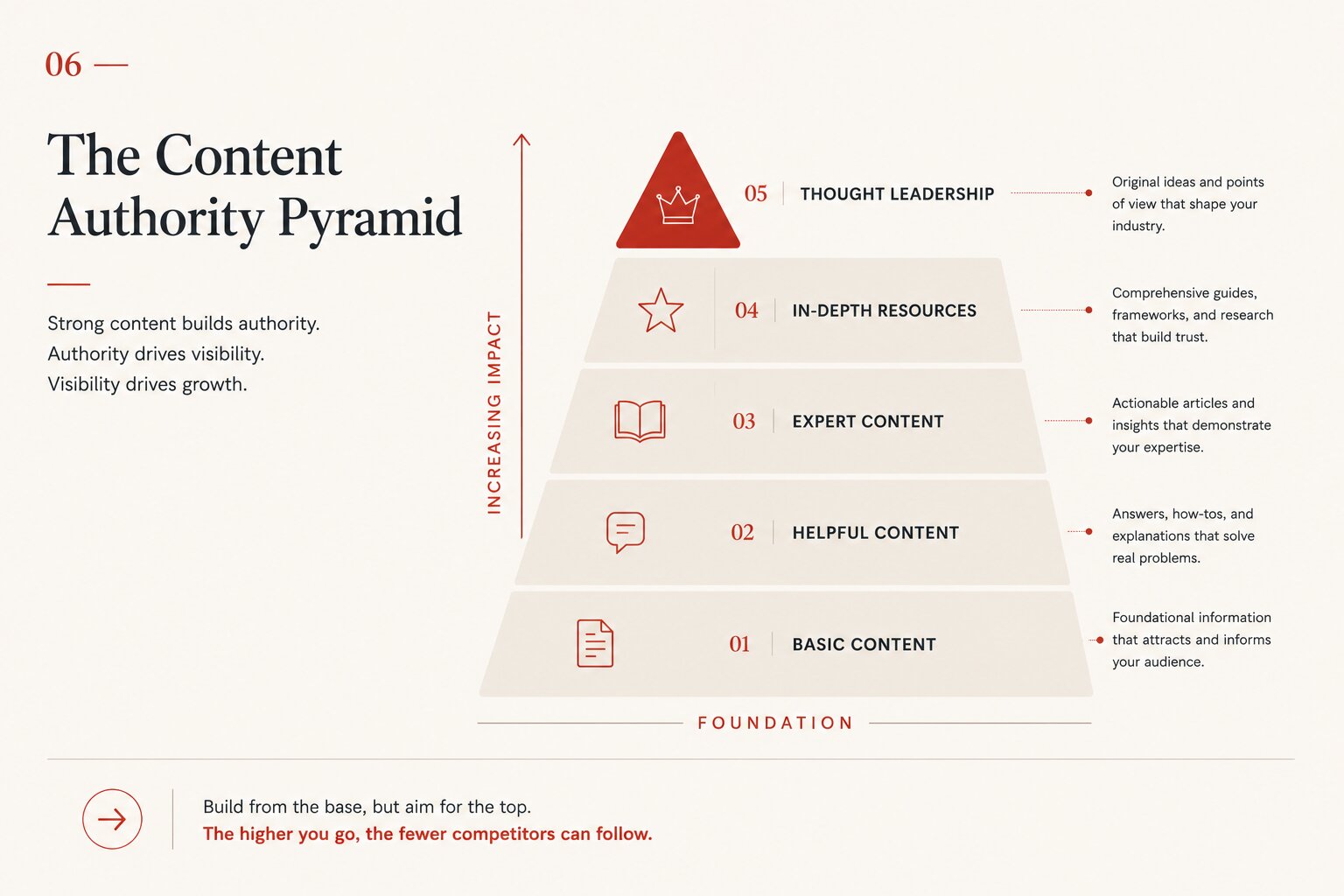
The companies providing these resources consistently become trusted long before the first meeting takes place. Those that remain silent often appear less knowledgeable, not because they know less, but because they share less. Content debt accumulates every time valuable expertise remains unpublished. Every unanswered customer question becomes an opportunity for a competitor to provide the answer instead. Every undocumented success story becomes invisible. Every internal best practice that never reaches the website remains inaccessible to both search engines and future customers. Knowledge creates value only when it becomes accessible. Until then, it remains an unrealized asset.
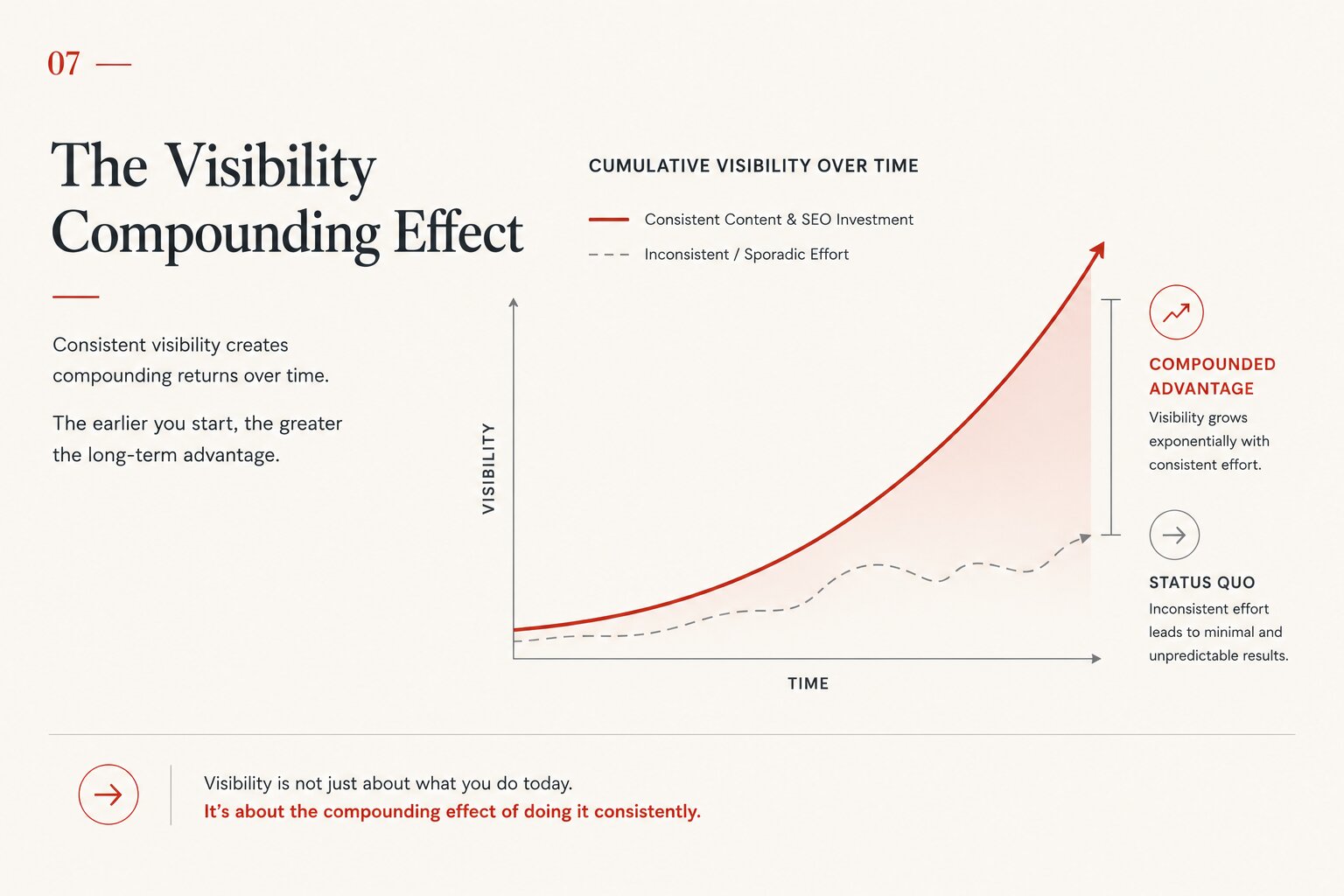
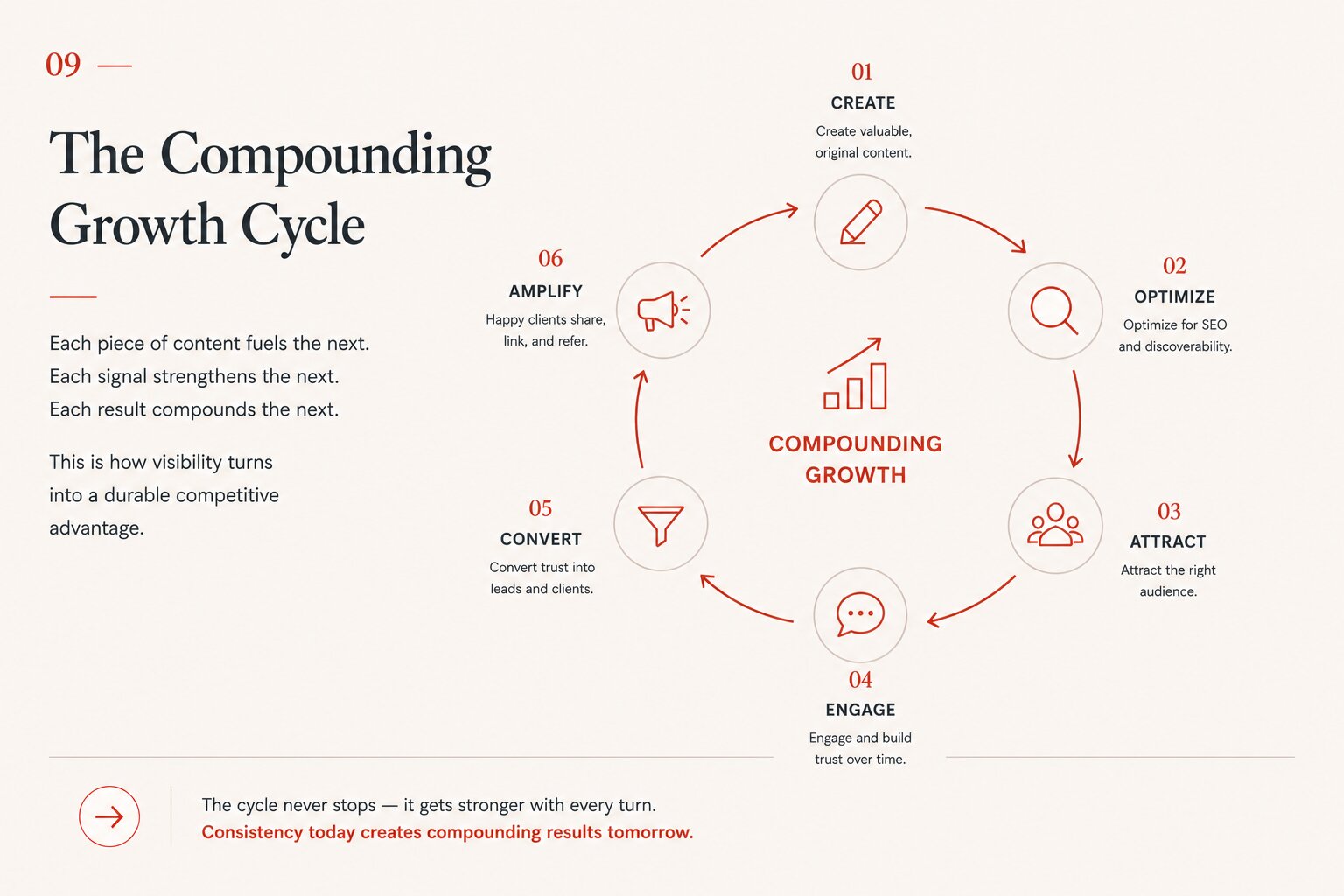
Consistent, small actions compound into a result no single campaign can match. A company that publishes one useful page a week isn't visibly different from a competitor after a month. After two years, it has built hundreds of entry points that competitor doesn't have.
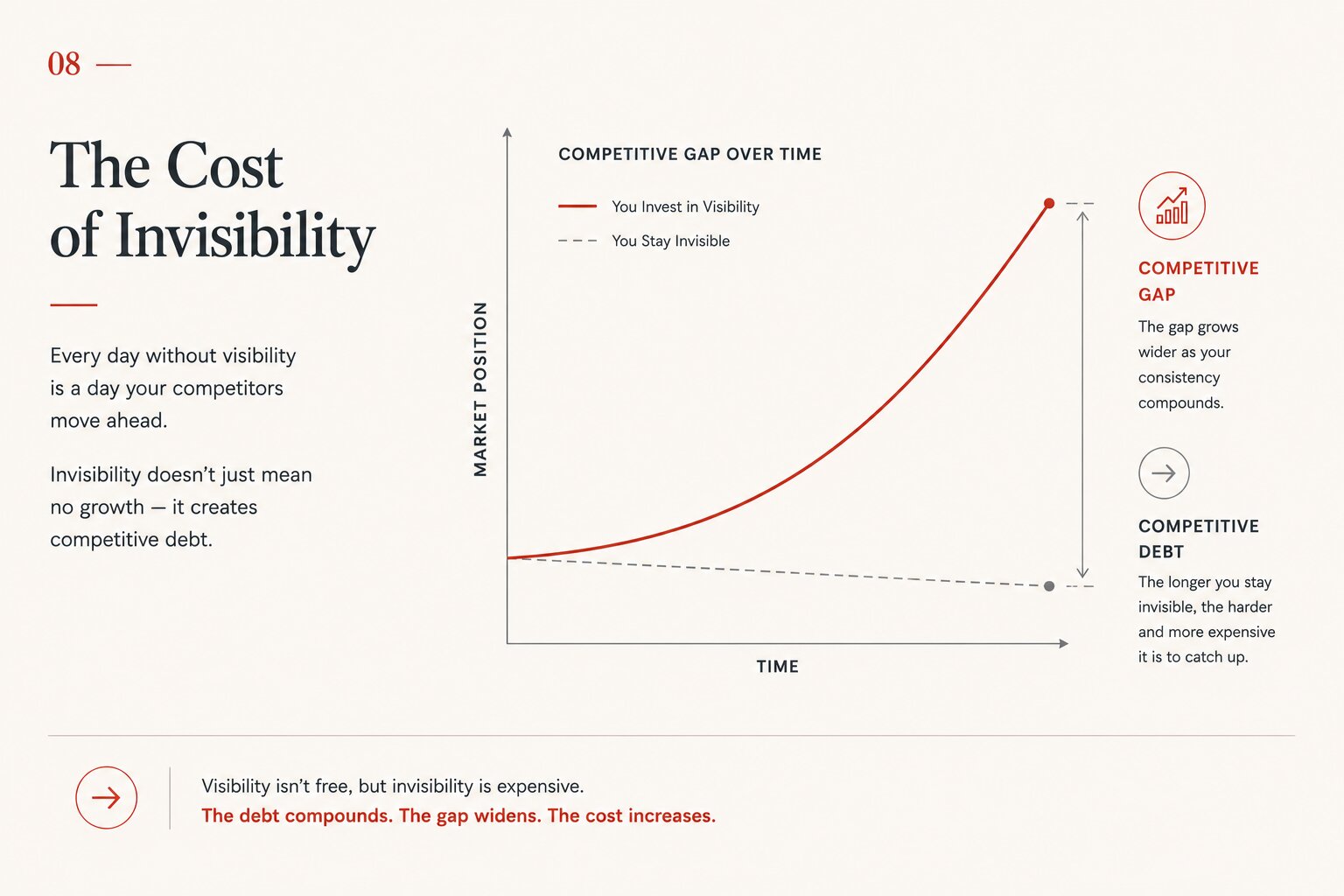
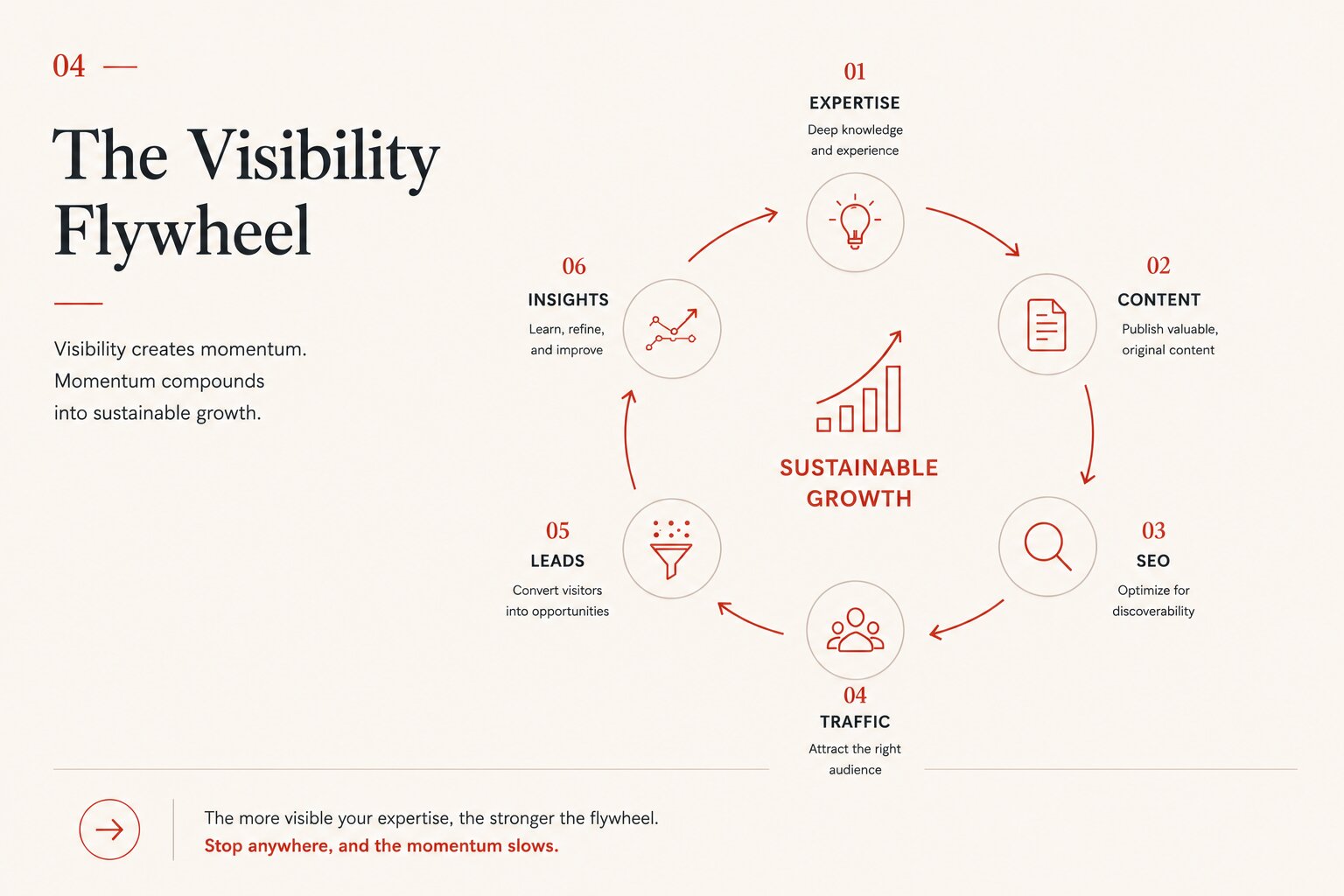
Content and SEO reinforce each other in a loop: useful content earns visibility, visibility earns traffic, traffic and engagement earn authority, authority makes the next piece of content perform better than the last. Businesses that treat content as a series of disconnected articles miss this. The value isn't any single piece. It's the system those pieces form together.
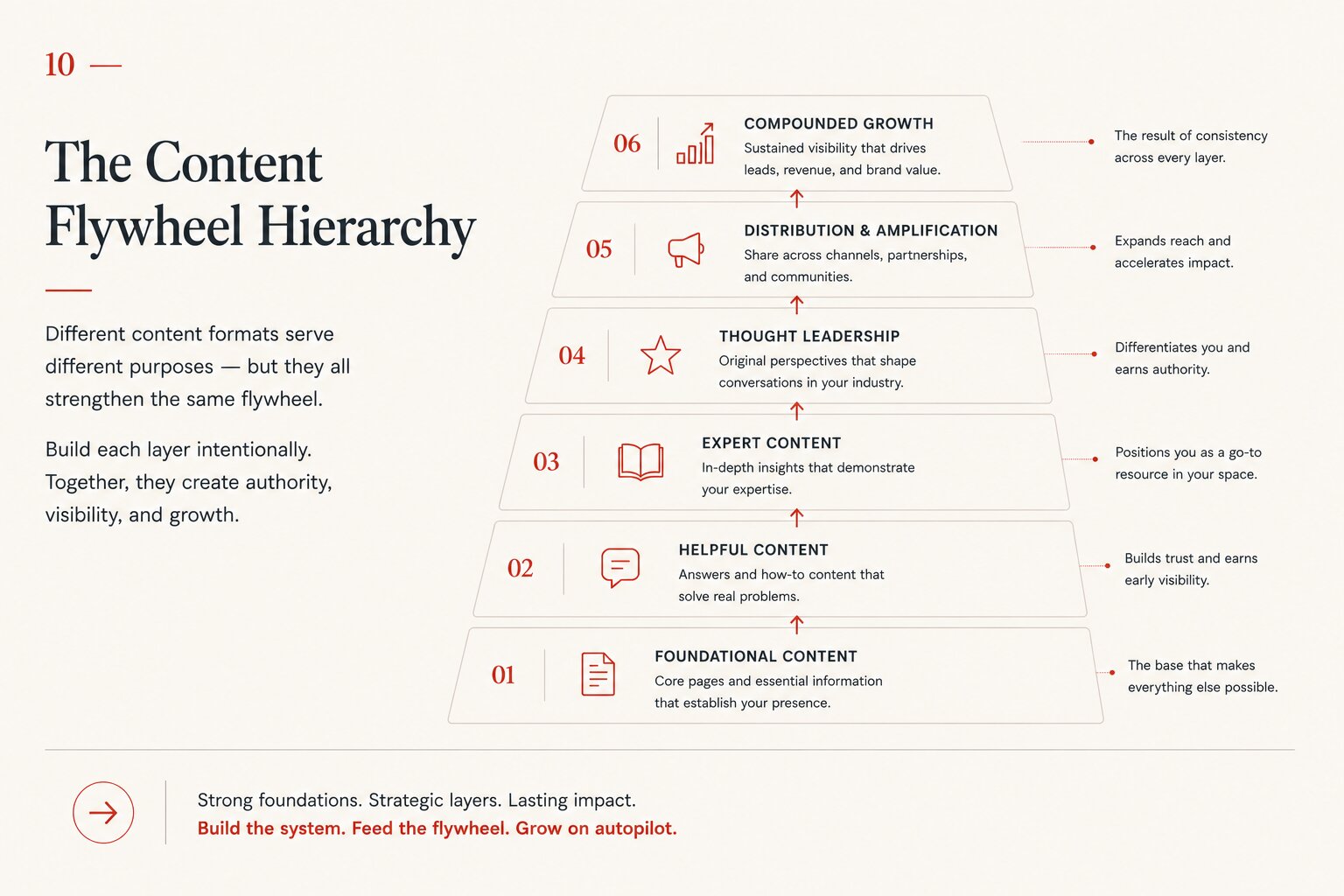
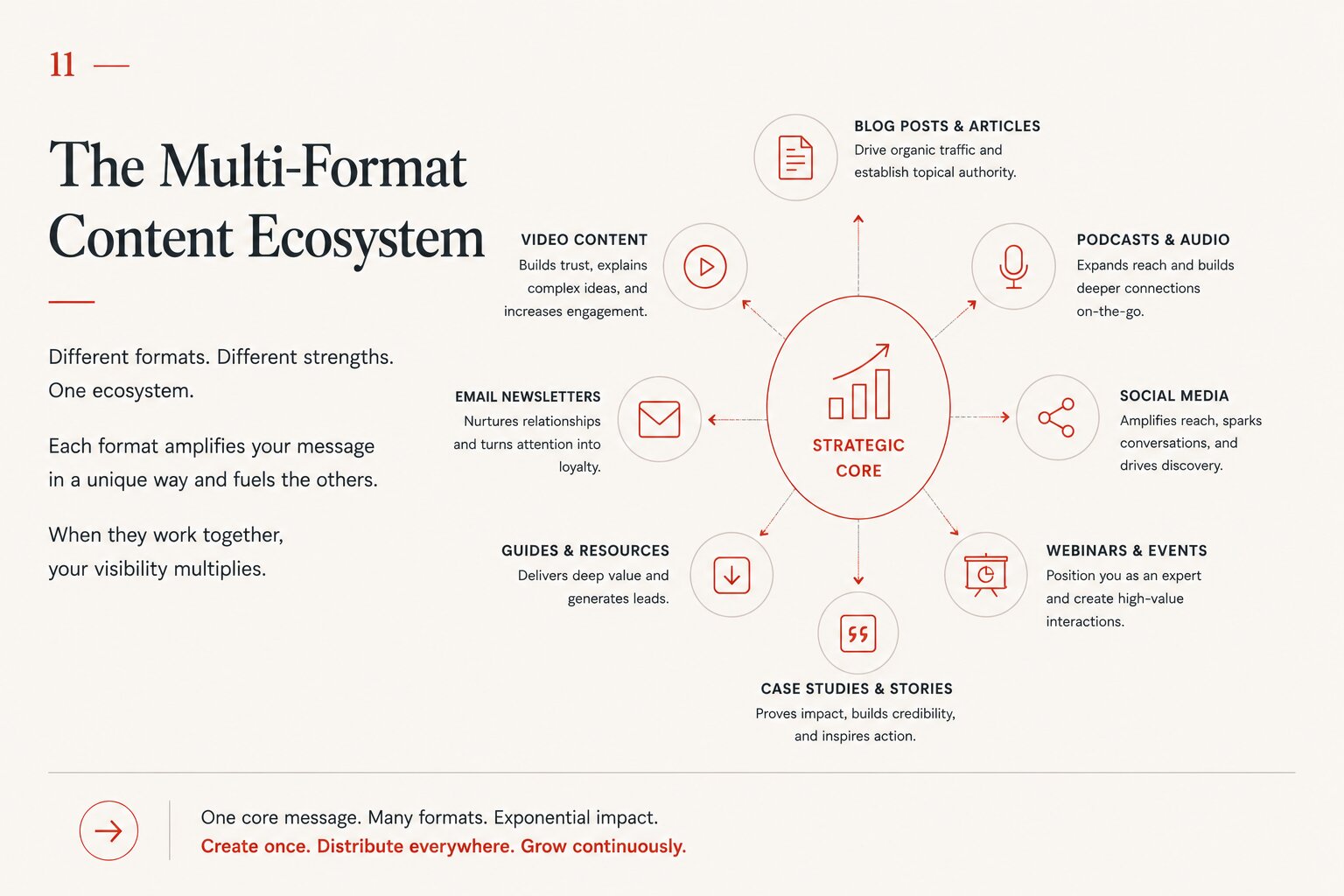
A mature content strategy doesn't rely on one format. Blog articles, case studies, service pages, comparison guides, and FAQs all answer different questions at different points in a buyer's research. Treated as a single ecosystem rather than a list of separate deliverables, they cover far more ground, and reinforce each other's search visibility along the way. For e-commerce specifically, this is exactly the gap we cover in Why Your E-Commerce Store Needs a Blog in 2026.
KNOWLEDGE DEBT
4. Knowledge Debt
Technical debt lives in code. Content debt lives in what never gets published. Knowledge debt lives somewhere less visible: inside the heads of the people who happen to still work at your company.
Every organization runs on decisions nobody wrote down. Why a particular integration works the way it does. Why a certain client always gets a specific exception. Why the pricing model has one strange rule that doesn't appear in any document. For as long as the person who made that decision stays, the knowledge is safe, even if it's invisible.
The problem isn't that people leave. People always leave. The problem is that most organizations only discover how much they depended on one person's memory after that person is already gone. Knowledge debt doesn't slow a business down while everyone is still there. It slows a business down exactly when speed matters most: during a hire, a departure, an audit, an outage, an urgent client request nobody currently at the company has handled before.
Unlike technical debt, knowledge debt is nearly free to prevent and expensive to repay. Writing down a decision the day it's made costs a few minutes. Reconstructing that same decision two years later, from scratch, after the person who made it is gone, can cost weeks.
In another project, the original development team was no longer available. There was no meaningful documentation explaining architectural decisions, integrations, or business logic. Every enhancement started with investigation. Every release required additional testing. Every new developer had to rediscover decisions that had already been made years earlier. The software itself remained operational. The organization's knowledge did not. This is the same underlying problem we explore in The Code Remembers Every Version of the Business, from the opposite direction: what a codebase quietly preserves, and what it doesn't.
AI DEBT
5. AI Debt
AI debt is the newest form of Competitive Debt, and the fastest-growing. It doesn't look like falling behind. It looks like staying exactly the same while the definition of "normal speed" moves underneath you. A team that used to publish four articles a month wasn't slow last year. This year, next to a competitor publishing twenty, it is.
AI debt accumulates in exactly the way earlier technology debts did: quietly, through reasonable-sounding decisions. "We're still evaluating AI tools." "Our team is trained the old way and it works." "We'll adopt this once it's more proven." Each sentence sounds careful. None of them is technically wrong. But every quarter spent waiting is a quarter competitors spend compounding a head start in workflows, in institutional comfort with the tools, in output per employee.
Several years ago, publishing expert content required substantial effort from subject matter experts, copywriters, editors, and SEO specialists. As a result, even highly knowledgeable companies published relatively little. Today, that limitation has largely disappeared. Organizations that integrate AI into their publishing workflows can transform internal expertise into educational content dramatically faster than before. The competitive consequence is significant: companies that consistently publish become increasingly visible, even if some competitors possess deeper expertise but publish very little. In digital markets, expertise that remains unpublished is difficult for customers, and search engines, to recognize.
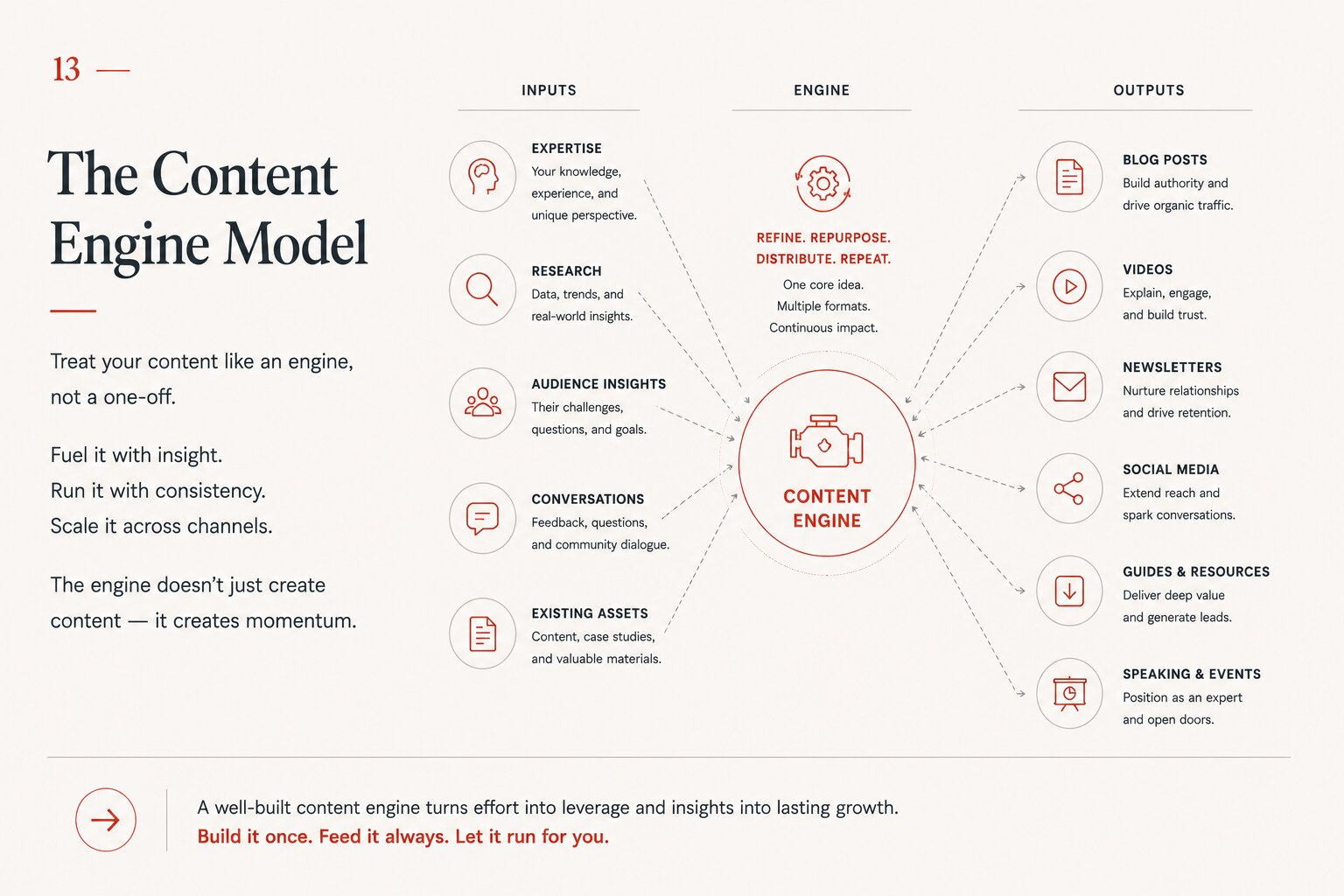
The organizations accumulating the least AI debt right now aren't necessarily the most technical. They're the ones treating AI adoption as a normal, ongoing part of how work gets done, the same way they'd treat a new piece of software or a new hire, rather than a special project waiting for a green light. The cost of AI debt isn't visible on any single day. It shows up later, as a gap in output per person that's hard to explain and even harder to close quickly.
Several years ago, publishing expert content required substantial effort. Today, organizations that integrate AI into their publishing workflows transform internal expertise into educational content dramatically faster than competitors still working the old way, without lowering the bar on what actually gets published. Speed only matters if trust survives it, a tension we dig into in Human-First Content Strategy: Why AI Content Is Losing the Trust War in 2026.
NEW ECONOMICS
From Competitive Debt to Competitive Advantage
By now, a pattern should be becoming clear. Technical debt slows development. SEO debt reduces discoverability. Content debt hides expertise. Knowledge debt weakens organizational resilience. AI debt widens the productivity gap between you and your competitors. Individually, each appears manageable. Together, they determine how quickly your organization can respond to change. And in modern markets, speed is no longer simply an operational advantage. It has become a strategic one.
The companies growing fastest today are not always those with the largest budgets, the biggest teams, or even the longest history. Increasingly, they are the organizations capable of learning faster, publishing faster, improving faster, and adapting faster. Competitive advantage is becoming a function of organizational velocity.
For decades, scaling a business usually meant adding resources: more employees, more managers, more agencies. Growth required proportional increases in cost. Artificial intelligence is beginning to change that equation. A marketing team that once published four major articles each month may now publish twenty. A software team can prototype ideas in days instead of weeks. None of this eliminates the need for skilled professionals. Instead, it increases the output of the professionals already inside the organization. The competitive question changes from "How many people do we have?" to "How effectively can our people create value?" That difference is enormous.
LEARNING SPEED
The Next Decade Will Reward Learning Speed
History shows that technology rarely destroys companies overnight. Instead, technology rewards organizations that adapt sooner. The internet did not eliminate traditional businesses, it rewarded businesses that learned digital commerce earlier. Cloud computing did not eliminate IT departments, it rewarded companies that modernized infrastructure sooner. Mobile devices did not eliminate desktop experiences, they rewarded businesses that redesigned customer journeys earlier.
Artificial intelligence is following the same pattern. Organizations waiting for certainty often discover that certainty arrives only after competitive advantages have already been distributed. By the time a technology feels completely safe, competitors have usually spent years learning how to use it. The question is no longer whether AI will change your industry. The question is how much competitive distance will exist by the time your organization fully embraces it.
AGING WELL
Building an Organization That Ages Well
Every company accumulates debt. That is unavoidable. The objective is not perfection. The objective is continuous renewal. Organizations that remain competitive over decades tend to share remarkably similar characteristics. They modernize before systems become critical. They document knowledge before people leave. They publish expertise before competitors answer the same questions. They invest in technology before it becomes an emergency. They experiment with emerging tools before customers begin demanding them.
Most importantly, they build processes that make adaptation normal rather than exceptional. Adaptation should not require a crisis. It should become part of how the organization operates.
THE FRAMEWORK
A Practical Framework for Reducing Competitive Debt
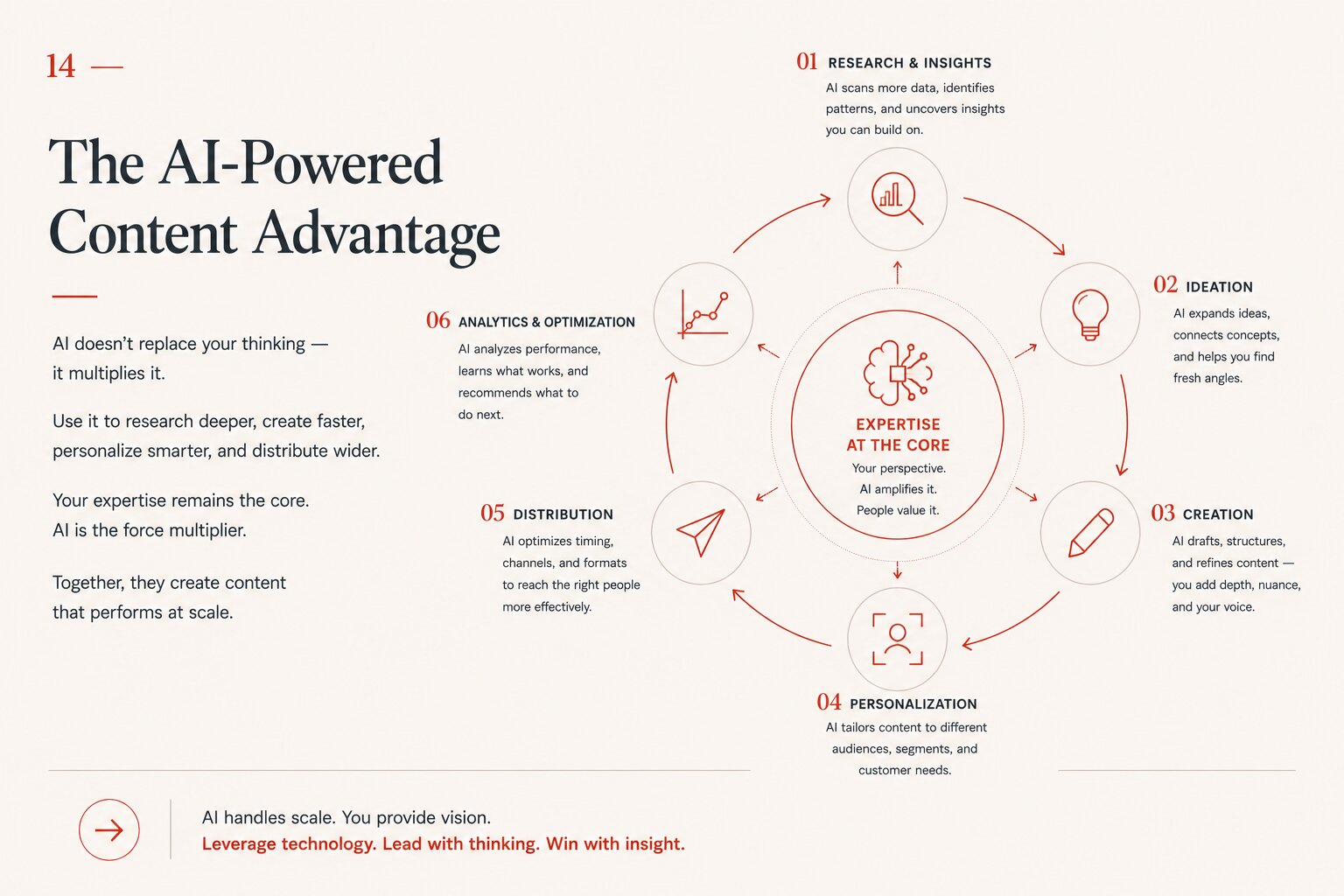
Competitive Debt cannot be eliminated through a single redesign or technology project. It requires continuous attention across the organization. Leaders should regularly ask questions that extend beyond traditional performance metrics.
Technology. Can new features still be delivered efficiently? Are software updates routine or disruptive? Do outdated systems limit business decisions?
Visibility. Are customers finding us before they find our competitors? Are we continuously expanding our digital footprint? Does our content answer the questions customers ask today, not two years ago?
Knowledge. If a key employee left tomorrow, what critical knowledge would disappear? How much organizational expertise exists only inside people's heads? Are important decisions documented?
Artificial Intelligence. Where are our competitors becoming faster? Which repetitive activities could be augmented by AI? How quickly can our organization convert expertise into reusable assets?
These are no longer technology questions. They are leadership questions.
COMPOUNDING ASSETS
Digital Assets Are Compounding Assets
Factories depreciate. Vehicles depreciate. Equipment depreciates. Well-managed digital assets behave differently. Every useful article continues attracting visitors. Every documented process accelerates future work. Every case study builds long-term credibility. Every improvement to software becomes the foundation for future improvements. Unlike many traditional assets, digital assets often become more valuable when they are maintained consistently.
That is why organizations should stop thinking of websites as projects. A website is not a brochure. It is an operating system for trust. It is where expertise becomes discoverable, where credibility becomes measurable, where customer relationships often begin. Treating it as a one-time project is like treating customer relationships as a one-time event. The value comes from continuous investment. If the real issue underneath your Competitive Debt is structural rather than cosmetic, Most Companies Don't Need a New Website. They Need a New Structure covers how to tell the difference.
THINK DIFFERENTLY
The Organizations That Win Will Think Differently
The next generation of successful companies will likely share one characteristic above all others: they will not separate technology from business strategy. Technology will no longer be viewed as a support function. Neither will AI, content, or SEO. These disciplines are increasingly interconnected. Technology enables better products. Better products generate better stories. Better stories create stronger visibility. Greater visibility attracts better customers. Better customers generate more knowledge. Knowledge strengthens AI. AI accelerates execution. Execution creates better products. The cycle repeats.
Competitive advantage is no longer built through isolated initiatives. It is built through connected systems.
FINAL THOUGHTS
Final Thoughts
Most companies don't lose because they make one catastrophic mistake. They lose because they underestimate the cumulative effect of hundreds of small decisions. One postponed software update. One undocumented process. One year without publishing. One more quarter spent observing AI instead of learning it. Each decision feels insignificant. None appears capable of changing the future of the business. Until they all do.
The companies leading their industries five years from now may not be the largest. They may not have the biggest budgets. But they will almost certainly share something else: they will adapt continuously, publish consistently, modernize proactively, preserve organizational knowledge, and embrace technologies that increase the capabilities of their people rather than waiting for perfect certainty.
Competitive advantage has never been static. Today, it is becoming increasingly dynamic. Businesses no longer compete only on products, price, or expertise. They compete on their ability to learn, improve, and make their knowledge visible faster than everyone else.
The future will not belong to the organizations that simply possess expertise. It will belong to those that continuously transform expertise into products, systems, relationships, and digital assets that customers can discover, trust, and act upon.
About Peretz Agency. We believe websites, software, AI, and digital marketing are not independent services, they are interconnected systems that shape how businesses compete. We don't simply build websites or develop software. We help organizations design digital ecosystems that remain competitive as technology, customer expectations, and markets continue to evolve. Because in the end, businesses rarely fail because they stop working. They fail because they stop evolving.
Author: Yevhen Borovoi, Founder at Peretz Agency.
We looked more closely at how this plays out specifically during website redesigns in The Hidden Technical Debt That Makes Website Redesigns More Expensive Than Planned.
On the technical side, standing still has a very concrete form: an old Laravel or PHP site that keeps working while the road around it disappears. We explored it in Upgrading an Old Laravel or PHP Site in 2026.
Not sure how much Competitive Debt your business has actually accumulated, across technology, visibility, content, knowledge, or AI adoption? A Strategic Session gives you a straight audit across all five, not just the one that happens to be loudest right now.
- Share
-

-

-

-

One notification a week with the new PERETZ articles. Nothing else.
Related Reading
-
15. 07. 2026
Everything You Build Starts Aging the Day You Finish It

-
14. 02. 2021
Link Building in 2026: Why It Still Matters and How to Do It Right
-
20. 12. 2020
Why Your E-Commerce Store Needs a Blog in 2026 — And How to Start One That Actually Works
-
17. 07. 2026

The Code Remembers Every Version of the Business
-
07. 07. 2026
Human-First Content Strategy: Why AI Content Is Losing the Trust War in 2026
-
20. 07. 2026

Most Companies Don't Need a New Website. They Need a New Structure.
-
31. 07. 2026

We Design for Reality, Not for Ideal Scenarios
-
05. 08. 2026

Your Business Doesn't Go Live. It Comes Alive.
-
26. 08. 2026

The Hidden Technical Debt That Makes Website Redesigns More Expensive Than Planned
-
29. 09. 2026
Upgrading an Old Laravel or PHP Site in 2026