Most Companies Don't Need a New Website. They Need a New Structure.
Paint a broken structure and you get a prettier version of the same problem. Why most redesigns fail before design starts.


THE WRONG STARTING QUESTION
A company comes to us and says: our website looks outdated, let's redesign it.
Nine times out of ten, we look closer and find something else. The visual design isn't really the problem. The structure underneath it is. And a redesign that repaints an unclear structure just produces a better-looking version of the same confusion.
This isn't a rare pattern. Roughly 81% of businesses that start a redesign project do it because their existing site isn't converting visitors into customers, according to industry data compiled by Sagapixel in 2026. The instinct is almost always the same: the site looks tired, so let's make it look current. But looking tired and being structurally unclear are two different diagnoses, and only one of them gets fixed by new visuals.
WHAT WE MEAN BY STRUCTURE
Not the color palette. Not the font. Structure is how information is actually organized: which pages exist, why they exist, what order someone encounters them in, whether the site tells them what to do next or just displays things at them.
A site can look current and still have structure from five years ago. A homepage that says “We create websites” when the business has quietly become something closer to “we diagnose, then build, then stay.” A services page where the thing you most want people to book isn't even listed as an option near the top. A blog with fourteen categories, three of which have one article each. Navigation built for a company that existed two reorganizations ago.
None of that shows up as “the site looks bad.” It shows up as visitors leaving without doing the thing you actually wanted them to do, and nobody being quite sure why.
Forrester Research has found that a seamless user experience can lift conversion rates by as much as 400%. That number rarely comes from a better-looking button. It comes from someone finally being able to find what they came for.
This is where a lot of redesign budgets quietly underperform. A B2B software company profiled in a 2026 industry review invested heavily in a full visual redesign with a well-regarded agency. New look, strong visual identity, real craft behind it. Six months after launch, lead volume hadn't moved. The site had the same positioning, the same proof points, and the same call-to-action logic as the version it replaced, just presented better. The surface changed. The substance didn't. When the same company later rebuilt the site's messaging, proof structure, and user journey instead of its visuals, qualified lead volume moved 34% within a single quarter. The lesson wasn't that design doesn't matter. It's that design was never the bottleneck in the first place.
There's a version of this that shows up constantly in e-commerce specifically. A store adds a new product line, electric bikes alongside regular bicycles, say, or a services company adds a new offering that doesn't fit any existing category. The easy move is to drop the new thing into the nearest existing category and move on. Six months later, the category makes sense to nobody, least of all the customer trying to compare two products that were never meant to sit next to each other. The redesign instinct at that point is usually “let's make the category page look nicer.” The actual fix is almost always “let's figure out what the categories should be now, given what the business actually sells today,” which is a structural question a new template can't answer on its own.
WE'RE GOING THROUGH THIS OURSELVES RIGHT NOW
We don't think about this from the outside. Peretz's own site has needed real structural work, not cosmetic work, and we're in the middle of it as this article is being written.
Our homepage used to say “We are creating.” Simple, and not wrong, but it described what we do, not how we actually work with clients. It didn't mention that most engagements start with diagnosis, not a build decision. So the line changed to “We Diagnose. We Build. We Stay.” Three words instead of two, but it forced us to rewrite the paragraphs underneath it too, because the old copy was written to justify the old line, not the new one.
Our services page listed Strategic Session, arguably the most important entry point for a new client, somewhere in the middle of a longer list, and it wasn't shown on the homepage at all. That wasn't a visual problem. Nobody needed a prettier list. The list needed a different order, and one particular item needed to exist on the homepage in the first place.
Our blog had category imbalance that had built up quietly over years: some categories thin, one piece of copy duplicated across languages with a mismatched translation nobody had caught, a filter option on the portfolio page that technically existed but rendered with no visible label because of a duplicate database row nobody remembered creating.
None of these were design problems. Every one of them was a structural problem wearing a “the site looks old” costume.
RESTRUCTURING ISN'T A MENU CHANGE
One thing worth saying plainly, so nobody reading this walks away with the wrong expectation: real structural work cascades. Move where the Strategic Session sits, and the homepage layout changes. Change what a category means, and every template that displays it needs to change with it. Restructuring isn't a task you do in isolation. It pulls design, layout blocks, templates, and content along with it, because all of those were built to serve the old structure.
That cascade is manageable when you're working with a system built to bend. It's a genuinely different problem inside an existing CMS that wasn't architected for this kind of change. Our own platform runs on compiled front-end assets we can't recompile directly on the server, there's no Node.js available there, so certain structural changes mean working around the compiled output rather than through it. CSS gets appended, never rewritten in place, because touching a shared stylesheet risks breaking pages nobody's currently thinking about. A single shared header template used across the whole site means one bad edit can take the entire site down. We hit that exact failure this year: a shared file edit referenced a class that didn't exist, the site returned a server error within a minute, and we reverted immediately rather than debugging forward under pressure. That's a real risk that doesn't exist in the same way with a custom-built system designed around the current structure from day one.
None of that is a reason to avoid restructuring. It's a reason to be honest about what it actually costs, and to plan for it as real engineering work, not a weekend of moving buttons around.
STRUCTURE AGES EVERYWHERE
The same thing happens in software.
A Python application built on Python 3.8 may continue working for years. Nothing “breaks” overnight. Python 3.8 reached its official end-of-life on October 31, 2024, no security patches, no bug fixes, no CVE remediation from that date forward, and it had been the default Python on Ubuntu 20.04 LTS, meaning any server still quietly running that combination is running two unsupported components at once. Eventually the language reaches end-of-life, security updates stop, libraries move forward, and hiring developers who still work comfortably with that version becomes increasingly difficult.
The software didn't fail. Its ecosystem moved on.
PHP tells the same story. PHP 7.4 has received no security fixes since November 2022. PHP 8.0 followed in November 2023. PHP 8.1 reached its own end-of-life on December 31, 2025. Any of those versions can still run a website today, visibly, functionally, without a single error on the page, while quietly accumulating known, unpatched vulnerabilities the moment a new one is disclosed.
Front-end tooling ages the same way, often more invisibly. Bootstrap 3 reached end-of-life in July 2019. Bootstrap 4 followed on December 31, 2022. Both versions depend on jQuery to power their interactive components, and any jQuery build older than 3.5.0 carries a documented cross-site scripting vulnerability. A site can be running Bootstrap 3 and an old jQuery build today, look completely normal to every visitor, and still be carrying two stacked, unpatched dependencies at once. This isn't a hypothetical. It's common enough that OpenCart, one of the most widely used open-source e-commerce platforms, has shipped recent default installations with jQuery 2.1.1 and Bootstrap 3.3.5 baked in, years past end-of-life on both, simply because upgrading them without breaking existing themes and extensions is its own significant project.
Exactly the same thing happens to websites. Navigation, content structure, user journeys, and business positioning rarely become wrong overnight. They simply stop matching the environment around them.
That's why modernization isn't always about replacing everything. Sometimes it's about moving the structure forward before the surrounding ecosystem leaves it behind.
“WE LAUNCHED” IS NOT THE FINISH LINE PEOPLE THINK IT IS
There's a specific moment that trips up almost every client, and honestly, almost every agency too. The site launches. Everyone exhales. The natural assumption is: that's done now.
It isn't. It's closer to the opposite of done.
The launch is when the site starts actually meeting reality: integrations that seemed fine in a sandbox now touch real customer data and real edge cases nobody tested for. Analytics start accumulating, and within weeks they're telling you things the original structure never accounted for, which pages people actually use, which ones they land on and immediately leave, which button nobody has clicked once. A/B tests run against the live structure surface assumptions that felt obvious in planning and turn out to be wrong in practice.
All of that is new information arriving after launch, not before it. A site treated as finished the day it goes live is a site that stops listening to exactly the data that would tell you what to fix next. Industry benchmarking on strategy-led redesigns backs this up directly: sites that keep iterating after launch, rather than treating launch as the finish line, show a markedly different return curve than sites that don't. One 2026 analysis of strategy-led rebuilds found conversion improvements compounding well past the first month, still climbing at the six-month mark, roughly 32% higher than launch-day levels, purely from acting on post-launch data rather than walking away once the site went live.
We felt this ourselves, directly, this year. Analytics from our first fully-tracked month surfaced things the original site structure never anticipated: a conversion tracking discrepancy nobody would have caught by looking at the design, bot traffic patterns that only became visible once real data existed to look at. None of that was visible before launch. All of it changed what we did next.
The teams that get real, compounding value from a website aren't the ones who launched and stopped. They're the ones who treated launch as the point where real information finally started arriving.
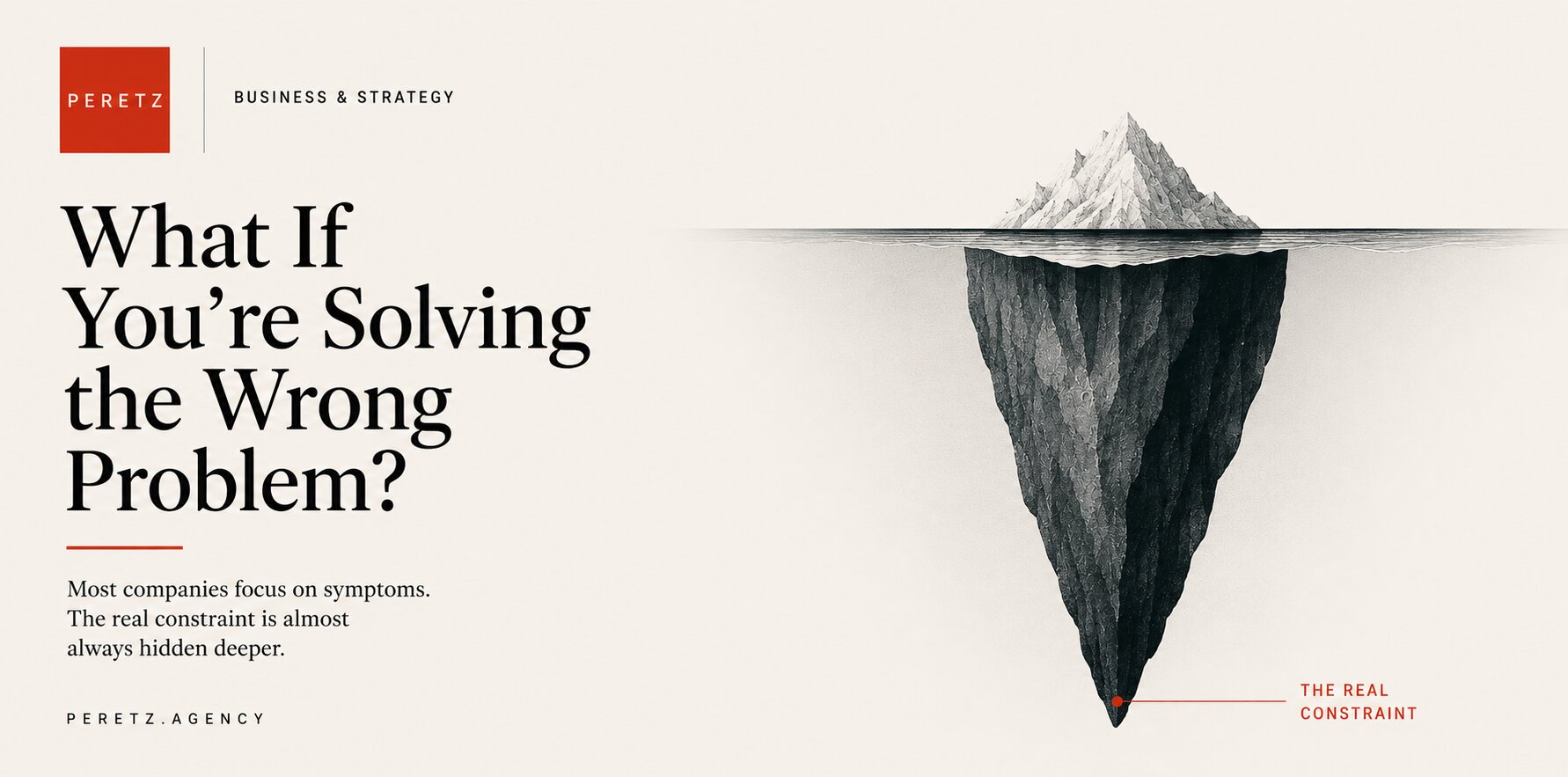
This is the same diagnostic instinct we wrote about more broadly in What If You're Solving the Wrong Problem? A new coat of paint rarely fixes a structural issue.
HOW TO TELL WHICH ONE YOU ACTUALLY HAVE
Ask what a new visitor is supposed to do after landing on your homepage, then check whether the page actually leads them there, or just describes you. Ask whether your most important service is your most visible one, or just one entry in a long list. Ask whether your navigation reflects how the business works today, or how it worked when the site was last touched. Ask whether your content categories reflect real depth, or just accumulated history nobody's cleaned up.
If the honest answer to most of these is “we're not sure,” a redesign won't fix it. It'll just make the same structure look more expensive.
There's a rough industry pattern worth knowing here too: most business websites get redesigned somewhere between every eighteen months and two and a half years, largely on a visual-refresh cycle rather than a structural one. That cadence makes sense for keeping a site looking current. It has almost nothing to do with whether the underlying structure still matches the business. A company can refresh its visuals twice and still be running navigation and page hierarchy built for a version of the business that no longer exists.
A useful, slightly uncomfortable exercise: pull up your own site's analytics and look at which pages people actually spend time on versus which ones you assumed mattered when the navigation was built. The gap between those two lists is usually where the structural problem lives. It's rarely subtle once you're looking directly at it. It's just rarely looked at directly, because a redesign proposal is a much easier conversation to have than “we don't actually know why our own navigation is organized this way.”
WHAT WE ACTUALLY DO FIRST
Before we propose a new design, we map the existing structure: every page, why it exists, what it's actually accomplishing versus what it was supposed to accomplish. Most of the time, that map is more useful to a client than any mockup, because it's the first time anyone's actually seen the whole thing laid out at once, instead of experienced one page at a time.
Sometimes the conclusion is: yes, redesign it, the structure is sound, the execution is dated. Often the conclusion is closer to what we found in our own site: the bones need to move before the paint matters.
A redesign changes how the site looks. A restructure changes whether it works. Most companies asking for the first one are actually looking for the second.
Once you know which one you actually need, there's a follow-up question worth asking: what does good design actually do, once the structure underneath it is right?
We wrote more about the technical debt that gets exposed during a redesign in The Hidden Technical Debt That Makes Website Redesigns More Expensive Than Planned.
If you've reached the point where you're wondering whether your company needs a redesign or a restructuring, don't start by choosing a new color palette.
Start by understanding what your current website is actually doing, and what it isn't.
That's exactly why every project at Peretz begins with a Strategic Session. Before discussing design, technology, or development, we map the existing structure, identify where the business has outgrown it, and determine whether the right next step is optimization, restructuring, or a complete rebuild.
Sometimes the answer is a redesign. Sometimes it's not. The important thing is making the decision for the right reason. If a rebuild does turn out to be the answer, Custom Website vs Website Builder: What Should a Business Choose? is the next question worth asking before picking a platform.
Already know the structure is sound and it's the execution that needs work? If the structure itself is WordPress specifically, When Does a Business Outgrow WordPress? covers the signals worth checking first.
LavShash needed restructuring more than a redesign, a real example of this exact pattern.
See the fuller architecture thesis, with real cases, in the software should fit the business.
- Share
-

-

-

-

One notification a week with the new PERETZ articles. Nothing else.
Related Reading
-
15. 07. 2026
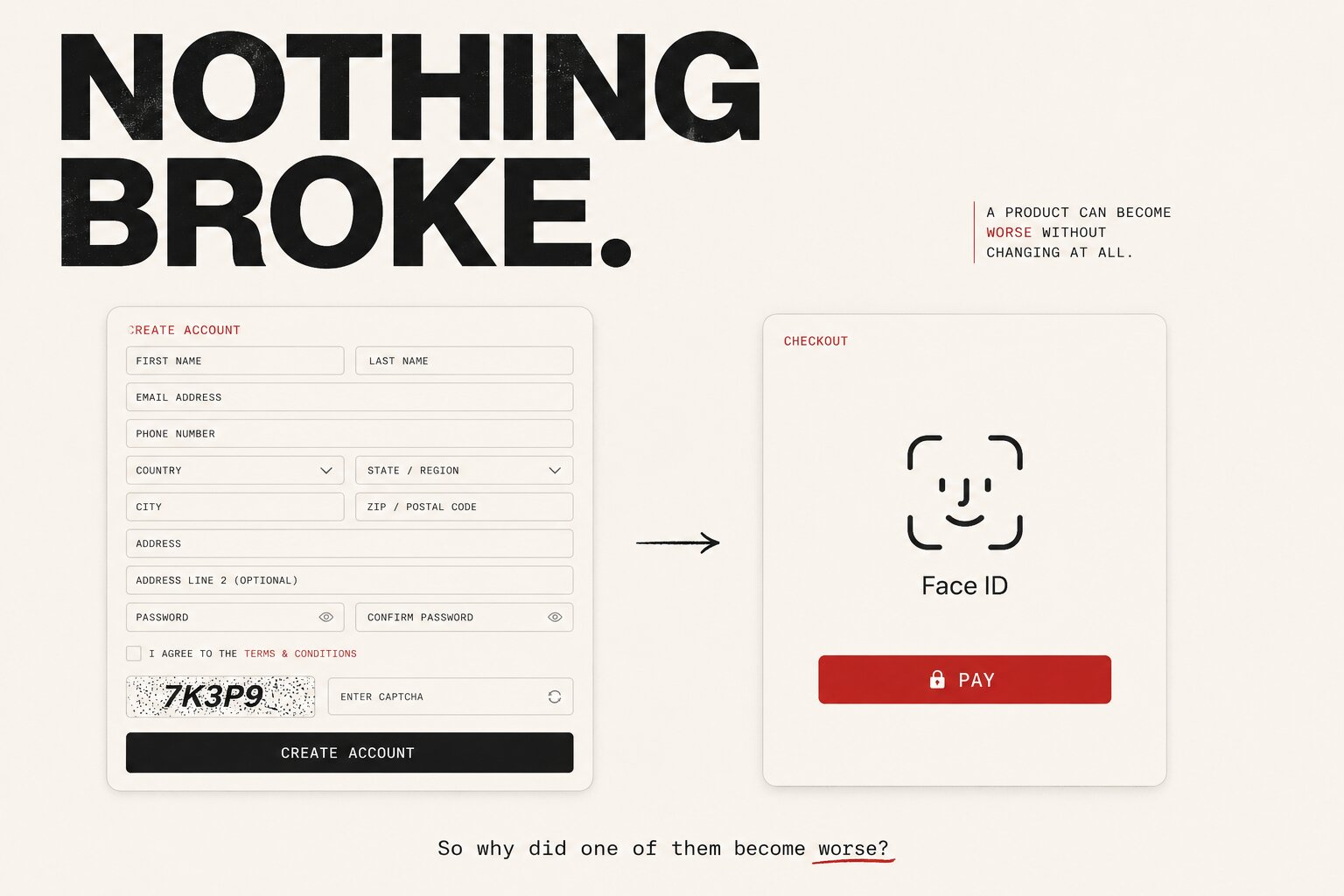
Everything You Build Starts Aging the Day You Finish It

-
17. 07. 2026
The Code Remembers Every Version of the Business
-
17. 07. 2026
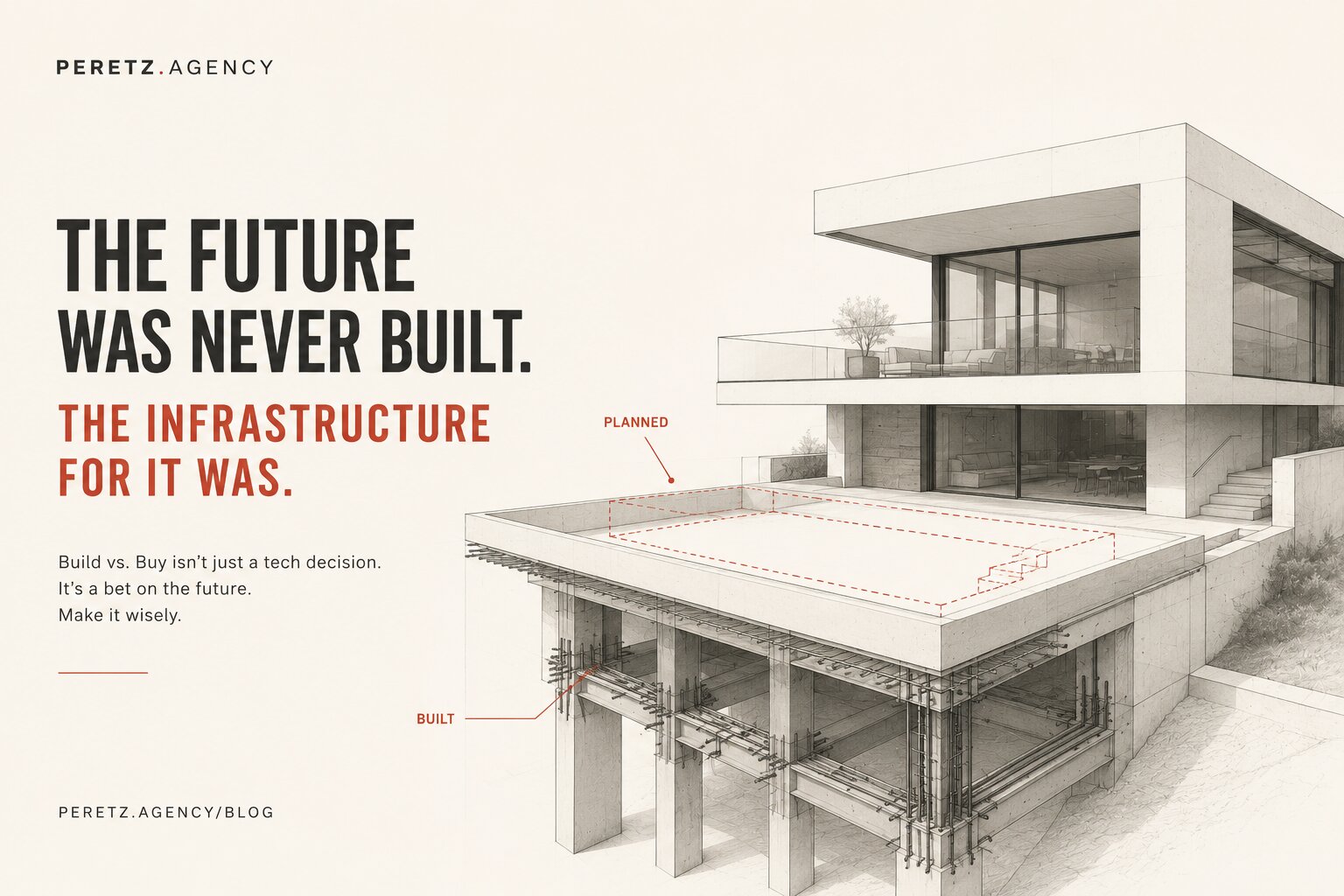
The Build vs. Buy Equation Has Changed. Most Companies Have Not Recalculated It.
-
20. 07. 2026
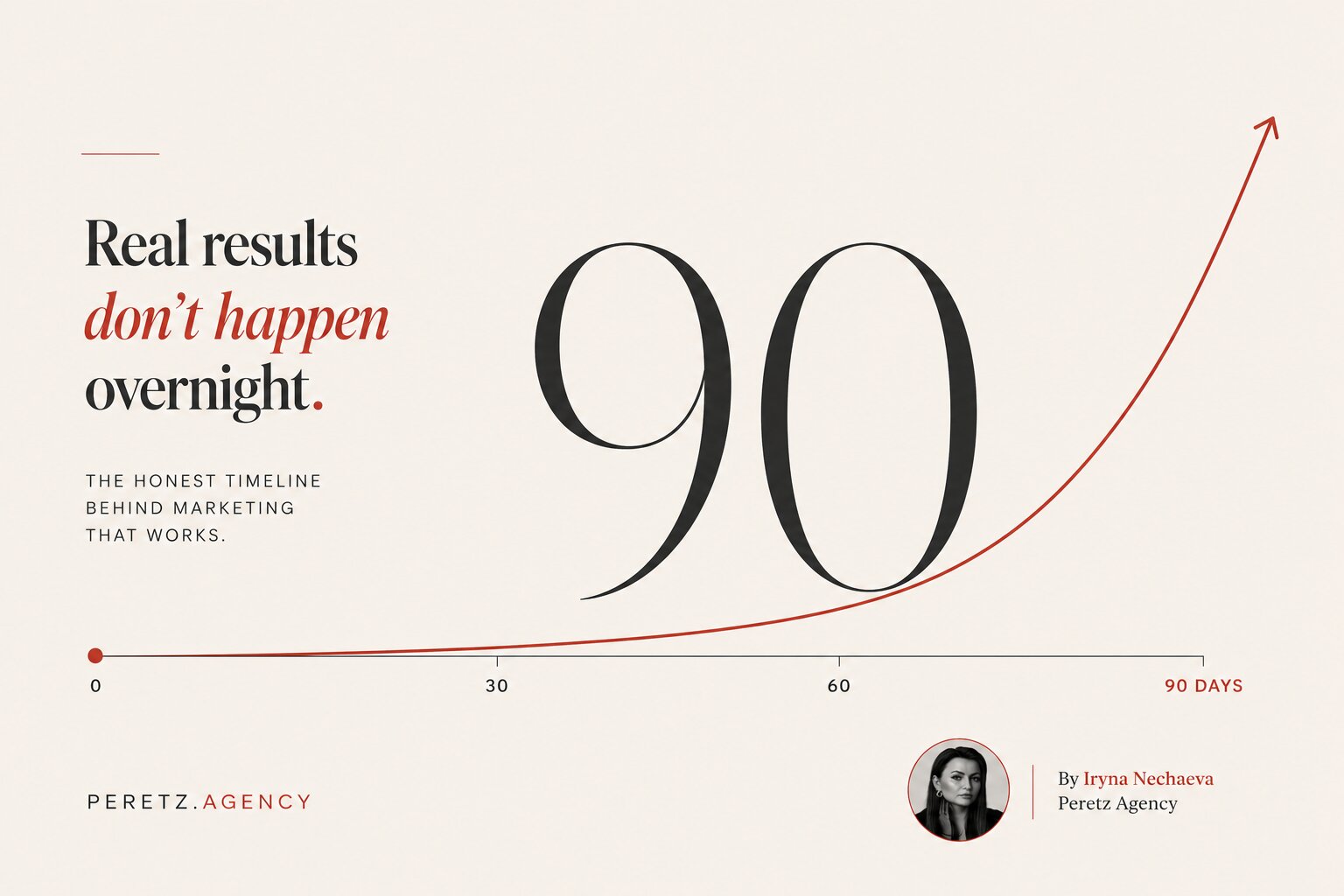
How Long Does It Take to See Marketing Results? Why Agencies Promising Faster Are Lying to You
-
21. 07. 2026
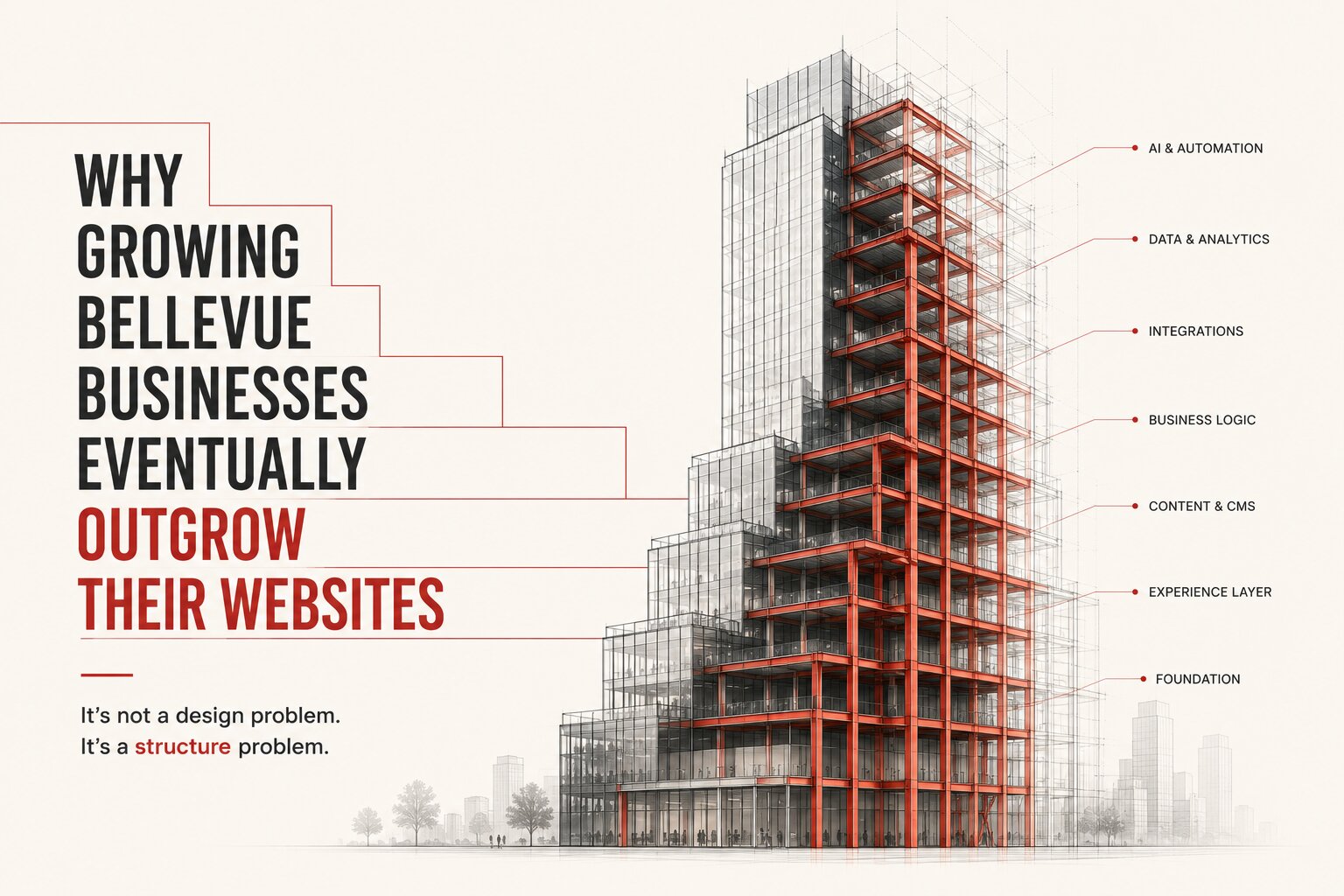
Why Growing Bellevue Businesses Eventually Outgrow Their Websites
-
29. 07. 2026

The Hidden Cost of Standing Still: Why Modern Businesses Lose Competitive Advantage Long Before They Notice
-
05. 08. 2026

Your Business Doesn't Go Live. It Comes Alive.
-
23. 08. 2026

Custom Website vs Website Builder: What Should a Business Choose?
-
23. 08. 2026
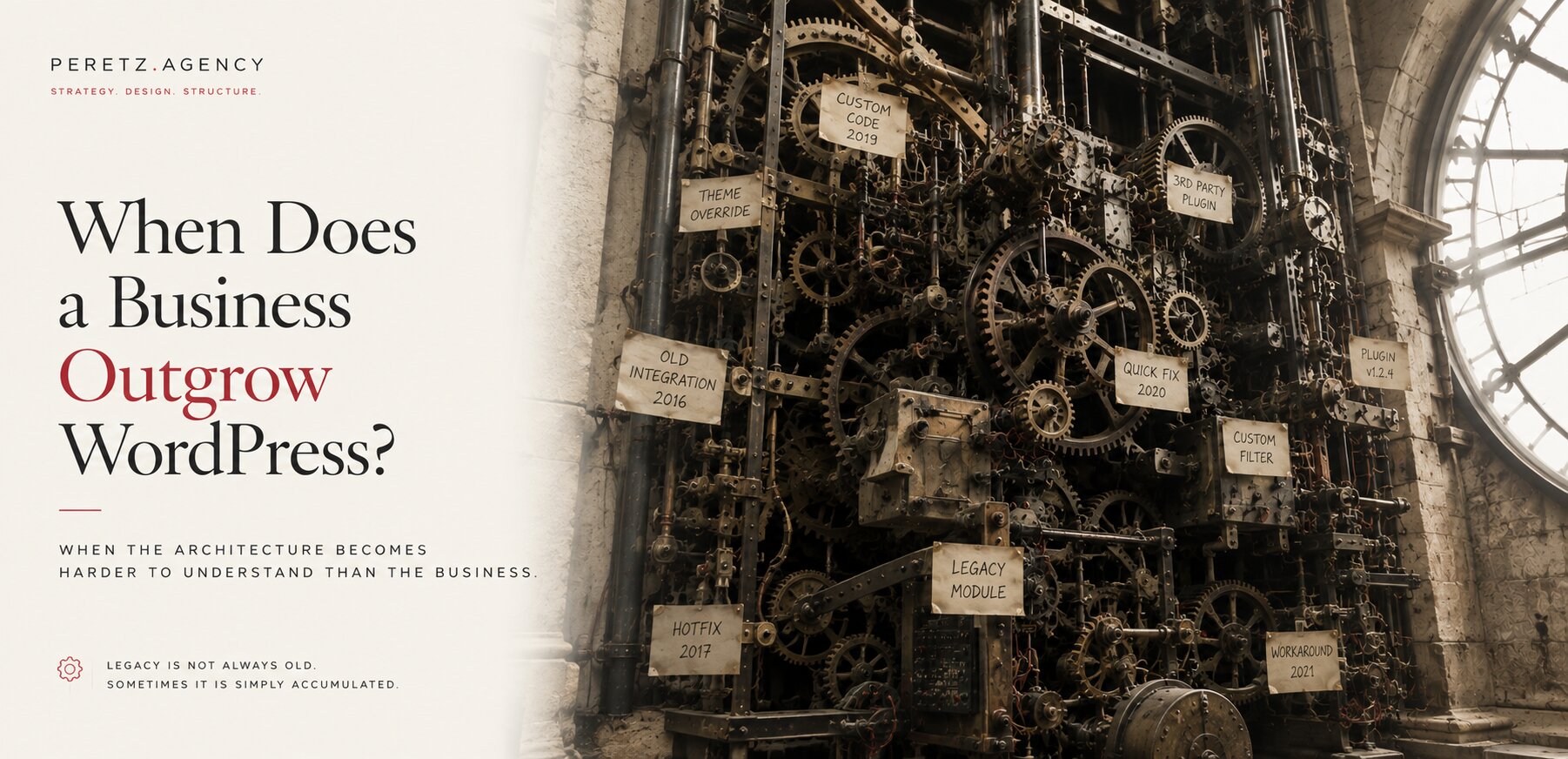
When Does a Business Outgrow WordPress?
-
26. 08. 2026
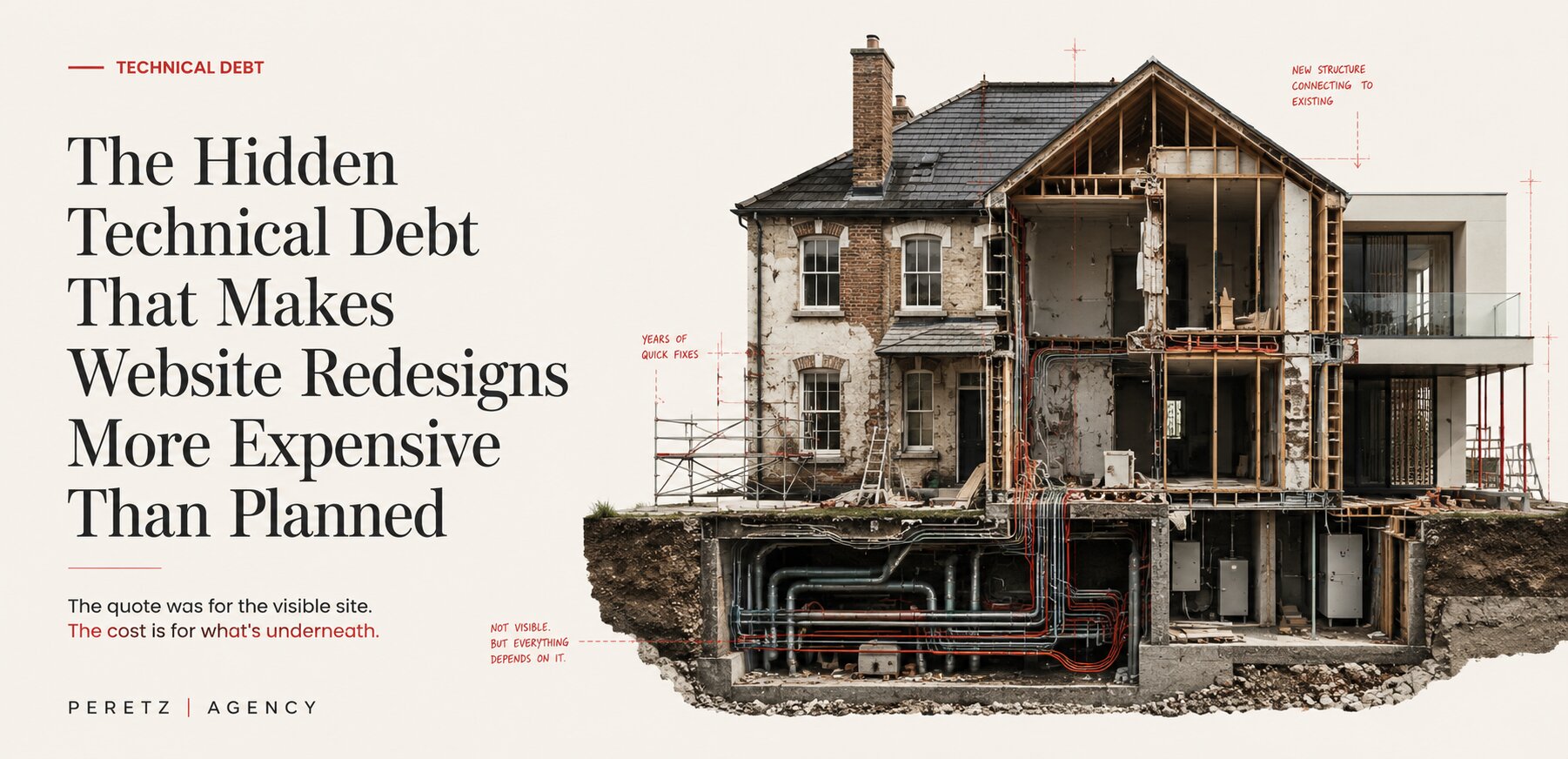
The Hidden Technical Debt That Makes Website Redesigns More Expensive Than Planned
-
23. 07. 2026
What Good Web Design Actually Does Once the Structure Is Right
-
24. 07. 2026
What If You're Solving the Wrong Problem?
-
21. 09. 2026

The Software Should Fit the Business