


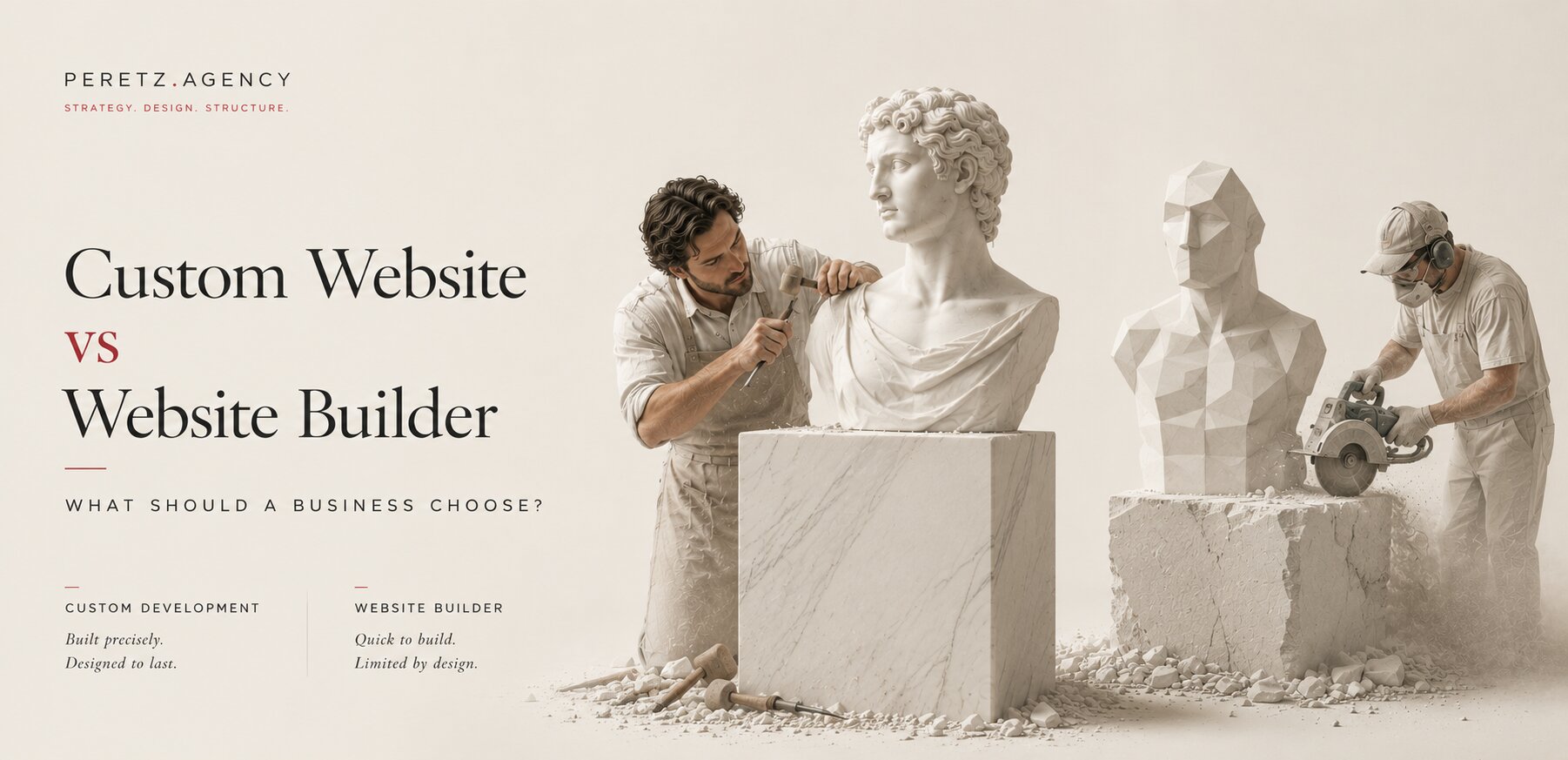
A website builder and custom development are not competing for the same job.
They are tools for different stages, different levels of complexity, and sometimes completely different business models. Choosing the wrong one can waste real money, either upfront or later, when the platform becomes the limitation.
The real question is not which one is better.
It is which one matches what your business actually needs to do this year, not what it might need five years from now.
In practice, five things usually decide the answer: how complex what you sell or show really is, whether you are likely to outgrow the platform within a year, what needs to integrate with what, the actual total cost, and who will maintain the system once launch week is over.
COMPLEXITY
How Complex Is What You Actually Sell or Show?
A website builder can handle a surprising amount.
A fixed catalog. A simple booking flow. A handful of service pages. Standard forms. Basic e-commerce.
And there is nothing wrong with that.
The problem begins when the business itself stops being standard.
Configurable products. Layered pricing logic. Custom filters. Complex product relationships. Customer-specific workflows. A quoting system. Rules that determine what a customer can see or purchase.
At that point, the platform may start fighting the business instead of supporting it.
The simplest test we use is this: can you describe what your website needs to do in the builder's own language?
If yes, a builder is not a compromise. It is probably the correct tool.
If you constantly have to ask how to make the platform do something it was never designed to do, the answer may already be obvious.
GROWTH TIMELINE
Will You Outgrow It Within a Year?
This is the question most businesses skip.
A platform can be a perfect fit today and become a constraint twelve months later.
We see this often. The website is not broken. The business simply grew beyond the assumptions the website was built around, the exact pattern we describe in Most Companies Don't Need a New Website, They Need a New Structure.
There is one scenario where a template is genuinely the right call, not a compromise: testing an idea.
If you are validating a new product, a new market, or a business model you are not yet sure will work, speed and low upfront cost matter more than architecture at that stage. A builder gets you to real customer feedback fast, and that is exactly what an MVP needs to do, the actual cost of entry we unpack in MVP Isn't a Minimal Product. It's the Cost of Entry.
The technical debt shows up specifically when the idea works. The moment real demand appears and the business needs to scale past what the template was built for, the same builder that made testing fast becomes the constraint. That is not a failure of the original decision, it is the natural next decision a validated idea forces you to make.
New product lines appear. A second market opens. The sales process changes. The company needs a CRM integration. A new pricing model is introduced. The business starts collecting data that needs to move somewhere else.
None of these things necessarily justify custom development from day one.
But if you already know they are coming, they should be part of the decision today. Otherwise, the cheap solution can become the first stage of a much more expensive rebuild.
INTEGRATIONS
What Actually Has to Connect to What?
This is where the difference becomes especially clear.
CRM. Inventory. Custom quoting. ERP. Membership logic. Booking systems. Internal databases. Customer portals.
A website does not always exist by itself. Sometimes it is simply the public-facing part of a much larger system.
A builder's plugin ecosystem can be extremely useful here. But there is a point where a collection of plugins and workarounds stops being an ecosystem and starts becoming technical debt.
And you usually do not need ten complex integrations to justify custom development. One critical integration can be enough.
If your business already knows that the website needs to communicate with an internal system in a very specific way, that requirement can settle the decision by itself.
TOTAL COST
The Honest Total Cost, Not Just the Sticker Price
This is where the comparison usually gets distorted.
A website builder has an obvious advantage: the initial cost is generally lower.
You pay a subscription. You choose a template. You configure the site. You launch.
For many businesses, that is exactly what should happen.
But the real cost is not necessarily the monthly platform fee.
It can include developer hours spent working around platform limitations, additional apps and subscriptions, slower performance, compromises in the user experience, limitations on conversion flows, and eventually the cost of migrating the entire system somewhere else.
Custom development works differently. It moves more of the cost to the beginning.
A builder often defers complexity. Custom development often addresses complexity upfront.
Neither is automatically cheaper. The question is where the complexity belongs and whether the business can afford to postpone dealing with it.
WHO MAINTAINS IT
Who Keeps It Running After Launch Week?
This one is surprisingly important.
A website is not finished when it launches.
A builder generally assumes that a non-technical person can handle most everyday changes without a developer.
Custom development assumes that someone, internally or through an agency, is responsible for maintaining the system.
Neither model is inherently better.
But you should decide who will own the website after launch before deciding how the website should be built.
We have seen custom systems become frustrating because nobody inside the company knew how to maintain them.
We have also seen businesses trapped inside builders because every meaningful change required a workaround or an expensive developer.
Technology is only part of the decision. The operating model matters just as much.
IN PRACTICE
What We Actually See in Practice
Most of the businesses we've worked with did not start with a custom build.
They started with something simpler.
A builder was enough. The business grew. The website evolved. Eventually, the platform itself became the constraint.
That is usually when we get involved.
The businesses that regret their original choice rarely regret starting with a builder. They regret staying with it after the business had already outgrown it.
The reverse mistake exists too.
We've seen businesses commission a completely custom website for what was, honestly, a five-page service business with a contact form.
That is not ambition. It is an expensive way of building something a website builder could have handled perfectly well.
The goal is not to build the most sophisticated website possible. The goal is to build the right system for the business that exists, and the business that is realistically about to exist.
WHICH TO CHOOSE
So, Which One Should You Actually Choose?
If your catalog is simple, your workflow fits a standard platform, and nothing needs to communicate with internal systems in a specific way, a website builder is not a lesser choice.
It is probably the right one.
In that case, who designs and builds the website may matter far more than whether it runs on one platform or another.
If the business already has complexity that a template cannot reasonably hold, growth plans that will outgrow the platform within a year, or integration requirements that exist today rather than somewhere in a hypothetical future, custom development is not overbuilding.
It is simply matching the tool to the job.
And that is the part that is often missed.
The expensive decision is not choosing a website builder instead of custom development. The expensive decision is choosing technology before diagnosing the business.
Once that decision is made, comparing development quotes raises its own questions, covered in Why E-Commerce Development Quotes in Seattle Range From $25 to $300 an Hour.
Need help deciding which direction makes sense?
Before recommending a website, custom software, AI integration, or digital marketing, we take the time to understand how your business actually works, where it is going, and where technology can create the greatest long-term impact. You do not need to know whether you need a builder or custom development before the conversation. That is what the session is for.
When the business has outgrown standard solutions, we design and develop custom digital systems around its actual workflows, customers, integrations, and growth plans.
Explore Corporate Website Development
Not sure whether an existing site or system is already carrying more technical debt than it looks like from the outside? If that system runs on WordPress specifically, When Does a Business Outgrow WordPress? covers the exact signals worth checking first.
Explore Digital Ownership & Debt Audit
The same standard-vs-custom question applies to CRM systems too, see custom CRM vs ERP.
Both are really one piece of a larger question, see digital architecture.
- Share
-

-

-

-

Related Reading
-
20. 07. 2026
Most Companies Don't Need a New Website. They Need a New Structure.

-
02. 08. 2026
How to Choose a Web Development Company
-
09. 08. 2026
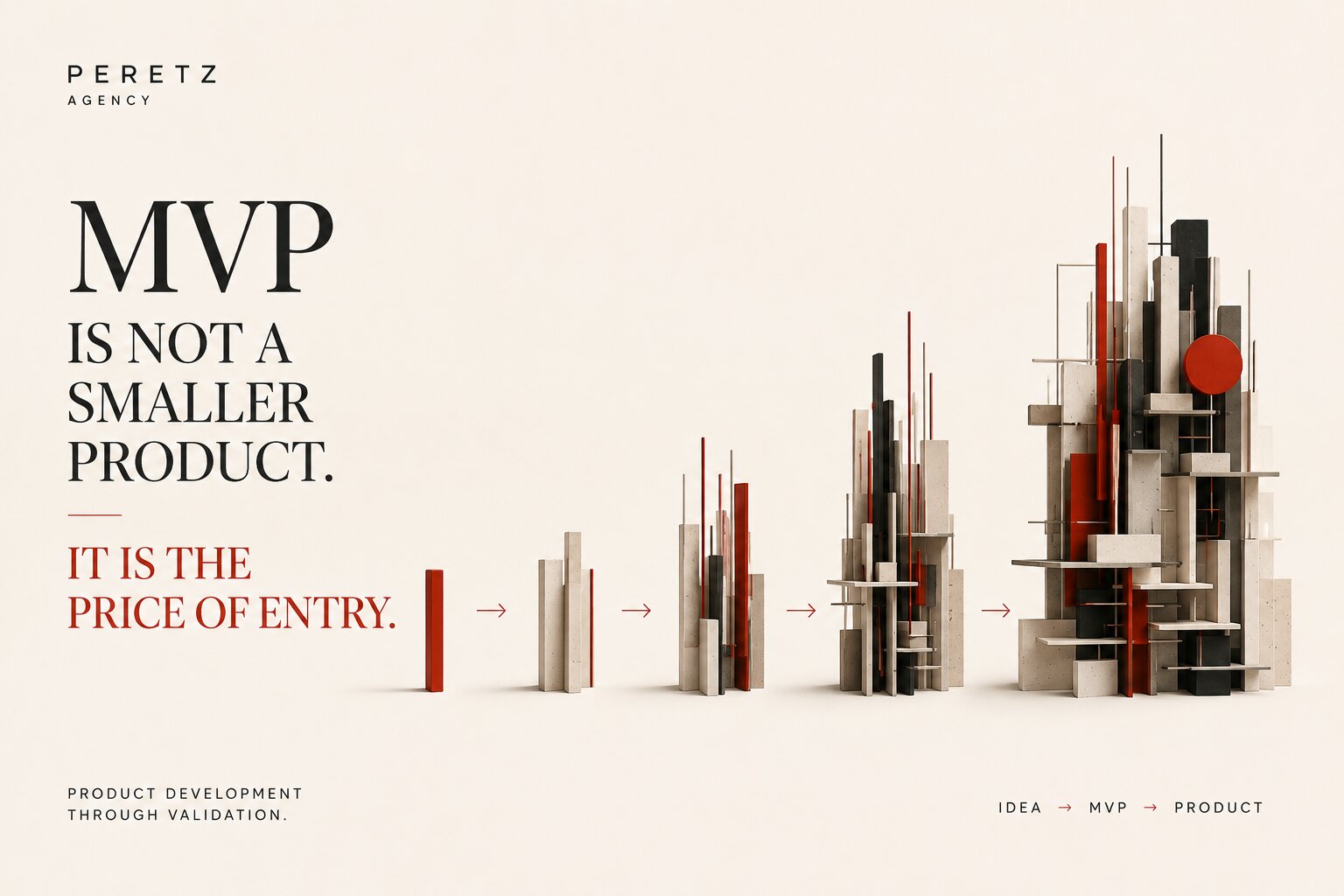
MVP Isn't a Minimal Product. It's the Cost of Entry.
-
17. 07. 2026
The Code Remembers Every Version of the Business
-
23. 08. 2026
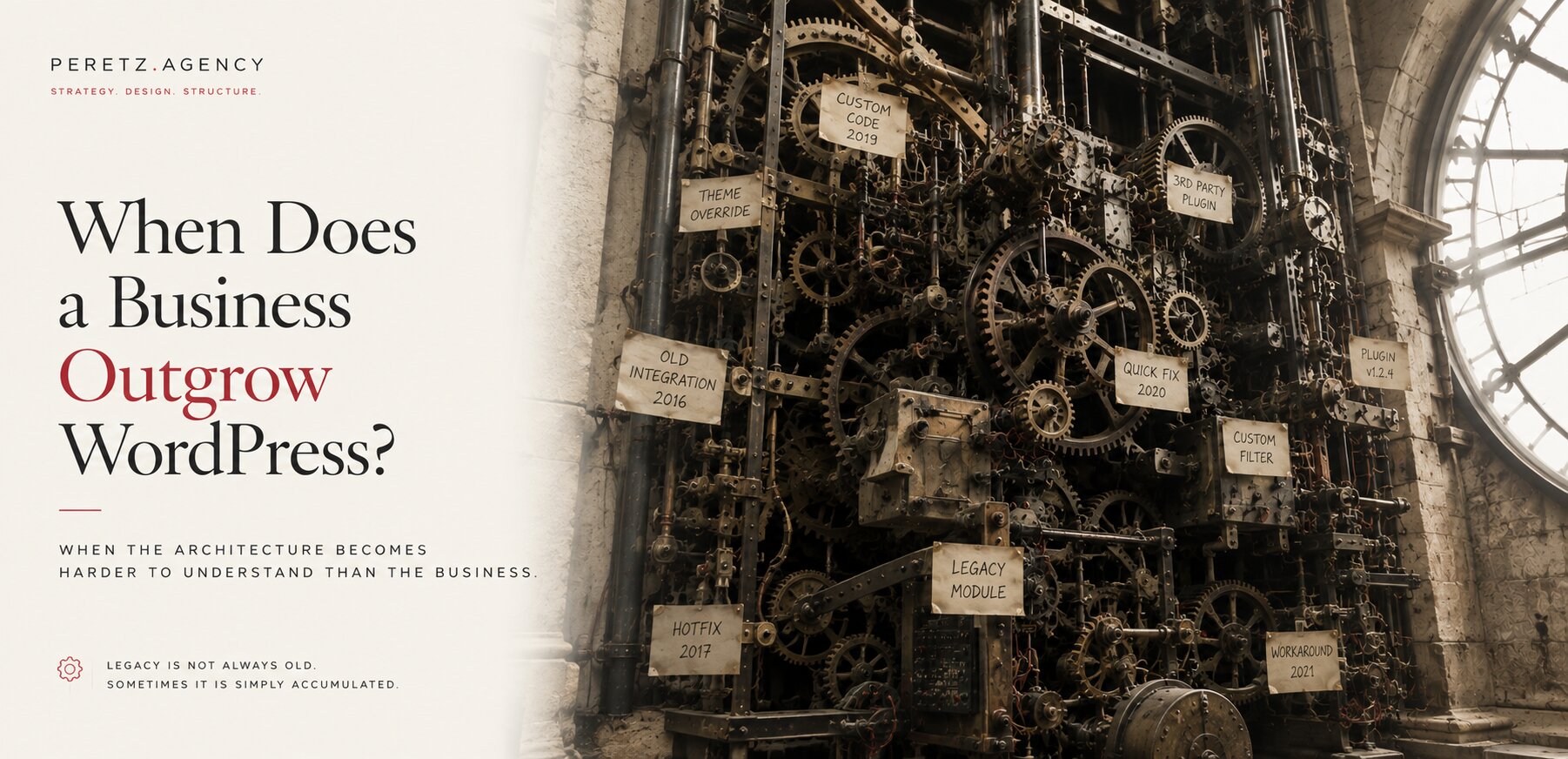
When Does a Business Outgrow WordPress?
-
12. 03. 2021

In-House vs Outsourcing in 2026: What Business Owners Actually Need to Know
-
23. 08. 2026

How Much Does a Custom Website Cost in 2026?
-
01. 09. 2026
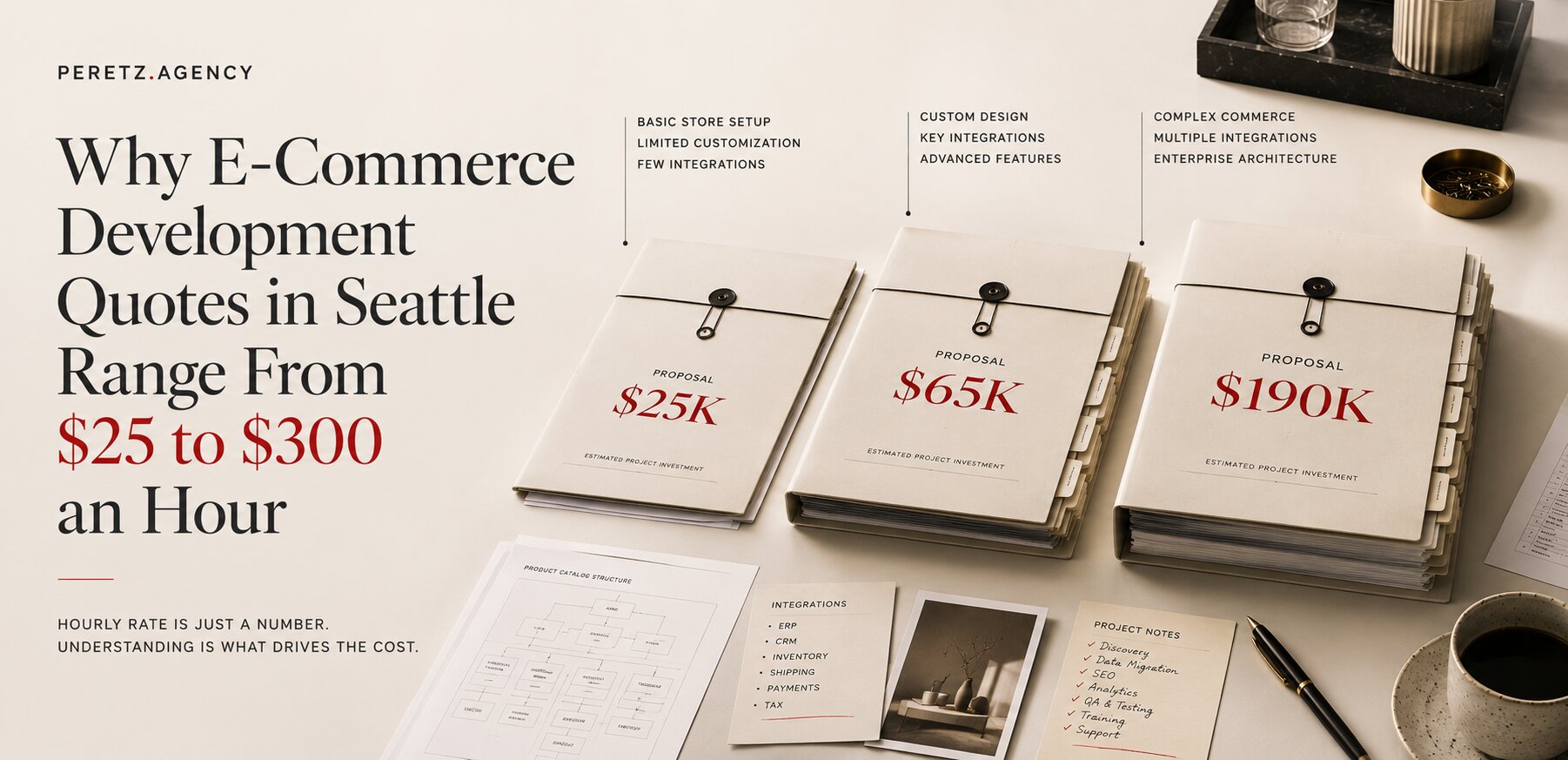
Why E-Commerce Development Quotes in Seattle Range From $25 to $300 an Hour
-
10. 09. 2026
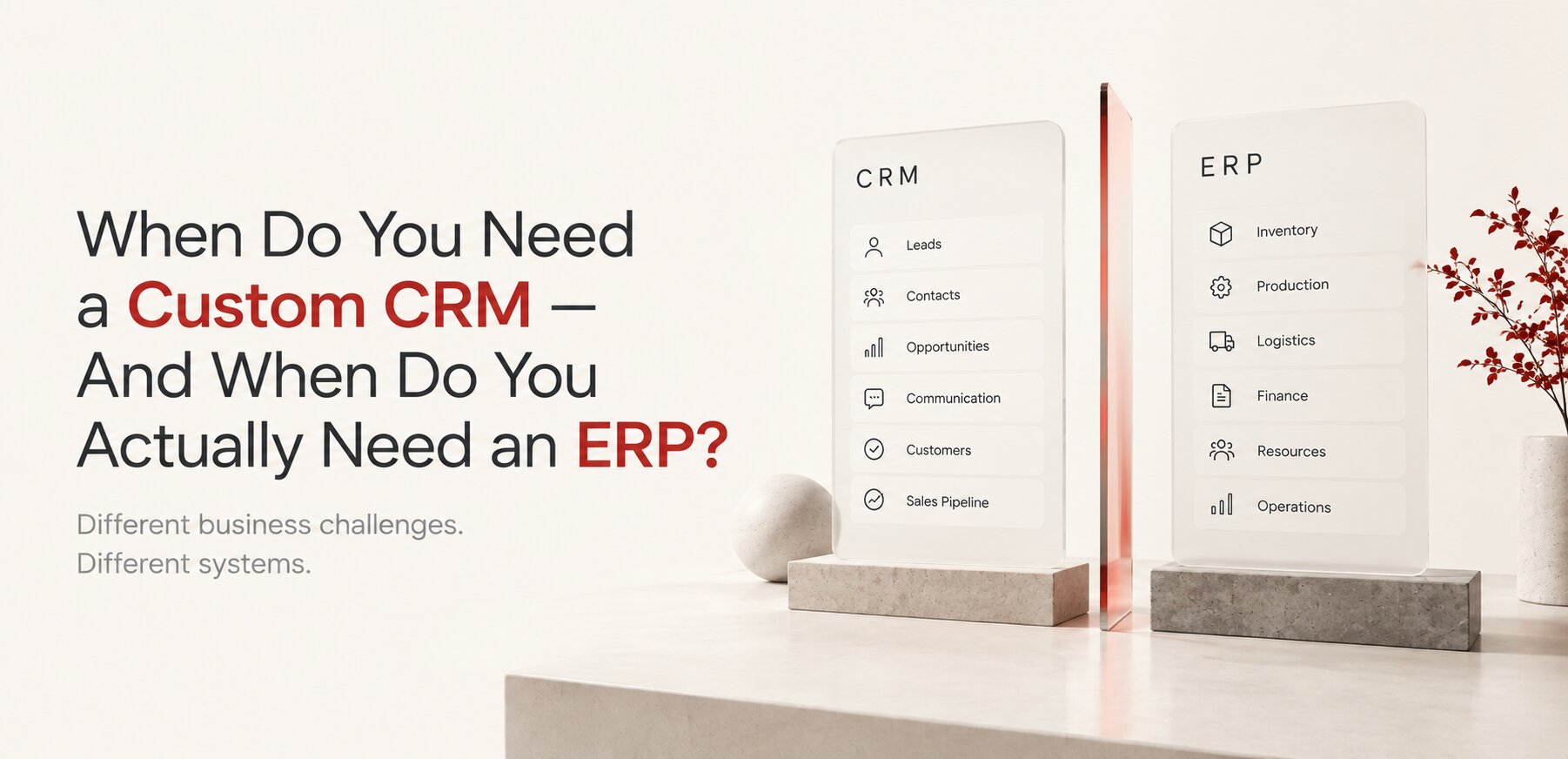
Custom CRM or ERP? The Difference, and When You Need Each
-
11. 09. 2026

Digital Architecture: How to Build a System That Can Grow With Your Business