What Separates a Premium Laravel or Symfony Build From a Merely Functional One

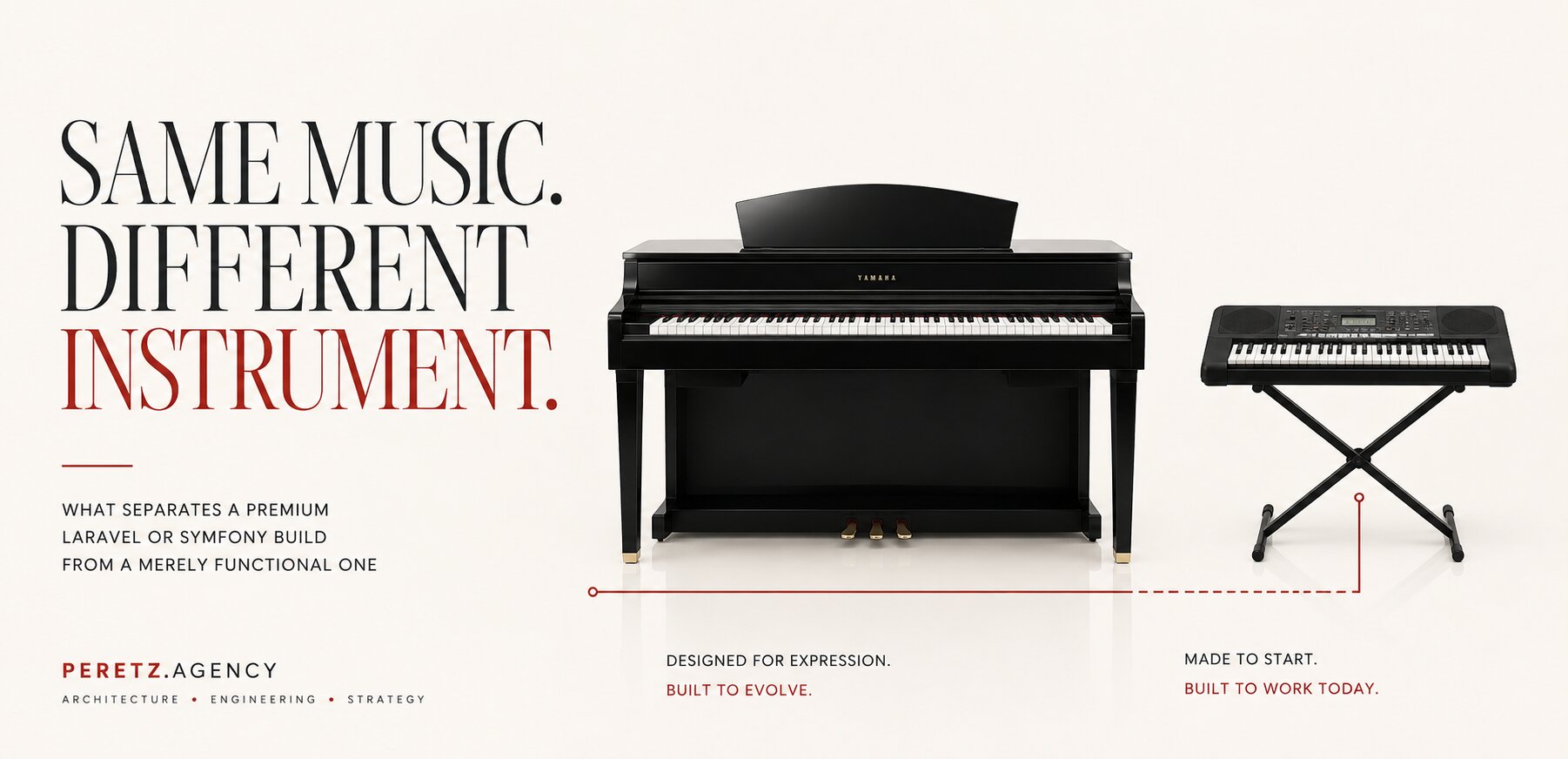
Why Two Applications Built With the Same Framework Can Have Completely Different Long-Term Costs
Two Laravel applications can look identical in a demo.
The same features. The same clean interface. The same smooth checkout flow.
One was built to last. The other was built to launch.
The difference rarely appears in the first ninety days. It appears eighteen months later, when the business needs to add a feature nobody anticipated during the original specification and the answer comes back: "That will take longer than expected." Sometimes much longer.
The framework is rarely the reason.
Laravel and Symfony both provide mature foundations: dependency injection, routing, ORM capabilities, queues, security mechanisms and testing tools. The quality difference comes from the engineering decisions made inside those frameworks, most of which are invisible to anyone reviewing a demonstration.
And that difference has a business consequence.
A poorly structured application does not necessarily fail. It becomes more expensive to change. That is the beginning of technical debt.
ARCHITECTURE
1. Architecture: Working With the Framework vs Fighting It
Laravel and Symfony come with conventions for a reason.
A premium application uses those conventions as structural components. A merely functional application often bypasses them and gradually pushes business logic into places where it becomes difficult to understand, test and change.
One of the clearest examples is the controller. A 400-line controller handling validation, business logic, database queries and response formatting is not merely a matter of coding style. It creates a business liability.
When another developer needs to modify that feature, they first have to understand everything that controller is doing. When two developers work on it simultaneously, their changes begin to interfere with one another. When the original developer leaves, the cost of understanding the system increases again.
A better architecture separates responsibilities deliberately. Validation belongs in appropriate request or validation layers. Business logic belongs in services, actions or domain-oriented components that can be tested independently. Controllers orchestrate the request rather than becoming the application itself.
The objective is not architectural purity. It is predictability.
In a well-structured application, a developer unfamiliar with the codebase can usually locate a particular piece of business logic quickly. In a poorly structured one, the same task can take days. And those days appear on the invoice.
ARCHITECTURE OF CHANGE
2. The Architecture of Change: The Real Test Is Not What the Application Does Today
Most specifications describe what a business needs now. Premium engineering also considers what the business is likely to need next.
A new payment provider. A second warehouse. A different CRM. A mobile application. A new pricing model. An international market. A subscription system. A completely different customer workflow.
The question is not whether the original team can implement these things. Almost any competent team can. The question is: how much of the existing system has to be disturbed to make the change?
Good architecture isolates areas of change. Changing a CRM should not require rewriting customer authentication. Changing a payment provider should not require rebuilding checkout. Adding an API should not require duplicating the entire business logic. Changing the presentation layer should not require rewriting the underlying domain.
This is one of the most important differences between software that was designed for a business and software that was simply assembled for a specification.
Premium architecture makes future change cheaper and more predictable.
DATABASE
3. Database Design: The Part Nobody Demos
Nobody opens a database schema during a sales presentation. That is exactly why it is easy to neglect.
A premium application treats the database as part of the architecture, not merely as storage. Relationships should be explicit. Foreign keys should protect data integrity. Indexes should reflect the queries the application actually performs. Migrations should provide a reliable history of how the database evolved.
The difference often remains invisible while the dataset is small. Five hundred records can make almost any database design look acceptable. Five hundred thousand records expose the decisions that were made years earlier.
The same applies to migrations. A well-maintained migration history reads almost like a changelog: focused changes that can be safely applied to a production system. A neglected project may contain edited migrations, assumptions about a fresh database, abandoned changes or manual production modifications that nobody properly documented.
The problem is not that the database suddenly becomes "bad." The problem is that the business has grown while the architecture has not.
TESTING
4. Testing: The Difference Between Confidence and Hope
Both Laravel and Symfony provide strong testing capabilities. The question is whether the team uses them where they matter.
Premium development does not mean testing every line of code simply to achieve an impressive coverage percentage. It means testing the paths where being wrong is expensive. Pricing calculations. Permissions. Orders. Payments. Subscriptions. Inventory. Critical integrations. Anything where a silent failure could cost money, customers or trust.
A tested application gives the team evidence that a change works. An untested application gives them hope.
The difference becomes particularly obvious when the client requests a change. With meaningful automated tests, the team can make the change, run the suite and investigate failures systematically. Without them, somebody has to manually click through the application and hope nothing else broke. Then do it again next month. And again after the next release.
Testing therefore isn't simply a developer convenience. It is a mechanism for controlling the cost of change.
SECURITY
5. Security: Defaults Are a Starting Point, Not a Security Strategy
Laravel and Symfony provide strong security foundations. That is table stakes. Premium engineering begins where the framework defaults end.
Are secrets kept out of source control? Are dependencies updated systematically? Are authentication endpoints protected against abuse? Are permissions tested? Are production credentials separated from development environments? Are third-party packages monitored for vulnerabilities?
These questions are rarely interesting during a launch. They become extremely interesting during a security incident, or during due diligence before an acquisition.
A dependency that is several major versions behind may have worked perfectly for years. That does not make the situation safe.
Security is therefore not something added at the end of development. It is a property of how the application is maintained over time.
PERFORMANCE
6. Performance: Fast in a Demo Is Not Fast at Scale
A demo with a few hundred records tells you very little about an application's performance. Real performance appears when the system has real data, real users and concurrent requests.
This is where seemingly invisible decisions become expensive. N+1 queries. Missing indexes. Repeated expensive calculations. Unnecessary database calls. Synchronous operations that should be queued. Data that could safely be cached but isn't.
A premium application considers these conditions before they become emergencies. Queues can move non-critical work, such as emails or report generation, outside the request cycle. Caching can reduce repeated expensive computation. Database indexes can be designed around actual access patterns. And application architecture can prevent performance problems from propagating through the entire system.
The important point is that performance is not simply a technical metric. Slow software changes user behaviour. It can reduce conversion. It can increase support costs. And once performance becomes a production emergency, fixing it is usually more expensive than designing for scale from the beginning.
INTEGRATIONS
7. Third-Party Integrations: The Systems Around Your Application Matter Too
Modern business applications rarely exist alone. They communicate with payment processors, CRMs, accounting platforms, shipping systems, marketing tools, analytics platforms and external APIs.
These integrations are often where architecture becomes fragile. If an application tightly couples its core business logic to one external provider, changing that provider can become a major development project.
A premium architecture creates boundaries around external systems. The business should be able to replace one service without destabilizing the entire application.
This is particularly important because external services change independently of your software. APIs change. Pricing changes. Providers disappear. Companies get acquired. Business requirements evolve. A good application anticipates that reality.
Your software should depend on the capability it needs, not unnecessarily on the specific vendor providing it today.
DOCUMENTATION
8. Documentation: Knowledge That Outlives the Person Who Had It
One of the most underestimated assets in software is documentation. Not documentation for the sake of documentation. Documentation that preserves decisions.
A useful README explains how to run the project. An architecture overview explains how the major pieces fit together. Comments explain why an unusual decision exists rather than repeating what the code already says. Deployment documentation explains how the application reaches production. Integration documentation explains assumptions that otherwise exist only in someone's memory.
This becomes critical when people change. The original developer leaves. The agency relationship ends. A new technical lead arrives. The company acquires the application.
The code remains. But the context behind the code may disappear. Reconstructing that context later is expensive.
Documentation is institutional memory.
OBSERVABILITY
9. Observability: You Cannot Maintain What You Cannot See
A production application should not simply run. The team should know how it is running.
Errors need to be visible. Failed jobs need to be identifiable. Unexpected performance degradation needs to be detectable. Critical infrastructure needs monitoring. Important events should be logged in a way that allows the team to understand what happened.
This is the difference between discovering a problem because a customer calls and discovering it because the system has already reported the problem.
Observability turns maintenance from reaction into information. It also changes how confidently a team can evolve a system. When developers can see what the application is doing in production, they can make decisions based on evidence rather than assumptions.
DEPLOYMENT
10. Deployment: How Confidently Can You Ship on a Tuesday?
A premium deployment process is intentionally boring. There should be a repeatable path from development to staging to production. The staging environment should be sufficiently representative of production to catch meaningful problems. Deployments should be automated where appropriate. Rollback should not be a theoretical possibility. It should be a known procedure.
A fragile deployment process often depends on one person's memory: "First run this command. Then change this setting. Then restart that service. And don't forget to..."
That is not infrastructure. That is institutional memory disguised as infrastructure.
A mature system can be deployed without everyone in the room holding their breath.
TCO
11. Total Cost of Ownership: The Cheapest Build Is Not Necessarily the Cheapest Application
This is where engineering quality becomes a business calculation.
Imagine two applications. Application A: initial development $50,000. Application B: initial development $75,000.
At launch, Application A looks like the obvious financial decision. Then the business begins changing.
A new integration costs $8,000 instead of $3,000. A pricing change takes three weeks. A framework upgrade requires a major refactor. A new developer spends days understanding the system. A performance problem requires emergency optimization.
After three years, the cheaper application may have cost substantially more.
This is why development price alone is a poor measure of software value. A more useful equation is:
Total Cost of Ownership = Build + Maintenance + Change + Scaling + Risk + Eventual Replacement
The exact numbers vary from project to project. The principle does not.
A premium application is not necessarily the one with the highest initial budget. It is the one that keeps the cost of future change under control.
HUMAN FACTOR
12. The Human Factor: Can the Business Survive Losing the Developer?
There is another test that has nothing to do with code quality on paper. Ask: what happens if the lead developer leaves tomorrow?
If the answer is "we would have to find someone who understands how everything works," there is already a problem.
A healthy application should not depend on one person's memory. Architecture, documentation, deployment procedures, integrations and business logic should be understandable by more than one person. This does not mean every developer needs to know every part of the system. It means the system itself should not become hostage to individual knowledge.
A business buys software. It should not accidentally buy a permanent dependency on one developer.
EVALUATING
13. How to Evaluate a Codebase Without Reading the Code: Ten Questions That Reveal More Than a Demo
Most business owners cannot, and should not have to, read a Laravel or Symfony codebase. But they can ask questions.
When was the last major framework or dependency update, and what happened when it was performed? How long would it take to add a major new feature? Is there a staging environment? How much of the critical business logic is covered by automated tests? Can another developer deploy the application without the original developer? What happens if the primary developer leaves? How are third-party integrations isolated and maintained? How are production errors and failed background jobs monitored? Is technical debt actively identified and addressed, or only fixed when it becomes an emergency?
None of these questions requires technical expertise. And often, the hesitation before the answer tells you as much as the answer itself.
WHY IT COMPOUNDS
14. Why the Gap Compounds: The Difference Is Smallest on Launch Day
This is the most important part.
On launch day, two applications can look almost identical. Both work. Both have the required features. Both may perform perfectly. Both may have clean interfaces.
But software is not a static product. It is an environment that continues to change.
A well-architected application can absorb change. A poorly structured application accumulates friction with every new feature. One feature adds another dependency. Another adds another exception. Another requires a workaround. Another touches three unrelated parts of the system.
The cost of the next change rises. Then the next. And eventually the business begins designing around the limitations of its own software.
That is when technical debt becomes competitive debt. The problem is no longer simply that the code is difficult to maintain. The software begins limiting what the business can do.
Premium software development is often misunderstood. It does not necessarily mean more code, more abstractions, more developers, more features, a more expensive framework, or a larger initial budget. It means better decisions where future consequences matter.
The framework provides the tools. Engineering discipline determines how those tools are used. Architecture determines how the system absorbs change. Database design determines how it behaves as data grows. Testing determines how confidently it can evolve. Security determines how safely it can operate. Observability determines how quickly problems become visible. Documentation determines how much knowledge survives personnel changes. Deployment determines how safely the business can release improvements.
And all of these ultimately influence one thing: the cost and risk of change.
REAL DEFINITION
15. The Real Definition of Premium
Laravel and Symfony are both capable frameworks. Neither guarantees a premium application. Both can produce elegant, maintainable systems. Both can also be used to create difficult, fragile codebases, a choice we cover from the technology-selection side in Laravel vs Symfony: The Most Expensive Technology Decision Is Often the One You Never Make.
The framework is the foundation. The engineering decisions are the structure. That is why two applications built on exactly the same framework can have completely different long-term economics.
The real question is not "was this built with Laravel or Symfony?" It is: "was this built to accommodate the business that will exist three years from now?" Because launch day is only the beginning.
A premium application is not necessarily the one that cost more to build. It is the one that gives the business more freedom after it has been built.
Freedom to add features. Freedom to change vendors. Freedom to scale. Freedom to hire new developers. Freedom to update dependencies. Freedom to deploy. Freedom to evolve the product without negotiating with years of accumulated technical debt.
That is the difference between software that was built to launch and software that was built to last.
A premium application is not one that costs more to build. It is one that costs less to change.
What that build quality has to account for at catalogue scale is covered in Fifty Thousand Products, Eight Markets: Where Catalogue Scale Becomes an Architecture Problem.
What that build quality has to account for at catalogue scale is covered in Multi-Country E-Commerce for Large Catalogues: The Architecture Decisions That Set the Ceiling.
If you are evaluating an existing Laravel or Symfony application, a technical assessment can reveal where architectural, security, performance and maintainability risks are hiding before they become expensive.
If you are building something new, the same principles should be considered before development begins, when architectural decisions are still inexpensive to change.
- Share
-

-

-

-

One notification a week with the new PERETZ articles. Nothing else.
Related Reading
-
18. 07. 2026
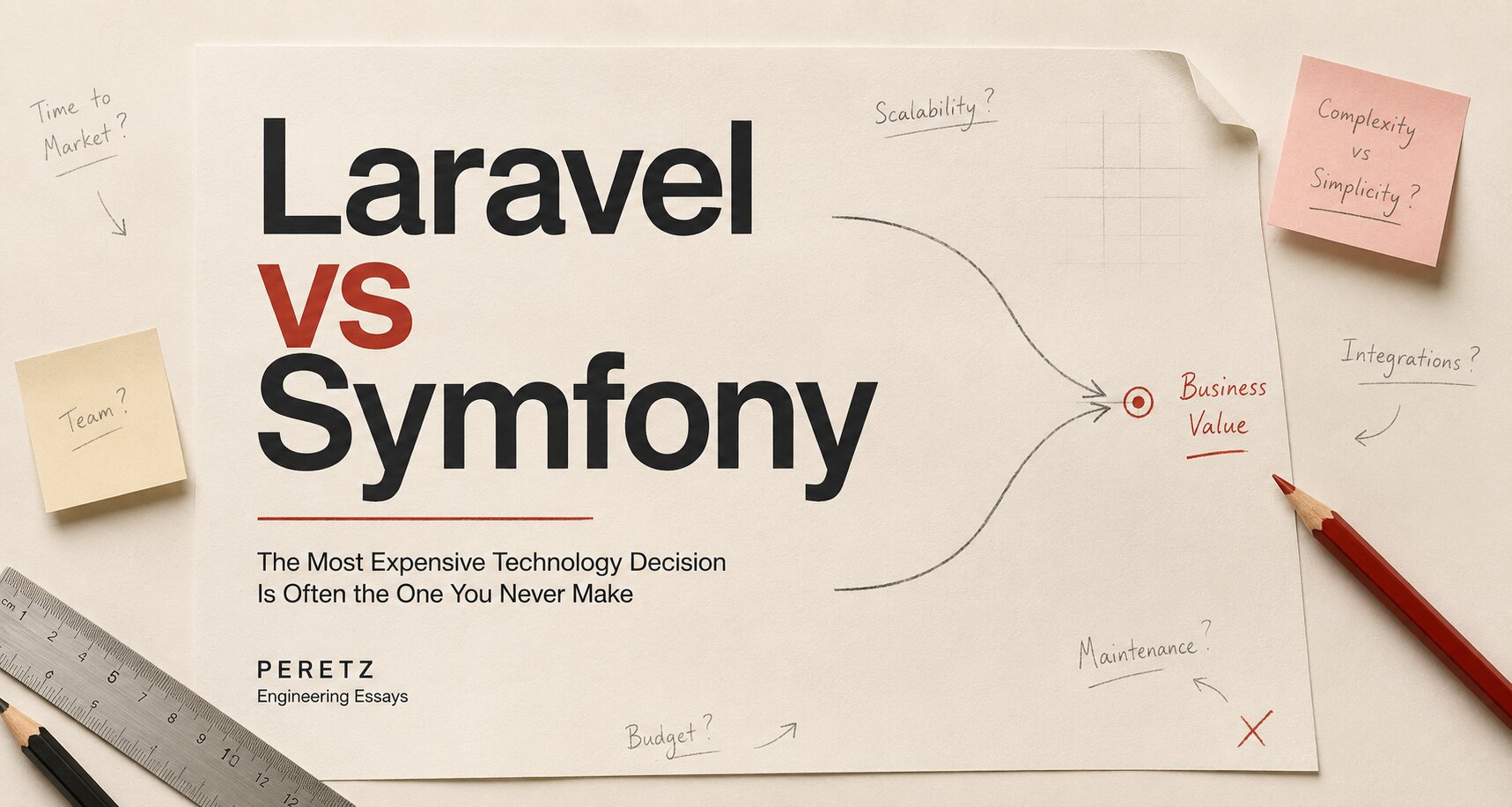
Laravel vs Symfony: The Most Expensive Technology Decision Is Often the One You Never Make

-
04. 09. 2026

Do I Need a Developer, or Is AI Enough?
-
28. 08. 2026
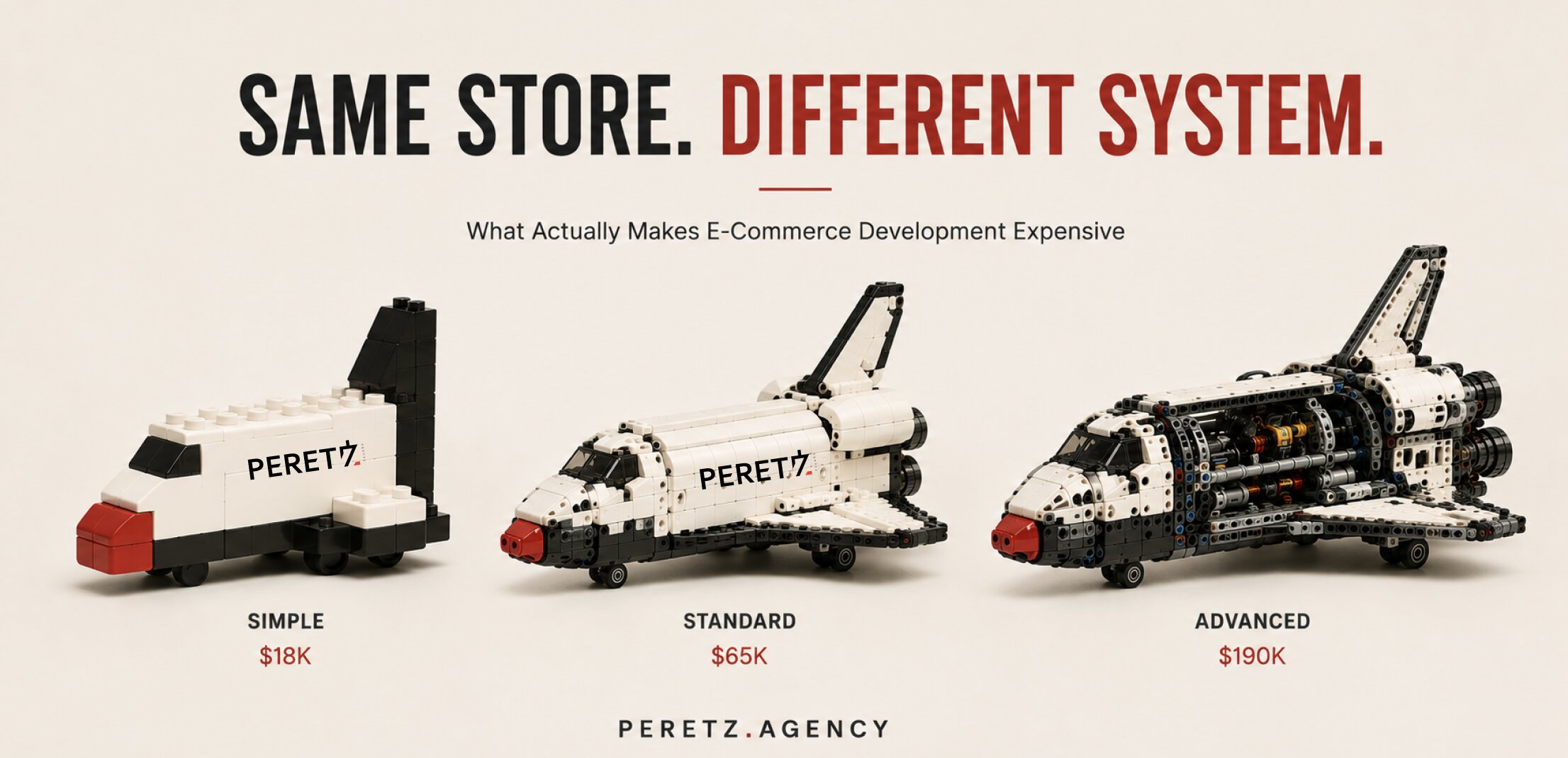
What Actually Makes E-Commerce Development Expensive
-
01. 09. 2026

Why E-Commerce Development Quotes in Seattle Range From $25 to $300 an Hour
-
26. 08. 2026
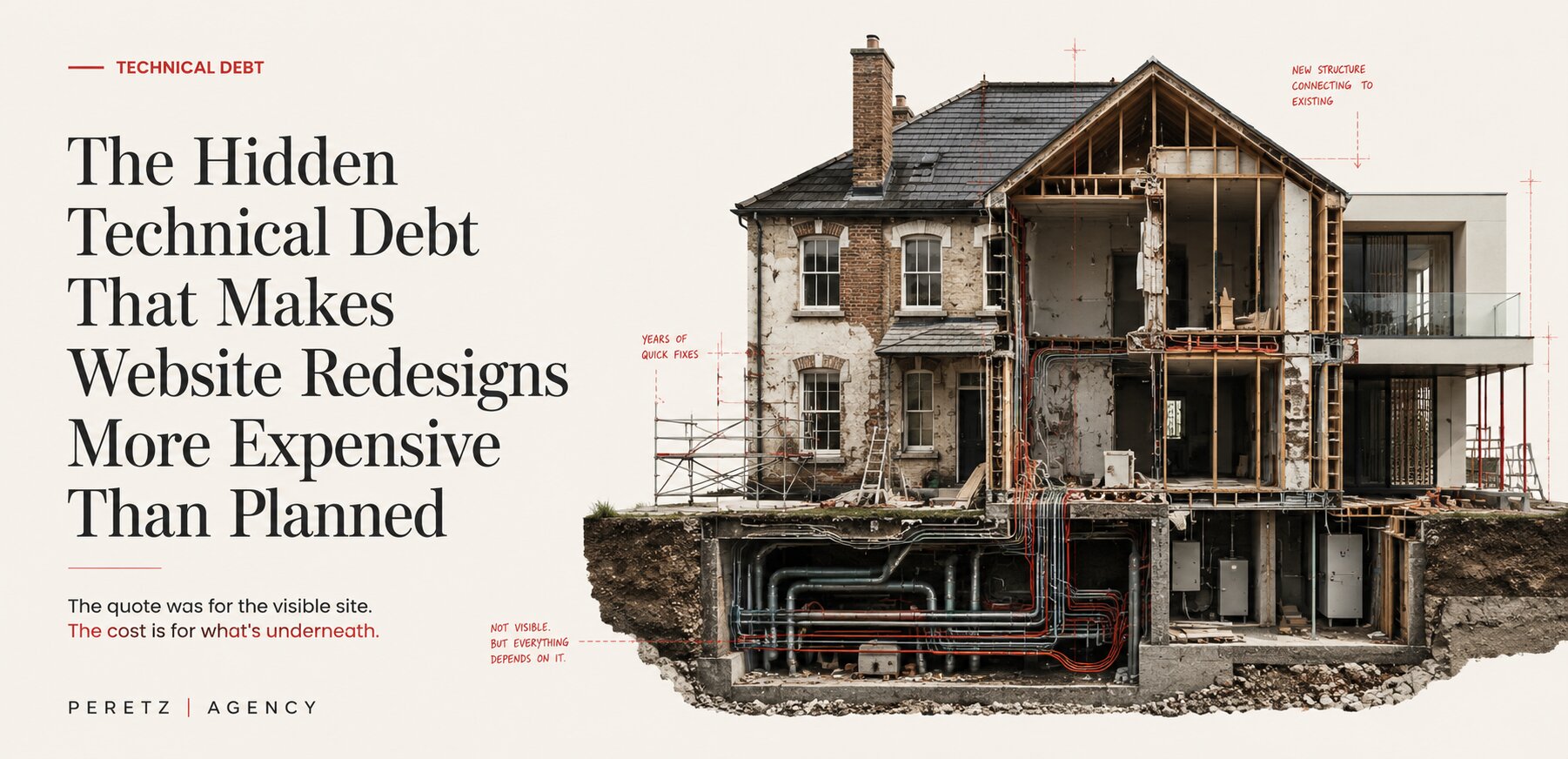
The Hidden Technical Debt That Makes Website Redesigns More Expensive Than Planned
-
01. 08. 2026
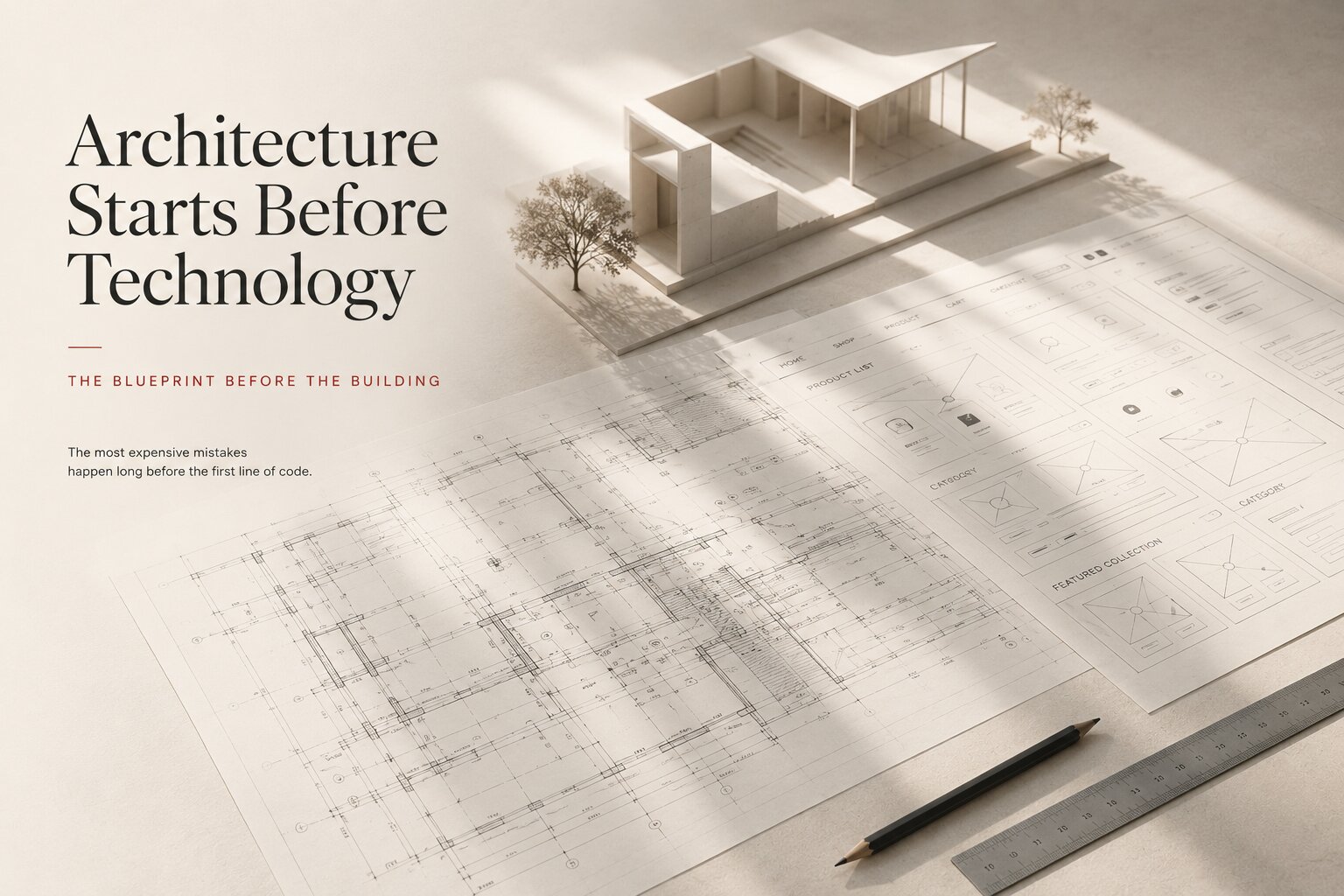
The Hidden Cost of Choosing the Wrong Architecture
-
02. 08. 2026

How to Choose a Web Development Company
-
06. 09. 2026
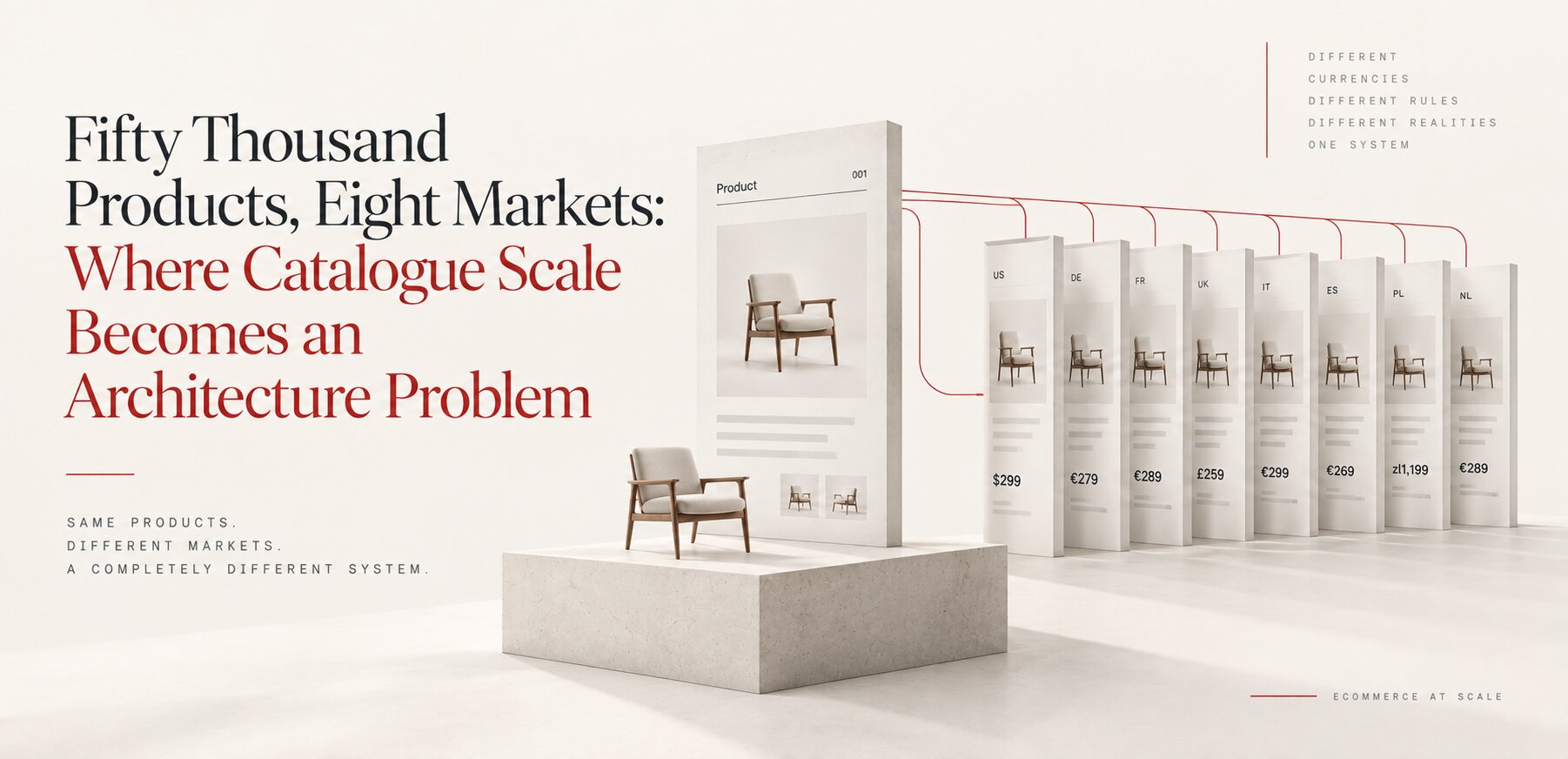
Multi-Country E-Commerce for Large Catalogues: The Architecture Decisions That Set the Ceiling
-
07. 09. 2026

Agentic AI Compliance: How to Secure, Govern and Monitor AI Agents