
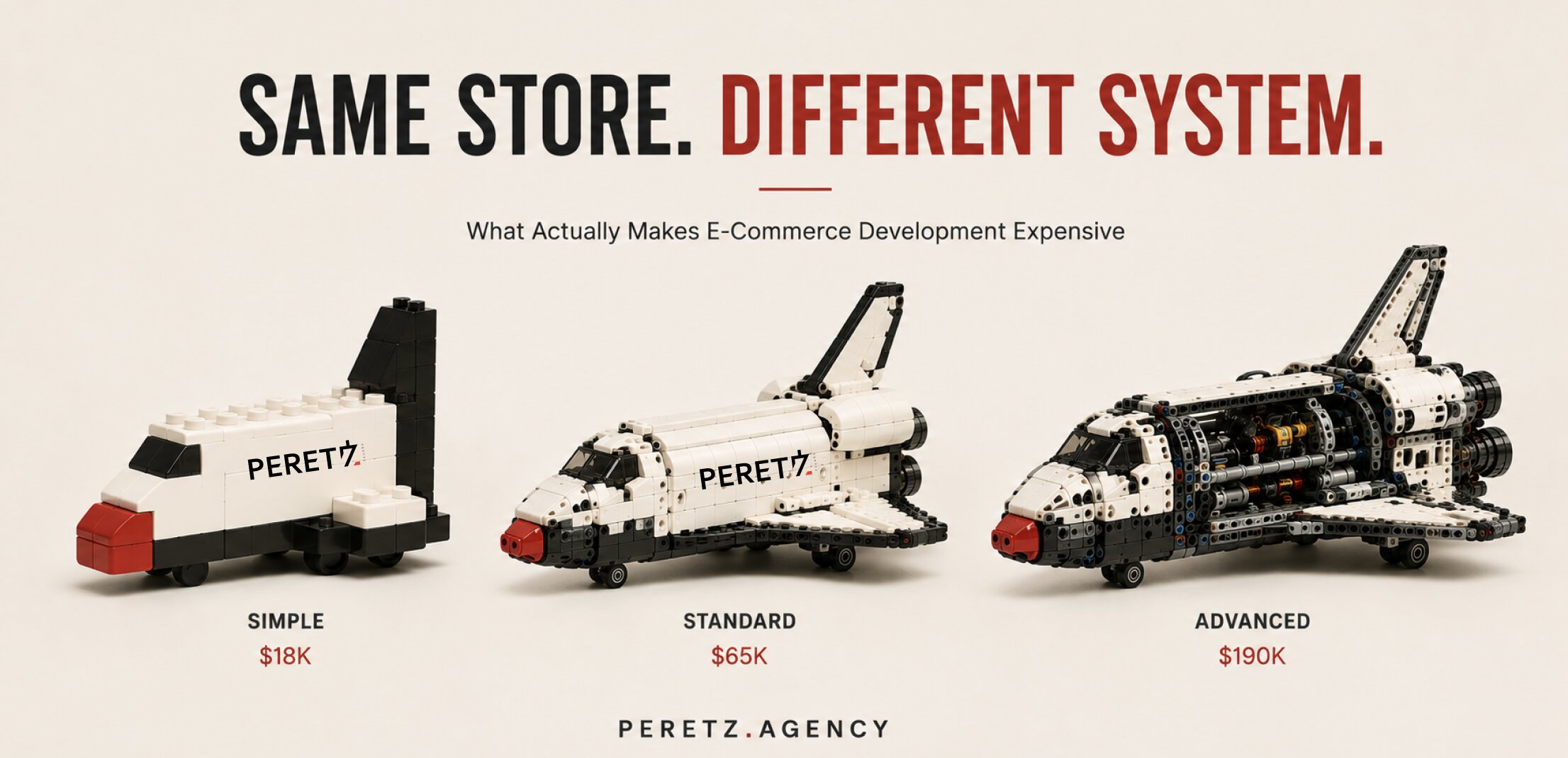
A business owner asks three agencies what it costs to build an online store.
The quotes come back at $18,000, $65,000 and $190,000.
Same brief. Same product photos. Same launch date.
The natural reaction is to assume that someone is overcharging, or that someone else has simply found a smarter way to build it.
Usually, neither is true.
The three agencies may simply be quoting three different products.
From the outside, an e-commerce website can look deceptively simple. A homepage, product pages, a cart, checkout and a payment button.
But the visible storefront is only one layer.
The real complexity often sits underneath it: how products are modeled, how variants affect inventory and pricing, how systems exchange data, how taxes are calculated, how an existing catalog is migrated, how customers actually make purchasing decisions and what the business has to operate after launch.
A storefront and a commerce system can look almost identical from the outside.
We have built both.
This is what actually moves the number.
SKU Count Misleads
SKU Count Misleads
The first question in most e-commerce briefs is:
How many products do you have?
It sounds like an important number.
Often, it isn't.
A catalog of 5,000 simple products, each with one price, one inventory number and a few images, is fundamentally a flat dataset.
It will take longer to import than 500 products.
But the underlying system may be relatively straightforward.
Now take 500 products where every product can vary by size, color, material and finish.
Those 500 products can generate tens of thousands of real combinations. And every combination may need its own price, inventory state, image, availability and place in search and filtering.
That is not simply a larger catalog.
It is a different data model.
This distinction is easy to miss because businesses naturally describe their stores in terms of products.
Developers have to think in terms of relationships.
What changes when the customer chooses a different material?
Does the price change?
Does inventory change?
Does the image change?
Can that combination actually be ordered?
Should it appear in search?
Can the customer return it?
What happens if the selected combination is temporarily unavailable?
The number of products tells you how much information exists.
It tells you surprisingly little about what the system has to do with that information.
A working example: SHTAYER, a premium home textile brand. The catalog is not enormous, but almost every product carries size and material logic, and those attributes affect pricing, availability and how a customer narrows a search. The platform the store originally launched on eventually ran out of room for that logic, which is why the store is now moving to a custom Laravel build. The catalog did not get bigger. It got more structured. You can see the project in our portfolio, and we wrote about the decision behind a move like this in When Does a Business Outgrow WordPress?
Variants Are the Multiplier
Variants Are the Multiplier
Once variants enter the picture, several systems have to agree with one another.
Pricing needs to know that one material costs more than another.
Inventory needs to track the correct combination.
Search and filtering need to avoid showing combinations that do not exist.
Photography needs to represent enough variation to help the customer without requiring an individual photograph for every possible combination.
And the CMS needs to allow someone on the client side to manage all of this without accidentally breaking the catalog.
We see this particularly clearly in the categories we work with.
Premium home textiles can involve size and material logic.
Jewelry can involve metal, stone, size and personalization.
Furniture can involve dimensions, finishes, configurations and lead times.
None of these businesses necessarily thinks of itself as technically complicated.
Their catalogs are.
This is also where B2B e-commerce becomes a different problem.
Customer-specific pricing, volume tiers and contract rates are not simply another field in a product record. They turn pricing into a system that has to understand who the customer is and which commercial rules apply to them.
A product catalog stops being a list.
It becomes infrastructure.
What the Customer Never Sees
What the Customer Never Sees
The brief usually describes what the customer sees.
The cost often lives in what the business runs behind it.
ERP.
Accounting.
CRM.
Warehouse management.
Inventory.
Shipping.
Payment gateways.
Email automation.
Tax services.
The question is not simply whether these systems need to connect.
It is how they need to behave when something goes wrong.
A one-way integration can be a feed.
A two-way integration is a contract between two systems that both expect to be right.
If a feed fails, information may become stale.
If a two-way integration fails, the consequences can be much more serious: inventory can become inaccurate, orders can be duplicated, or an invoice can disagree with what actually shipped.
Proper integration therefore requires more than moving data from A to B.
It requires handling conflicts, retries, failures and reconciliation. That work is engineering, even though none of it appears in a design mockup.
For US businesses, sales tax adds another invisible layer.
Rates can vary across states, counties and cities, while product classification can affect the calculation itself.
The customer sees a checkout total.
Behind it may be a tax service, product classifications and logic that needs to remain correct as the order moves through the system.
The customer sees a button. The business sees a chain of systems that has to agree about what happens after it is pressed.
Convenience Has a Recurring Price
Convenience Has a Recurring Price
Hosted platforms make an enormous amount of sense for many businesses.
A subscription and a transaction fee can be a much better decision than spending heavily on infrastructure that the business does not actually need.
We recommend that approach when it fits the business.
The problem begins when platform choice becomes ideology.
At low volume, a percentage of every transaction may be insignificant.
At substantial volume, the arithmetic changes.
A business processing $5 million annually can end up paying thousands of dollars a year in transaction fees; at $20 million, the recurring cost can become considerably more meaningful. The exact number depends on the platform, plan and payment structure, but the underlying issue is simple: a percentage remains a percentage as revenue grows.
That does not mean custom development is automatically cheaper.
It means the comparison eventually changes from:
Which platform is better?
to:
At what point does the recurring cost of convenience exceed the cost of ownership?
That point is different for every business.
We explore the broader build-versus-buy question in The Build vs. Buy Equation Has Changed.
Development Versus Working Store
Development Versus Working Store
One of the easiest ways to make an e-commerce proposal look affordable is to price the visible development and leave the operational work for later.
Product data may need to be migrated, cleaned and restructured because the old catalog was built around a different model.
Existing URLs may need to be mapped and redirected so the business does not lose search visibility accumulated over years.
Analytics and e-commerce tracking need to be configured correctly.
Payments and tax calculations need to be tested with real transactions.
Someone on the client side needs to be trained to operate the system.
None of this makes a particularly impressive presentation slide.
All of it determines whether the store actually works.
This is why we distinguish between launching a website and launching a business system.
A store that goes live without its data, tracking, payment logic, migration and operational processes properly prepared is not finished.
It is just visible.
The same applies to timelines.
A relatively simple themed store can go live in weeks.
A custom commerce system with real integrations can take several months.
But even those ranges hide another variable: how stable are the requirements?
The assumption that requirements will remain unchanged is one of the easiest assumptions to make and one of the hardest to maintain.
Costs Continue After Launch
Costs Continue After Launch
E-commerce is closer to operating a system than owning a website.
There is hosting.
Security.
Updates.
Monitoring.
Bug fixes.
Third-party services.
Applications.
API dependencies.
Platform changes.
And eventually, new requirements.
A useful planning model therefore considers the cost of operating the system after launch, not just the initial development budget. A common planning figure is roughly 10 to 20% of the initial build cost annually, covering areas such as hosting, security, updates, monitoring and fixes, while hosted platforms distribute those costs differently through subscriptions and apps.
The psychology of recurring costs is interesting.
One $20,000 engineering decision feels large.
Fifteen $50 monthly applications do not.
Until there are fifteen of them.
And each application is also a dependency.
It can change pricing.
It can stop being maintained.
It can conflict with another application.
It can break after a platform update.
This is why cheap to launch and cheap to own are different questions.
Why Quotes Differ Tenfold
Why Quotes Differ Tenfold
Now the original $18,000 versus $65,000 versus $190,000 question becomes easier to understand.
Sometimes the low quote is simply wrong.
Sometimes the high quote is inflated.
But often the difference is much more specific.
The low quote may be pricing the storefront.
The high quote may be pricing the system underneath it.
One agency may assume simple products, minimal integrations and a clean migration.
Another may have asked what happens when:
- a customer has contract pricing
- inventory changes in the warehouse
- a product has dozens of combinations
- tax needs to be calculated
- an order has to pass through several systems
- the existing URLs need to survive a migration
- the business needs reliable reporting after launch
Those are not abstract differences.
They are line items.
The important thing is that many of them can be excluded from a proposal without making the proposal look incomplete.
That is why discovery matters so much.
A quote is only as reliable as the questions asked before it.
And there is a distinction worth making very clearly:
A cheap quote is not necessarily a bad quote. An expensive quote is not necessarily a good one.
A simple business should not pay for complexity it does not need.
A complex business, however, should be suspicious of a quote that somehow manages to avoid pricing the complexity it already has.
Considered Purchases Change Architecture
Considered Purchases Change Architecture
There is another variable that has little to do with catalog size.
How does the customer make the decision?
Some products are bought almost immediately.
Others are considered for days, weeks or months.
A customer buying a familiar, inexpensive product usually benefits from the shortest reliable path to checkout.
Someone considering a piece of jewelry, a premium textile set or a piece of furniture that may remain in their home for twenty years may need provenance, specifications, materials, detailed photography, comparison, reassurance and sometimes a conversation before buying.
Those are not simply additional pages.
They are a different architecture.
This matters because e-commerce advice is often presented as if conversion optimization were universal.
Reduce friction.
Shorten the journey.
Remove distractions.
Make checkout faster.
Often, these are good principles.
But a customer buying a considered product does not necessarily want the shortest possible path.
They may need the information that makes them comfortable taking the next step.
That is why a jewelry store, a premium textile brand and a convenience retailer can all be successful e-commerce businesses while requiring very different digital experiences.
We have explored this in Why Luxury E-commerce Breaks Every Rule of Conversion Optimization and How We Design E-Commerce: From Objects to Experience.
Pricing a considered-purchase store as if it were a convenience store is one of the more expensive mistakes available.
A working example: Magerit, a Spanish jewellery house whose pieces are organised not only by product category but by collections built around mythology, nature and the four elements. That gives a customer two legitimate ways in: through the product, or through the story. The interface had to support both, plus a separate section for children's jewellery, where the buyer, the language and the decision process are all different. None of that is a catalog size problem. It is an architecture problem. The case is in our portfolio.
Geography Changes the Cost Base
Geography Changes the Cost Base
Development rates vary significantly by geography.
That is a legitimate factor when comparing proposals.
But hourly rate is not the same thing as project value.
A lower rate does not automatically mean lower capability.
A higher rate does not automatically mean better engineering.
The more useful question is:
What am I actually getting for that rate?
How much discovery?
What architecture?
Which integrations?
What data migration?
What QA?
What happens after launch?
What happens when requirements become more specific?
Our engineering teams are based in Europe, which gives us a different cost structure from many US agencies. That can allow a greater proportion of the budget to go into engineering, integrations, data architecture and post-launch stability rather than the cost base surrounding delivery.
We do not present that as a discount.
The point is simply that cost structure and quality are not the same variable.
And geography does not solve the fundamental problem.
A team anywhere in the world can build the wrong system very efficiently.
The protection against that is discovery and architecture.
A team can be inexpensive and still build the wrong thing. A team can be expensive and still build the wrong thing.
The important part is understanding the business before opening the code editor.
What to Ask First
What to Ask First
Before comparing e-commerce proposals, ask questions that expose the assumptions behind the number.
- Are the products simple or configurable? Who defined the product data model?
- Which integrations are included? Are they one-way or two-way?
- How is sales tax handled?
- Is product data migration included? Does that include cleaning and restructuring?
- Is SEO migration included? Who creates and validates the redirect map?
- What analytics and e-commerce tracking are included?
- What does the first year of ownership actually cost? Including hosting, applications, licenses and third-party services.
- What happens during the first eight weeks after launch?
And perhaps the most revealing question:
What assumptions did you make to arrive at this price?
An agency that can answer these questions clearly has probably thought about the project.
An agency that cannot may simply be quoting an assumption.
The Real Cost of E-Commerce
E-commerce development becomes expensive when the business behind the store is complex.
Not necessarily because it has thousands of products.
Because those products behave differently.
Because customers see different prices.
Because inventory lives somewhere else.
Because orders have to move between systems.
Because tax has to be calculated.
Because existing URLs have accumulated value.
Because customers need more information before buying.
Because the business needs the system to keep working after launch.
And sometimes because the business has outgrown the platform it started with.
That is why we are skeptical of universal e-commerce price lists.
There is no meaningful price for "an online store" in isolation.
There is a price for a particular catalog, a particular business model, a particular customer journey and a particular set of operational requirements.
The right question is therefore not:
How much does an e-commerce website cost?
It is:
What does our business actually require the system to do?
Once that is understood, the price becomes much easier to explain.
And much harder to fake.
The same question applied to the Seattle market specifically is covered in Why E-Commerce Development Quotes in Seattle Range From $25 to $300 an Hour.
The timeline side of the same question, including which parts of it the client controls, is covered in How Long Does an E-Commerce Build Actually Take, and What the Client Has to Do.
At catalogue scale across several markets these costs change shape entirely, which we examine in Fifty Thousand Products, Eight Markets: Where Catalogue Scale Becomes an Architecture Problem.
At catalogue scale across several markets these costs change shape entirely, which we examine in Multi-Country E-Commerce for Large Catalogues: The Architecture Decisions That Set the Ceiling.
A newer factor now sits alongside these costs, examined in SEO Gets You Found. AEO Gets You Recommended. Your Commerce Infrastructure Gets You Bought..
If you are planning an e-commerce build and want to understand what your catalog, integrations, customer journey and operations actually require before comparing proposals, that is exactly what a Strategic Session is for.
Explore our E-Commerce Development services.
Multichannel architecture is one of the biggest drivers of that cost, see when e-commerce becomes a business system.
- Share
-

-

-

-

Related Reading
-
12. 08. 2026

Why Luxury E-commerce Breaks Every Rule of Conversion Optimization

-
13. 08. 2026
What Happens to E-Commerce When a Website Stops Being a Website?
-
14. 08. 2026

How We Design E-Commerce: From Objects to Experience
-
16. 08. 2026

Why Family-Owned Jewelry Stores Outgrow Their E-commerce Platform
-
23. 08. 2026
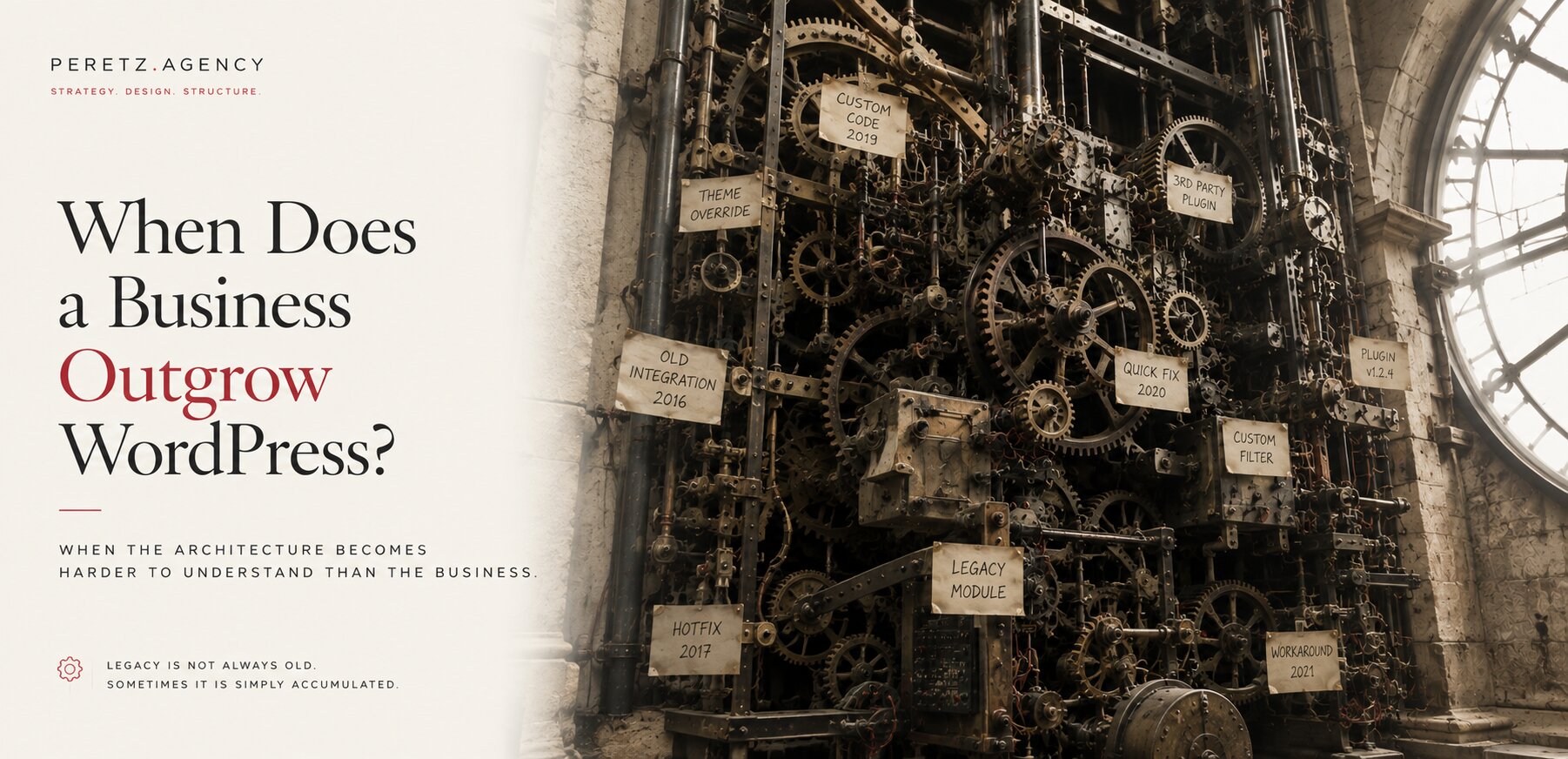
When Does a Business Outgrow WordPress?
-
17. 07. 2026
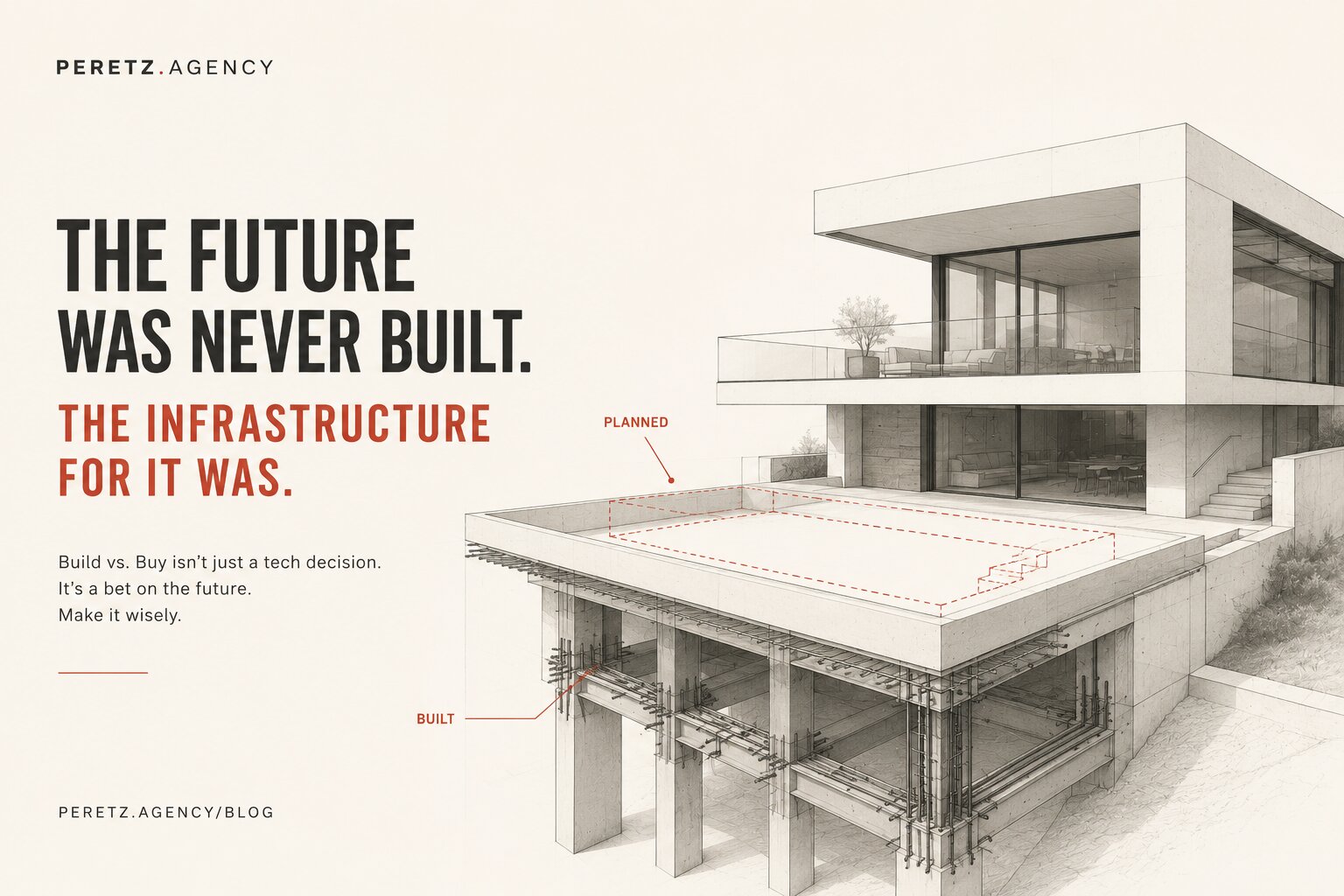
The Build vs. Buy Equation Has Changed. Most Companies Have Not Recalculated It.
-
23. 08. 2026

How Much Does a Custom Website Cost in 2026?
-
01. 09. 2026

Why E-Commerce Development Quotes in Seattle Range From $25 to $300 an Hour
-
01. 09. 2026
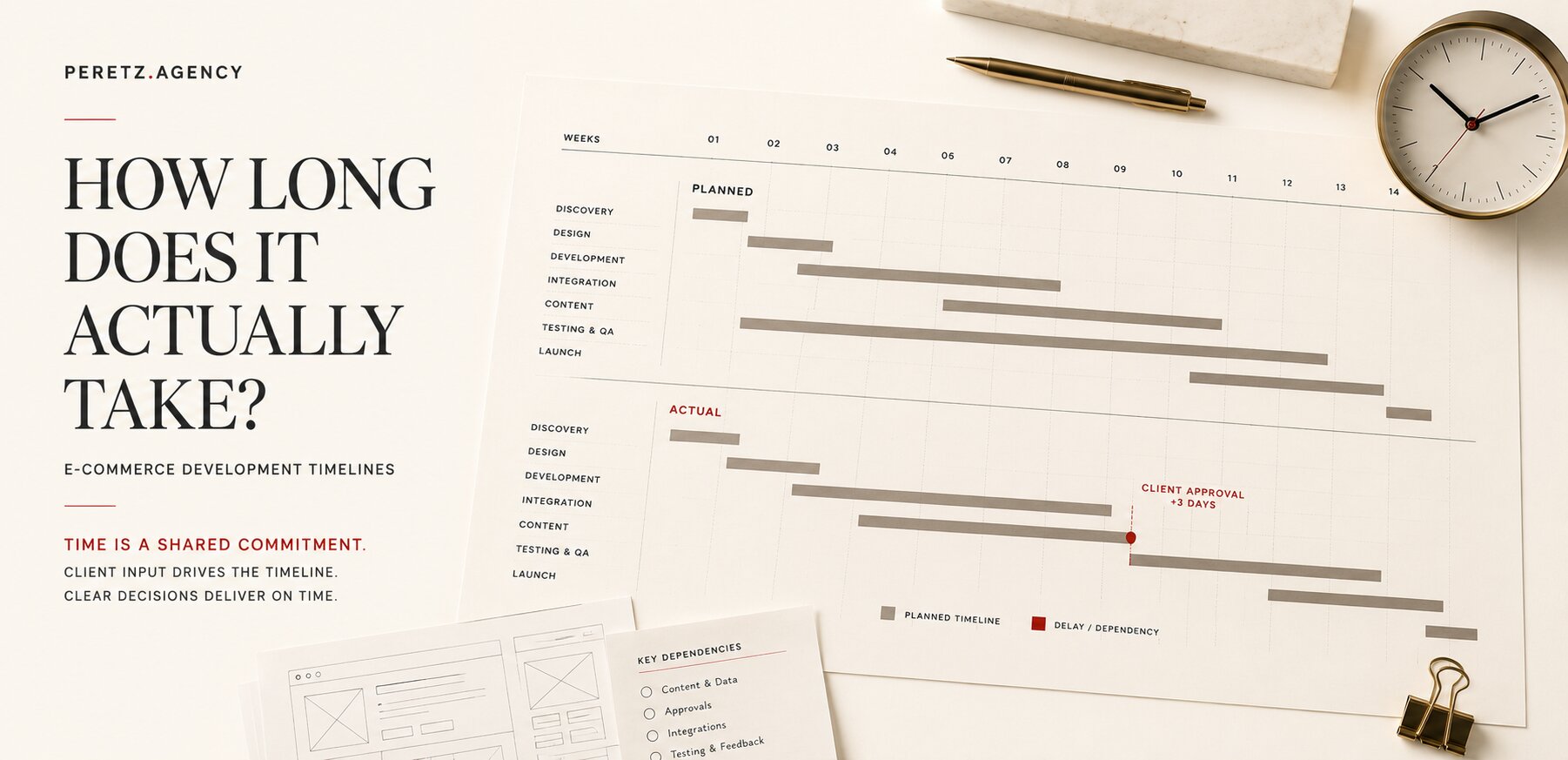
How Long Does an E-Commerce Build Actually Take, and What the Client Has to Do
-
04. 09. 2026
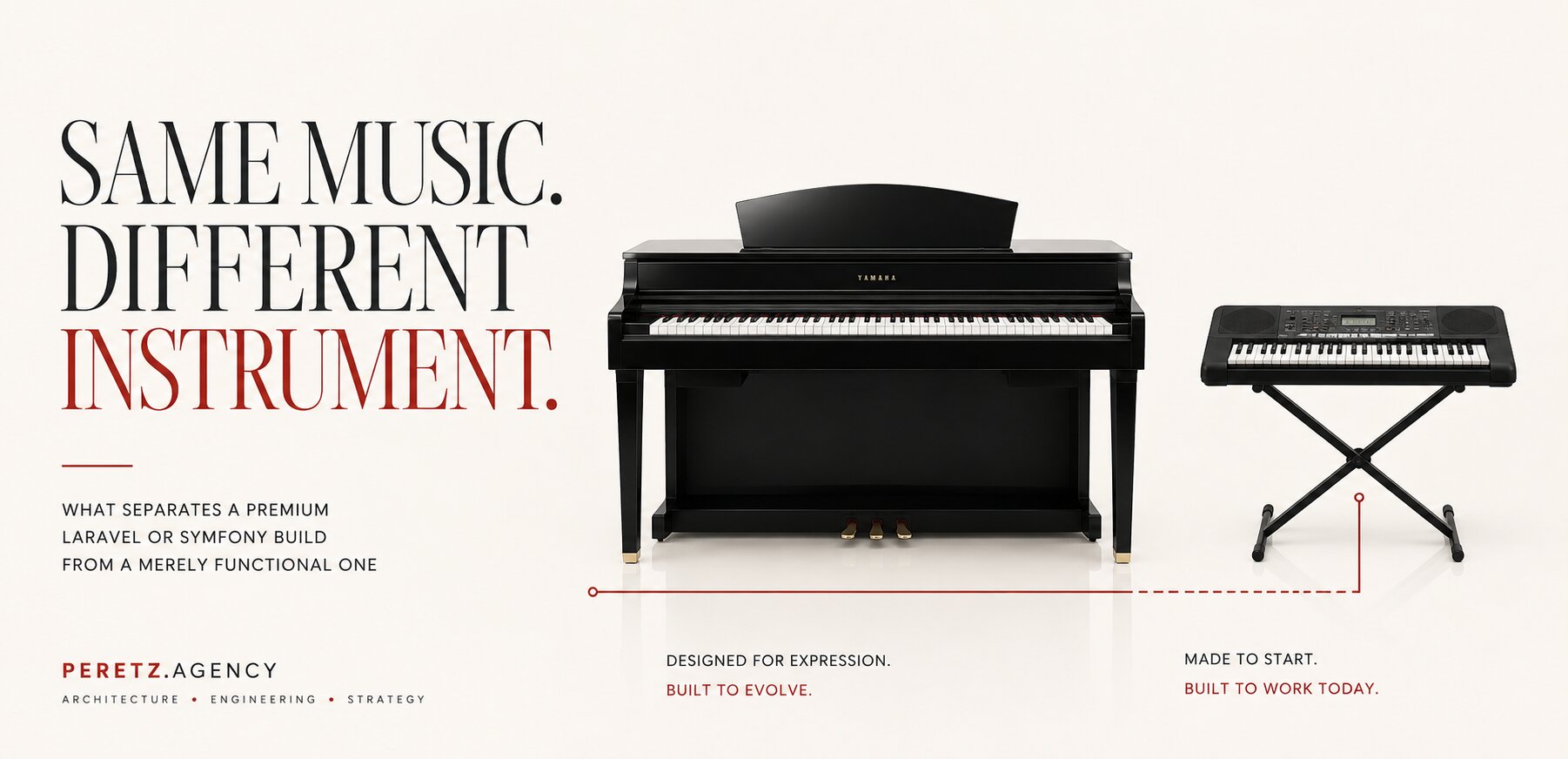
What Separates a Premium Laravel or Symfony Build From a Merely Functional One
-
06. 09. 2026
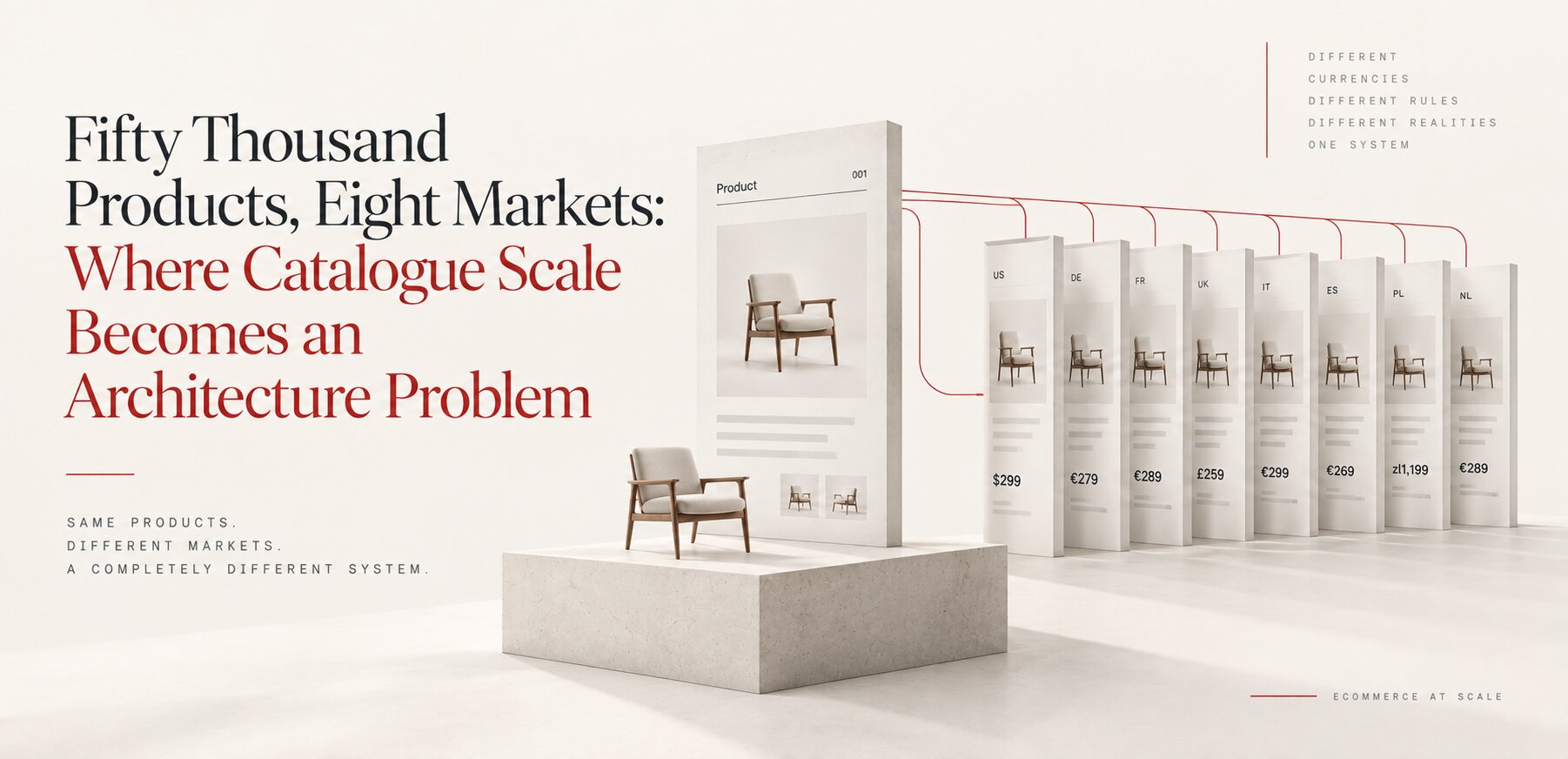
Multi-Country E-Commerce for Large Catalogues: The Architecture Decisions That Set the Ceiling
-
06. 09. 2026
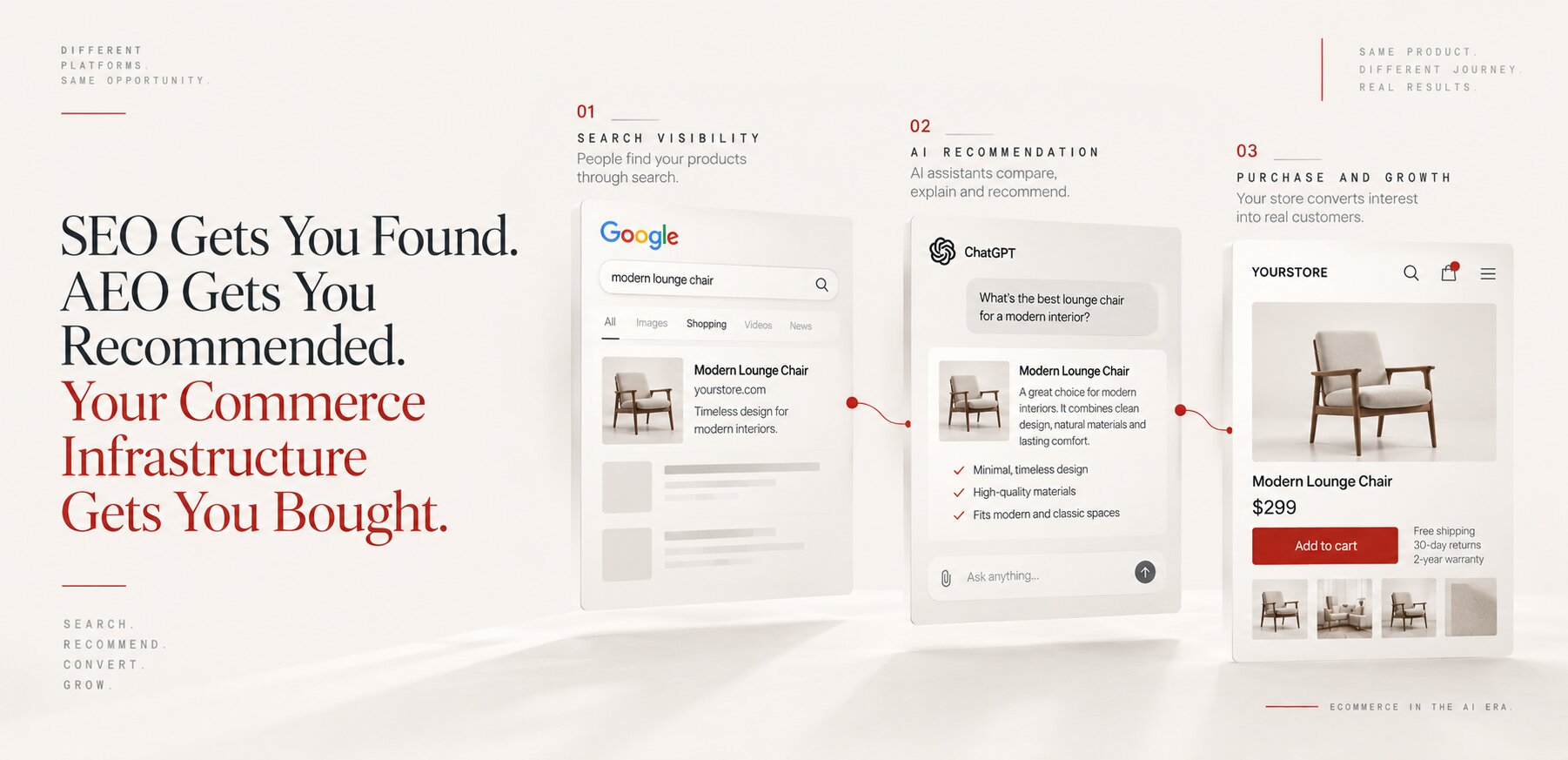
SEO Gets You Found. AEO Gets You Recommended. Your Commerce Infrastructure Gets You Bought.
-
07. 09. 2026

Agentic AI Compliance: How to Secure, Govern and Monitor AI Agents
-
17. 09. 2026
When E-Commerce Becomes a Business System