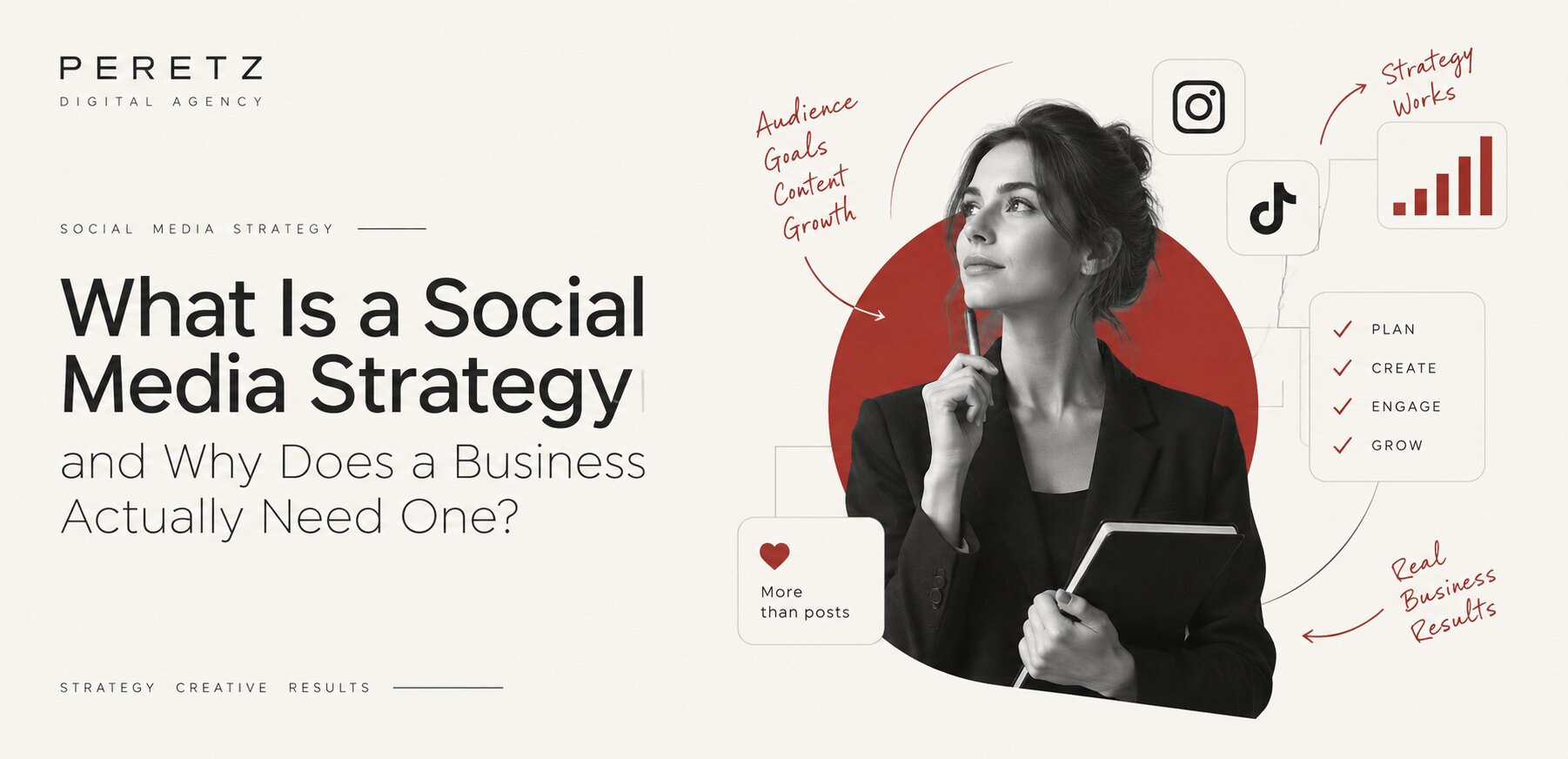
What Is a Social Media Strategy and Why Does a Business Actually Need One?
Close to 60% of consumers now research products on Instagram before buying. Posting isn't a strategy, it's activity with no answer why.



Almost every business already has an Instagram account. Most of them post regularly. Very few of them have a strategy, and the gap between those two facts is where a lot of marketing budgets quietly disappear.
A social media strategy isn't a content calendar, a posting schedule, or a list of hashtags. It's the answer to a small set of questions, decided in order, before a single post gets planned: who specifically are we trying to reach, why does reaching them matter to the business, where do they actually spend attention, what do we say to move them somewhere specific, and how will we know if any of it worked. A content calendar is what you build after those five questions have real answers. Posting without them isn't a strategy executed badly. It's an activity with no strategy behind it at all.
A posting schedule tells you what happens on Tuesday. A strategy tells you why Tuesday's post exists, what it's supposed to change, and how you'll know if it did. Most businesses have the first one and call it the second.
I see this confusion constantly in the first client call. Someone hands me a beautifully organized content calendar, color coded by pillar, scheduled three months out, and asks why it isn't converting. The calendar isn't the problem. Nobody ever decided what the calendar was supposed to accomplish for the business before building it.
A calendar filled to look active isn't a strategy.
Why This Distinction Matters More in 2026 Than It Used To
Social platforms have quietly become the primary place people research a purchase before they make it, not a supplementary channel next to search, but often ahead of it. Close to 60% of consumers now use Instagram and just over half use TikTok specifically to research products before buying, according to 2026 consumer research. Roughly two-thirds of US consumers report using social search, searching directly inside a platform instead of Google, to find what they need. For audiences in the 16-to-34 range specifically, social platforms have overtaken traditional search as the primary channel for researching a brand.
This changes what's actually at stake when a business has no strategy. It's not just wasted posting effort, it's a missed opportunity at the exact moment a real percentage of potential customers are actively deciding whether the business is worth trusting, using the business's own social presence as the evidence.
Video content specifically is showing roughly 48% higher engagement than static images across platforms in 2026, a gap large enough that format decisions, not just topic decisions, are now part of what a real strategy has to account for.
The shift is sharper in some categories than others. For product-based businesses, especially in beauty, fashion, and home goods, social search functions less like discovery and more like the final due-diligence step before checkout: a shopper who already intends to buy checks Instagram or TikTok not to decide whether to want the product, but to decide whether to trust this specific business enough to hand over a card number. Service businesses see a version of the same pattern in slower motion: a potential client checks a firm's social presence looking less for pretty content and more for evidence that real work is actually happening there. In both cases, a thin or inconsistent presence doesn't just fail to help. It actively raises doubt at the exact moment doubt is most costly. This is also the honest answer to whether social media marketing is dead in 2026: the channel isn't dying, strategy-free posting is.
The Failure Pattern Almost Every Business Recognizes
Most businesses don't fail at social media because they lack ideas. They fail because they post without a plan, chase whatever trend appeared last week, and then judge the entire effort by follower count. A marketing manager posts three times, gets underwhelming reach, and concludes "social media doesn't work for us." What actually happened is simpler: there was no strategy behind the posting, so there was nothing to measure results against, learn from, or improve.
"Grow our social media presence" isn't a goal. It's a wish. A goal specifies the metric, the target, and the timeframe. "Increase qualified website traffic from Instagram by 20% this quarter" is something you can actually plan around, staff for, and evaluate honestly at the end.
Vague goals produce vague results, and vague results are exactly what makes a business conclude the channel itself doesn't work, when the actual problem was never having a specific enough target to know whether it did.
I worked with a boutique fitness studio last year that had genuinely good content: sharp video, consistent posting, decent engagement numbers. The owner was ready to cut the entire channel because six months of posting hadn't produced a single new membership she could trace back to it. The content wasn't the issue. Nobody had ever defined what a win looked like, so there was no way to know whether the content was moving toward one or just filling space. Once we defined the goal as trial-class bookings and built content specifically to drive that one action, the same production budget produced measurable signups within five weeks, not because the content got better, but because it finally had somewhere to go.
The content wasn't the problem. The missing decision was.
The Five Questions a Real Strategy Answers
WHO, SPECIFICALLY
1. Who, specifically
Not "women 25–45," a level of specificity that describes almost nobody usefully. A real audience definition includes what problem they're trying to solve, what they've likely already tried, and what would make them trust a business enough to act. This is the same depth of audience thinking that separates content people recognize themselves in from content that gets scrolled past. For a pediatric dental practice, "parents" is useless. "A parent whose child just had their first cavity, who feels guilty about it, and who is quietly searching for a dentist who won't make them feel worse" is specific enough to actually write to. Getting this right is also what separates building an audience from building a community, one just watches, the other buys.
WHY IT MATTERS
2. Why it matters to the business
Every serious social media goal falls into one of four categories, and it's worth being honest about which one is actually being pursued before choosing tactics: awareness (reach, impressions, follower growth), consideration (website traffic, profile visits, saves), conversion (leads, sales, bookings), or retention (repeat engagement, community, customer loyalty). A strategy built for awareness and measured like a conversion strategy will always look like it's failing, because it was never built to do that job. A new restaurant opening in a neighborhood needs awareness first. A nine-year-old accounting firm with a full referral pipeline probably needs retention content for existing clients, not reach.
WHERE THEY ARE
3. Where the audience actually spends attention
Not every business needs to be on every platform doing everything. The decision about where to show up needs to be deliberate, based on where the specific audience defined in step one is actually active and receptive, not based on which platform is currently getting the most industry attention. A B2B software company chasing TikTok trends while its actual buyers live on LinkedIn is optimizing for the wrong room entirely. This is exactly why platform questions like TikTok vs Instagram or Threads vs X only make sense once the audience from step one is actually defined, not before.
WHAT MOVES THEM
4. What moves them somewhere specific
Content that doesn't connect back to a business outcome is activity, not strategy. This is the difference between content chosen because it's trending and content chosen because it's the next step in a specific person's decision to trust and eventually buy from this specific business. A trending audio clip with no connection to what the business actually sells might get views. It rarely gets customers. This is also where paid amplification without organic direction breaks down, see why Instagram ads stop working when there's no strategy behind the spend.
HOW YOU'LL KNOW
5. How you'll know if it worked
This has to be decided before launch, not invented afterward to justify whatever numbers came in. If the goal is awareness, the metric is reach and impressions. If the goal is conversion, the metric is leads and qualified traffic, not likes, which measure something else entirely and were never built to answer this question. A business that celebrates a viral post with zero attributable leads is measuring the wrong scoreboard for the game it's actually trying to win. A high click-through rate with low conversion is exactly this kind of mismatch, the wrong metric looking healthy while the real one fails.
What This Actually Looks Like in Practice
- A specific, evidence-based audience definition, not a demographic range, but a description detailed enough that content decisions can be tested against it directly.
- One goal category chosen honestly, with the metric that actually measures it, not a wish dressed up as a target.
- A platform decision based on where that specific audience is actually researching and deciding, not on where the business feels it should have a presence.
- A content plan where every recurring piece connects back to moving that audience toward the stated goal, not a calendar filled to look active.
- A measurement plan decided in advance, checked on a schedule, and used to actually change what gets made next, not a report built after the fact to explain whatever happened.
The fastest way to tell whether a business currently has a strategy or just a posting habit: ask what the last three posts were supposed to accomplish, specifically, for the business. If the honest answer is "to post something this week," that's a habit. A strategy has a different answer for every post, and all of them point somewhere.
I ran this exact test with a client's marketing team last quarter. Nobody in the room could answer what the last post was supposed to accomplish beyond "staying visible." That answer, on its own, told us more about the account's problem than three months of analytics would have. I run this exact audit process on every new account, the same one behind 50 Instagram accounts I reviewed this year, and the pattern was always the same: growth stalled where strategy was missing, not where content was weak.
A strategy has a different answer for every post.
Why I Start Every Client Relationship Here
Before I write a single caption for a new client, I want real answers to those five questions, not because it's a nice exercise, but because every piece of content I make after that point is either working toward something specific or it's just filling a calendar. I've taken over accounts with genuinely good content that wasn't moving the business anywhere, because nobody had ever decided what "moving the business" was supposed to look like for that account. The content wasn't the problem. The missing decision underneath it was.
This is also why a strategy and a posting schedule get priced and delivered so differently: one is a set of decisions made once and revisited quarterly, the other is ongoing execution against those decisions. Confusing the two is how businesses end up paying month after month for content with no way to tell whether it's actually working.
FAQ
Frequently Asked Questions
Is posting on social media the same as having a social media strategy?
No. Posting is an activity. A strategy is the set of decisions, audience, goal, platform, content approach, and success metric, that gives the activity a direction and a way to measure whether it's working. A business can post daily for years and never have had a strategy.
Does a small business really need a formal social media strategy?
Yes, though "formal" doesn't mean complicated. Even a one-page answer to the five questions above gives a small business more direction than most enterprise accounts have. The size of the business changes the scale of execution, not whether the underlying decisions need to be made.
How long does it take to build a real social media strategy?
A genuine strategy, built properly with real audience research and a measurement plan, typically takes one to three weeks to develop for a single business, depending on how much audience and competitor research already exists. Skipping this step doesn't save that time. It just spends it later, more expensively, on content that has to be redone. The actual build order matters as much as the answers themselves, see the process, audit first, then everything else.
HOW PERETZ AGENCY APPROACHES THIS
How Peretz Agency Approaches This
Every new client relationship starts with these five questions answered in writing, before a single post gets planned, because a strategy document that takes a week to build saves months of content that nobody can prove is doing anything.
Not sure whether your account currently has a strategy or just a posting habit? Contact us at hello@peretz.agency or call +1 425 471 94 96.
Once the strategy exists, the next confusion is usually strategy versus management, deciding what to do versus making sure it happens.
Once you know what you need, the next question is what it should cost, see the real breakdown by component.
If the strategy is solid and the content still isn't landing, see the 7 real reasons content underperforms.
Not sure whether your account currently has a strategy or just a posting habit? A Strategic Session gets you real answers to the five questions above, in writing, before a single post gets planned.
Or if the strategy is already clear and you just need it executed?
Explore Social Media Marketing (SMM)
For a deeper framework specifically on lead-generation structure, see building a strategy that generates leads.
This is one link in a larger chain, covered in full in social media strategy is not a content calendar.
- Share
-

-

-

-

One notification a week with the new PERETZ articles. Nothing else.
Related Reading
-
18. 06. 2026
Why Your Instagram Ads Aren't Working in 2026 — And How to Fix Them

-
02. 07. 2026
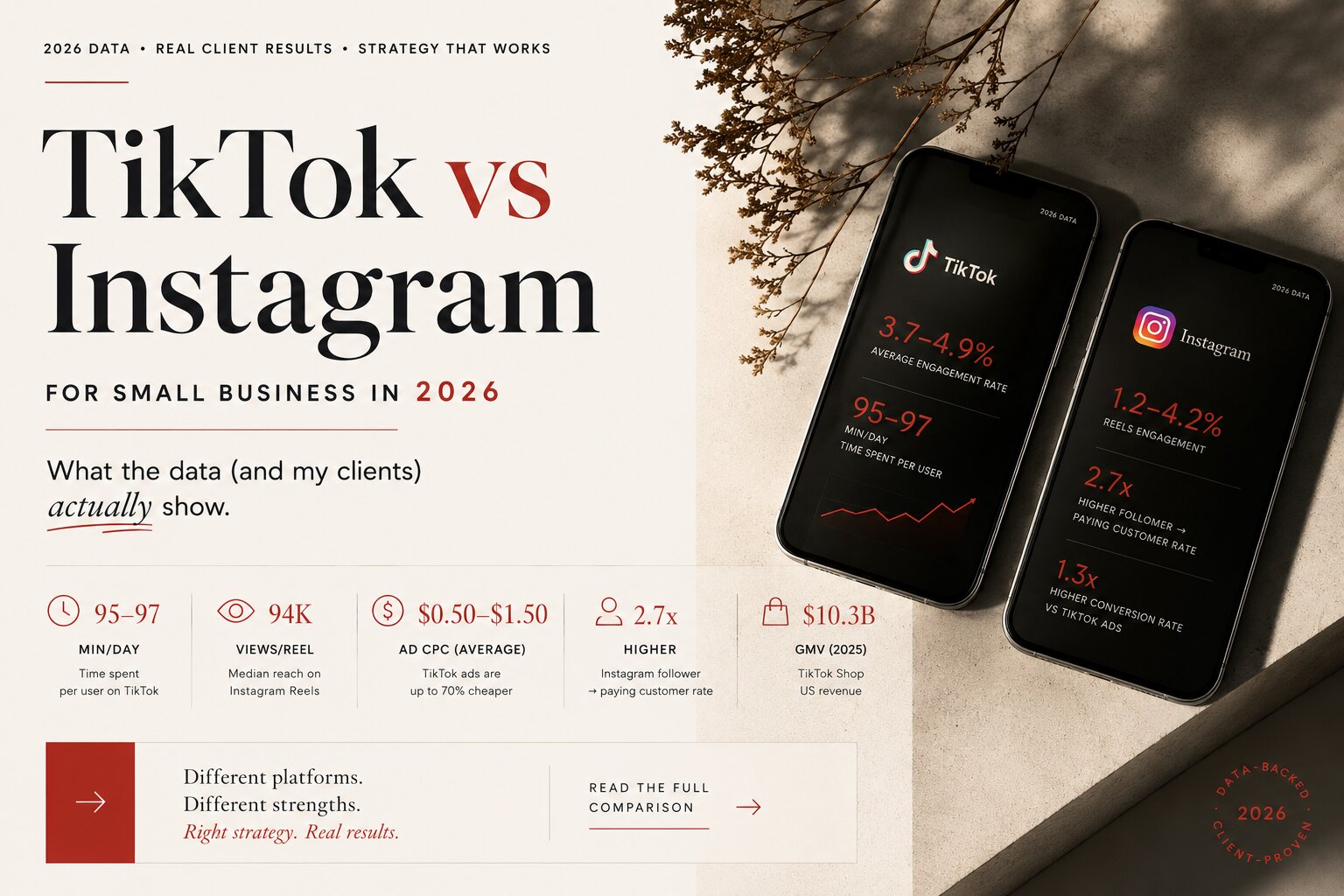
TikTok vs Instagram for Small Business in 2026: What the Data (and My Clients) Actually Show
-
08. 07. 2026
Threads vs X in 2026: Which Platform Should Your Business Actually Be On?
-
12. 07. 2026

How to Build a Community, Not Just an Audience
-
19. 07. 2026
High CTR But Low Conversion Rate? Here's Why Your Ad Copy Is the Problem
-
24. 07. 2026
Is Social Media Marketing Dead in 2026? What the Data Actually Says
-
30. 06. 2026

I Audited 50 Instagram Accounts This Year. Here's What Actually Separates Growth from Stagnation.
-
08. 09. 2026
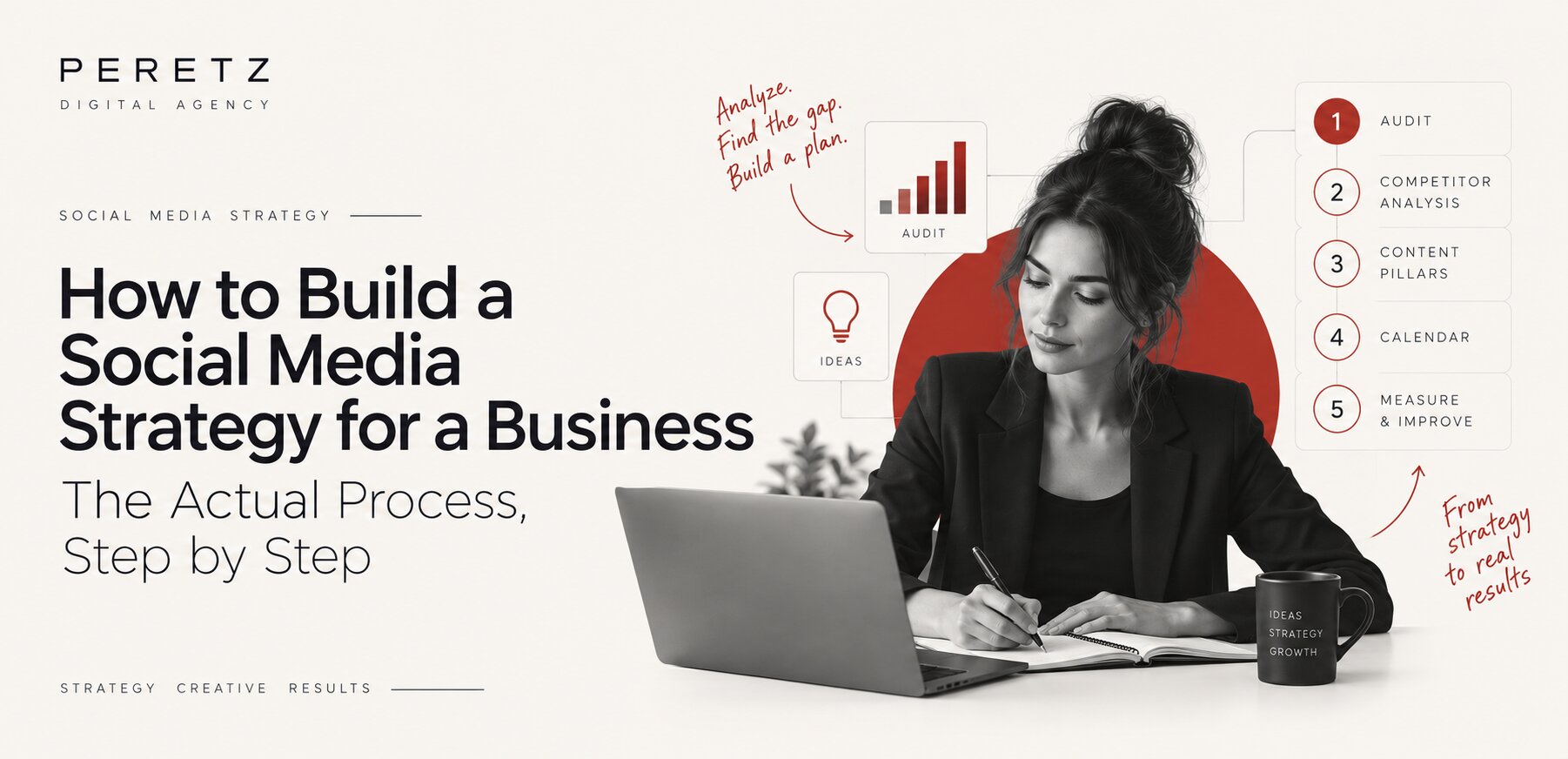
How to Build a Social Media Strategy for a Business, The Actual Process, Step by Step
-
08. 09. 2026
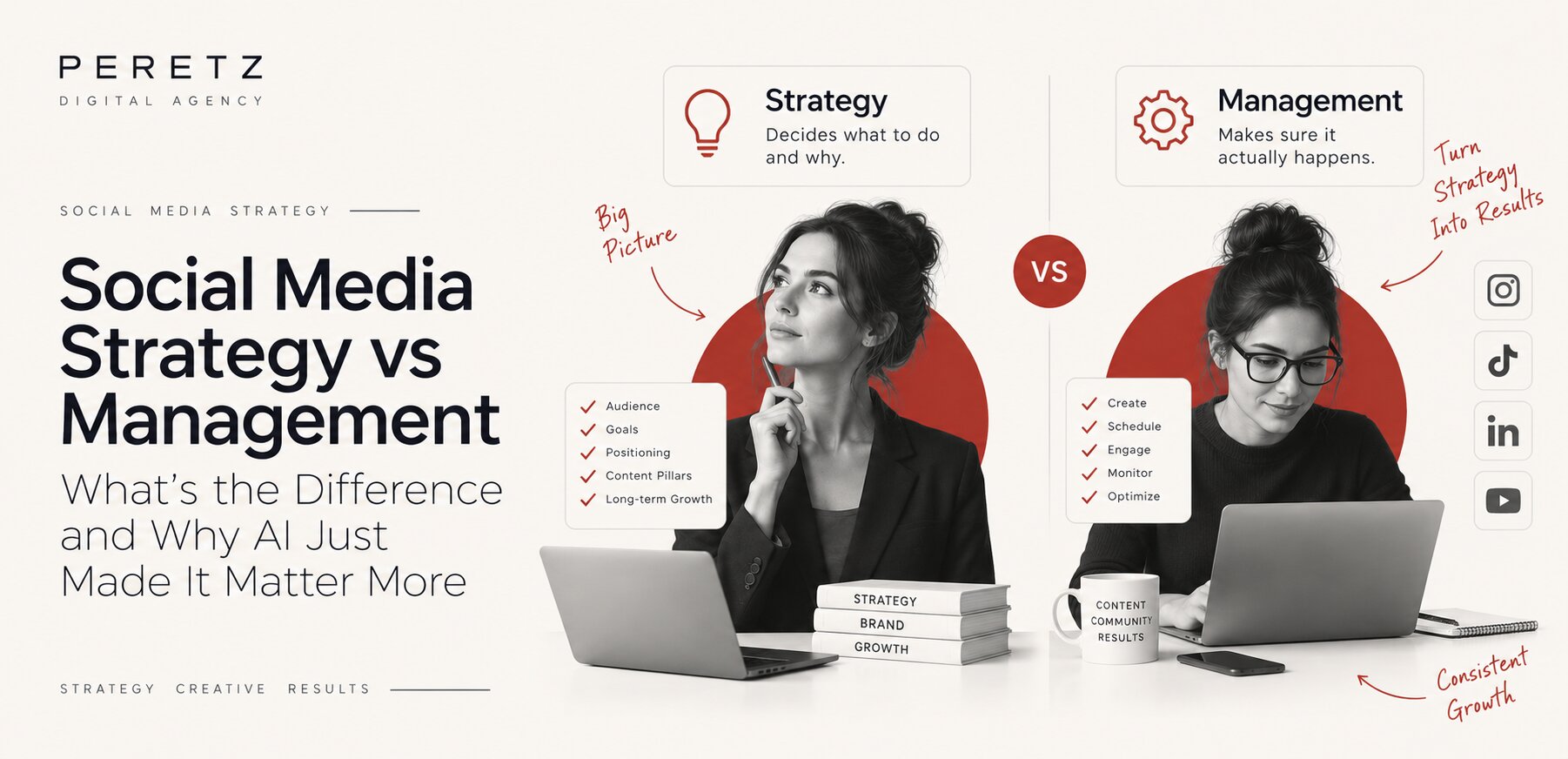
Social Media Strategy vs Social Media Management, What's the Difference and Why AI Just Made It Matter More
-
08. 09. 2026
How Much Does Social Media Strategy Cost in 2026? A Real Breakdown by Component
-
08. 09. 2026
Why Your Social Media Content Isn't Working (7 Real Reasons, Not Algorithm Excuses)
-
26. 06. 2026
How to Build a Social Media Strategy That Actually Generates Leads
-
24. 09. 2026

Social Media Strategy Is Not a Content Calendar
-
25. 09. 2026
How Many Social Media Posts Does a Business Really Need?
-
16. 10. 2026
Brand Positioning for Small Business: How to Write One That Customers Can Repeat