How to Build a Social Media Strategy for a Business, The Actual Process, Step by Step
Most content calendars get built before anyone decides what job the content should do. Here's the real process, audit first, then pillars.



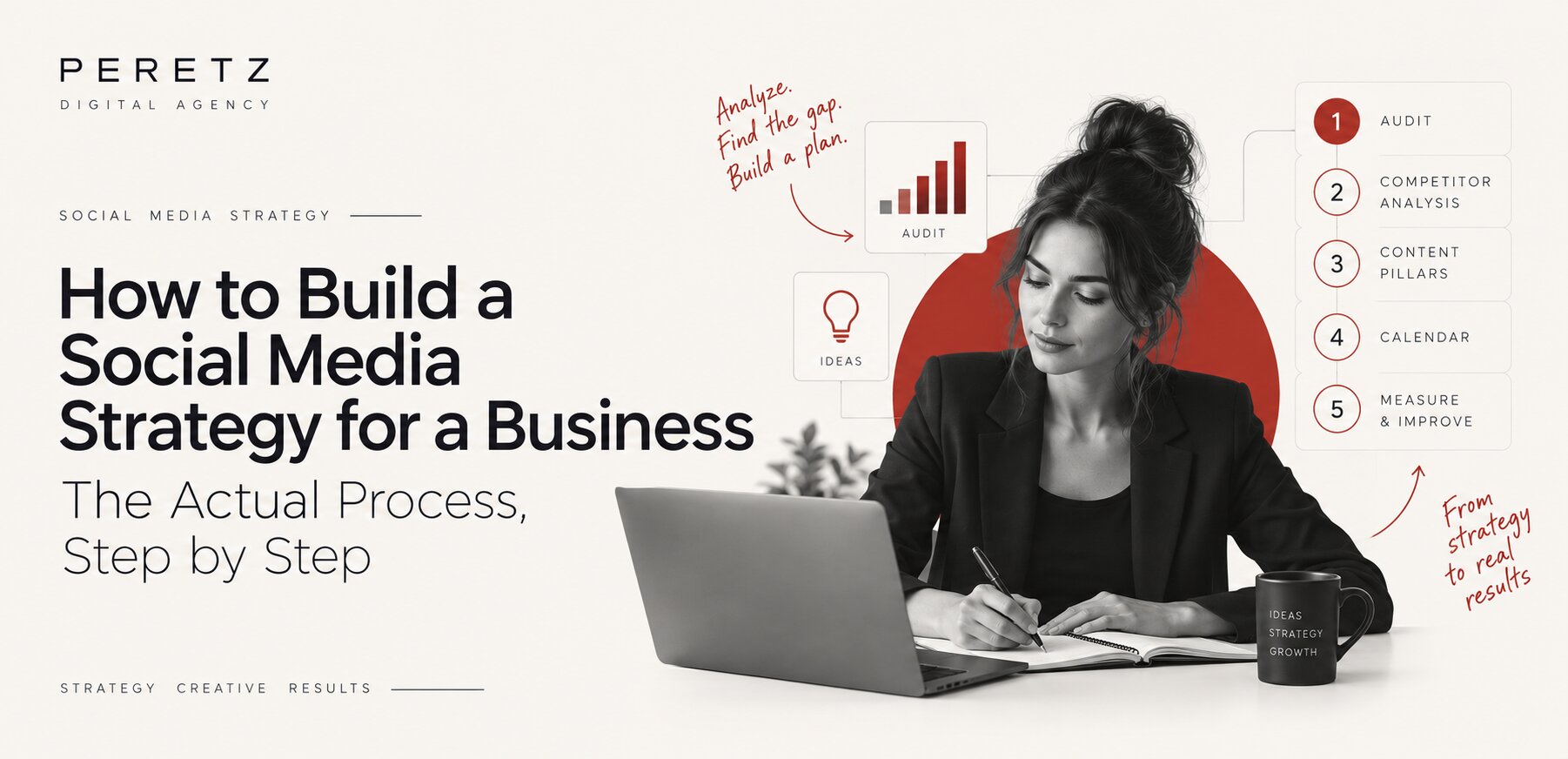
Knowing that a strategy is different from a posting schedule doesn't tell you how to build one. Most teams that understand the distinction still end up building the calendar first, because a calendar feels like progress and an audit feels like delay. That order is backwards, and it's the reason so many strategies quietly become posting schedules within the first month regardless of good intentions.
Here's the process that actually holds up, in the order that actually works, not seven generic steps copied from a template, but the specific decisions that determine whether everything built afterward compounds or just accumulates.
A calendar built before the audit accumulates. It doesn't compound.
STEP ONE: AUDIT
Step One: Audit Before You Plan Anything
A social media audit is a full review of what already exists: every account, what's been posted, what actually performed, and what the current numbers say about audience and engagement, done before a single new decision gets made. Skipping this step means building a strategy on assumptions about what's already working, which is exactly backwards. The audit is where you find out. I run this exact kind of check in 50 Instagram accounts I audited this year, and the pattern was always the same. This is also the first thing to nail down before anything in what a real social media strategy actually answers makes sense to build against.
What a real audit checks: posting cadence against what the platform actually rewards, whether content pillars are documented or just happening by accident, the ratio of evergreen to timely content, and, the part almost always skipped, whether the best-performing posts from the last 90 days share anything in common that isn't currently being repeated on purpose.
I ran this exact audit for a B2B logistics client last quarter and found their three highest-performing posts of the year all shared one trait nobody had noticed: each one quoted a real employee by name. The client's regular content was polished corporate messaging with no names attached anywhere. That single pattern, invisible without the audit, became the seed of an entire content pillar.
A meaningful shift for 2026: treating competitive analysis as a one-time event is already outdated. Social moves in weeks, not quarters, and a competitor audit filed away after one presentation is stale within months. The businesses gaining ground are running a lightweight competitor check monthly, not a full audit once a year.
COMPETITOR GAPS
Step Two: Competitor Analysis Isn't About Matching, It's About Finding the Gap
Most competitor research gets used the wrong way: teams catalog what competitors are doing well and try to do the same thing, slightly better. That produces content that's competent and forgettable, because it's answering a question the audience has already had answered somewhere else.
The point of competitor analysis was never the report. It's the content pillar every competitor in the category is ignoring, the specific question the audience keeps asking in the comments that nobody in the space is actually answering.
The useful version of this research looks for three specific things: a content angle every competitor is ignoring that the audience would likely respond to, a platform where competitors have weak or inconsistent presence, and formats competitors use poorly despite frequent posting, evidence of an opening, not a bar to clear. Whether you handle this in-house or bring someone in changes the economics here more than most businesses expect, see SMM agency vs freelancer for the real tradeoffs, or the broader in-house vs outsourcing decision behind it.
For a regional dental group I worked with, every single competitor in their market ran generic "meet the team" content and none of them addressed the actual anxiety driving most searches: fear of pain. That gap became their strongest-performing content angle within six weeks.
CONTENT PILLARS
Step Three: Content Pillars, Built on the Right Question
Most content pillar frameworks map to funnel stages, awareness content, consideration content, conversion content. That's not wrong, but it's not where pillars should start, because it describes the business's process, not the audience's actual reason for showing up.
Content pillars should map to the job the audience is hiring social media to do right now, not to a stage in your sales funnel they've never consciously agreed to be standing in.
In practice, that means asking, for each primary audience segment: what job are they actually hiring this content to perform? "Help me look competent making this decision at work." "Help me feel less alone dealing with this problem." "Help me find something I can show my boss tomorrow and defend." "Help me feel like part of something." Three to five pillars, each answering a real job like that, produce content that gets watched because it's useful in the moment, not content that's technically on-brand but answers no question anyone actually had. This is also where human-first content strategy earns its name, pillars built on real jobs, not AI-generated filler. Confusing strategy with the execution that follows it is exactly the trap covered in strategy vs management.
A wealth management client came to me with a funnel-mapped pillar structure, awareness posts, consideration posts, conversion posts, that had been running for a year with flat engagement. Rebuilding the pillars around actual jobs ("help me not sound stupid at the family dinner when someone asks about my portfolio," "help me know if my advisor is any good") produced their first genuinely shared posts in eighteen months. The funnel stages hadn't changed. The question underneath the content had.
The funnel stage didn't change. The question underneath the content did.
THE CALENDAR
Step Four: Build the Calendar Around the Pillars, Not the Other Way Around
Once pillars exist, the calendar is mostly arithmetic: how often each platform actually rewards posting, how the pillars rotate across that cadence, and how far ahead the calendar needs to stay to avoid last-minute scrambling that quietly degrades quality.
That diversification figure is worth sitting with: more brands are finding better results in smaller, more specific communities than in maximizing reach on the largest platform available. This connects directly back to the audience definition from step one. A niche platform where the actual defined audience is deeply present will usually outperform a broad platform where they're one demographic slice among many.
REVIEW CADENCE
Step Five: Set the Review Cadence Before You Need It
A strategy that's never revisited quietly turns back into a posting schedule within a few months, just a well-organized one. The review cadence has to be decided at build time, not improvised later: a monthly light check against the plan, and a full quarterly review that actually has the authority to change pillars, platforms, or cadence based on what the data showed, not just to report the numbers and continue exactly as before.
The single fastest sign that a strategy has quietly become a habit again: nothing about the plan has changed in two consecutive quarterly reviews, despite the numbers moving. A living strategy adjusts. A dead one just gets reported on.
A living strategy adjusts. A dead one gets reported on.
One strategy built this way, for an official Mercedes-Benz dealer that had to sell the dream and not only the cars in stock, is described in the Mercedes-Benz UkrAvto Kharkiv case.
FAQ
Frequently Asked Questions
How long does the whole process take, from audit to a working calendar?
For most single-market businesses, a properly run audit, competitor gap analysis, and pillar-building process takes two to four weeks before the first strategically-built calendar goes live. Rushing this compresses the timeline but usually means skipping the audit or the review-cadence step, both of which quietly recreate the exact problem the process was built to avoid.
Do I need to redo the whole process if I already have a content calendar running?
No. Run the audit against the existing calendar first. Most businesses find some pillars already working by accident, and the process becomes sorting what's already effective from what's just habit, rather than starting from nothing.
What's the most commonly skipped step, and what happens when it's skipped?
The monthly competitor check in Step One. Most teams do a competitor audit once, at the start, and never repeat it. Because social platforms and competitor behavior shift within weeks, a strategy built on a six-month-old competitor snapshot is often optimizing against a competitive landscape that no longer exists.
How many content pillars should a business actually have?
Three to five is the workable range for most single-market businesses. Fewer than three usually means the pillars are too broad to guide real content decisions. More than five tends to mean at least two of them are actually the same job described twice, which dilutes each individual pillar's frequency without adding real variety.
WHY I BUILD IT IN THIS ORDER
Why I Build It in This Order
The order matters more than any individual step. I've seen teams do brilliant competitor research and then ignore it because the content calendar was already half-built by the time the research came back. The audit and the competitor gap analysis have to come before a single content pillar gets written down, or they become homework nobody actually uses, a report that gets read once and filed, instead of the actual foundation the rest of the plan is supposed to stand on.
This is also why building a real strategy takes real time upfront, most serious frameworks take two to four weeks to work through properly, and why that time is never wasted the way an unplanned month of posting is. A strategy document is a decision made once and revisited on a schedule. A content calendar built without one is a decision remade, badly, every single day.
How Peretz Agency Runs This Process
Every strategy we build for a client follows this exact order: audit, competitor gap analysis, pillars mapped to real audience jobs, then the calendar and the review cadence, because skipping ahead to the calendar is the single most common reason a strategy quietly stops being one.
Want your account audited and a real strategy built in the right order, not the calendar-first way most teams default to? Contact us at hello@peretz.agency or call +1 425 471 94 96.
Want your strategy built in the right order, not calendar-first? Peretz Agency runs every new client through this exact five-step process before a single post gets scheduled. See that process applied to a real international client in the A10 Architectural Bureau case.
Or want an agency team already running the execution side?
Explore Social Media Marketing (SMM)
This is one link in a larger chain, covered in full in social media strategy is not a content calendar.
- Share
-

-

-

-

One notification a week with the new PERETZ articles. Nothing else.
Related Reading
-
07. 09. 2026
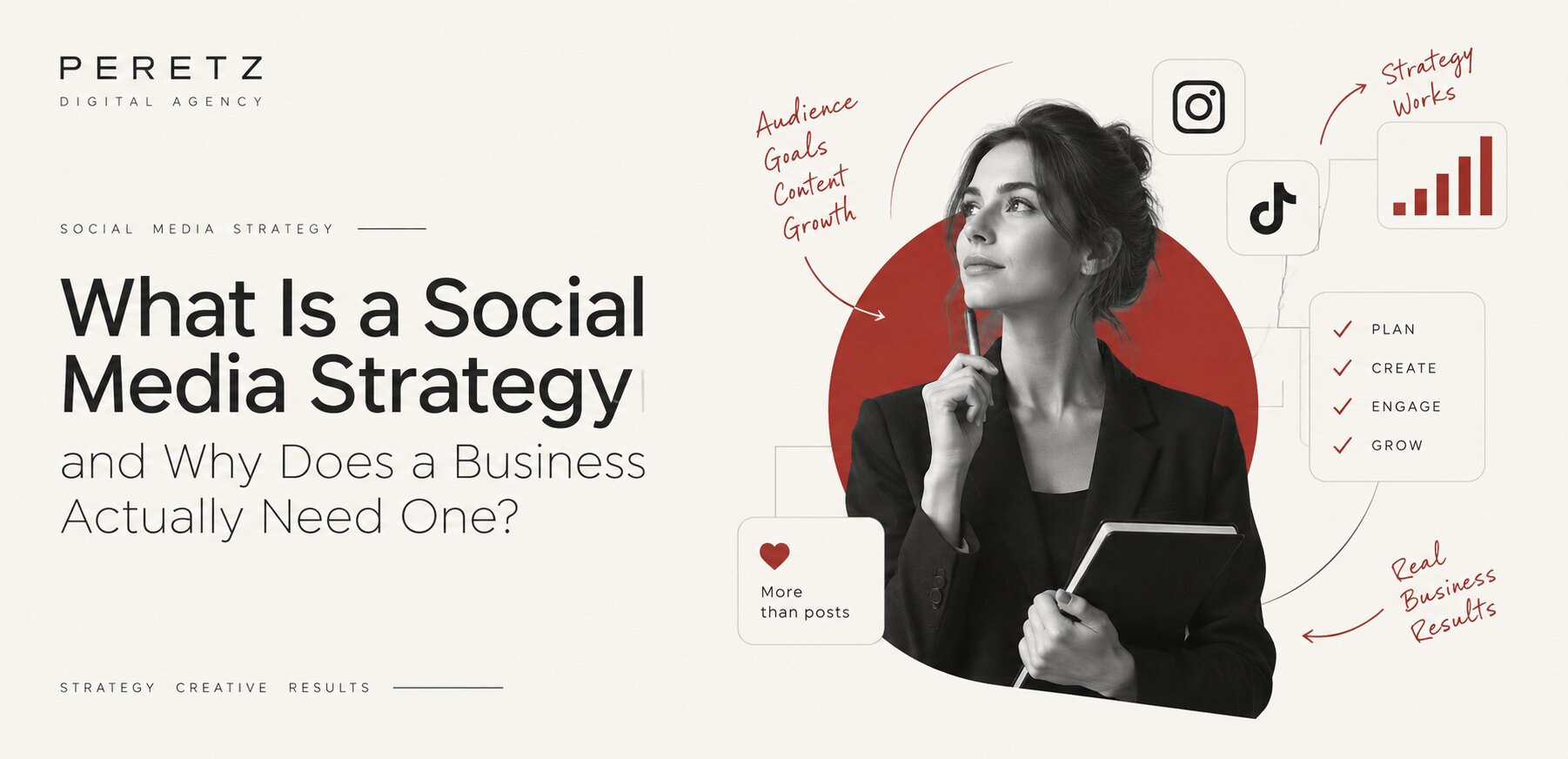
What Is a Social Media Strategy and Why Does a Business Actually Need One?

-
20. 06. 2026
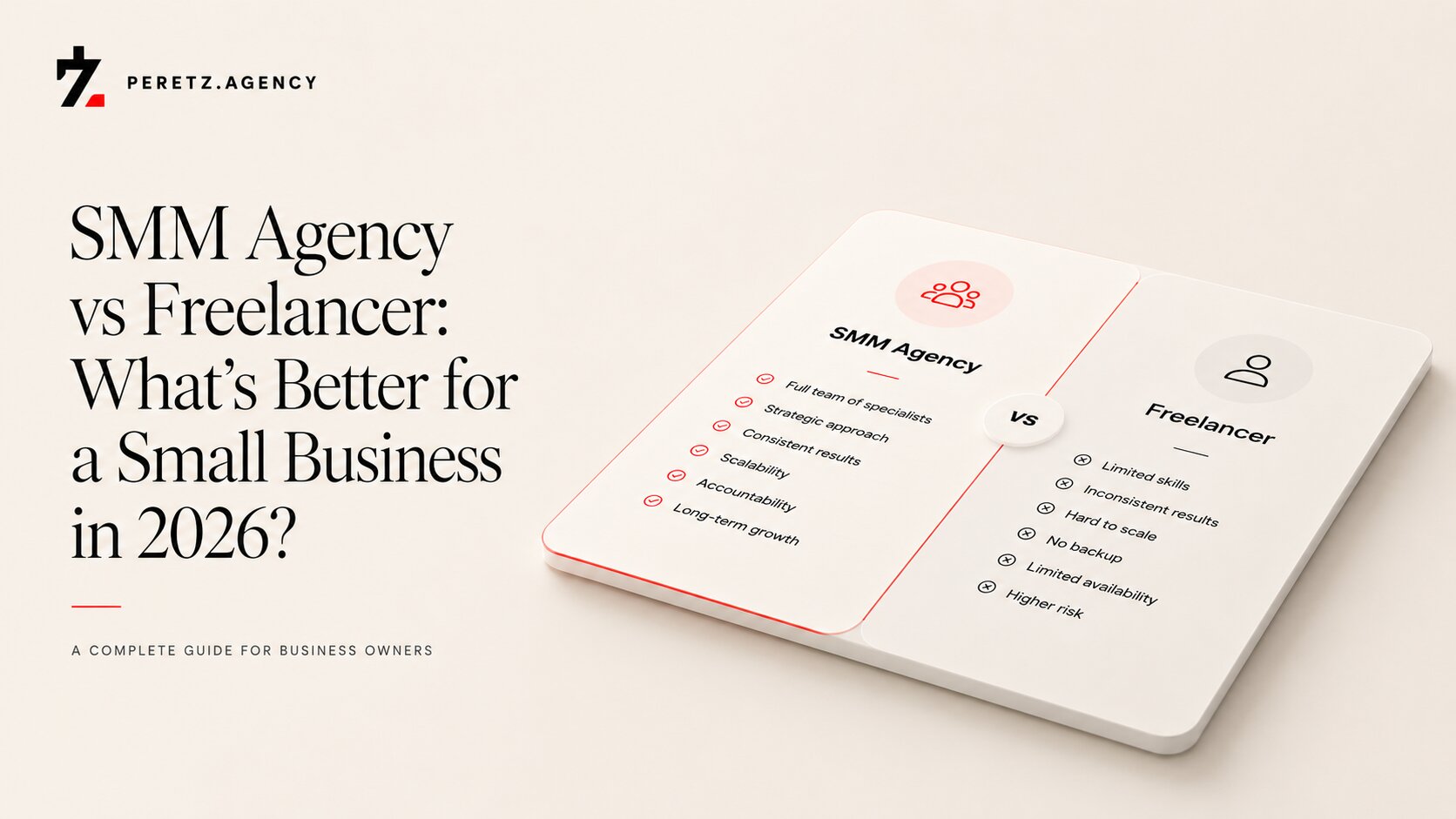
SMM Agency vs Freelancer: What's Better for a Small Business in 2026?
-
30. 06. 2026

I Audited 50 Instagram Accounts This Year. Here's What Actually Separates Growth from Stagnation.
-
07. 07. 2026
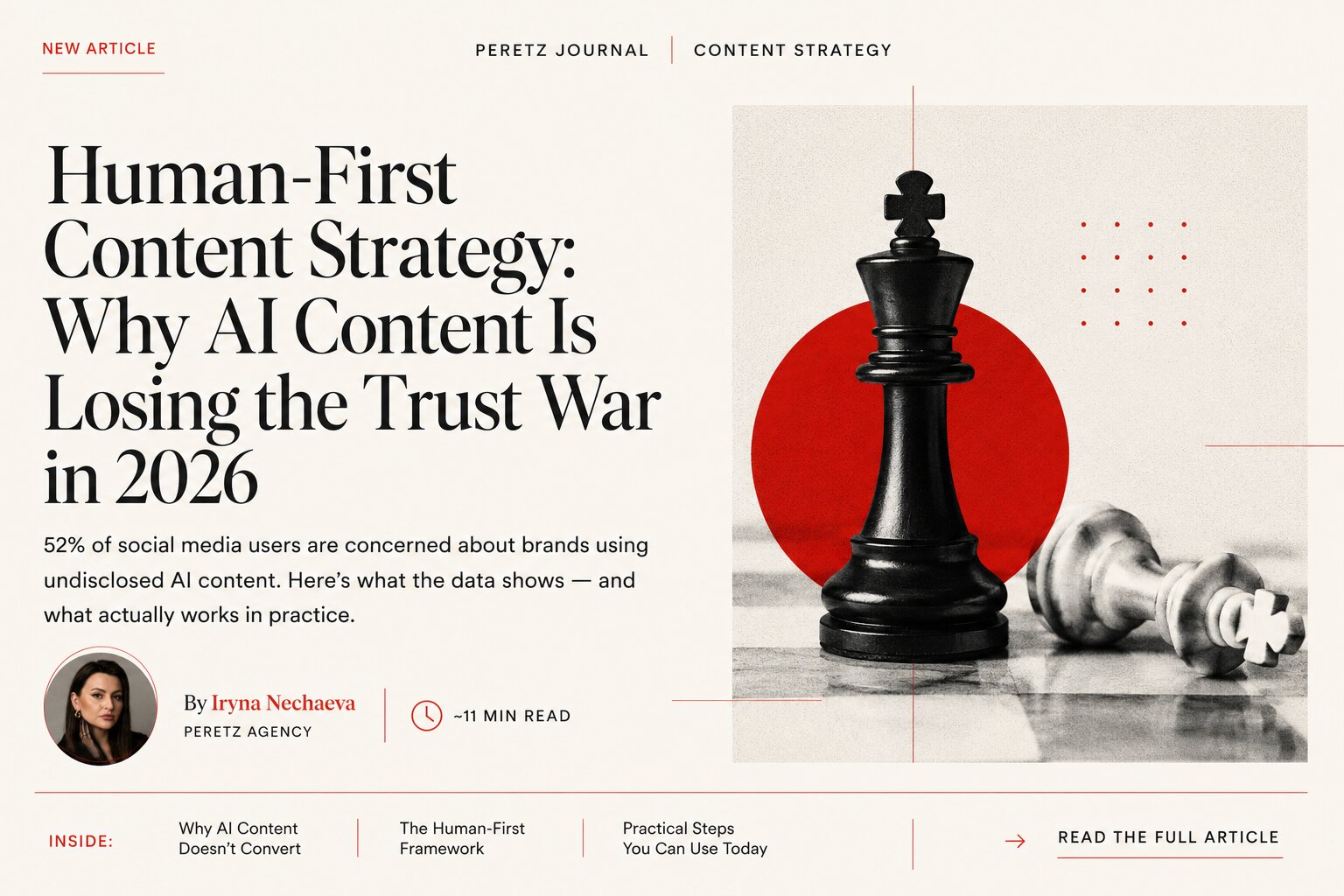
Human-First Content Strategy: Why AI Content Is Losing the Trust War in 2026
-
12. 03. 2021

In-House vs Outsourcing in 2026: What Business Owners Actually Need to Know
-
08. 09. 2026
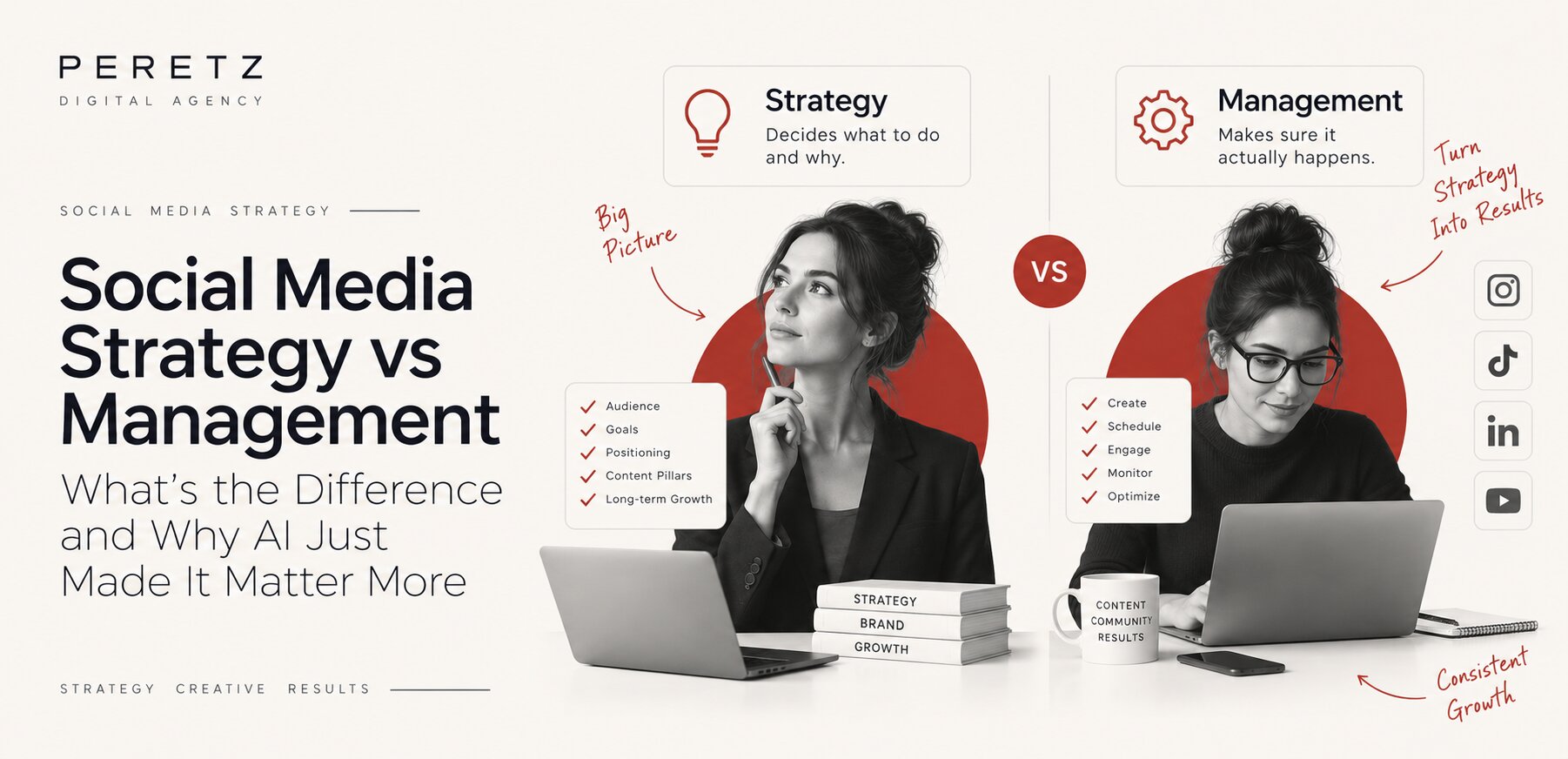
Social Media Strategy vs Social Media Management, What's the Difference and Why AI Just Made It Matter More
-
24. 09. 2026

Social Media Strategy Is Not a Content Calendar
-
25. 09. 2026

How Many Social Media Posts Does a Business Really Need?