I Audited 50 Instagram Accounts This Year. Here's What Actually Separates Growth from Stagnation.



Chapters

Most Instagram audits begin with exactly the same sentence.
“We post consistently, but nothing seems to work anymore.”
I've heard it from contractors, medical clinics, interior designers, online stores, consultants, restaurants, and local businesses across completely different industries.
Different audiences.
Different products.
Different budgets.
Yet after auditing more than fifty Instagram accounts this year, I keep finding the same problems.
Not because businesses copy each other.
Because people naturally become blind to their own marketing.
When you look at your Instagram every day, you stop seeing it the way your customers do.
You know why that post was published.
You know what happened behind the scenes.
You know the story behind every photo.
Your visitors don't.
They see your profile for the first time.
And in less than five seconds they decide whether to keep scrolling or leave.
Methodology note: this is drawn from real account reviews conducted in 2026 across multiple industries — local services, e-commerce, B2B, education, hospitality. I'm describing patterns, not naming specific clients or accounts. The point isn't the individual case. It's that the same five things show up again and again, regardless of niche.
GRID VS BIO
Pattern 1: The Grid Doesn't Deliver What the Bio Promises
This is the single most common gap I find — and the easiest one to miss when you're looking at your own account.
Here's how it shows up: someone lands on a profile from a Reel, a share, a Google search, an Instagram search result. They tap the profile. They have about three seconds to understand what this account is, who it's for, and why they should follow. In those three seconds, they're not reading your bio carefully. They're scanning your last nine posts.
I see this constantly: a bio that says 'helping businesses grow' next to a grid that's a random mix of product photos, a holiday post, a quote graphic, and a screenshot of a testimonial — with no visible pattern connecting any of them. A new visitor can't tell what this account is about from the grid alone. And if they can't tell in three seconds, they don't stay to find out. When I run an audit, before I look at engagement numbers, I do this test: I cover the bio and just look at the last nine posts. Can I describe, in one sentence, what this business does and who it's for? If I can't — that's diagnosis number one, before we even get to content quality.
The fix isn't complicated, but it requires discipline most accounts don't have: pick three content pillars that map directly to what you actually sell, and make sure six of your last nine posts clearly belong to one of them.
CONTENT FATIGUE
Pattern 2: Content Fatigue Nobody Noticed Happening
This one is sneaky because it develops slowly, and the account owner is usually the last person to see it.
It looks like this: the same content format, repeated with minor variations, for weeks. Same Reel hook style. Same carousel structure. Same photo composition. The audience has seen the pattern enough times that they recognize it before they finish reading the first line — and they scroll past without engaging.
The diagnostic I use: compare engagement rate on your last five posts against the five before that. If the recent set is meaningfully lower — not because of a bad week, but as a consistent trend — that's fatigue, not a fluke. What surprises clients is how fast this resolves. It's almost never a strategy problem. It's a format problem. I tell people: alternate your formats deliberately. Reel, then carousel, then a static post, then Stories, then back to Reel. Introduce one new content pillar every month or so. The accounts I've watched do this consistently see engagement recover within two weeks — not because the underlying business changed, but because the pattern broke.
WRONG FOLLOWERS
Pattern 3: Followers That Don't Match the Business
This is the pattern that's hardest for business owners to accept, because the number on the profile looks good. 8,000 followers feels like success. But when I look closer, a meaningful chunk of that audience has no connection to the business at all.
I check this by sampling: pull 100 random followers and look at basic signals — profile photo, bio, post count, follower count. If a third or more look inactive or clearly mismatched to your target customer, you don't have a growth problem. You have a quality problem that's been mistaken for a growth win. This usually traces back to one thing: chasing broad, high-volume hashtags or follow/unfollow tactics at some point in the account's history. It feels productive in the moment — the number goes up. But it attracts people who were never going to become customers, and it actively hurts how the algorithm reads your account going forward, because engagement rate relative to follower count is a real signal Instagram uses to decide who sees your content next.
The fix is slower and less satisfying than chasing a follower count, but it's the only one that compounds: build content specifically for your actual customer, not for the broadest possible audience. Smaller, more relevant following beats larger, disconnected following every time I've measured it.
NO VIDEO
Pattern 4: No Video Strategy — And It's Costing More Than People Realize
This is the most common gap among the small business accounts I review, particularly service businesses that feel uncomfortable on camera.
In 2026, Instagram functions less like a photo-sharing app and more like a search and discovery engine. Reels are the primary mechanism the platform uses to push your content to people who don't already follow you. A profile that posts only static images is invisible to discovery in a way that wasn't true five years ago — it's nurturing the audience you already have, but it's not finding new people.
When I tell a client this, the pushback is almost always the same: 'we don't have a video budget' or 'I don't want to be on camera.' Neither objection holds up the way people think it does. The Reels that actually perform for the small business accounts I work with are rarely high production — they're useful, specific, and shot in a single afternoon. A quick demonstration. A common mistake explained in 30 seconds. A behind-the-scenes moment that takes no editing skill, just a phone and a clear idea. The businesses that finally add a basic, consistent Reels habit — even just two a week — see discovery metrics move within a month. Not virality. Just visibility, which is what most accounts are actually missing.
NO CONVERSION PATH
Pattern 5: A Conversion Path That Doesn't Exist
This is the pattern I see in accounts that are actually doing everything else right — strong content, real engagement, a growing audience — and still aren't generating business results. It's the gap between attention and action.
The diagnostic question: if someone reads your content, gets interested, and wants to take the next step — what exactly happens? Is the link in bio current? Does it go to something specific, or to a generic homepage? Is there a clear next action anywhere in your last ten posts?
More often than I'd expect, the honest answer is: nothing happens. The content earns attention and then drops it. There's no DM prompt, no link, no clear 'here's what to do next.' The account is doing the hard part — getting someone to care — and then failing at the easy part, which is telling them what to do with that interest. This is the cheapest fix on this entire list and the one most consistently skipped. Every few posts needs a specific, low-friction next step. Not 'check out our website' — something concrete: 'DM us the word GROW and we'll send you the guide,' 'link in bio for a free 15-minute audit,' 'comment your biggest challenge and I'll respond.'
LESSONS LEARNED
What I've Learned Running These Audits
None of these five patterns are about talent, creativity, or budget. They're structural. They're the kind of thing that's nearly invisible from inside your own account and immediately obvious from outside it — which is exactly why an outside audit catches things that weeks of internal strategy meetings miss.
- Grid alignment with bio promise — does a stranger understand what you do in 3 seconds?
- Content fatigue — are you repeating the same format until the audience tunes out?
- Follower quality — does your audience actually match your customer?
- Video presence — are you visible to people who don't follow you yet?
- Conversion path — when someone is interested, do you tell them what to do?
Run this checklist on your own account honestly. Most businesses fail at least two of these five — and the fix for each one is specific, not a vague 'post more' or 'be more consistent.'
IN MY AUDITS
How This Shows Up in My Audits at Peretz Agency
When a new client comes to Peretz Agency for SMM work, the very first thing I do is exactly this exercise — before any content calendar, before any strategy document, before any conversation about posting frequency.
I genuinely believe most accounts don't need more content. They need a clear-eyed look at what's already there, from someone who isn't emotionally attached to every post. Business owners are too close to their own feed to see it the way a new visitor does. That distance is the entire value of an outside audit — not new ideas, just honest eyes.
If you want a quick self-check before booking a full audit, these are the ten most common reasons Instagram growth stalls, worth ruling out first.
What a Peretz Agency audit covers:
- Grid and bio alignment review — would a stranger understand your business in 3 seconds?
- Content format and fatigue analysis across your last 30 posts
- Follower quality sampling to assess real audience-customer match
- Video/Reels gap analysis and a realistic production plan that fits your actual resources
- Full conversion path mapping — bio link, CTA frequency, DM automation opportunities
- A prioritized action plan: what to fix first, what to ignore, what actually moves the needle for your specific business
Most of the accounts I audit this way turn out to be missing the same thing: a real strategy underneath the posting habit, built in the right order, not just decided on paper. Sineta Event Team is a concrete example of that discipline: 1.74M+ views, 96.9% from Reels alone.
Want an honest look at what's actually happening on your account? Contact us at hello@peretz.agency or call +1 425 471 94 96. We'll tell you what we'd tell any client — including where the problem isn't what you think it is.
- Share
-
-

-

-
Related Reading
-
29. 06. 2026
Meta Ads in 2026: What Budget Do You Really Need to See Results?

-
27. 06. 2026
Your Business Is Invisible to AI Search in 2026 — Here's How to Fix It
-
26. 06. 2026
How to Build a Social Media Strategy That Actually Generates Leads
-
23. 06. 2026
Why Most Businesses Are Using AI Wrong in Marketing — And It's Killing Their Conversions
-
19. 06. 2026
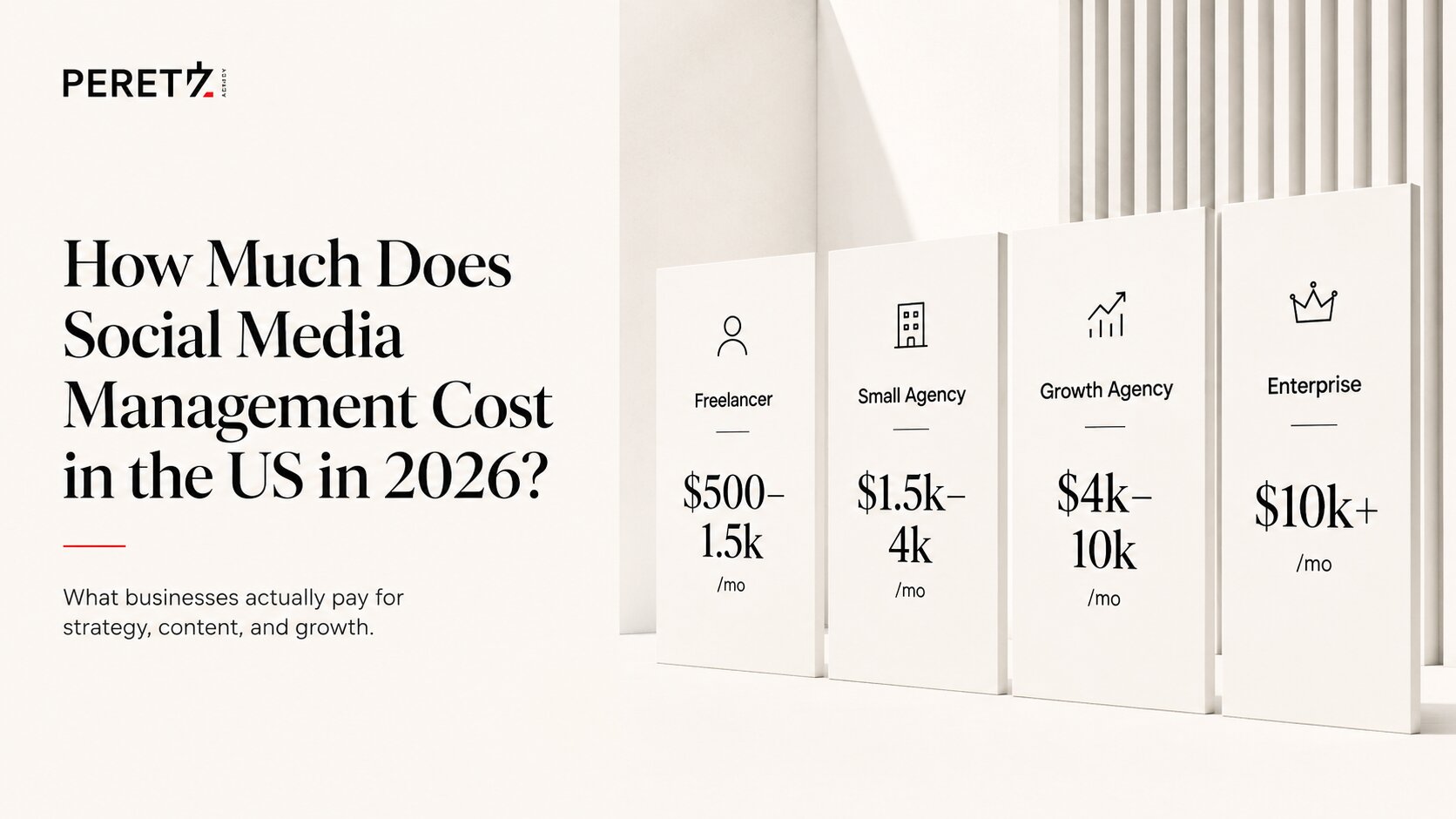
How Much Does Social Media Management Cost in the US in 2026?
-
27. 07. 2026

Why Your Instagram Isn't Growing in 2026 (10 Fixes)
-
24. 07. 2026
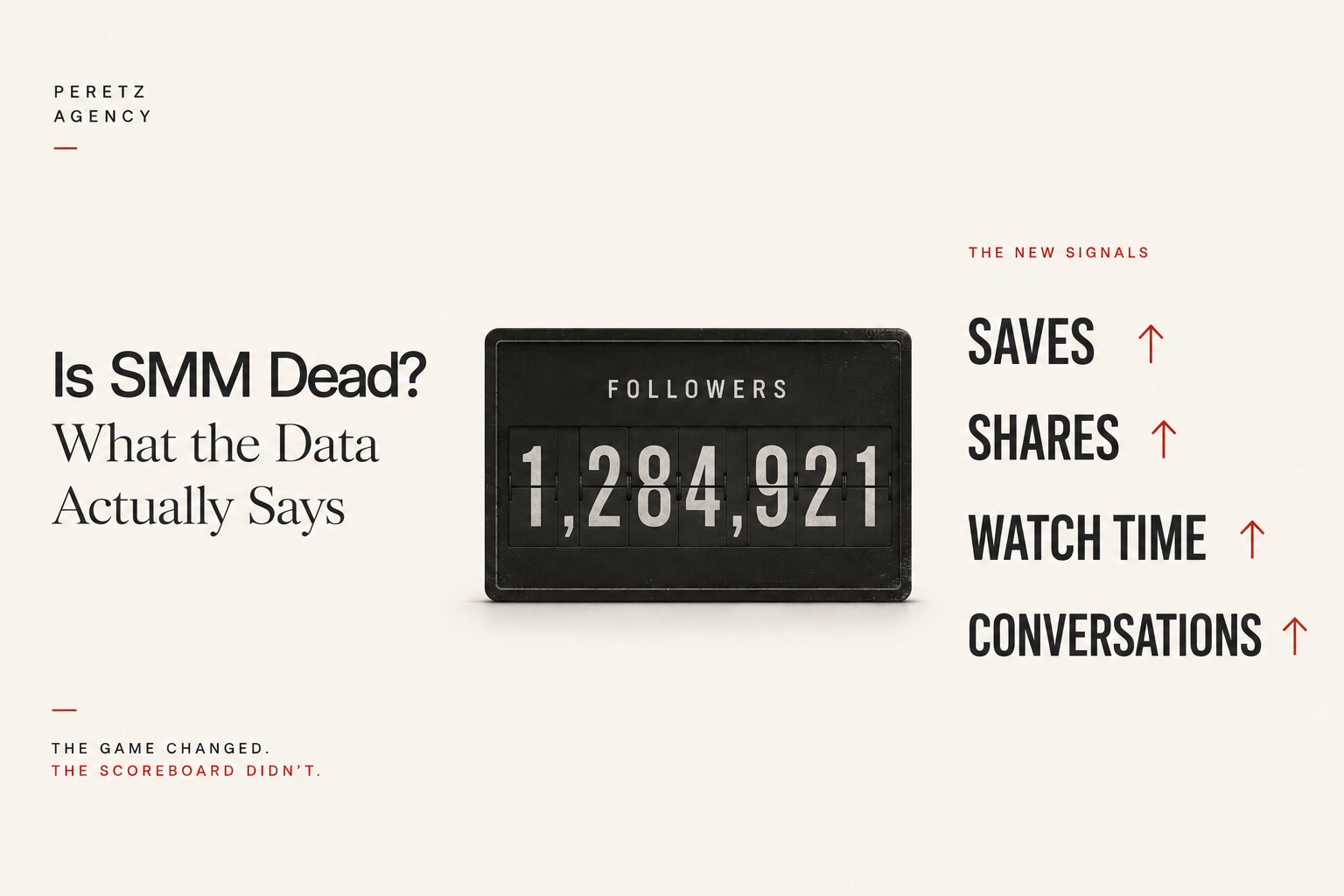
Is Social Media Marketing Dead in 2026? What the Data Actually Says
-
07. 09. 2026
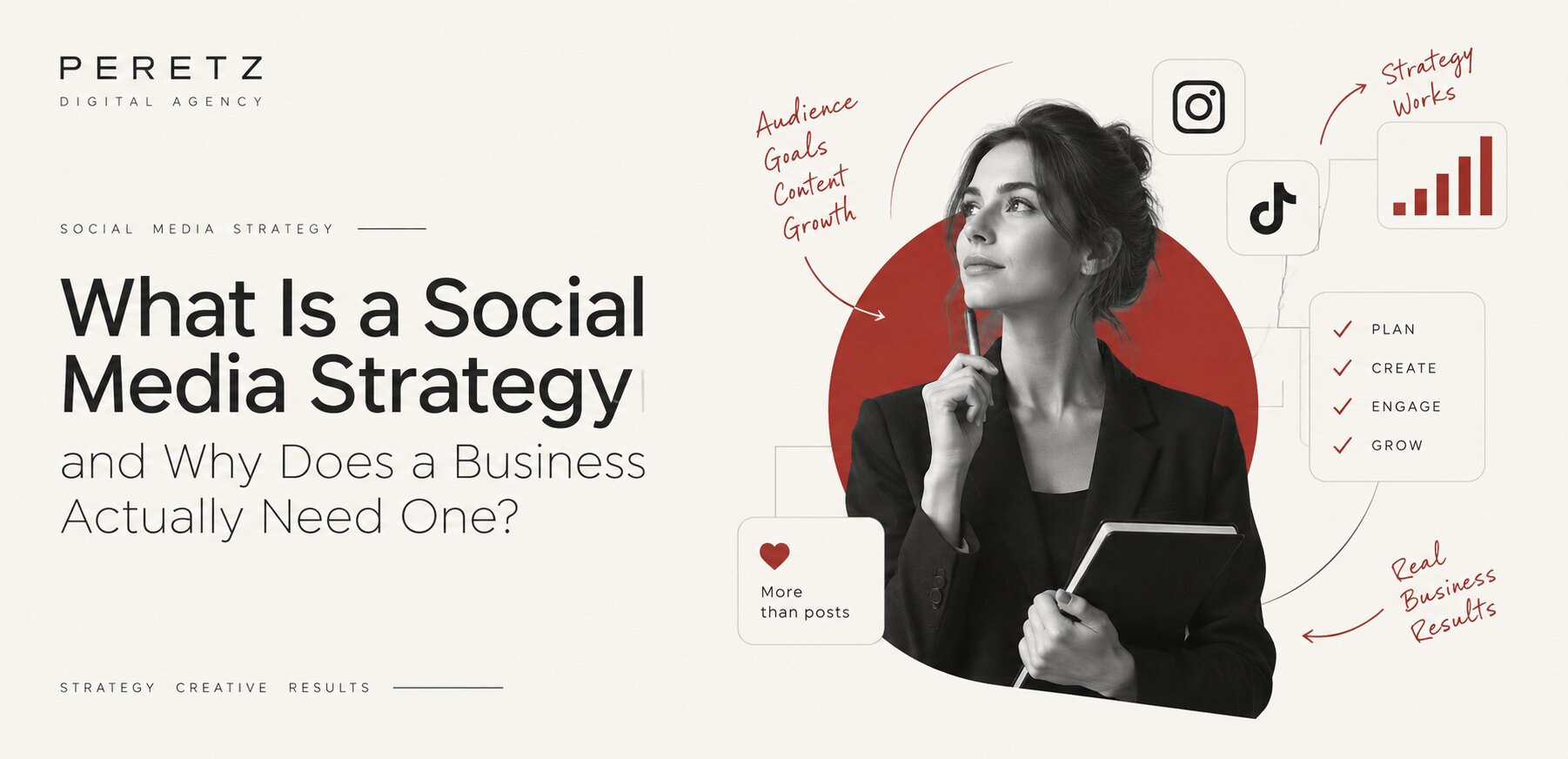
What Is a Social Media Strategy and Why Does a Business Actually Need One?
-
08. 09. 2026
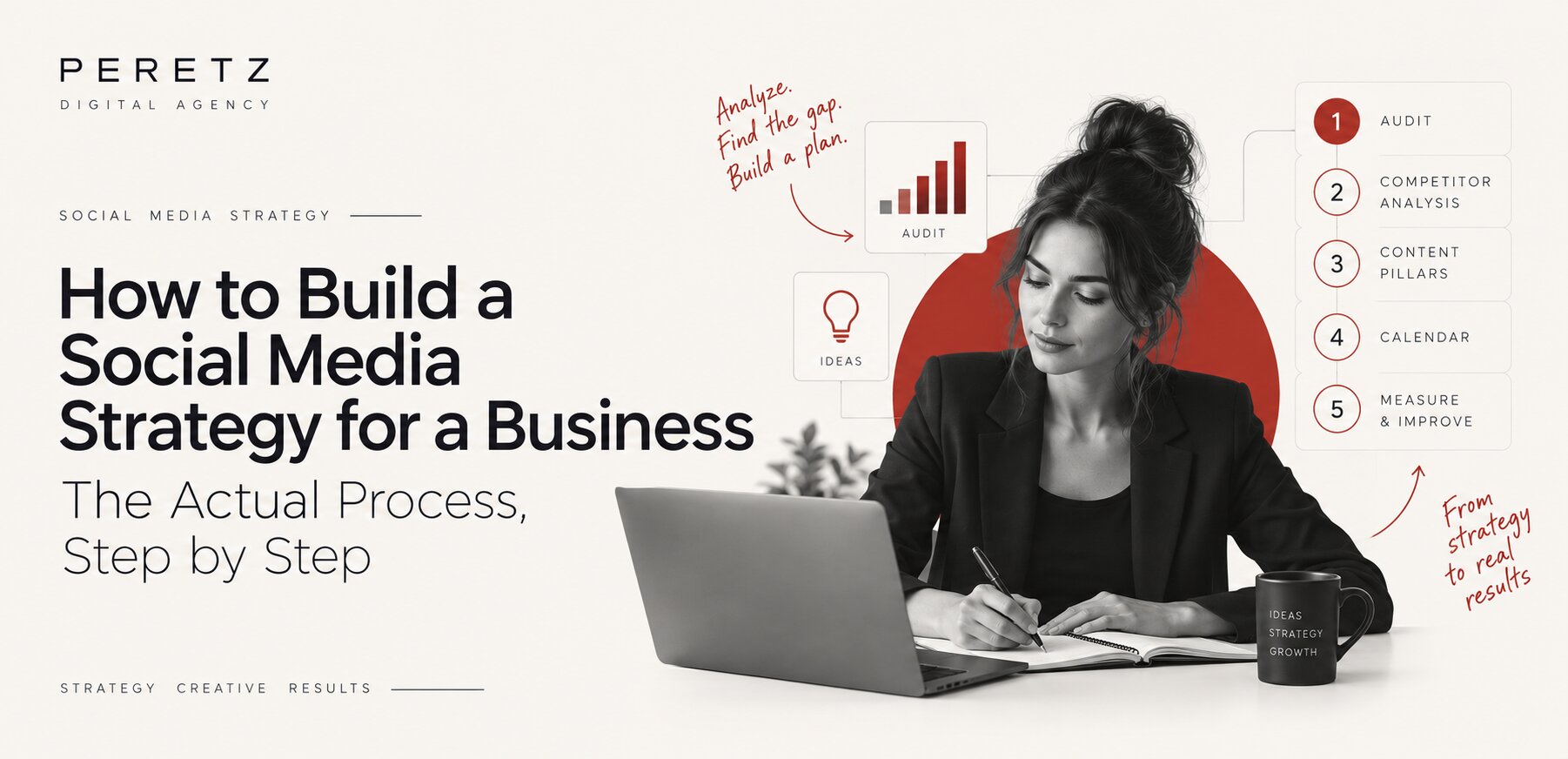
How to Build a Social Media Strategy for a Business, The Actual Process, Step by Step