

Meta's official minimum budget is $1 per day. You can technically run Instagram and Facebook ads for $30 a month.
You can also technically drive a car with no oil. Both will produce predictable results.
The gap between Meta's technical minimums and the budgets that actually generate results is one of the most expensive misunderstandings in digital advertising. Businesses spend weeks in the 'Learning Limited' phase, wondering why their ads aren't working — when the real problem is simply that they started with a budget that gave the algorithm nothing to work with.
Budget is one variable. If your tracking, creative, or targeting are also broken, no budget fixes that. We cover the other nine culprits in Why Your Meta Ads Aren't Converting in 2026.
This guide gives you the real numbers — what Meta's minimums actually mean, how to calculate the right budget for your specific situation, what you can realistically expect at each spending level, and the formula the pros use to plan every new campaign.
Written by Iryna Nechaeva, Targetologist and SMM Strategist at Peretz Agency. We manage Meta Ads campaigns for US and European clients across e-commerce, services, and B2B.
TWO TYPES OF MINIMUMS
The Two Types of Meta Ads Budget Minimums
Before we get into numbers, you need to understand that there are two completely different thresholds in Meta advertising:
Technical Minimum (What Keeps Your Ad Running)
This is the floor Meta enforces just to keep campaigns active:
- Awareness/impression campaigns: $1/day per ad set
- Traffic/engagement campaigns: $5/day per ad set
- Conversion/Lead campaigns: $10–$20/day per ad set
Running at these minimums keeps your campaign technically 'active' — but it produces almost no meaningful data. You'll see sporadic impressions, minimal results, and your campaign will stay stuck in the Learning Phase indefinitely.
Practical Minimum (What Actually Generates Results)
This is the floor that gives Meta's algorithm enough data to optimize your campaigns effectively:
- Traffic campaigns: $15–$30/day per ad set
- Lead generation campaigns: $50–$100/day per ad set
- E-commerce/purchase campaigns: $75–$150/day per ad set (depending on your target CPA)
The gap is real: $5/day keeps your ad running. $50/day gives the algorithm enough signal to actually optimize. This is why so many small businesses waste budget on Meta ads. They're running at the technical minimum, not the practical minimum.
THE LEARNING PHASE FORMULA
The Learning Phase: Why Budget Math Matters
Meta's algorithm uses a Learning Phase at the start of every new campaign (or after significant edits). During this phase, Meta tests different audiences, placements, and delivery times to find your best-converting combination.
To exit the Learning Phase successfully, your ad set needs to generate approximately 50 optimization events within 7 days. If you can't generate 50 events in a week, your campaign gets stuck in 'Learning Limited' status — and costs are typically 20–40% higher than post-learning averages.
The Learning Phase Formula (used by professional ad managers):
Minimum Daily Budget = (Target CPA × 50) ÷ 7
Let's apply this:
- If your target cost per lead is $20 → minimum daily budget = ($20 × 50) ÷ 7 = $143/day
- If your target cost per lead is $40 → minimum daily budget = ($40 × 50) ÷ 7 = $286/day
- If your target cost per purchase is $30 → minimum daily budget = ($30 × 50) ÷ 7 = $214/day
Reality check: if your CPA is $30 and you're spending $15/day, you're getting 0.5 conversions per day, or 3.5 per week. You need 50 per week to exit learning. At that rate, it would take 14 weeks. By then, you've wasted 3+ months and never got useful data.
BUDGET BY BUSINESS TYPE
Budget Benchmarks by Business Type (2026 US Market)
|
Business Type |
Campaign Goal |
Daily Budget |
Monthly Ad Spend |
Expected CPL/CPA |
|
Local service business |
Leads (consultation) |
$50–$100/day |
$1,500–$3,000/mo |
$15–$45 CPL |
|
E-commerce (low ticket <$50) |
Purchase |
$75–$150/day |
$2,250–$4,500/mo |
$8–$20 CPL |
|
E-commerce (mid ticket $50–$200) |
Purchase |
$100–$200/day |
$3,000–$6,000/mo |
$15–$40 CPL |
|
B2B service / agency |
Lead / demo request |
$50–$150/day |
$1,500–$4,500/mo |
$30–$100 CPL |
|
Real estate |
Lead |
$75–$150/day |
$2,250–$4,500/mo |
$20–$60 CPL |
|
Legal / financial services |
Lead |
$100–$250/day |
$3,000–$7,500/mo |
$50–$150 CPL |
|
Restaurant / retail (local) |
Traffic + engagement |
$30–$60/day |
$900–$1,800/mo |
N/A (brand) |
Important: These are ad spend figures only — the money going directly to Meta. Management fees (what you pay your agency or specialist to run the campaigns) are additional.
WHERE THE MONEY GOES
The Budget Breakdown: Where Your Money Actually Goes
When you invest in Meta advertising, your budget splits across several components. Understanding this split prevents sticker shock when you see your first monthly statement:
1. Ad Spend (goes to Meta directly)
This is the money Meta uses to show your ads to real people. It's the component most people think of when they say 'my Facebook ads budget.'
2. Management Fee (goes to your agency or specialist)
The cost of having an experienced professional build, run, and optimize your campaigns. Typically $500–$2,000/month flat fee, or 10–20% of total ad spend. This is separate from your ad spend and is what pays for strategy, creative iteration, A/B testing, and reporting.
3. Creative Production (may be separate)
High-performing ads need strong visuals and copy. If your agency includes creative production in their management fee, factor this in. If not, budget $300–$1,000/month for ad creative development.
Total realistic monthly budget for a serious Meta ads program:
|
Tier |
Ad Spend/mo |
Management Fee |
Creative |
Total Investment |
|
Starter (local business / testing) |
$1,500 |
$500–$800 |
$0–$300 |
$2,000–$2,600 |
|
Growth (SMB, e-commerce) |
$3,000 |
$800–$1,500 |
$300–$500 |
$4,100–$5,000 |
|
Scale (established brand) |
$5,000–$10,000 |
$1,500–$2,500 |
$500–$1,000 |
$7,000–$13,500 |
REALISTIC TIMELINE
For the fuller picture on realistic timelines beyond Meta Ads specifically, we cover that in How Long Does It Take to See Marketing Results?
What Results Can You Realistically Expect?
Here's the honest timeline for a new Meta ads campaign in the US market in 2026:
- Weeks 1–2: Learning Phase. Performance is volatile. CPL/CPA is typically 20–40% higher than your eventual benchmark. Do not make major changes.
- Weeks 3–4: Learning Phase exits (if budget is sufficient). Performance stabilizes. You start to see your real CPA emerge.
- Month 2: First optimization round. Pause underperforming creatives. Scale what's working. CPA drops 10–25%.
- Month 3: First meaningful data set. You can now make strategy decisions based on real performance data. CPA typically 30–40% lower than month 1.
- Month 4–6: Scaling phase. Winning creative and audiences identified. Incremental budget increases of 20–30% every 3–5 days.
The 3-6 month ramp: Meta Ads specialists consistently say it takes 3-6 months before a new account produces reliably predictable results. This is not a flaw. It's the learning curve of a complex machine learning system. Businesses that judge performance at week 2 and pull their budget never reach the profitable phase.
EXPENSIVE BUDGET MISTAKES
The Most Expensive Budget Mistakes
Mistake 1: Budget Fragmentation
Running 5 ad sets at $20/day each ($100/day total) produces significantly worse results than running 2 ad sets at $50/day each. Concentrate your budget. The algorithm needs volume per ad set, not spread across many.
Mistake 2: Starting Too Small and Getting Discouraged
$10–$15/day for a lead generation campaign in a competitive US market will produce almost nothing. You'll spend $300–$450/month, see 3–5 low-quality leads, and conclude 'Meta ads don't work.' The ads worked fine — the budget was too small to give the algorithm what it needed.
Mistake 3: Aggressive Daily Scaling
Doubling your budget overnight forces the Learning Phase to restart. Scale in 20–30% increments every 3–5 days. This preserves the algorithm's learned data and maintains performance stability.
Mistake 4: Spending Without Tracking
If you don't have your Meta Pixel and Conversions API properly set up, Meta's algorithm is blind to your actual results. You may be generating leads your CRM is tracking but Meta can't see — leading to manual optimization decisions based on false data. Set up tracking before spending a dollar.
Mistake 5: Ad Spend Without a Management Strategy
Running ads without a professional strategy is like running a factory with no quality control. The machine produces output — but often the wrong kind. Professional ad management adds 30–60% performance improvement over unmanaged self-service campaigns, according to Meta's own partner data.
CALCULATE YOUR BUDGET
This calculation only works if you know your real numbers, not just the budget math. We wrote about why so many businesses get the traffic but not the leads in Traffic But No Leads?
How to Calculate Your Specific Budget
Use this step-by-step framework before setting any budget:
- Step 1: Define your target cost per acquisition (CPA). What can you afford to pay for one new customer and still be profitable? (Product price × gross margin = max allowable CPA)
- Step 2: Apply the Learning Phase formula. Minimum daily budget = (Target CPA × 50) ÷ 7
- Step 3: Multiply by your number of ad sets. If running 2 ad sets, multiply by 2.
- Step 4: Add 20% buffer for the Learning Phase premium (CPAs are higher during learning).
- Step 5: Multiply by 30 for monthly budget.
Example: You sell consulting services. Average client value = $3,000. You can afford up to $200 CPA and still be profitable.
→ Daily budget per ad set = ($200 × 50) ÷ 7 = $1,429/day. That seems high — which means you need to either increase your conversion rate, lower your target CPA by improving your landing page, or accept a lower ROAS during the learning phase with the expectation of improving.
Practical starting point for most US SMBs: $50/day (~$1,500/month) for a lead generation campaign on 1-2 ad sets. This is the minimum that gives the algorithm a real chance to learn and optimize within a reasonable timeframe.
HOW WE PLAN BUDGETS
Peretz Agency: How We Plan Meta Ads Budgets for Clients
Before we launch any paid campaign, we:
- Calculate your break-even ROAS based on your actual unit economics
- Use the Learning Phase formula to set minimum viable budgets per ad set
- Design a campaign structure that concentrates budget for maximum algorithm efficiency
- Set up Pixel + Conversions API tracking before spending the first dollar
- Build a 90-day budget ramp plan: conservative start → optimize → scale
Want us to calculate the right Meta ads budget for your specific business? Contact us at hello@peretz.agency or call +1 425 471 94 96. We'll tell you exactly what to spend, how to structure it, and what results to expect.
FAQ
FAQ
Can I run Meta ads with a $500/month budget?
Yes — but with realistic expectations. At $500/month (~$17/day), you can run brand awareness or traffic campaigns to a local audience. Lead generation at this budget is very limited. The algorithm won't have enough data to optimize in most competitive US markets. Consider this an 'awareness starter' budget, not a lead generation budget.
Is $1,500/month enough to generate leads?
For most service businesses and local businesses in the US, $1,500/month ($50/day) is a realistic starting budget for lead generation on 1–2 platforms. You'll generate 10–30 leads/month at this level depending on your industry, offer, and creative quality.
What ROAS should I expect?
There's no universal benchmark — ROAS depends entirely on your margins. Calculate your break-even ROAS: 1 ÷ gross margin percentage. A business with 50% margins needs a 2x ROAS to break even. Anything above that is profit. Industry averages are meaningless without knowing your margin structure.
Should I start with a small budget and scale, or start larger?
Start with the minimum viable budget for your target CPA (Learning Phase formula), not with what feels comfortable. Starting too small wastes weeks in the Learning Phase and produces misleading data. Starting at the right level gives you accurate performance data faster.
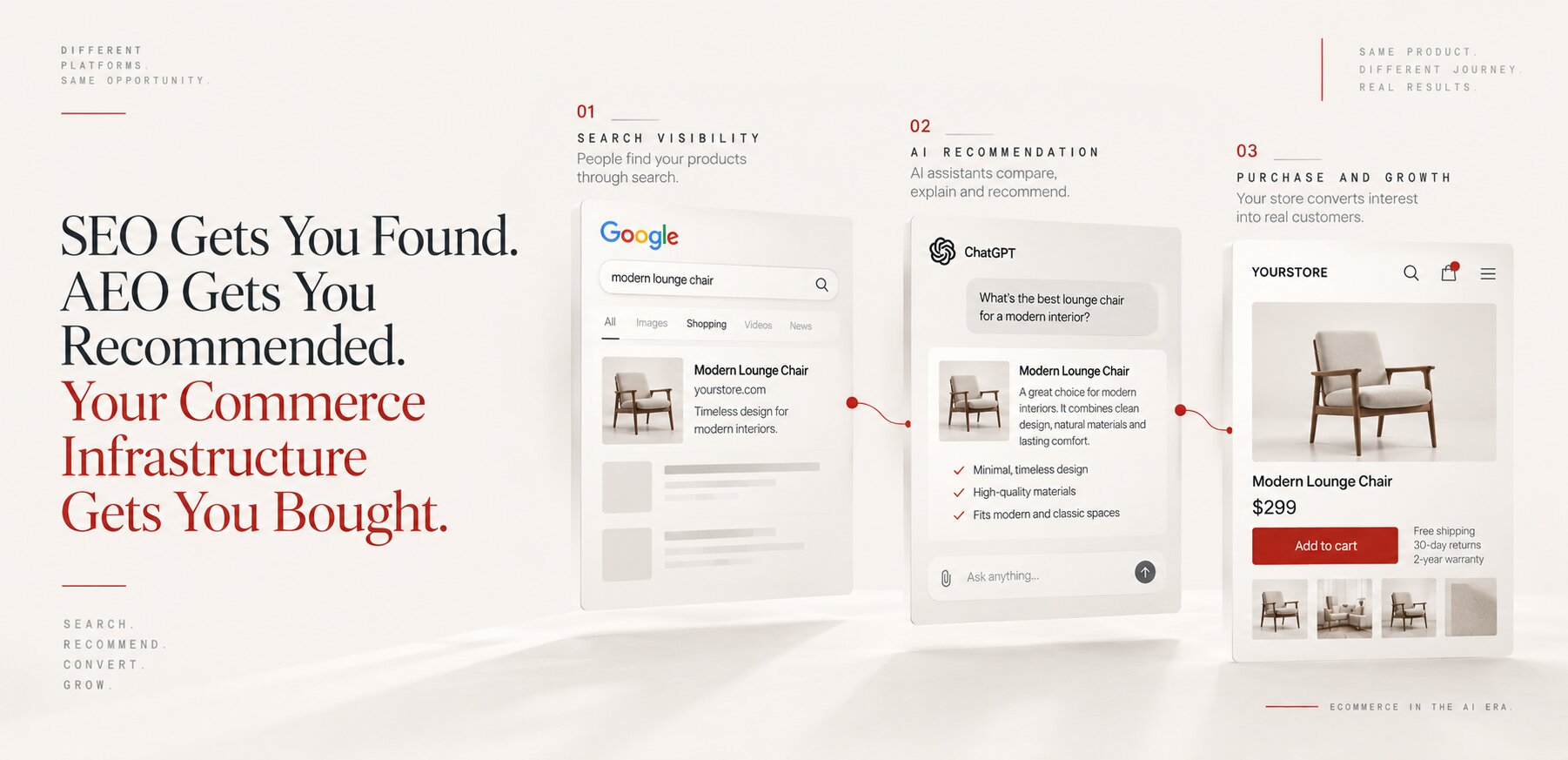
A second paid channel has since appeared alongside it, examined in SEO Gets You Found. AEO Gets You Recommended. Your Commerce Infrastructure Gets You Bought..
If the ads bring clicks but not leads, the cause is often not the campaign but the page the ad sends people to. A usability audit shows where visitors drop off, and when the page has to be rebuilt, the next step is usually a landing page built around one offer.
Want the exact minimum daily budget for your specific business, not a general benchmark? A Strategic Session includes a real break-even ROAS calculation for your numbers.
Ready for a team that already runs full-cycle Meta Ads management?
- Share
-

-

-

-

Related Reading
-
15. 06. 2026
How Much Does a Website Cost in Seattle in 2026?

-
01. 02. 2021
Why Responding to Online Reviews Matters in 2026 — And How to Do It Right
-
18. 06. 2026

How Much Does a Website Cost in Bellevue WA in 2026?
-
24. 06. 2026

How to Choose a Web Design Agency in Seattle: A Business Owner’s Guide for 2026
-
14. 02. 2021
Link Building in 2026: Why It Still Matters and How to Do It Right
-
30. 06. 2026
I Audited 50 Instagram Accounts This Year. Here's What Actually Separates Growth from Stagnation.
-
02. 07. 2026
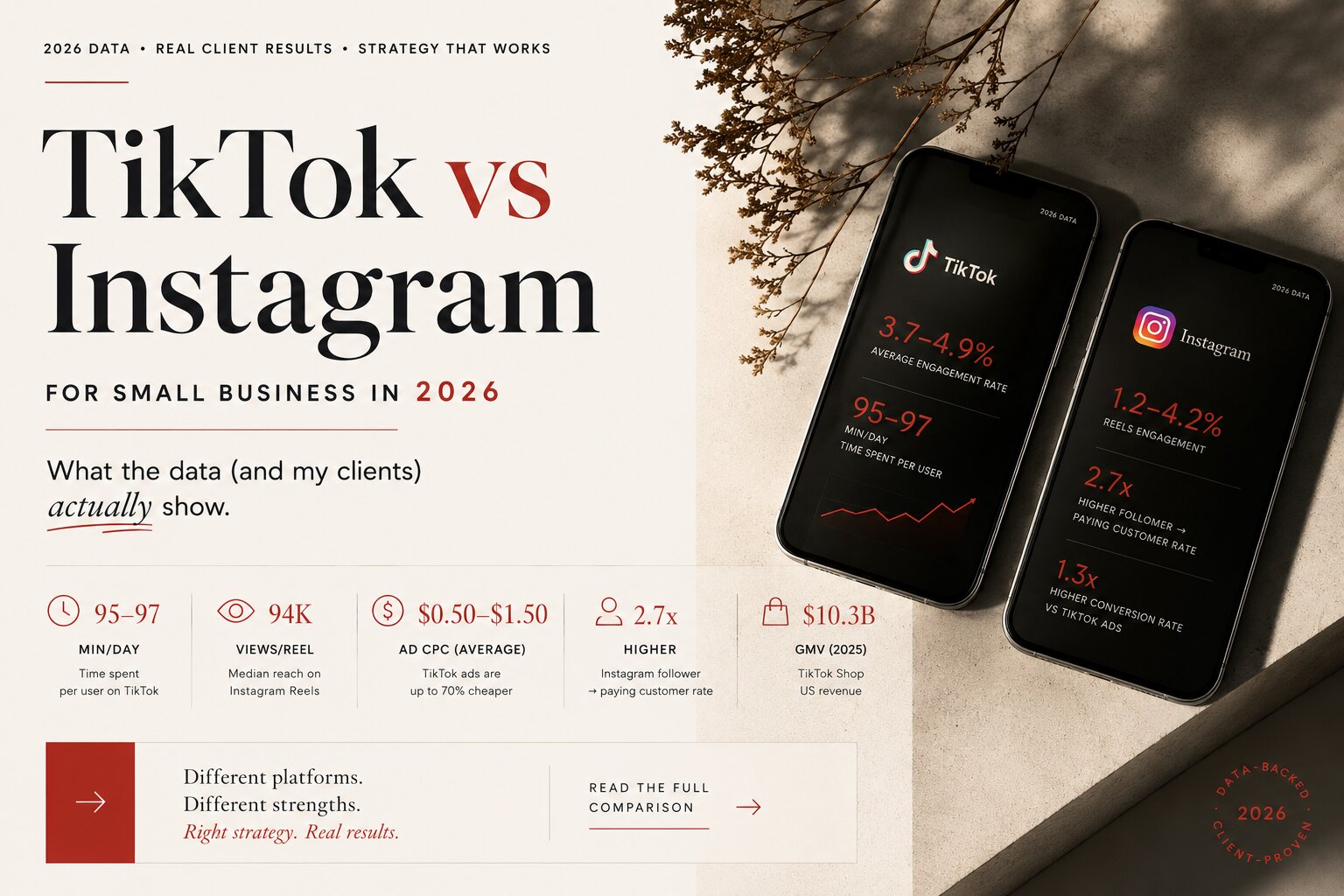
TikTok vs Instagram for Small Business in 2026: What the Data (and My Clients) Actually Show
-
02. 07. 2026

I've Rebuilt My Career Twice Because of War. Here's What That Actually Teaches You About Strategy.
-
28. 07. 2026
Why Your Cost Per Lead Keeps Going Up in 2026 (10 Fixes)
-
07. 08. 2026
Campaign Budget Optimization Is a Governance Decision, Not a Toggle
-
07. 08. 2026

Your Meta Spending Limit Is a Circuit Breaker, Not a Setting
-
08. 08. 2026
Meta Quietly Rewired How It Collects Money From Advertisers in 2026
-
10. 08. 2026
Daily vs Lifetime Budget in Meta Ads Is a Fixed-Cost vs Variable-Cost Decision, Not a Setting
-
06. 09. 2026
SEO Gets You Found. AEO Gets You Recommended. Your Commerce Infrastructure Gets You Bought.