Social Media Strategy vs Social Media Management, What's the Difference and Why AI Just Made It Matter More
AI can now do 60-70% of pure execution tasks in social media. It cannot do the judgment underneath them. Confusing the two is how businesses overpay.



For years, this was a distinction most businesses could afford to blur. Strategy and management got bundled into one vague job title, one flat monthly retainer, one person expected to do both without anyone specifying where one ended and the other began. In 2026, that blur has gotten expensive in a new, specific way.
AI now directly replaces roughly 60-70% of pure execution tasks in social media work, scheduling posts, resizing images, writing straightforward captions, the mechanical parts of keeping a calendar full. It does not replace the judgment underneath those tasks: deciding what the calendar should be full of, why, and what business outcome any of it is supposed to produce. That judgment is strategy. Everything AI is currently eating is management. A business that can't tell the two apart is now at real risk of badly overpaying for the part that's becoming commoditized while underpaying for the part that never was.
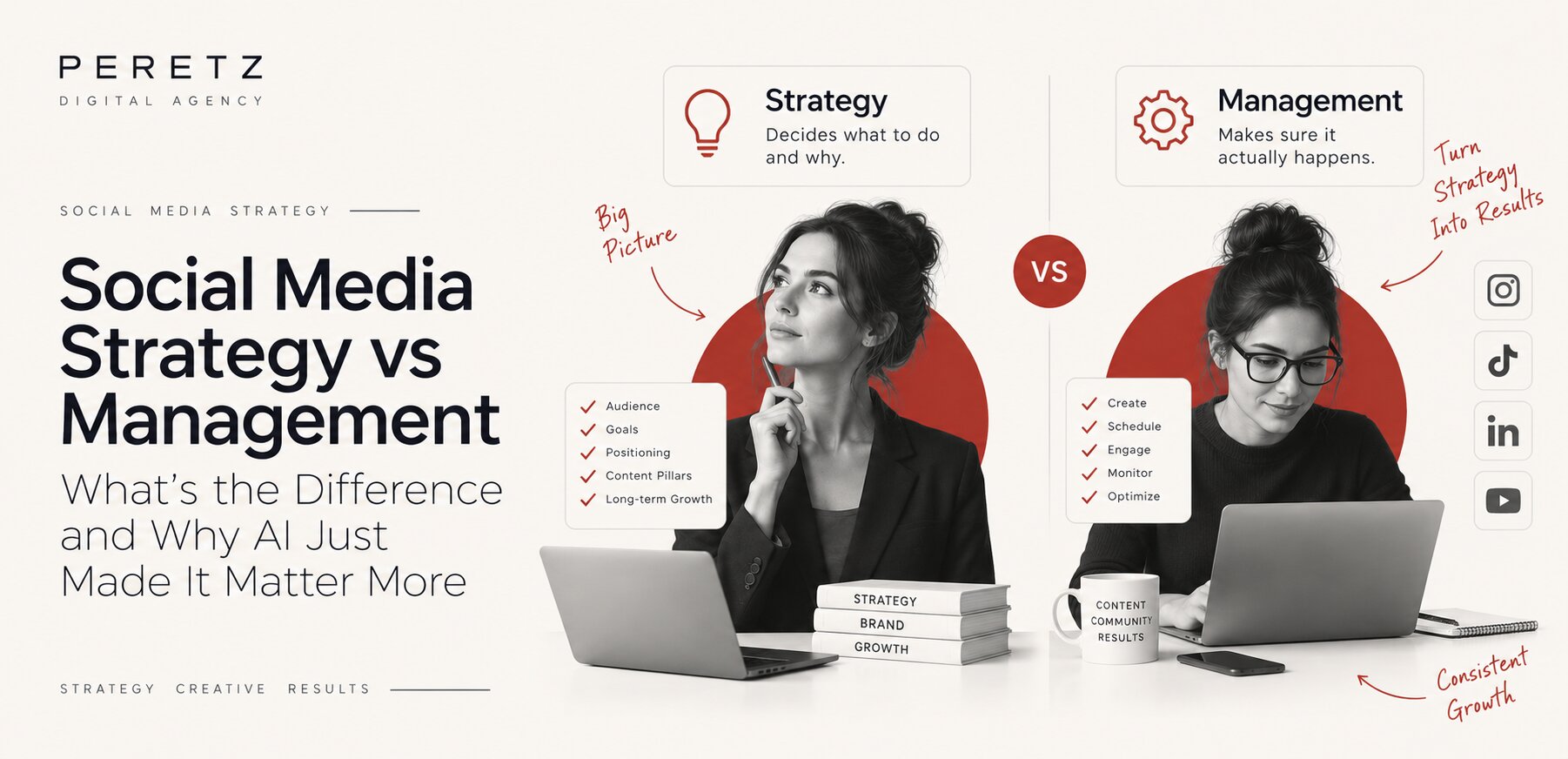
Strategy decides what to do and why. Management makes sure it actually happens, consistently, week after week. One is judgment. The other is execution. AI is rapidly closing the gap on execution, which makes judgment the only part of this job that was ever actually worth paying a premium for. This distinction only matters once a real strategy actually exists to confuse with its own execution.
Judgment is the only part worth a premium now.
THE DISTINCTION
The Distinction in Practice
Strategy is infrequent and high-leverage: it happens at the start of a relationship and gets revisited quarterly, and a single strategic decision, the audience, the goal, the platform, the content pillars, shapes everything that gets executed underneath it for months. Management is frequent and operational: it's what happens every single day and week to keep that strategic decision actually running in the real world, responding to what's happening in real time rather than sitting in a document.
Neither one works without the other, which is exactly why confusing them causes two distinct, common failure modes, both expensive in different ways.
A useful gut check I give clients: if you can point to a document that hasn't changed in three months and still explains why every post this week exists, you have strategy. If you can only point to the posts themselves, you have management, and possibly not even that.
MANAGEMENT ALONE
Failure Mode One: Management Without Strategy
This is the more common version, and it's what most "we post consistently but nothing's happening" complaints actually describe. Content goes out on schedule. It's professionally made, on-brand, competently written. And nobody can say what specific business outcome any individual piece was supposed to produce, because that decision was never actually made, the calendar just got filled, week after week, by someone executing without a strategic document to execute against.
This is precisely the part of the job AI is now automating fastest. Paying a premium price for pure scheduling-and-captioning execution, with no strategic layer attached, is increasingly paying human rates for what a tool can already do a meaningful share of. The management itself hasn't stopped mattering, someone still has to catch what the tool misses and use real judgment in the comments section. But the purely mechanical slice of that work is shrinking fast, and pricing that hasn't caught up with that shift is where businesses quietly overpay.
A boutique law firm I audited last year was paying a full-service agency rate for what turned out to be pure scheduling. The captions were fine. Nobody could tell me what a single post in the last quarter was supposed to accomplish for the firm's actual client pipeline. The retainer hadn't changed in two years. The work inside it had quietly become 80% automatable.
STRATEGY ALONE
Failure Mode Two: Strategy Without Management
The less common but equally costly version: a business pays for a genuinely good strategy document, real audience research, a clear goal, defined content pillars, and then nothing consistent happens with it. The plan sits in a shared drive. Nobody's executing against it week to week, adapting it as data comes in, or actually showing up in the comments section where a real community either does or doesn't get built.
A strategy with no management behind it is a plan nobody is running. It has the same practical value as a strategy that was never written, arguably less, because it creates the appearance that the thinking has already been done, which makes a business less likely to notice that the execution simply isn't happening. Building it in the right order in the first place is exactly what the actual process is supposed to prevent.
I've seen this play out with a founder who commissioned a genuinely excellent strategy document, then got busy running the actual business and never assigned anyone to execute it. Eight months later, the document was still accurate. Nothing on the actual account reflected a single decision in it.
A plan nobody runs has the value of no plan.
WHAT GOES WHERE
What Belongs in Each Category
Documented strategy correlates strongly with business outcomes, research from CoSchedule found businesses with a documented social strategy are dramatically more likely to report success than those without one. But a document alone produces nothing. It has to be paired with someone actually managing execution against it, or it's a plan sitting in a drive, not a business result.
In practice, strategy work includes: audience research, goal definition, platform selection, content pillar development, and the quarterly review that decides whether any of it still holds. Management work includes: the actual content calendar, day-to-day posting and scheduling, community management and comment response, real-time adjustments to what's working this week, and monthly reporting against the strategic goals. Confusing which bucket a task belongs in is the single fastest way to either overpay or under-resource it.
Confusing the two buckets means overpaying for one.
WHY HIRING BREAKS
Why Hiring Goes Wrong Around This Distinction
The most common mistake small businesses make is hiring someone to "manage social media" before deciding what that phrase is actually supposed to mean for their specific business, starting with a candidate instead of starting with the job. A hire brought in to manage will often, reasonably, execute whatever direction they're given. If nobody ever supplied a strategic direction, they'll default to keeping the calendar full, because that's the part of the job that's visible and expected. Six months later, the business has consistent content and no idea whether any of it moved anything that mattered, and the honest diagnosis usually isn't that the hire failed. It's that strategy was never actually purchased, only management was.
The fastest way to check which one you currently have: ask whoever runs your social media to state, in one sentence, what the last month of content was strategically trying to accomplish. A confident, specific answer means strategy exists. "We've been posting regularly" means it doesn't. This is the exact hire-vs-outsource question covered in SMM agency vs freelancer, and in the broader which functions to outsource decision behind it.
FAQ
Frequently Asked Questions
Can one person do both strategy and management well?
Yes, especially for smaller accounts, but only if both roles are explicitly defined and both get dedicated time. The failure mode isn't one person doing both. It's one person doing both without either ever being clearly scoped, so strategy quietly gets skipped whenever execution gets busy, which is most weeks.
How do I know if I'm paying strategy prices for management work, or the reverse?
Compare the deliverable to the price. A genuine strategy engagement produces a document: audience definition, goals, platform choice, pillars, a measurement plan. If what you're actually receiving each month is a content calendar and nothing else, you're paying for management regardless of what the invoice calls it.
Does AI change how much management should cost, even if the person doing it stays the same?
Yes. As AI absorbs more of the purely mechanical scheduling and captioning work, the human time spent on management increasingly shifts toward judgment calls AI can't make, real-time community response, creative decisions, catching what a tool gets wrong. Pricing that hasn't adjusted for that shift is usually still charging full mechanical-execution rates for work that's now partly automated.
WHY I TREAT THESE AS GENUINELY DIFFERENT SERVICES
Why I Treat These as Genuinely Different Services
I don't sell one vague retainer that quietly includes both. A client gets a strategy engagement when the real question is what to do and why, and they get a management engagement, on top of an existing strategy, when the question is whether it's actually happening well, consistently, week after week. Selling those as one blurred thing is how a business ends up paying strategy-level prices for management-level thinking, or management-level prices while quietly hoping strategic judgment shows up for free.
How Peretz Agency Structures This
Every engagement starts by naming which one a client actually needs. Pricing follows that distinction directly, in the next article in this series.
Not sure whether your business currently has a strategy, management, both, or neither? Contact us at hello@peretz.agency or call +1 425 471 94 96.
Whichever it turns out to be, knowing what it should actually cost is the next question, see the real breakdown by component.
Not sure if you're paying for strategy, management, or neither? Peretz Agency names exactly which one your business needs before any engagement starts.
Or already know which one you need?
Explore Social Media Marketing (SMM)
This is one link in a larger chain, covered in full in social media strategy is not a content calendar.
- Share
-

-

-

-

One notification a week with the new PERETZ articles. Nothing else.
Related Reading
-
07. 09. 2026
What Is a Social Media Strategy and Why Does a Business Actually Need One?

-
08. 09. 2026
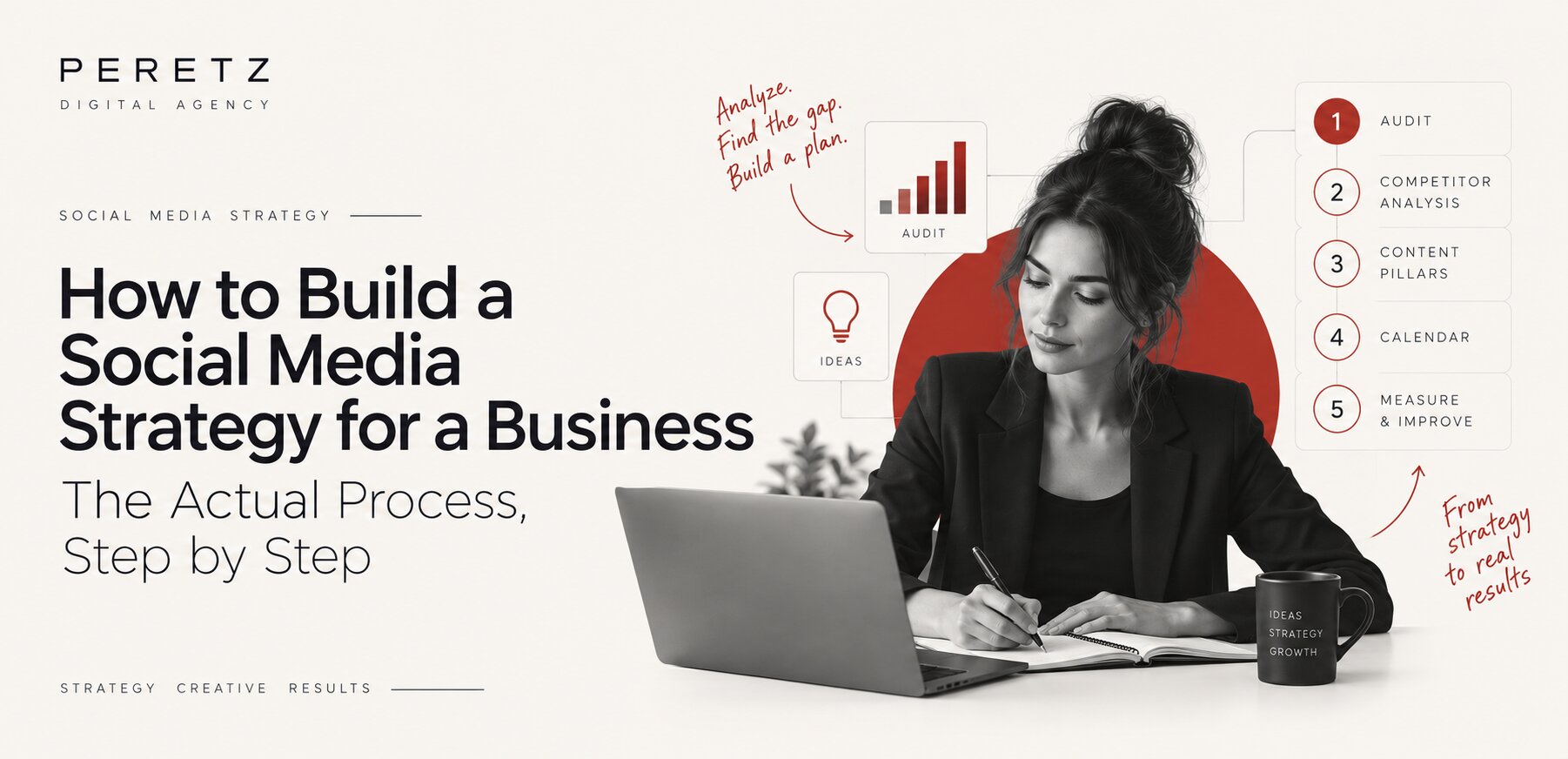
How to Build a Social Media Strategy for a Business, The Actual Process, Step by Step
-
20. 06. 2026
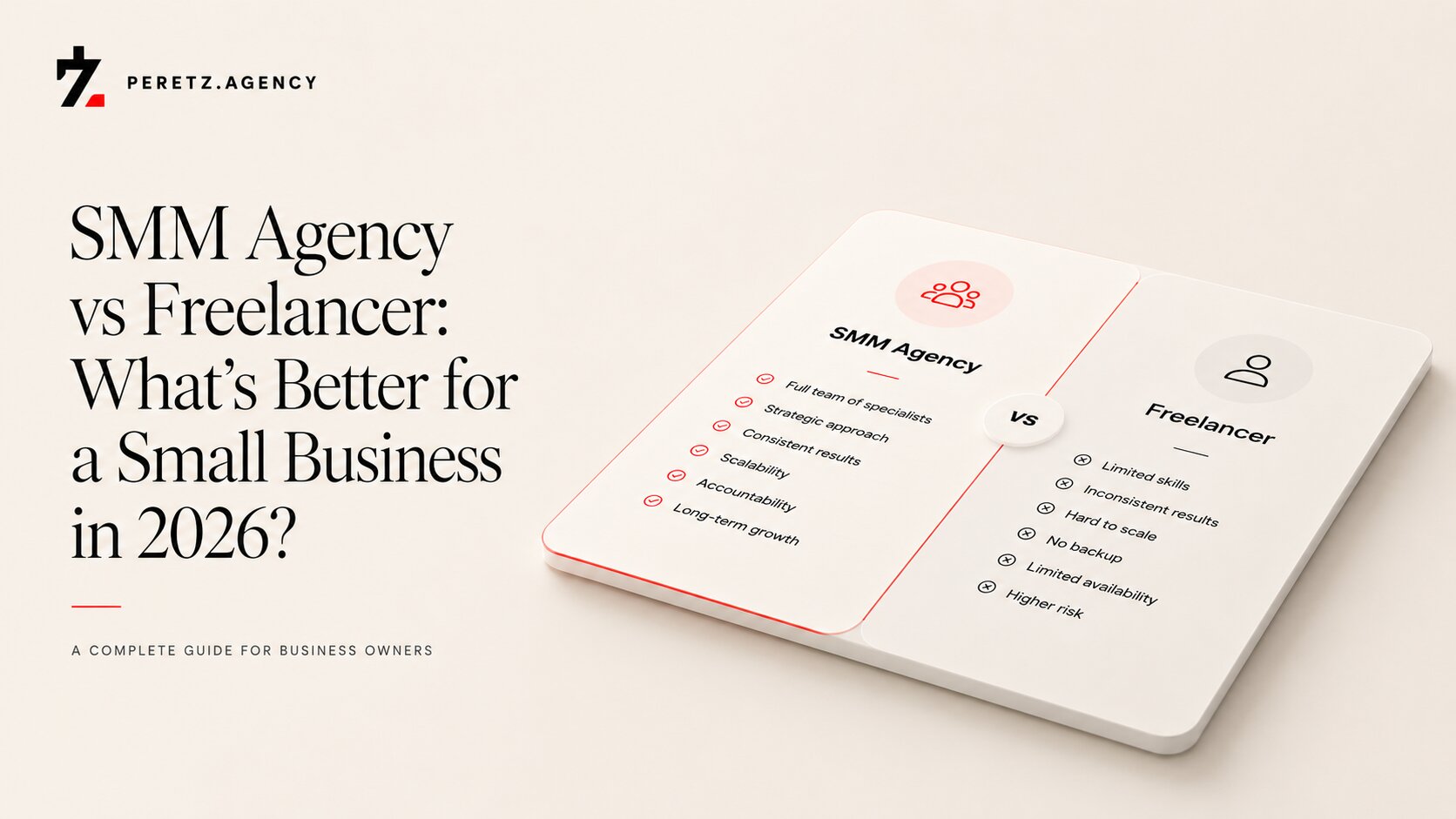
SMM Agency vs Freelancer: What's Better for a Small Business in 2026?
-
16. 03. 2021

Which Business Functions Should You Outsource in 2026?
-
08. 09. 2026

How Much Does Social Media Strategy Cost in 2026? A Real Breakdown by Component
-
24. 09. 2026

Social Media Strategy Is Not a Content Calendar