Is Social Media Marketing Dead in 2026? What the Data Actually Says
Organic reach dropped from 10-15% to 3.5-7.6% since 2020. So is SMM dead? The data says no, it says something more specific and more useful. By Iryna Nechaeva.


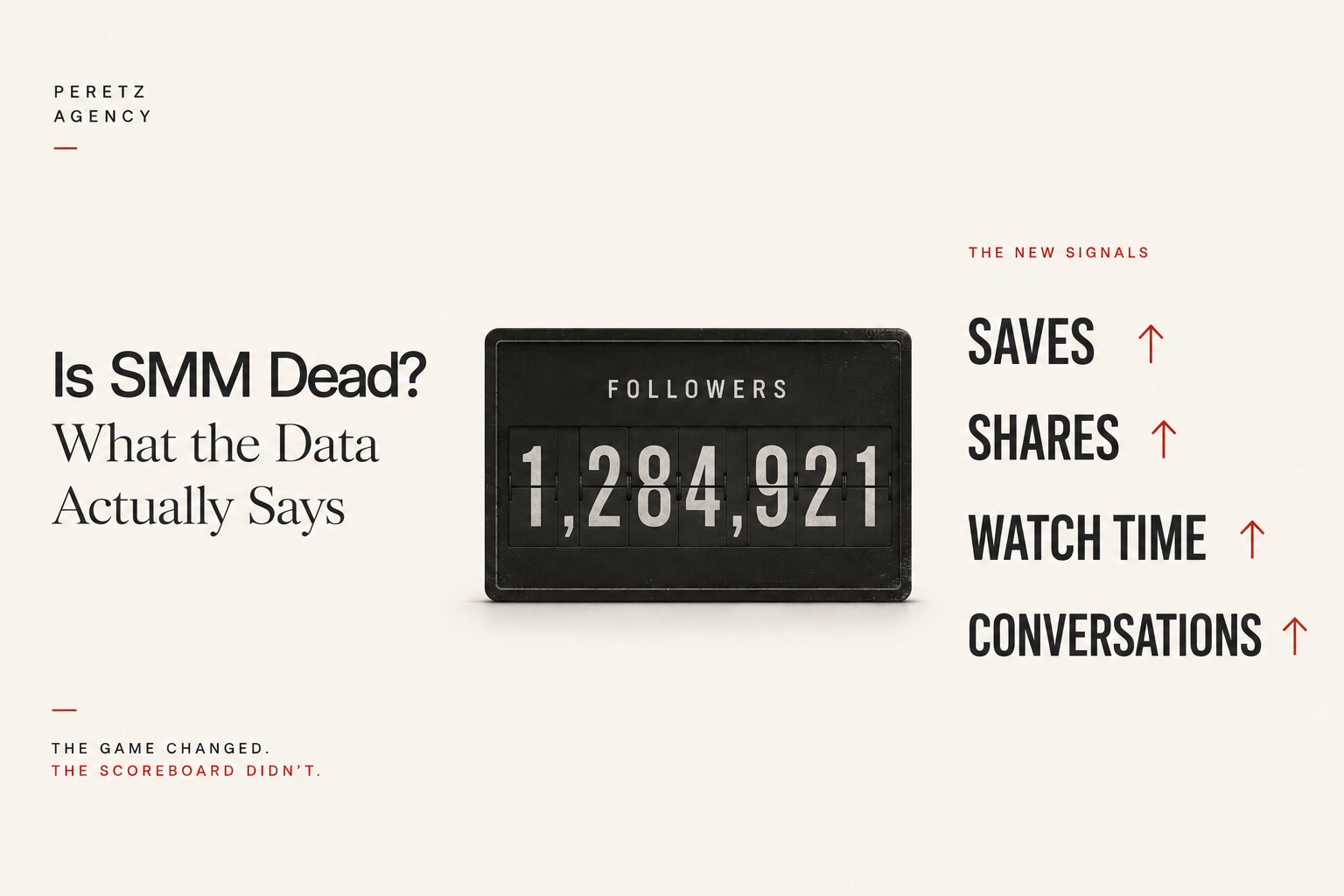
In 2020, an average Instagram post reached 10-15% of a brand's followers. In 2026, that number is 3.5-7.6%. Organic reach fell another 12% just from 2024 to 2025.
Every one of those numbers is real. None of them means what the panicked headlines say they mean.
"Is SMM dead" is the wrong question, and it's worth being precise about why, because the right question gets you a completely different, far more useful answer.
What's Actually Dead (Be Specific About This)
What died isn't social media marketing. What died is one specific mechanism: posting content to your existing followers and having most of them see it for free. That mechanism worked in 2018. It doesn't work in 2026, and it's not coming back, for a reason that's worth naming plainly rather than treating as some kind of algorithm mystery.
The business model explains everything. Instagram, Facebook, and TikTok are free to use. Their revenue comes entirely from advertisers paying for the attention they used to hand out for free. Every platform has a direct financial incentive to make organic reach worse, because worse organic reach is what makes paid ads necessary. This isn't a temporary punishment for something brands did wrong. It's the business model working exactly as designed.
If your own account's reach has plateaued under this shift, we've mapped the ten most common reasons Instagram growth stalls, and the fix for each.
So yes, if your definition of "SMM" is "post content, wait for followers to see it, get business results," that specific thing is dead, and no amount of better captions brings it back.
What's Actually Happening Instead. And It Changes Who Can Win
Here's the part that gets buried under the panic: platforms haven't stopped distributing content for free. They've changed who they distribute it to. Instagram in particular has shifted from social-graph distribution, showing your posts to people who follow you, to AI-driven recommendation, showing content to whoever the algorithm predicts will actually engage with it, regardless of whether they've ever heard of your account.
Facebook now pulls up to 50% of a user's feed from accounts they don't follow. Follower count "no longer determines your content's potential reach": a small account can go viral off a single strong post; a large account can post something that reaches almost nobody.
This is the single most important mental shift for any business owner still measuring SMM success by follower count. Your following isn't your reach anymore. It's a much smaller, much more specific asset than it used to be, and treating it like reach is exactly what makes people conclude SMM is dead, when what actually happened is that the game changed underneath the old scoreboard.
Reels Still Outperform. By a Lot, If You Use Them Right
Reels get roughly 2.25x the reach of static posts in 2026. That's not a marginal edge, it's the platform openly telling you which format it's willing to distribute for free right now. TikTok and LinkedIn currently offer meaningfully better organic visibility than Facebook or Instagram feed posts specifically, depending on content quality and how fast early engagement builds.
The mechanism behind this: platforms increasingly test content with a small initial audience first. If early engagement is weak, distribution stops almost immediately. If it's strong, the algorithm keeps expanding the pool of people it shows the content to. This means the first hour or two after posting matters more than it used to, and it means content built to earn a reaction in the first three seconds has a structural advantage that a beautifully composed but slow-building post doesn't.
Facebook Isn't Dead Either. It's Just Not What It Was
| Metric | 2026 figure |
|---|---|
| Global social media users (2026) | 5.79 billion, roughly two-thirds of everyone on Earth |
| Average weekly time spent on social/video | 18+ hours per user |
| Instagram avg. reach per post (2026) | 3.5-7.6% of followers, down from 10-15% in 2020 |
| Instagram engagement rate (2026) | 0.48%, essentially flat year-over-year |
| TikTok engagement rate (2026) | 3.70%, up 49% year-over-year, the platform's strongest showing |
| Facebook feed content from unfollowed accounts | Up to 50% |
| Reels reach vs. static posts | ~2.25x higher |
If someone tells you Facebook is dead, the data says otherwise: it's still third for global ad reach, and it belongs in most plans, especially for audiences over 30. What changed is its role in the mix, not its size. Reach is no longer the hard part for most businesses: Instagram, Facebook, TikTok, and YouTube each reach close to or above 2 billion people, meaning one or two well-chosen platforms already put most of your audience within range. The hard part moved from access to attention.
The Part of the Engagement Story Most Recaps Get Wrong
Here's a distinction worth getting exactly right, because the two platforms aren't actually moving in the same direction. Instagram's engagement rate held essentially flat in 2026, at 0.48%. TikTok's engagement rate did the opposite: it climbed 49% year-over-year to 3.70%, currently the strongest of any major platform.
What actually dropped by roughly a quarter is comments specifically, not engagement overall. TikTok's average comments per post fell 24% year-over-year; Instagram's fell a comparable amount. On both platforms, shares climbed at the same time comments fell, TikTok's shares per post rose 45% year-over-year.
That combination, fewer comments, more shares, isn't engagement dying. It's engagement going quiet. People are still reacting, just privately, by forwarding something to one specific person instead of leaving a public comment. If your content strategy is still built around sparking conversation in the comments, you're optimizing for the exact behavior that's declining, while the behavior that's actually growing, the private share, is invisible unless you're specifically tracking it.
The Bot Traffic Problem Nobody Wants to Talk About
Industry-wide bot traffic estimates for 2026 put automated activity at roughly 40% of ad traffic on major platforms, even after sophisticated filtering. This matters for two reasons: it inflates the appearance of reach and engagement in ways that make organic decline look even worse by comparison when you're benchmarking against numbers that were partly inflated to begin with, and it means the honest, human engagement your content earns is more valuable, and rarer, than raw metrics suggest.
So What Actually Works Now
The brands still growing from social media in 2026 aren't the ones that found a way to beat the algorithm. They're the ones that stopped depending on any single algorithm to carry the entire relationship with their audience. And why the word “authenticity” alone no longer does that job is covered in Why “Authenticity” Became 2026's Most Overused Word.
- Build content around watch time, saves, and shares, not follower count. The feed prioritizes these signals specifically, regardless of an account's size or history.
- Treat your platform presence as a discovery engine, not a delivery mechanism. Assume most of the people who see your content today have never seen it before, and design for that first impression rather than assuming brand familiarity.
- Build an owned channel in parallel: email list, website, SMS, so your ability to reach your own customers doesn't depend entirely on a platform's daily mood. This isn't abandoning social; it's refusing to let one company's ad-revenue incentives be your only line to your own audience.
- Use Reels and short-form video as the default format, not the occasional experiment. The 2.25x reach multiplier isn't a trend, it's the current mechanics of how these platforms distribute content for free.
- Measure engagement rate and save/share behavior, not follower growth, as your primary organic health signal. A small, real, engaged following now consistently outperforms a large, passive one.
The businesses treating organic reach decline as a reason to quit posting are making the exact mistake that guarantees it stays dead for them specifically. The businesses treating it as a reason to get more specific, more consistent, and less dependent on any one channel are the ones the data actually shows still growing.
How Peretz Agency Approaches This With Clients
When a client asks whether social media is still worth the investment, the honest answer depends entirely on what they were expecting it to do. If the expectation was "post consistently and watch our existing followers turn into customers for free," that expectation was already outdated in 2022, let alone 2026.
If the expectation is "build content that earns distribution from people who've never heard of us, and build owned channels in parallel so we're not entirely dependent on any platform's mood," that's a strategy that works with 2026's actual mechanics instead of fighting them.
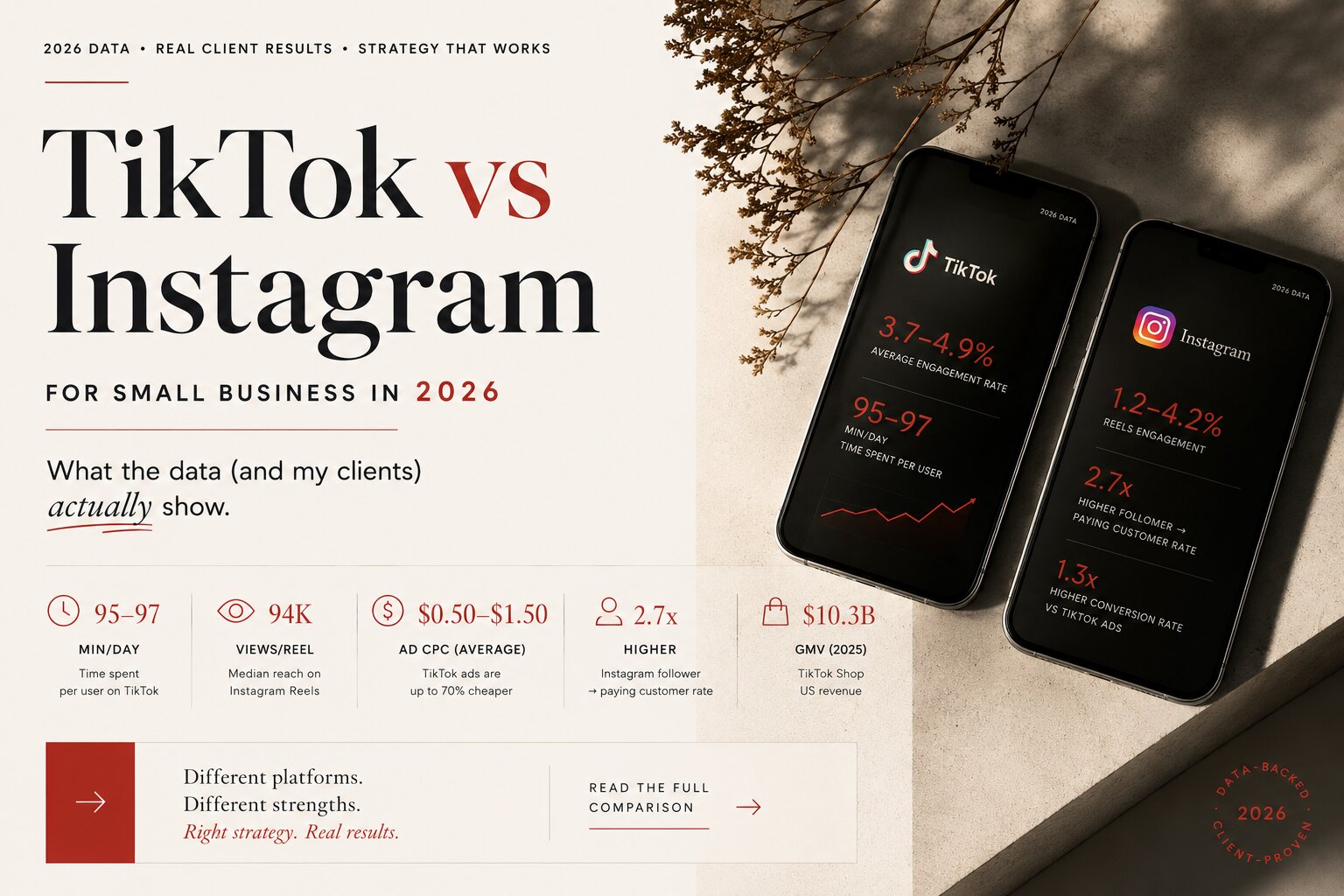
We wrote more about what this looks like on a single account in I Audited 50 Instagram Accounts This Year, and about how the platform choice itself changes the equation in TikTok vs Instagram for Small Business. If the follower-count mindset is the thing to unlearn, How to Build a Community, Not Just an Audience is the other half of that same shift.
We looked at how collaborations turn into real infrastructure, not just reach, in The accounts that keep working in 2026 are the ones built on an actual strategy, not just a bigger content budget.
Not sure whether your social strategy is fighting the algorithm or working with it? A Strategic Session gets you a straight answer before you spend another dollar on content that's optimizing for the wrong signal.
Ready to build a social presence around what actually earns reach in 2026?
- Share
-

-

-

-

One notification a week with the new PERETZ articles. Nothing else.
Related Reading
-
30. 06. 2026
I Audited 50 Instagram Accounts This Year. Here's What Actually Separates Growth from Stagnation.

-
02. 07. 2026
TikTok vs Instagram for Small Business in 2026: What the Data (and My Clients) Actually Show
-
12. 07. 2026
How to Build a Community, Not Just an Audience
-
27. 07. 2026
Why Your Instagram Isn't Growing in 2026 (10 Fixes)
-
19. 08. 2026
Collaboration Strategy: Why One-Off Partnerships Don't Build Lasting Growth
-
07. 09. 2026
What Is a Social Media Strategy and Why Does a Business Actually Need One?