Why "Authenticity" Became 2026's Most Overused Word — And What Actually Works Instead
The ANA named 'authenticity' its Word of the Year for 2025. Here's what actually signals it to consumers now.


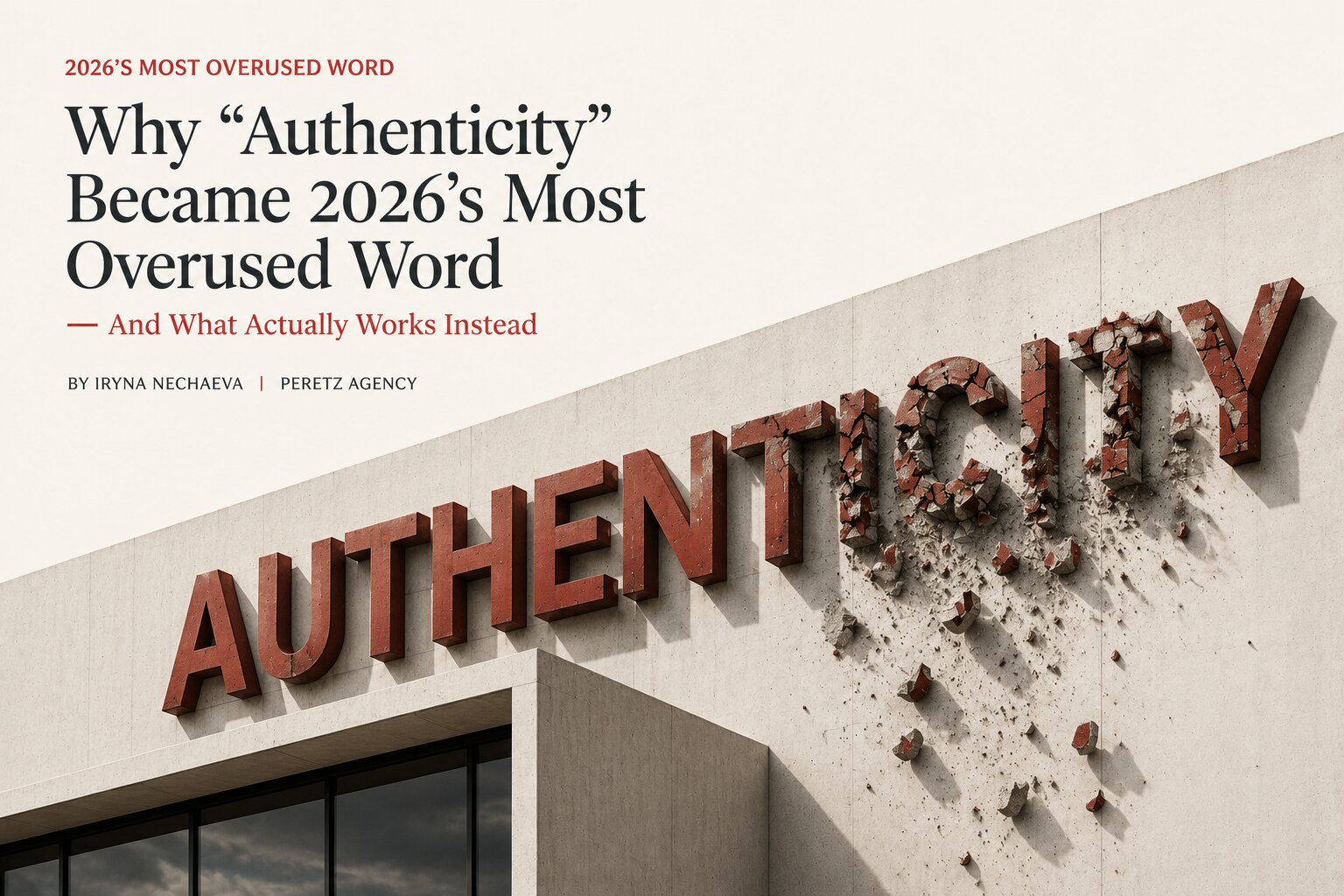
In late 2025, the Association of National Advertisers did something it had never done before: it named two Words of the Year instead of one. "Agentic AI" — and "authenticity."
Read that pairing slowly, because it's the whole story. The same year the industry admitted AI agents were now writing, deciding, and acting on brands' behalf, it also admitted the word everyone reaches for to sound trustworthy had become the industry's most repeated, least believed claim. Those two facts aren't a coincidence sitting next to each other. They're cause and effect.
A restaurant in Santa Cruz found this out the hard way. The owner — who actually had graphic design experience — used an AI-generated logo of a surfing otter. Locals said it felt AI-generated and pushed for a local artist instead, flooded the business with negative reviews, and didn't stop until she replaced it with a plain wordmark. Notice what that story actually proves: it wasn't about whether the logo was good. It was about whether it matched what people had already decided a "real" small business was allowed to look like. The backlash wasn't against AI. It was against a mismatch between claim and expectation — which is exactly what happens every time a brand says "authentic" about something that doesn't feel like it.
TWO FORCES
Two forces hit at the same time in 2026, and together they explain why "authentic" stopped working as a word businesses could just say.
First, the sheer volume of AI-generated content flooding every channel made audiences reflexively skeptical of anything that felt too polished or too templated — polish itself became a warning sign rather than a quality signal. Second, consumer trust became measurably harder to earn and easier to lose, which means the cost of getting caught overstating your own authenticity went up at exactly the moment more brands were reaching for the word to compensate for content that increasingly wasn't handmade.
The result: "authentic" joined a specific category of marketing language — "disruptive," "innovative," "game-changing" — where repetition alone stripped the word of its power. Declaring something is true stopped counting as evidence that it is.
The pattern behind every overused marketing word is identical: the word gets used as a substitute for proof instead of a description of it. "Innovative" without a demonstrated difference from competitors. "Disruptive" applied to a minor iteration. "Authentic" said about content that was written, approved, and distributed by a committee. Consumers don't reject the concept. They reject being told instead of shown.
THE DATA
This is the part most articles about authenticity skip: consumers can name, specifically, what makes a brand feel real or fake to them. It's not a vibe. It's a checklist, and the checklist is measurable.
| Consumer signal | % who cite it |
|---|---|
| Product quality slips | 61% |
| Language becomes generic or robotic | 59% |
| Actions contradict stated values | 56% |
| Trust brands more when reviews are unfiltered and unpolished | 62% |
Look at what's actually on that list. None of it is about whether a brand uses the word "authentic." It's about whether the product still works as promised, whether the tone sounds like a person or a template, and whether stated values match observed behavior. Consumers aren't grading your vocabulary. They're grading the gap between your claim and your conduct — and 59% specifically notice generic-sounding language as an inauthenticity signal, which means the word itself, overused, is now actively working against the brands that lean on it.
THE CONDITIONS
The sharpest reframe in 2026's authenticity conversation is this: authenticity isn't a content style you produce. It's a set of conditions you either meet or don't. A brand can film something on a shaky phone and still be performing. A brand can run a polished, professionally produced campaign and still be telling the truth. The format was never the tell. The conditions were.
What are the conditions? Consumers reward brands that openly share how things are made, who's actually behind the work, and where mistakes happen — not brands that claim transparency as a value statement. One marketing executive put it precisely: authenticity doesn't mean making more noise. It means communicating what needs to be communicated, when and where the audience actually needs it. That's a much narrower, much more testable standard than "be yourself" ever was.
This is exactly the pattern I described in an earlier piece about a real estate developer whose previous agency posted unedited ChatGPT captions under beautifully designed graphics. The design met every condition of "professional." The words met none of the conditions of "true." Nobody in that audience was checking whether the brand had used the word authentic. They were checking whether anything in the caption sounded like it came from a person who actually knew that building. It didn't, and they felt it immediately, even without being able to name why.
DE-INFLUENCING
One of the clearest proofs that vague positivity has stopped converting is the rise of de-influencing — creators actively telling audiences not to buy something, or being upfront about a product's real limitations before recommending it. Anti-haul, limitation-forward content now regularly outperforms traditional promotional content in engagement, particularly with younger audiences fatigued by generic endorsement.
The mechanism is simple and directly testable: a creator who says "this works well for X but honestly isn't worth it for Y" earns more trust in the same sentence than ten posts calling something authentically amazing. Acknowledging a real limitation is now a stronger trust signal than claiming a universal strength — because a limitation is specific, checkable, and costs the brand something to admit. A claim of universal authenticity costs nothing to say, which is exactly why it's stopped being believed.
WHAT TO DO
1. Show the making, not just the made
Consumers specifically reward brands that share how something is built and who's behind it — the process, not just the polished result. A 30-second video of a real customer explaining, in their own words, why they chose you will outperform a polished testimonial graphic every time it's tested, because the rough edges are the proof, not a flaw to edit out.
2. State a real limitation before someone else finds it
Borrowing directly from the de-influencing pattern: say who your product or service is genuinely not right for, before a customer discovers the mismatch themselves. "This works best for teams under 500 people" builds more trust than a claim of universal fit — because it's the kind of statement a brand only makes when it's telling the truth.
3. Check the values-behavior gap before publishing anything
56% of consumers name a mismatch between stated values and actual behavior as a major red flag. Before publishing a values-driven message, the honest question isn't "does this sound good" — it's "can we point to a specific action that backs this up, and would we be comfortable if someone checked."
4. Let real people sound like real people
59% notice when language turns generic or robotic. This is a direct, practical argument against having a single AI-smoothed voice for every piece of content a brand publishes. A founder, a specialist, an actual team member speaking in their own specific rhythm will always out-signal a uniformly polished brand voice, because uniformity itself has become a tell.
The fastest self-check for any piece of content before it goes out: could this exact sentence have been written by any competitor in our category, with our logo swapped for theirs? If yes, it's not proving anything — it's occupying space where proof should be.
HIGHER STAKES
Large brands have the budget to survive an authenticity misstep — a bad AI ad, a tone-deaf campaign — because they have decades of accumulated trust to draw down. A small business doesn't have that reserve. Every piece of content is closer to a first impression than a large brand's ever will be again, which means the gap between claimed and demonstrated authenticity is riskier, and the payoff for closing that gap correctly is proportionally larger.
This is also, genuinely, good news for smaller businesses specifically: real authenticity signals — showing the actual process, naming a real limitation, letting an actual person's voice through — don't require a bigger budget than performing authenticity does. They require less production, not more. The businesses that get this right aren't spending more. They're spending on the right thing.
OUR APPROACH
We stopped using the word "authentic" in strategy documents a while ago, honestly, because it had become exactly the kind of empty claim this article describes. What we ask instead, for every piece of content: what's the specific process being shown here, whose actual voice is this, and what would happen if a skeptical reader tried to fact-check this claim against the brand's real behavior.
That's a harder standard to meet than "sound authentic." It's also the only one that still works.
The same problem shows up visually, not just in words, which we explored in Why Some Websites Look Cheap Even When They Are Well Designed.
Want a content strategy built around conditions that actually hold up to scrutiny, not just language that sounds trustworthy?
Our Strategic Session maps what your brand can actually prove, before we write a single word about what it claims. the Sineta Event Team case is what replacing that claim with real editorial storytelling actually looks like.
Already know social is where the trust gap shows up first?
- Share
-

-

-

-

One notification a week with the new PERETZ articles. Nothing else.
Related Reading
-
07. 07. 2026
Human-First Content Strategy: Why AI Content Is Losing the Trust War in 2026

-
23. 06. 2026
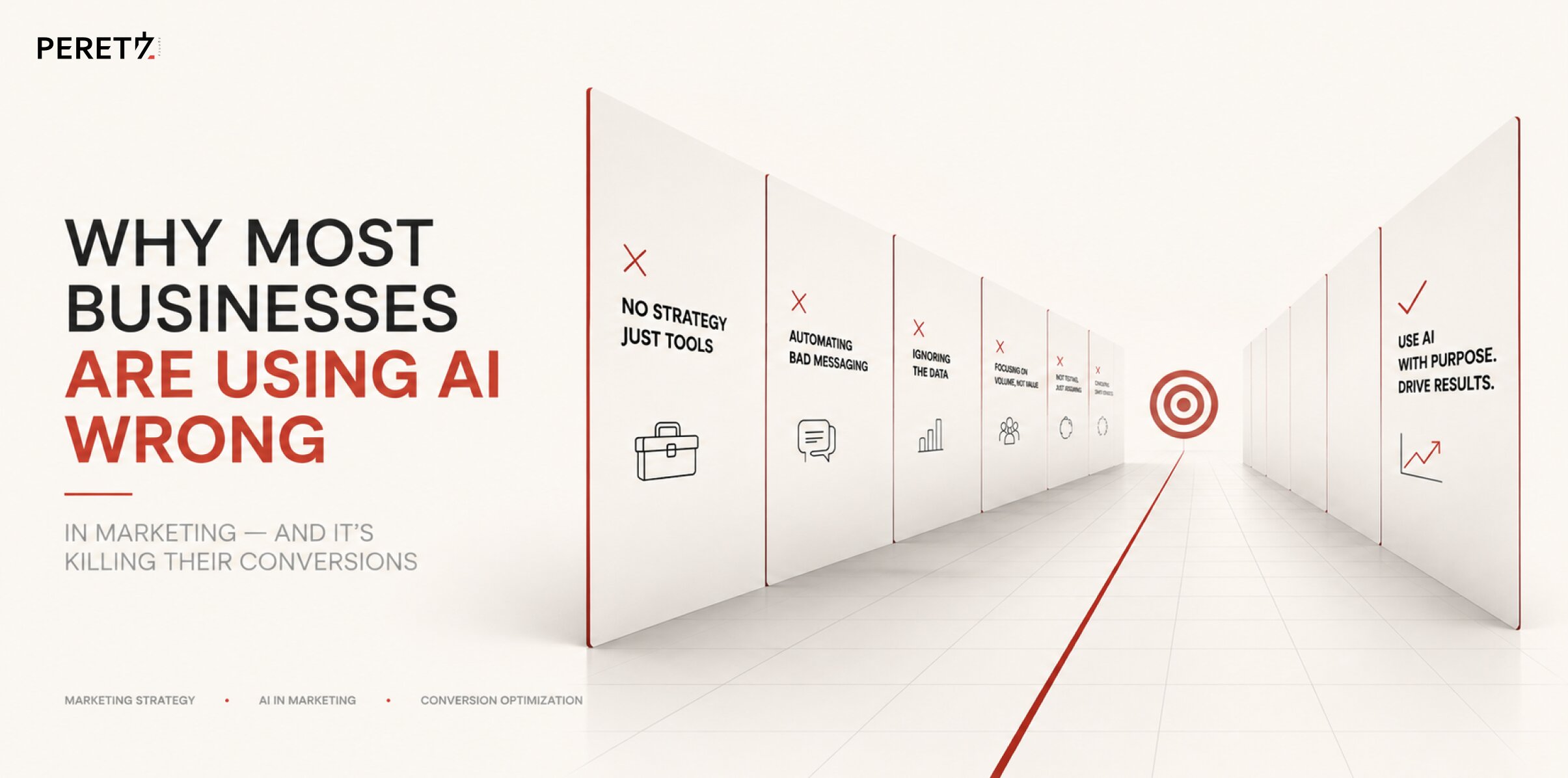
Why Most Businesses Are Using AI Wrong in Marketing — And It's Killing Their Conversions
-
20. 06. 2026
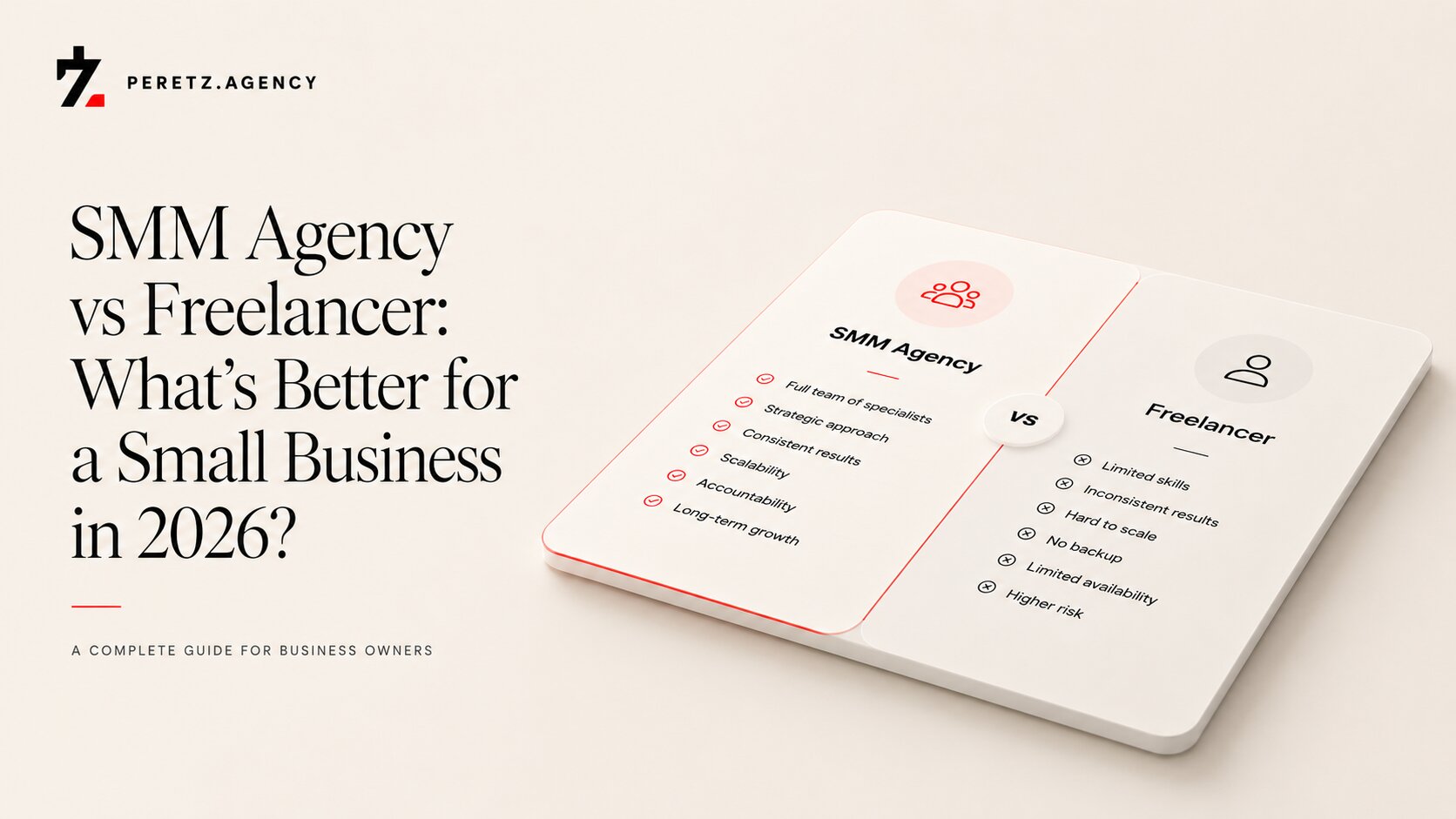
SMM Agency vs Freelancer: What's Better for a Small Business in 2026?
-
27. 08. 2026
Why Some Websites Look Cheap Even When They Are Well Designed