High CTR But Low Conversion Rate? Here's Why Your Ad Copy Is the Problem
Getting clicks but not sales? Vague copy gets ignored. Specific numbers get clicked and convert. Here's the exact reason why.


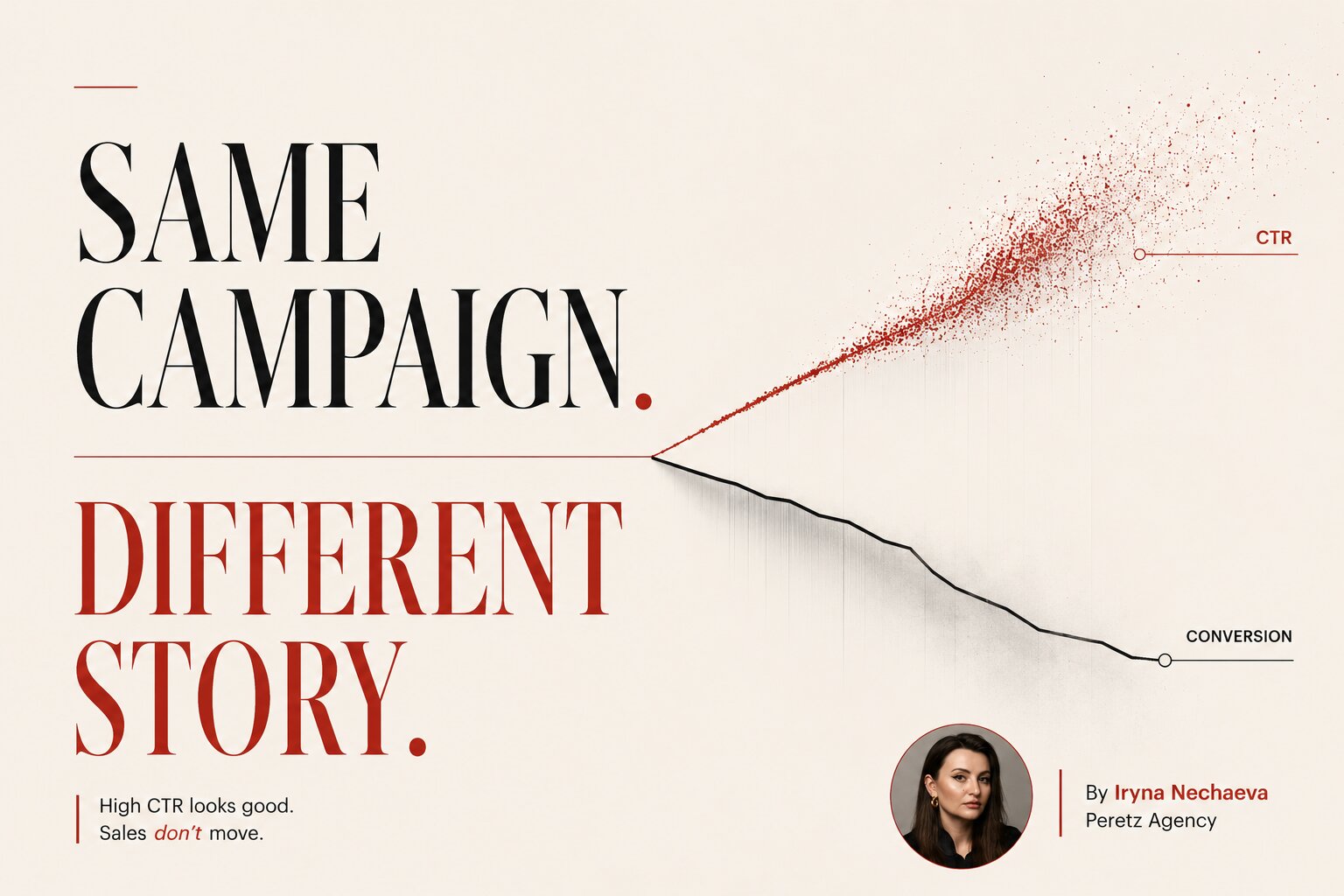
THE UNCOMFORTABLE FINDING
You open Ads Manager. Click-through rate looks fine, even good. But sales aren't moving. Somewhere between “people are clicking” and “people are buying,” something is quietly leaking, and it's tempting to blame the landing page, the price, the audience, anything except the ad itself, because the ad is the part that's technically working.
Here's the uncomfortable finding from 2026 creative performance data: a high CTR with a low conversion rate is very often not a landing page problem or an audience problem. It's a sign your ad made a promise your product never made, and got the click on false pretenses.
“Work better, faster.” Versus: “Cut working time by 70%.” Same product, same audience. One of these gets scrolled past without registering. The other gets clicked, by someone who now expects a specific, checkable outcome.
If your ad copy sounds like the second one, but your landing page and product deliver something closer to the first, that gap is exactly where your conversion rate is leaking.
WHY TARGETING ISN'T THE ANSWER ANYMORE
The instinct when CTR is high but conversion is low is to check audience targeting. In 2026, that's usually the wrong place to look. Meta's own Advantage+ system now consistently outperforms manually targeted campaigns by 15 to 25% in ROAS, because the algorithm already knows your warm audiences from pixel data and conversion history better than any interest stack you could build by hand.
When the algorithm handles targeting, creative becomes the only thing you actually control. And a creative that gets clicks but not conversions isn't a targeting failure, it's the ad making a claim that doesn't match what happens after the click. No clever interest stack fixes that. The mismatch is baked into the ad itself. AI-generated creative often widens that gap further, as we show in why most businesses are using AI wrong in marketing.
SPECIFIC CLAIMS CONVERT, CLEVER CLAIMS JUST GET CLICKED
The clearest 2026 finding on this exact problem: specific, testable claims outperform abstract, clever copy, not just on click-through, but specifically on the click-to-conversion step. “Cut working time by 70%” works because the claim is falsifiable, a real person can imagine testing it, and clicks expecting to verify it. “Work better, faster” is a mood. It gets ignored more often, but when it does get clicked, the click means less, because nothing specific was promised to disappoint.
This is the actual mechanism behind high-CTR-low-conversion: vague, high-energy copy (“Limited time!” “You won't believe this!”) generates curiosity clicks, people clicking to see what the fuss is, not because they identified with a specific claim. Those clicks show up as a healthy CTR. They convert far below a smaller number of clicks driven by a specific, checkable promise.
| Ad copy style | CTR pattern | Conversion pattern |
|---|---|---|
| “Work better, faster” | Higher (curiosity-driven) | Low, no specific expectation to fulfill |
| “Cut working time by 70%” | Lower (self-selecting) | High, click already means “this could solve my problem” |
The visual pattern matches the copy pattern: creative that shows a product doing a specific job in a specific setting converts consistently better than generic lifestyle imagery. The golden-hour stock photo of someone laughing at a salad gets looked at. It doesn't get bought from.
THE FIX
In practice, we see a very different pattern. Clients often come to us with a CTR of 2.5 to 3% and assume their advertising is working because people are clicking. But in most cases, the problem isn't the audience at all. It's that the ad promises one experience, while the experience after the click tells a completely different story. That's where conversions quietly disappear.
1. Make the ad copy as specific as the product actually is
Vague: “Grow your business with us.” Specific: “We took a Bellevue dental practice from 12 to 47 new-patient calls a month in 90 days.”
Vague: “Save time with our tool.” Specific: “Cut your invoice processing from 45 minutes to 6.”
Every specific version replaces a feeling with a fact the viewer can privately check, and critically, it pre-qualifies the click. Someone who clicks “cut invoice processing from 45 minutes to 6” already believes that's their problem. Someone who clicks “save time with our tool” might just be curious.
2. Say the claim early, not at second 20 of a 30-second video
A 30-second video that saves its most compelling, specific claim for the 20-second mark loses most viewers before they ever see the thing that would have made the click meaningful. If the specific promise is buried, you're generating exactly the curiosity-click pattern that inflates CTR and starves conversion.
3. Test 10 specific hooks, not 2 vague ones
Businesses winning on this metric right now aren't relying on one polished, broad ad running for weeks. They're testing 12 to 20 distinct, specific creative concepts per ad set, because an algorithm fed only 2 to 3 inputs has almost nothing to learn from, and quietly punishes that lack of diversity with a higher CPM. Testing ten specific hooks instead of two doesn't just find a winner faster. It tells you, quickly, which specific claim actually pulls a converting click instead of a curious one.
Quick self-check for any underperforming ad: read your headline out loud, then ask, if someone clicked expecting exactly this to be true, would our product deliver it in the first ten seconds on the landing page? If the honest answer is no, that's your conversion leak. Not your audience, not your price.
WHY THIS MATTERS MORE IN 2026 THAN IT USED TO
This gap used to be partially masked by manual targeting doing some of the qualifying work, a narrow interest audience meant even a vague ad reached people somewhat pre-sorted. With targeting now broad and algorithm-led by default, the ad copy is the only remaining filter between a stranger and a purchase decision.
A vague ad on a broad audience doesn't just underperform. It becomes the entire reason for a click-to-conversion gap that used to have somewhere else to hide.
HOW PERETZ AGENCY DIAGNOSES THIS
When a client comes to us with “good CTR, no sales,” we don't start with the audience or the landing page. We read the ad copy next to the actual product experience and ask one question: does the specific thing this ad promised happen, specifically, in the first ten seconds after the click? Most of the time, the gap between those two things is the entire explanation, and it's a copy fix, not a rebuild.
THE RIGHT PERSON, NOT EVERY PERSON
Good advertising doesn't make people click. It makes the right people click, the ones who need very little convincing once they arrive.
And when that person arrives on your landing page, you shouldn't have to start selling from zero.
A high CTR with no strategy behind it is exactly the kind of gap a real strategy is supposed to close before the ad even runs.
The ad should have already done most of that work.Getting clicks but not sales, and not sure why? We'll check whether your ad is making a specific promise your funnel actually keeps.
If the gap is in your creative and social strategy more broadly, that's exactly what we handle day to day.
- Share
-

-

-

-

One notification a week with the new PERETZ articles. Nothing else.
Related Reading
-
09. 07. 2026
Traffic But No Leads? Your Customer Is Doing Math You Never See

-
23. 06. 2026
Why Most Businesses Are Using AI Wrong in Marketing — And It's Killing Their Conversions
-
17. 06. 2026
Why Your Business Isn't Getting Leads From Its Website (And How to Fix It in 2026)
-
28. 07. 2026
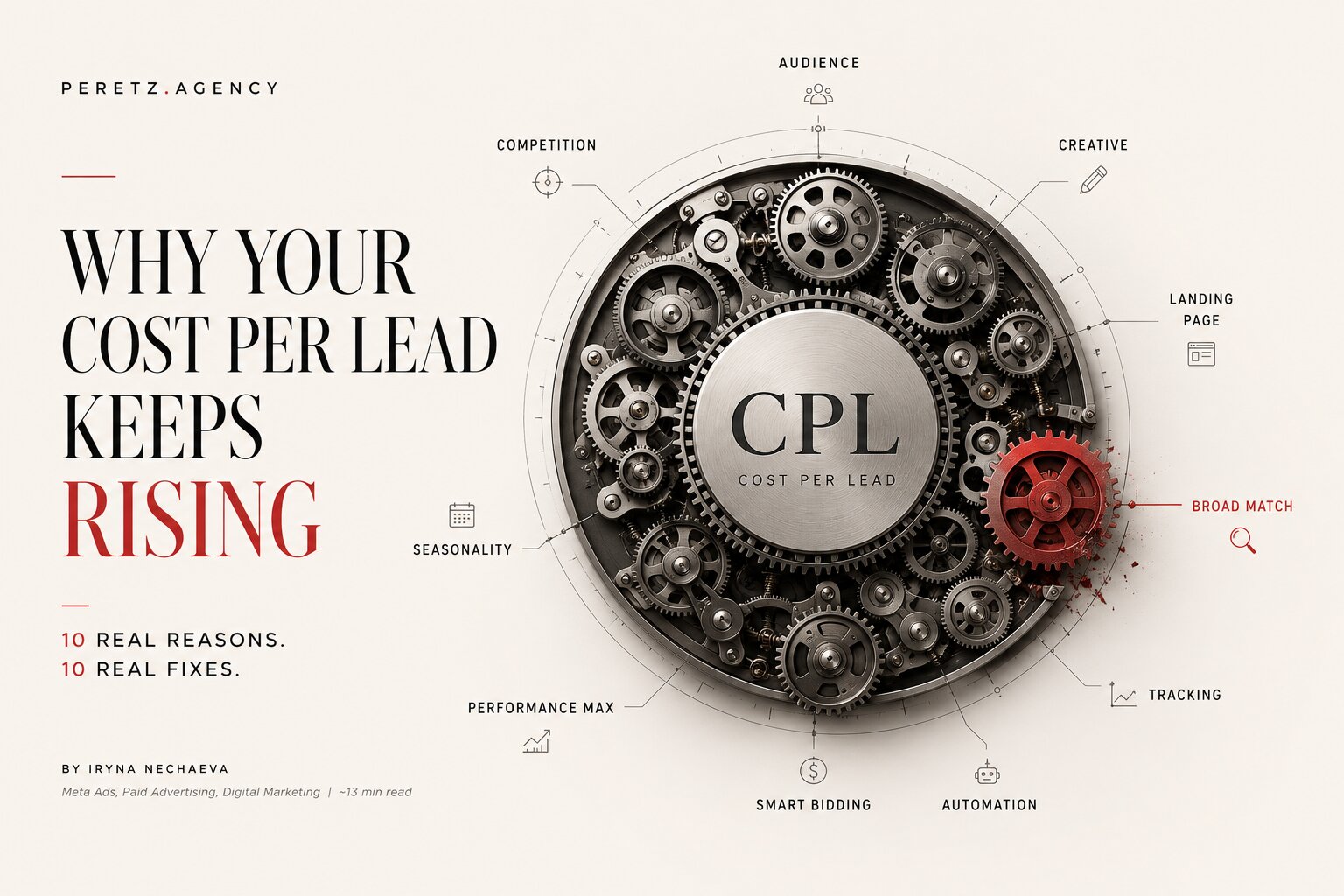
Why Your Cost Per Lead Keeps Going Up in 2026 (10 Fixes)
-
07. 08. 2026
Campaign Budget Optimization Is a Governance Decision, Not a Toggle
-
07. 08. 2026

Your Meta Spending Limit Is a Circuit Breaker, Not a Setting
-
08. 08. 2026
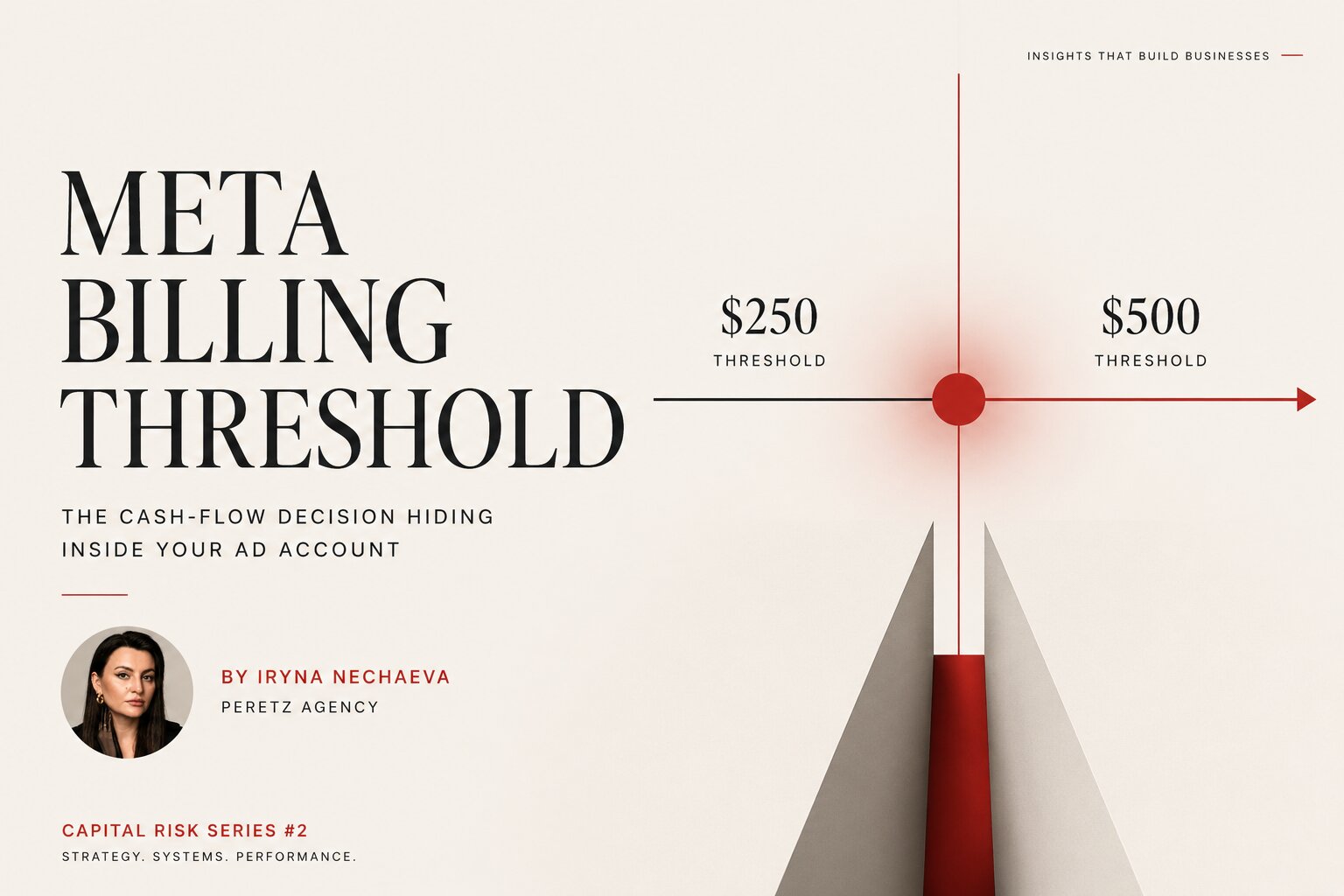
Meta Quietly Rewired How It Collects Money From Advertisers in 2026
-
20. 07. 2026
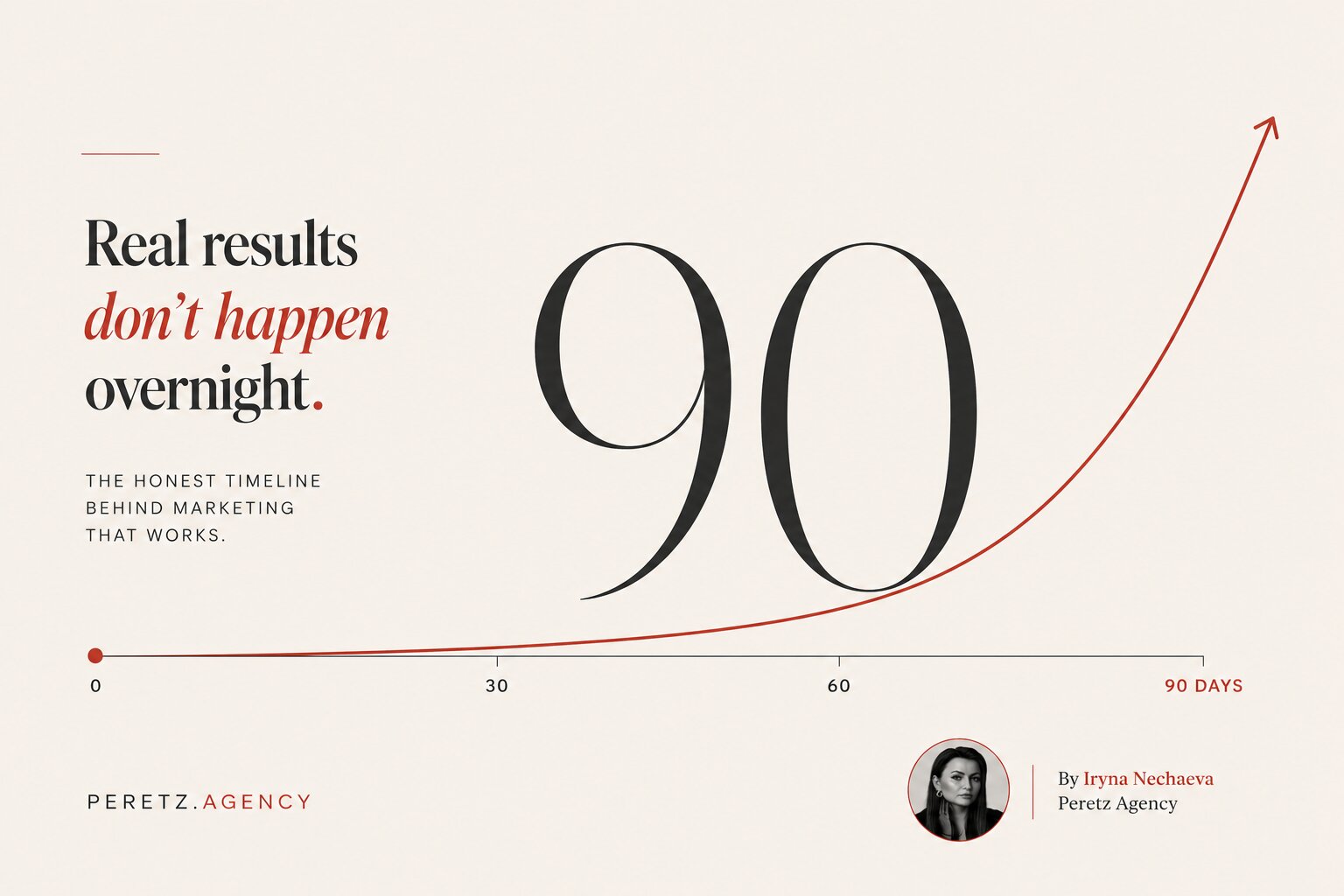
How Long Does It Take to See Marketing Results? Why Agencies Promising Faster Are Lying to You
-
27. 07. 2026
Why Your Instagram Isn't Growing in 2026 (10 Fixes)
-
06. 09. 2026
SEO Gets You Found. AEO Gets You Recommended. Your Commerce Infrastructure Gets You Bought.
-
07. 09. 2026
What Is a Social Media Strategy and Why Does a Business Actually Need One?