Why Your Cost Per Lead Keeps Going Up in 2026 (10 Fixes)
60-70% of rising CPL comes from fixable account issues, not the market. 10 causes behind a climbing cost per lead, a diagnostic table and a fix for each.



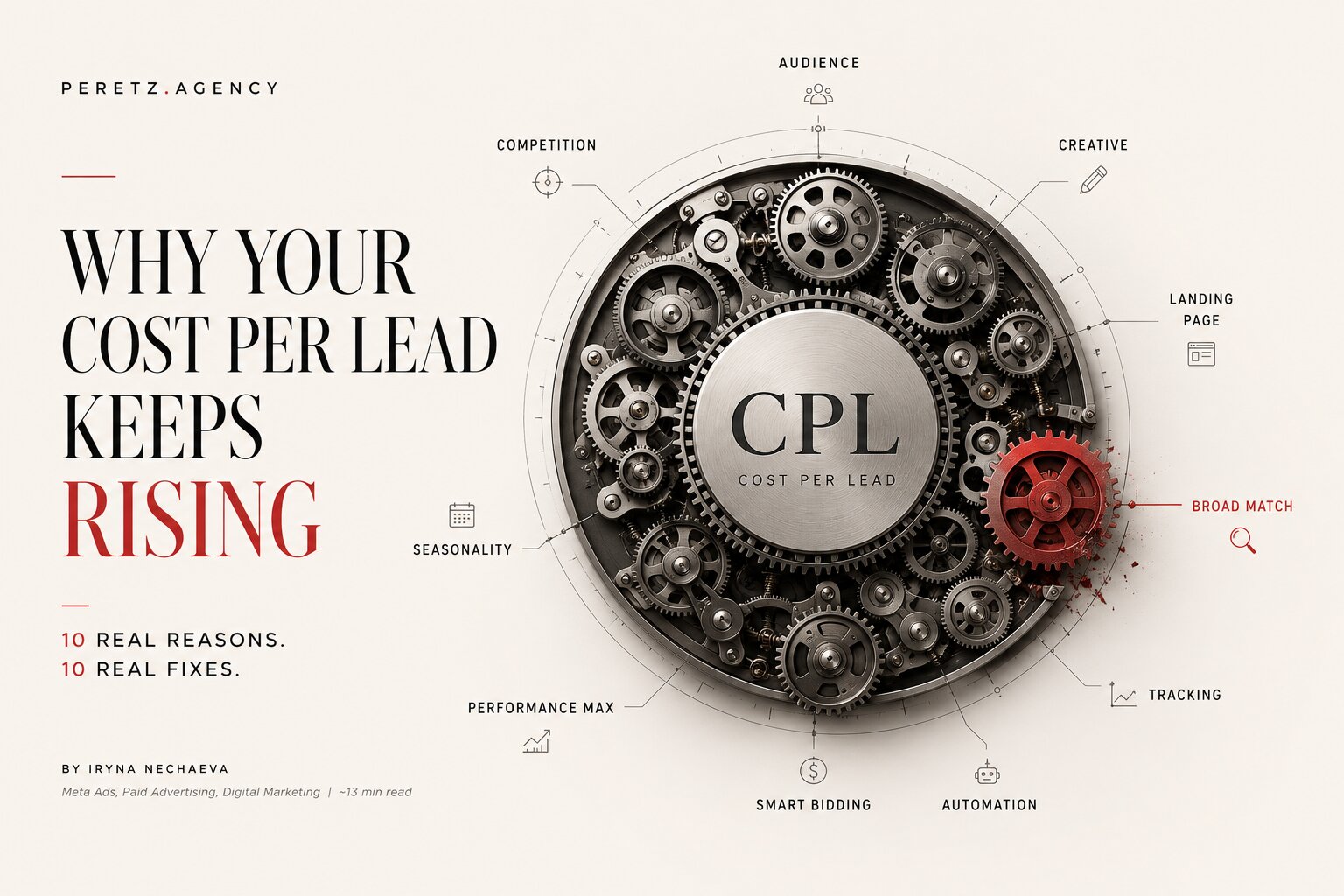
Six months ago, a lead cost you $22. Nothing about your funnel changed, same offer, same landing page, roughly the same audience. Last month it was $31. This month it's pushing $38, and nobody on your team can point to a single decision that caused it.
That's not a mystery, and it's not bad luck. Cost per lead rising with no obvious internal cause is one of the most common, and most diagnosable, problems in paid advertising right now. Meta ad costs climbed 21% year-over-year in 2025. Google Ads average cost per lead hit $70.11 across industries, up from the year before. Some of what's driving your number is market-wide and outside your control. A meaningful chunk of it usually isn't.
Here's the actual formula worth remembering before anything else: CPL = CPC ÷ Conversion Rate. Your cost per lead only has two possible inputs. Either your clicks got more expensive, or fewer of those clicks convert, or both. Every fix below maps to one of those two levers.
This overlaps closely with two related diagnoses worth knowing about. If your CTR looks fine but the clicks just aren't turning into leads, that's a different problem, covered in High CTR But Low Conversion Rate? Here's Why Your Ad Copy Is the Problem. If Instagram specifically feels broken rather than just pricier, start with Why Your Instagram Ads Aren't Working in 2026.
MARKET FORCES
Market Forces You Can't Control (But Should Understand)
A meaningful share of rising CPL is genuinely structural, not a mistake in your account. AI Overviews have reduced paid click-through rates by roughly 25%, from 8.76% down to 6.56%, by pushing ads further down search results pages, even when impressions stay flat. Average CPC has more than doubled over the past decade. Auction competition intensifies every year as more advertisers move budget into digital. None of this means your account is broken. It means the baseline cost of reaching anyone through these channels has genuinely gone up, and comparing this year's CPL to three years ago without adjusting for that isn't a fair comparison.
The useful split: account-level factors typically account for 60-70% of a CPL increase, even when the market explanation feels like the whole story. That's the part worth diagnosing, because it's the part you can actually fix.
The 10 Reasons Your CPL Is Climbing
AUDIENCE FATIGUE
Reason 1: Audience Fatigue, You've Burned Through Your Best-Fit People
Ad platforms are built to spend your budget, not protect your CPL. Once they exhaust the people who genuinely match your offer, they expand delivery to people who loosely fit your targeting but convert far less often. Same spend, fewer real buyers reached, this is how the auction is designed to work, not a malfunction.
The fix: this isn't solved by refreshing your ad creative alone, that fixes creative fatigue, a different problem. It's solved by feeding the algorithm better audience signal: tighter conversion event data, refined lookalike seeds, and, where the budget supports it, layering in intent-based audience data rather than relying purely on interest targeting.
CREATIVE FATIGUE
Reason 2: Creative Fatigue, Your Audience Has Seen This Ad Too Many Times
After roughly four exposures to the same ad, click likelihood drops approximately 45%. Fatigued creative loses 20-30% engagement weekly, and once an audience is genuinely saturated, CPA can climb 30-60% within just 2-4 weeks. 91% of consumers now report that advertising feels more intrusive than it did even two years ago, tolerance for repetition is lower than it used to be.
The fix: rotate creative on a schedule matched to the platform, every 7-21 days depending on where you're running, faster on TikTok, slower on Search. Cap frequency at 3-4 impressions per user per week. Use sequential creative across funnel stages, different messaging for someone seeing your brand for the first time versus the fifth.
BROAD MATCH CREEP
Reason 3: Broad Match Creep
Google's platform auto-suggests loosening match types, and most accounts accept those recommendations gradually without tightening negative keywords to compensate. Over 6-12 months this quietly expands traffic to increasingly irrelevant searches. Each month looks slightly worse than the last, not enough to trigger alarm on its own, but enough to steadily erode CPL if nobody's actively watching.
The fix: audit match types against actual search term reports monthly, not annually. Build negative keyword lists proactively rather than reactively. This is the single most common account-level cause behind a slow, unexplained CPL climb over many months.
LANDING PAGE DROP
Reason 4: Landing Page Conversion Rate Quietly Dropped
If your CPC held steady but your landing page started converting worse, your CPL rises with nothing visibly changed in the ad account itself. One documented case: a 46% jump in effective CPL traced entirely to a broken mobile version of a landing page, the ads were fine, the destination wasn't. Landing page relevance also feeds Quality Score directly, which affects what you pay per click in the first place.
The fix: check that the page loads fast on mobile specifically, matches the ad's exact promise, and gives visitors one clear action, not three competing ones. Test the actual mobile experience yourself, on a real phone, not just the desktop preview.
NO BID TARGET
Reason 5: Smart Bidding Running Without a Target
"Maximize Conversions" with no target CPA will spend to acquire conversions at almost any price as competition in the auction rises, it has no ceiling built in unless you set one. Bidding strategies set up during a cheaper era quietly get more expensive as the market heats up around them, with nobody actively adjusting the strategy to match.
The fix: set an actual target CPA or target ROAS rather than running conversion maximization unconstrained. Revisit bid strategy quarterly, not just at setup, a target that made sense a year ago may not reflect current auction pricing.
BROKEN TRACKING
Reason 6: Conversion Tracking Has Quietly Degraded
iOS 14.5+ privacy changes eliminated reliable third-party tracking for a large share of iOS users, forcing platforms to optimize on increasingly incomplete conversion data. When the algorithm is optimizing toward a signal that's missing a meaningful chunk of your real conversions, it can't accurately find more of the people who actually convert, it's guessing with worse information than it used to have.
The fix: verify server-side tracking (Conversions API on Meta, Enhanced Conversions on Google) is properly configured and deduplicated against browser-based tracking. This is invisible in the dashboard until you specifically check for it, and it silently makes every other fix on this list less effective.
AUCTION COMPETITION
Reason 7: Rising Auction Competition in Your Specific Category
More advertisers bidding on the same keywords or the same audience segments drives CPCs up market-wide, and some categories, legal, insurance, financial services, see steeper increases than the average. This is genuinely outside your control at the account level.
The fix: check your Auction Insights report (Google) or Ad Library activity (Meta) to see whether competitor impression share has meaningfully increased. If it has, the honest move is often to find a narrower segment where your conversion rate is strong enough that a higher CPC still produces an acceptable CPL, not to try to outspend larger competitors on the same broad terms.
WRONG BASELINE
Reason 8: You're Comparing Against the Wrong Baseline
CPL fluctuates seasonally, and a rising number in January compared to December might be nothing more than a predictable seasonal shift, not a real trend. The comparison that actually matters is year-over-year, same period, not month-over-month in isolation.
The fix: before diagnosing anything else, check whether this year's number at this time of year is meaningfully worse than last year's number at the same time. If it's in line with a normal seasonal pattern, you may not have a problem to fix at all.
AUTOMATED REALLOCATION
Reason 9: Performance Max or Advantage+ Is Reallocating Spend Away From What Was Working
Automated campaign types make real-time reallocation decisions with limited visibility into why. Budget can quietly shift away from a segment that was converting well toward one that isn't, simply because the algorithm is chasing a different signal than the one you'd choose manually.
The fix: review asset group or ad set-level performance regularly, not just the campaign-level summary. Automated bidding earns trust through verified results, not blind faith, check whether the algorithm's reallocation decisions actually match where your real conversions are coming from. For a deeper look at what realistic paid budgets should produce, see Meta Ads in 2026: What Budget Do You Really Need to See Results?
NO ACTIVE MANAGEMENT
Reason 10: Nobody Is Actively Managing the Account
This is the quiet cause behind most of the other nine. Broad match creep, audience fatigue, and bidding strategy drift all compound slowly, each month a little worse than the last, never dramatic enough on its own to trigger a review. Set-and-forget campaigns don't fail loudly. They fail gradually, and by the time the number is obviously wrong, months of accumulated waste are already spent.
The fix: put a monthly, not quarterly, review cadence in place specifically for CPL trend, not just total spend or lead volume, but the ratio between them, tracked over time.
DIAGNOSTIC TABLE
Quick Diagnostic Table
| Symptom | Likely Cause | Fix |
|---|---|---|
| CPL rising steadily over months, nothing obvious changed | Broad match creep or audience fatigue | Audit search terms monthly, refresh audience signal |
| CTR dropped, same audience | Creative fatigue (4+ exposures) | Rotate creative every 7-21 days, cap frequency at 3-4/week |
| CPC flat, conversion rate dropped | Landing page issue, often mobile-specific | Test the real mobile page yourself, verify one clear CTA |
| Spend climbing with no cap in sight | Smart Bidding with no target CPA | Set explicit target CPA/ROAS, revisit quarterly |
| Numbers look worse but dashboard says nothing changed | Degraded conversion tracking | Verify Conversions API / Enhanced Conversions, dedupe |
| CPL rising industry-wide, not just for you | Genuine auction competition increase | Check Auction Insights, narrow to high-converting segments |
| This month worse than last month | Seasonal comparison, not a real trend | Compare year-over-year, same period |
| Good segments underperforming after automation change | PMax/Advantage+ reallocating spend | Review asset-group level performance, not just campaign total |
HOW WE DIAGNOSE
How Peretz Agency Diagnoses Rising CPL
When a client comes to me with "our cost per lead keeps going up and we don't know why," I never start with new creative. I start with the CPL formula itself, is it the CPC side or the conversion rate side that's actually moving, because that one question eliminates half the possible causes immediately. Then I check tracking integrity before touching anything else, because every other diagnosis is unreliable if the algorithm is already optimizing on incomplete data. Most accounts I audit have two or three of these ten stacked together, which is exactly why a single fix rarely moves the number as much as clients expect.
Author: Iryna Nechaeva, Marketing Strategist | SMM Specialist | Targetologist at Peretz Agency.
If the ads bring clicks but not leads, the cause is often not the campaign but the page the ad sends people to. A usability audit shows where visitors drop off, and when the page has to be rebuilt, the next step is usually a landing page built around one offer.
A rising cost per click is not always a rising cost per sale; why the economics of the business matter more than the price of the click is in Rising CPC Isn't the Problem. Here's What Is.
Watching your cost per lead climb with no clear explanation? A Strategic Session gets your account audited against this exact list, we'll tell you which of the ten is actually driving your number, before you spend another dollar guessing.
- Share
-

-

-

-

One notification a week with the new PERETZ articles. Nothing else.
Related Reading
-
18. 06. 2026

Why Your Instagram Ads Aren't Working in 2026 — And How to Fix Them

-
19. 07. 2026
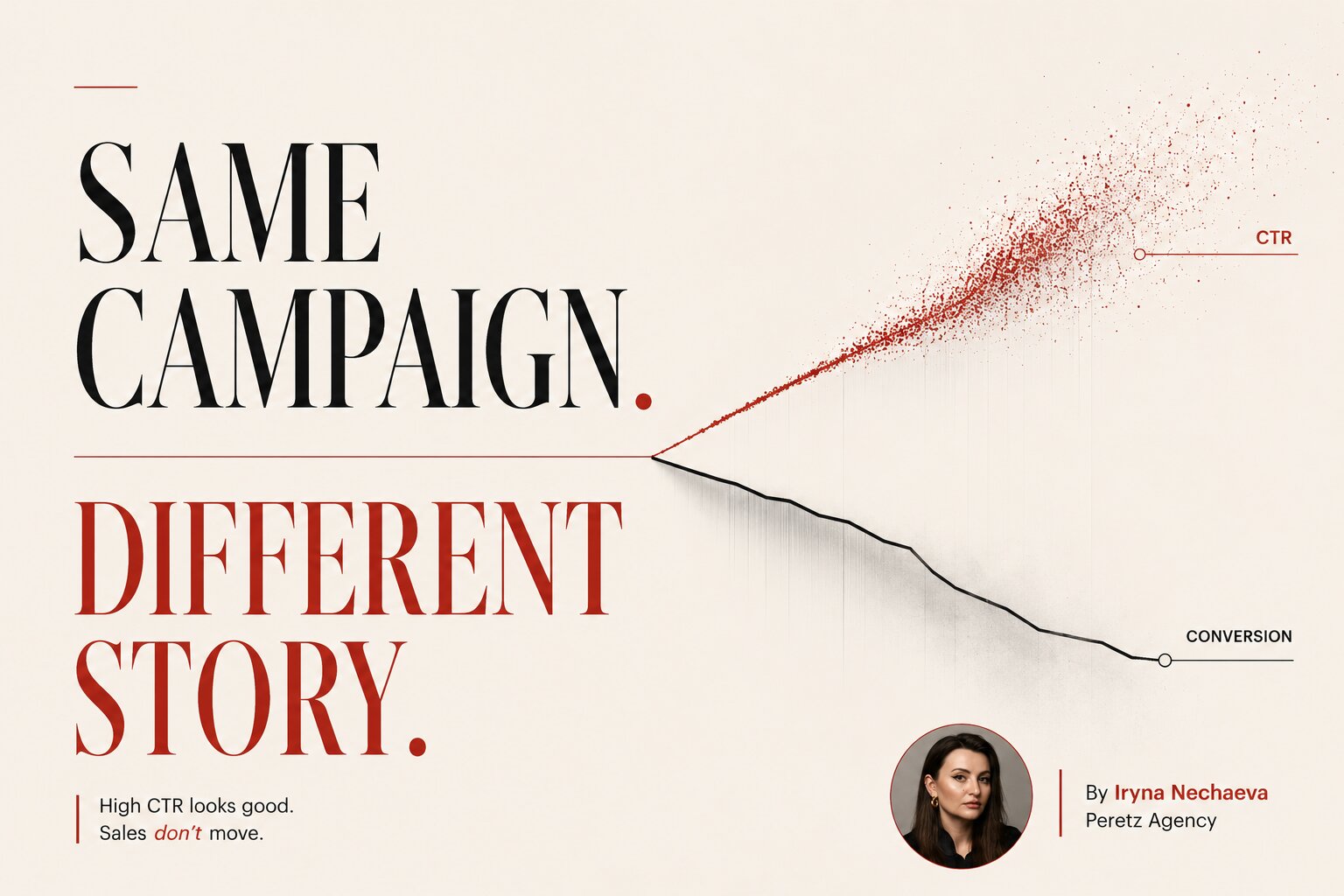
High CTR But Low Conversion Rate? Here's Why Your Ad Copy Is the Problem
-
29. 06. 2026

Meta Ads in 2026: What Budget Do You Really Need to See Results?
-
07. 08. 2026
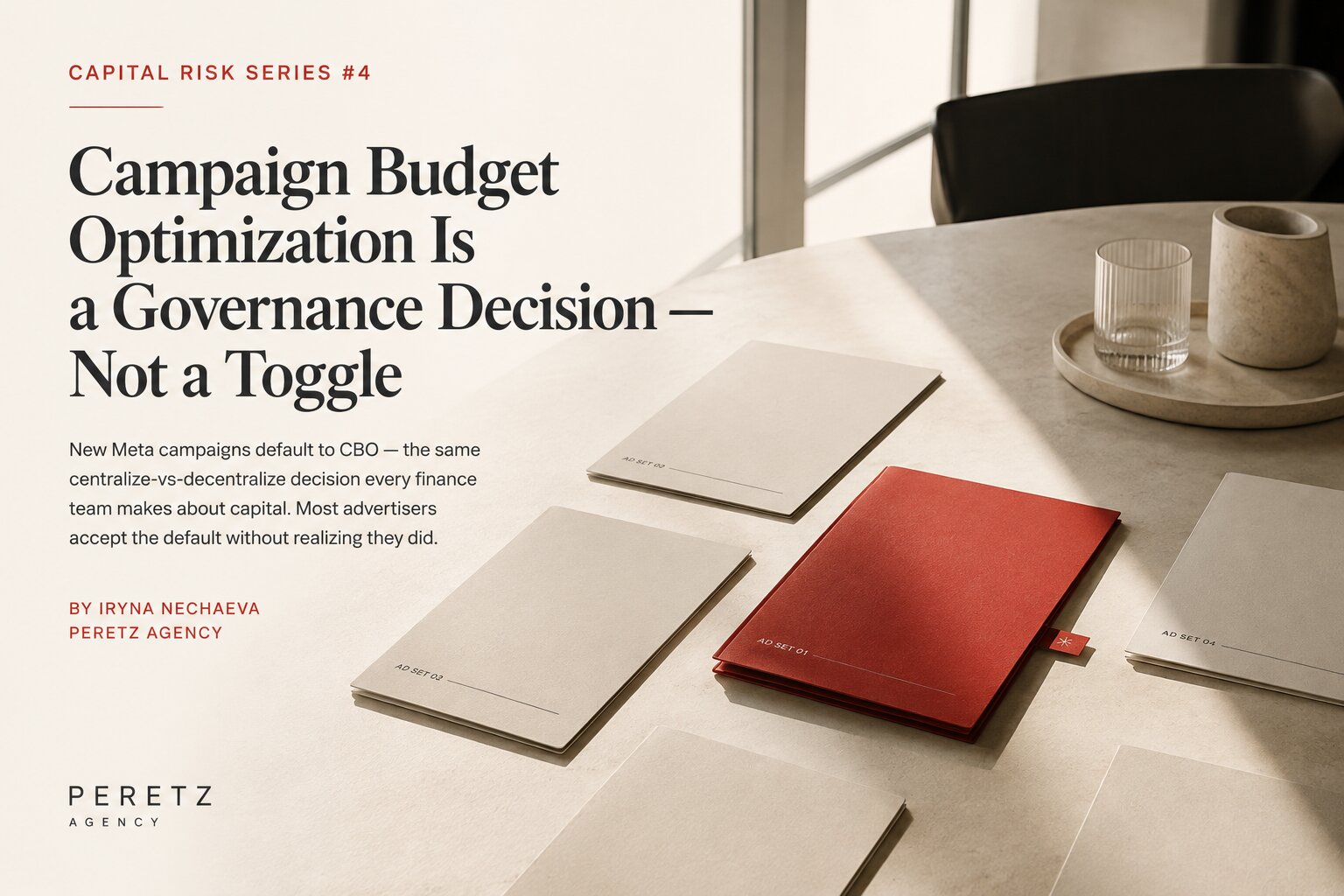
Campaign Budget Optimization Is a Governance Decision, Not a Toggle
-
07. 08. 2026

Your Meta Spending Limit Is a Circuit Breaker, Not a Setting
-
08. 08. 2026
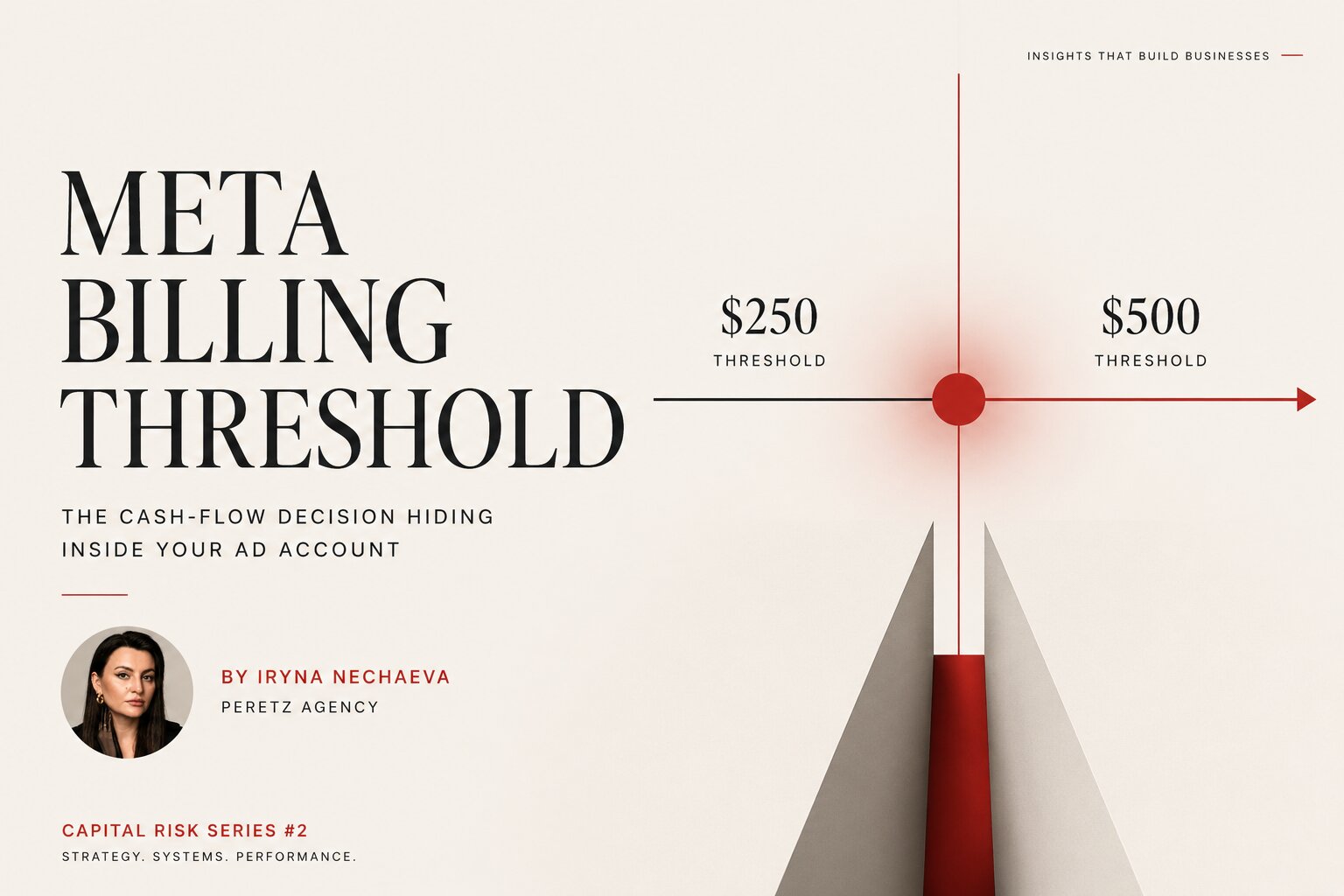
Meta Quietly Rewired How It Collects Money From Advertisers in 2026
-
10. 08. 2026
Daily vs Lifetime Budget in Meta Ads Is a Fixed-Cost vs Variable-Cost Decision, Not a Setting
-
10. 08. 2026
Ad Set Budget Optimization: The "Losing" Ad Sets You Fund on Purpose
-
25. 10. 2026
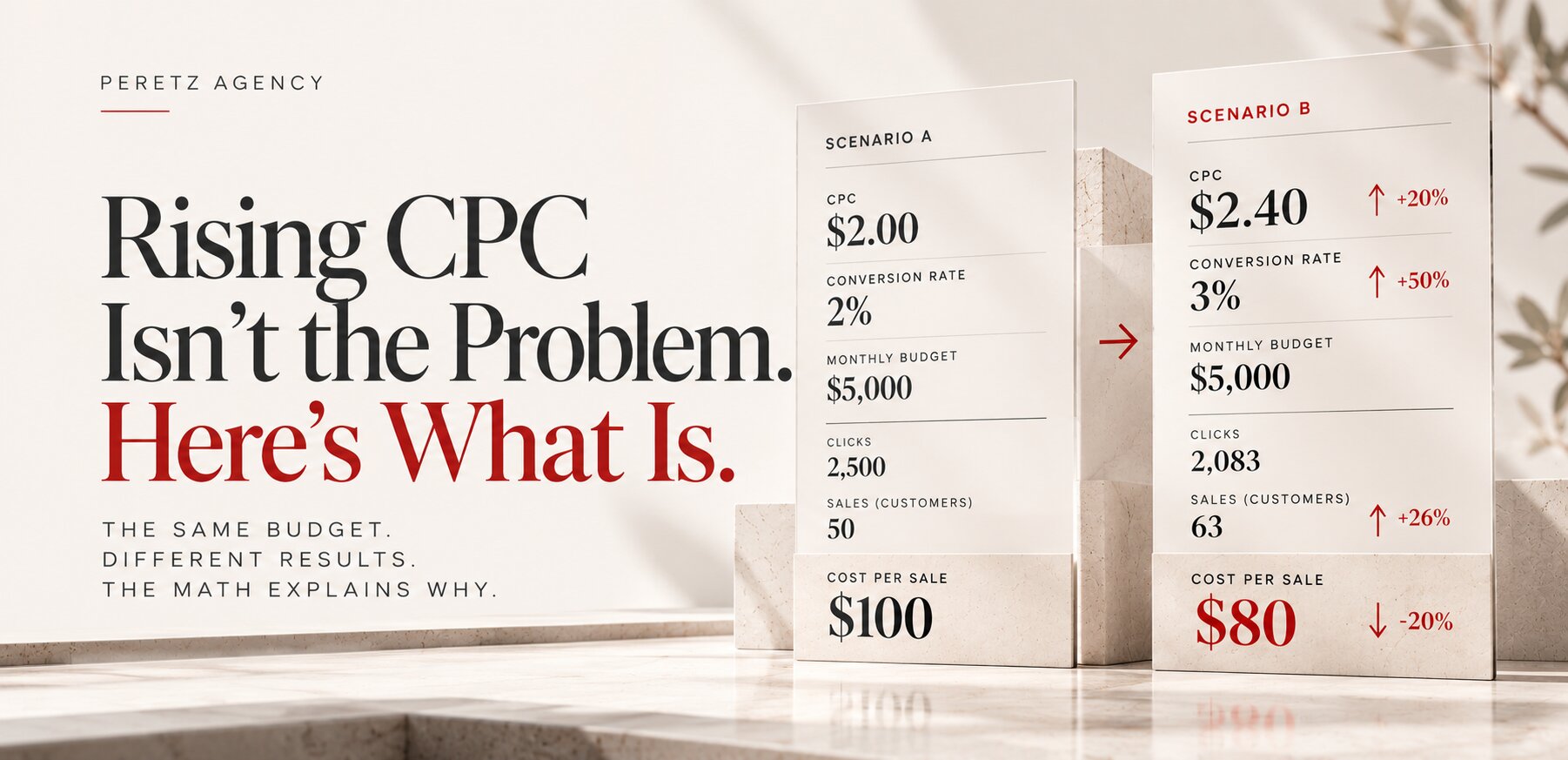
Rising CPC Isn't the Problem. Here's What Is