

Open your analytics right now.
The traffic is up. Reach is up. Clicks are up.
Now open your bank account.
If those two screens are telling you different stories, you already know the feeling I'm describing — that specific, disorienting frustration of doing everything right and watching nothing happen. You've probably been told to audit the funnel. Check the site. Check the audience. Check the creative. Find the leak, patch the leak.
I've done that audit hundreds of times. And I'm going to tell you something that took me years to understand:
The funnel tells you where people leave. It never tells you why. And you cannot fix a “why” you refuse to look at.
So let me ask you something, and answer it honestly in your head before you keep reading.
When was the last time you tried to buy your own product?
On your phone. On mobile data. As a complete stranger with a credit card and no patience.
Most people have never done it. And that's where this whole thing begins — because somewhere on that journey you've never taken, your customer is standing at a step, doing math you have never seen, and quietly deciding you're not worth it.
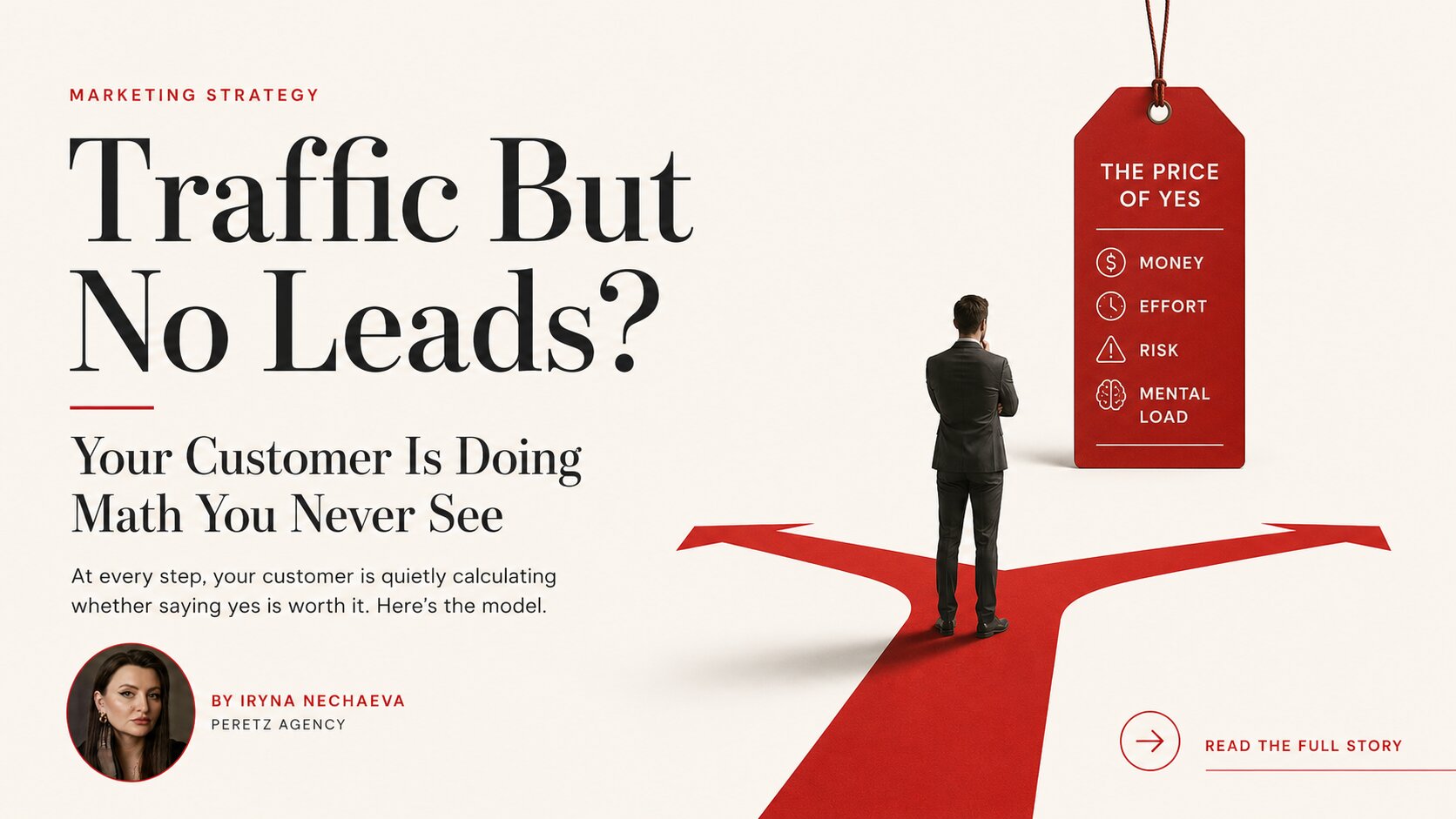
A customer doesn't move through your funnel. They stand at every step and ask one silent question: “Is saying yes worth what it costs me?” Every time the answer is no, they leave — and your analytics records it as a “drop-off,” as if it were a technical fault. It isn't a fault. It's a verdict.
I call this the price of yes.
Not the number on the tag. The full price of saying yes: the money, plus the effort, plus the risk of being wrong, plus the sheer mental work of deciding. Traffic is people willing to look. A lead is a person who decided the result was worth that entire price. When you have the first and not the second, you don't have a traffic problem. Somewhere, at one specific step, the price of yes quietly rose above the value you were offering — and they did the math and walked.
So I don't audit funnels anymore. I walk the price of yes. And I ask the customer's real question for them, out loud, at every step.
Let me walk it with you.
YOUR SITE
Step one: your site, where they pay in patience
Picture the person who just clicked your ad. They're on a phone, one hand, half-distracted, on a train. They already want the thing. That's why they clicked.
The page takes four seconds to load.
You just charged them for something you haven't delivered yet. That's not a technical issue — it's a tax on patience, collected before you've given them anything at all. And they haven't even seen the price.
They keep going. They find it, they want it, they hit buy. And now: eight form fields. Create an account first. Confirm your email.
You just raised the price of yes at the exact moment they were ready to pay the real one.
And then — the thing that does the most damage of all — they reach the last screen, and the price is different from the one they agreed to. Shipping appeared. A fee appeared. Suddenly the number moved.
Here's why that one is worse than everything before it. It doesn't cost money. It costs trust. The customer feels the price change under their hand, and a person who feels tricked in the final second doesn't just leave this purchase. They leave you. And they never tell you why — they just become one more number in a bar chart you'll misread as “cart abandonment.”
So here's what I actually check, in order — the cheapest and most common killers first:
1. Mobile speed, on a real phone, on mobile data. Not office wifi. Over 3 seconds and you're charging a patience-tax before the offer.
2. The checkout, bought as a stranger. Every field, every step, every forced registration is a place the price of yes goes up. Do this once and it finds most of your problem.
3. Payment methods. If the way this audience trusts to pay isn't there, you priced them out — not in money, in trust.
4. The price jump at the end. If it exists, fix it first. It's the trust-breaker.
5. Trust signals on the buying page. No reviews, no guarantee, no return policy — you left the entire risk sitting on the customer, and a serious buyer will not carry it for you.
Notice what just happened. I'm not fixing a website. I'm lowering the price of yes until it drops below the value they already wanted. That's a completely different job — and it finds things a bug-hunt never will.
YOUR AUDIENCE
Step two: your audience, where the machine obeys you perfectly and ruins you
Now, a story.
The targeting was perfect. On paper, flawless. Everything set up exactly as it should be. And then, over the course of a few weeks, Facebook drifted — quietly, invisibly — and started serving the ads to people who were never, under any circumstances, going to buy. Not the audience we had built. Somebody else entirely.
The obvious conclusion is: the algorithm broke.
It didn't. And this is the part I need you to sit with, because once you see it you can't unsee it:
The algorithm hunts the cheapest possible “yes” to whatever you asked for. Ask it for traffic, and it will find you the people on earth whose yes-to-a-click costs the least — the bored, the idle, the never-buyers. Not because it failed. Because that was the assignment you gave it.
The drift isn't a malfunction. It's obedience to the wrong instruction. Which means I don't “fix the targeting.” I correct what I asked for:
1. I read the breakdown, never the summary. Age, geo, device, placement. The drift is always visible there — 60% of budget quietly pouring into a segment that has never once bought.
2. I check what I actually ordered. Objective set to Traffic while you want sales? The machine is being perfectly obedient to the wrong goal. Change it to the real one.
3. I check whether it even knows what a buyer looks like. Broken Pixel, broken Conversions API — and it's optimizing blind. It can't recognize a buyer, so it defaults to the cheapest click. Fix the signal first; every decision below it is made on top of it.
4. Only then do I narrow — cutting what the data proved dead, letting it relearn on a clean signal. Not on a hunch. On evidence.
And here's the trap that makes this the most expensive problem in marketing. While all of this is happening — while the money quietly drains into people who will never buy — your dashboard looks alive. Reach climbing. Clicks climbing. Motion everywhere.
Which brings me to the sentence I'd tattoo on every marketer's forearm if they'd let me:
The most dangerous problem in marketing is not the one that looks like failure. It's the one that looks like success. Bad numbers get fixed. Good-looking bad numbers get scaled.
Read that again and then go look at what you scaled last quarter.
YOUR CREATIVE
Step three: your creative, where they pay before they even arrive
Sometimes it comes down to something as dumb as the banner.
The ordinary way to say this is “the creative attracts the wrong audience.” True. Shallow. Here's what's actually happening.
Your creative is the first place a customer pays the price of yes — before your site, before your price, before anything. Not in money. In expectation. A loud, flashy, curiosity-bait image collects a “yes” that was never about your product. It was a yes to the spectacle.
So when you see high CTR and low conversion, stop calling it a mystery. It's the sound of people paying a curiosity-price at your door and discovering, one click later, that the thing on sale isn't the thing that pulled them in.
You didn't attract the wrong people. You attracted the right emotion in the wrong people. Those are not the same failure, and only one of them is fixable.
So I stopped chasing the most eye-catching image and started building the most honest one — the creative that makes a promise the rest of the journey actually keeps. It usually gets a lower CTR. It gets a dramatically higher conversion rate. Fewer clicks, every one of them a person your product can actually satisfy.
Almost nobody makes that trade. Do you know why? Because a lower CTR looks like worse marketing on the dashboard.
There it is again. The dashboard rewarding the wrong thing. Are you starting to see the pattern?
◆ ◆ ◆
This is the moment most marketing advice skips. We wrote a longer version of this exact idea in What If You're Solving the Wrong Problem? Sometimes the fix isn't the campaign. It's the diagnosis you never ran.
THE UNSAID PART
And now the part almost nobody will say to you
Sometimes I walk the entire price of yes — every step, every link — and everything is sound. The site is fast. The audience is right. The creative is honest.
And it still doesn't convert.
When that happens, there's an uncomfortable truth waiting at the end, and most agencies will take your money for another six months rather than say it out loud.
Your marketing was never the problem. Your business was.
Because a lead is not just someone who wants the result. It's someone for whom the economics of yes actually work.
If your price is wrong for the value you deliver, no funnel on earth fixes that. You are paying money to introduce your product to people who correctly conclude it isn't worth it. If it costs more to win a customer than that customer will ever be worth to you, then a “working” campaign is simply a machine for losing money faster and more efficiently. And if your offer isn't meaningfully different from the one next to it, you are asking human beings to pay the price of yes for something they can get cheaper, or safer, or faster somewhere else.
They are not being difficult. They are being correct.
This is the line between a marketer and a consultant, and I'll draw it plainly:
A marketer asks, “how do I get more people to say yes?” A consultant asks first, “should they?” — and sometimes the most valuable thing I can tell a client is that their problem was never marketing, and I won't take their money to hide that from them.
Which means before I build anything, I need the numbers most social media people never ask for. What is a customer actually worth to you over their whole life? What does it currently cost to win one? Where does the margin really sit? And — honestly, with no flattery — what makes choosing you the rational decision instead of choosing anyone else?
If those don't work, the campaign cannot work. A beautiful campaign built on top of broken economics doesn't save a business.
It just helps it lose money with better production values.
◆ ◆ ◆
WHY BREAKFAST
Why I see it this way — and what it has to do with breakfast
I don't look at a client as an account to manage. I take them apart the way a marketer should: who they actually are, what value they carry, who their buyer is at the level of what keeps that person awake at night, where their competitors quietly bleed people, and whether the economics of choosing them make any sense at all.
I do that before a single post exists. Which is exactly why, when the leads stop, I don't panic and start rewriting captions. I already know the content is rarely the broken link. The break is in the price of yes, somewhere underneath, in a place nobody's looking.
And there's a softer reason I care, which I'll confess even though it isn't fashionable. So much of what gets published now is soulless, identical, machine-extruded text — and even in a year everyone has crowned the year of “authenticity,” the authenticity still isn't there.
What I want instead is logic across an entire day of a brand's life. If today's post is about one thing, the Stories that day should carry the same thread.
When I ran content for a gastro-market and a shashlik brand, I built the day the way people actually live it. Morning — come have breakfast. Midday — come have lunch. Evening — we offer you a table with your friends.
That isn't a content trick. It's the same principle as everything above: meet people where they actually are, and make saying yes feel like the natural next step instead of a cost.
WHAT TO DO
So here's what I want you to do
Close this article. Pick up your phone. Turn off the wifi. And try to buy your own product like a stranger with money and no patience.
Count every second you wait. Count every field you fill. Notice the exact moment you feel the price move, or the moment you think “ugh, forget it.”
That moment — the one you just felt in your own chest — is happening to every single person your ads bring you. Right now. Today. While your dashboard glows green.
Traffic is people willing to look. A lead is a person who decided the result was worth the full price of yes. When those two numbers don't match, don't post more. Go find the step where yes became too expensive — and if that step turns out to be your business itself, have the courage to say it out loud.
Anyone can run the campaign.
The whole value is in knowing when the campaign was never the answer. Sometimes the campaign was fine and the content itself was the problem, see the 7 real reasons content isn't working.
We looked at what an MVP owes the business before it ships, tracking, the channel hypothesis, brand foundation, in Architecting the MVP: What Marketing Owes a Product Before Launch.
- Share
-

-

-

-

Related Reading
-
14. 02. 2021
Link Building in 2026: Why It Still Matters and How to Do It Right

-
17. 06. 2026
Why Your Business Isn't Getting Leads From Its Website (And How to Fix It in 2026)
-
26. 06. 2026
How to Build a Social Media Strategy That Actually Generates Leads
-
24. 06. 2026

How to Choose a Web Design Agency in Seattle: A Business Owner’s Guide for 2026
-
08. 07. 2026

Everyone Wants the Prestige. We Study the Turn.
-
07. 07. 2026
I Didn’t Dream of Having a Job. I Dreamed of Building Something.
-
31. 07. 2026
We Design for Reality, Not for Ideal Scenarios
-
19. 08. 2026
Architecting the MVP: What Marketing Owes a Product Before Launch
-
19. 07. 2026
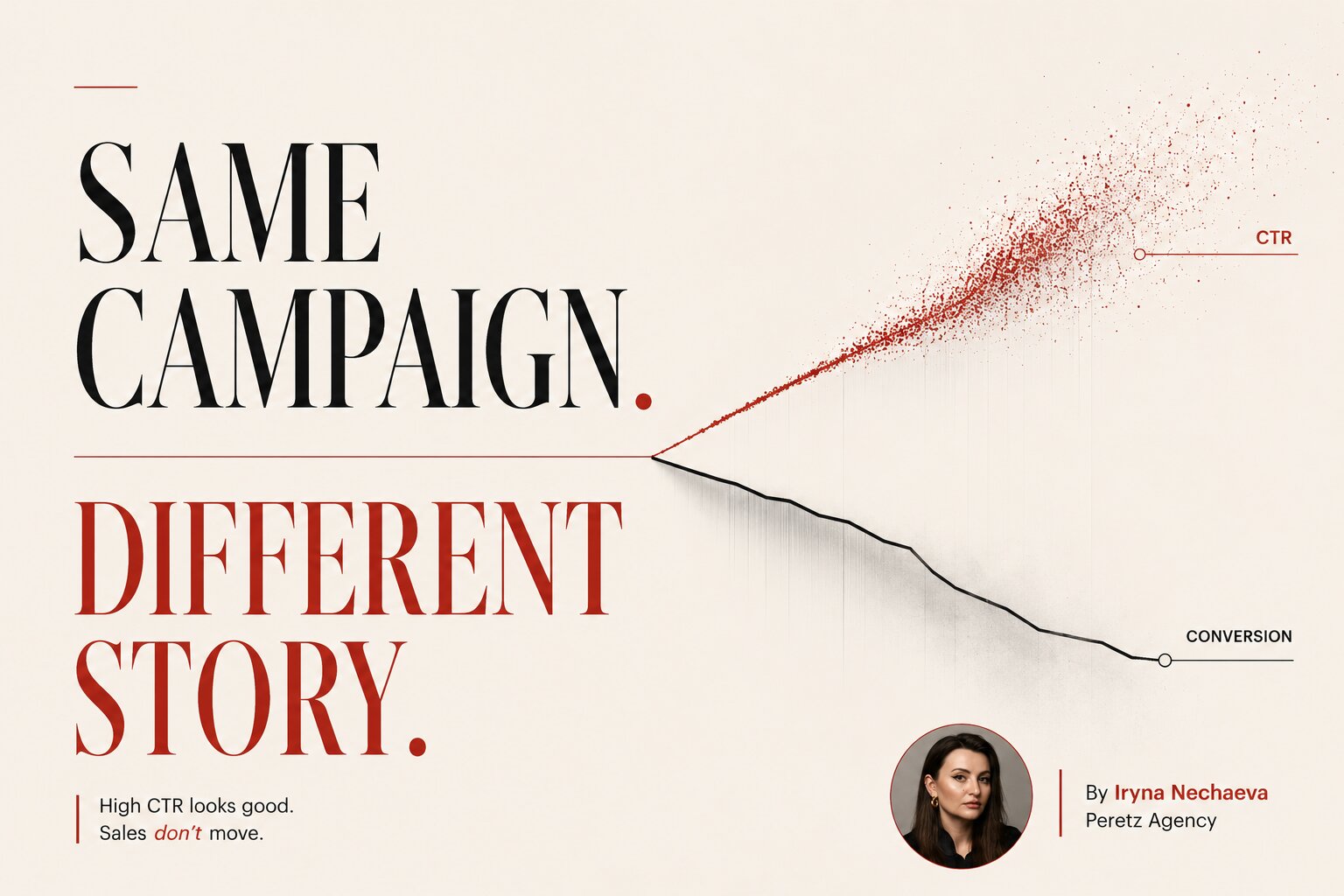
High CTR But Low Conversion Rate? Here's Why Your Ad Copy Is the Problem
-
20. 07. 2026
How Long Does It Take to See Marketing Results? Why Agencies Promising Faster Are Lying to You
-
24. 07. 2026
What If You're Solving the Wrong Problem?
-
06. 09. 2026
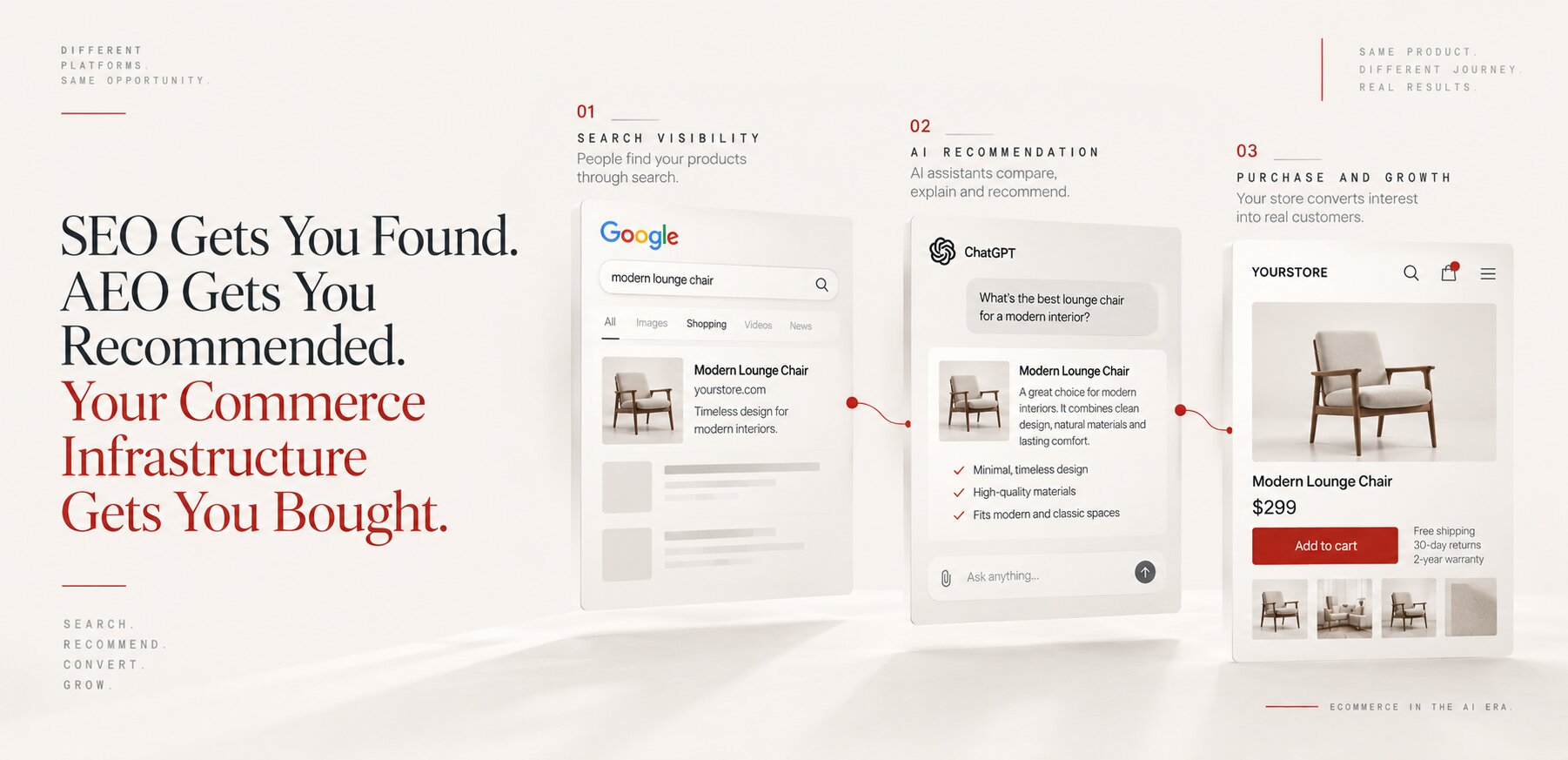
SEO Gets You Found. AEO Gets You Recommended. Your Commerce Infrastructure Gets You Bought.
-
08. 09. 2026

Why Your Social Media Content Isn't Working (7 Real Reasons, Not Algorithm Excuses)
-
02. 10. 2026

SEO, AEO and GEO Are Amplifiers, Not Engines