


Dedicated to Yulia.
Thank you for being uncompromising.
You probably never realized how much those five meetings changed my life.
Before You Begin
Some stories are best experienced with a soundtrack.
If you have a quiet moment, press play before you begin reading.
PROLOGUE
Every person carries ideas.
Some disappear within days.
Others stay for years.
Not because they’re louder than everything else.
Because they quietly refuse to leave.
Life gets busy.
Responsibilities grow.
The safe path slowly becomes the reasonable one.
And somewhere along the way, many people stop carrying the ideas they once couldn’t stop thinking about.
I don’t think ideas disappear.
I think people simply stop carrying them.
This is the story of one idea that never left me.
I DIDN’T DREAM OF HAVING A JOB
I Dreamed of Building Something.
As far back as I can remember, I never dreamed about having a profession.
I dreamed about building something of my own.
My mother worked at a private kindergarten in Kharkiv called Start, in the very center of the city, just behind Derzhprom.
Every weekday we took the metro.
Most children probably remember the trains.
I don’t.
I remember the structure.
The timetable.
The tunnels.
The endless power cables disappearing into the darkness.
Sometimes another train rushed past on the opposite track. For just a second, its illuminated windows flashed through the tunnel before disappearing again.
I remember the sound.
And even today…
I still remember the smell of the metro.
Sometimes I think I’ve been chasing that feeling ever since.
Not the trains.
The structure.
Around me, other children arrived in foreign cars.
In the early 1990s, that meant something.
Whenever I asked my mother who their parents were, she usually smiled.
“Entrepreneurs.”
Back then she used another word.
“Speculators.”
I didn’t understand business.
I didn’t understand entrepreneurship.
I only knew one thing.
One day…
I wanted to build something of my own.
THE TYPEWRITTEN CORPORATION
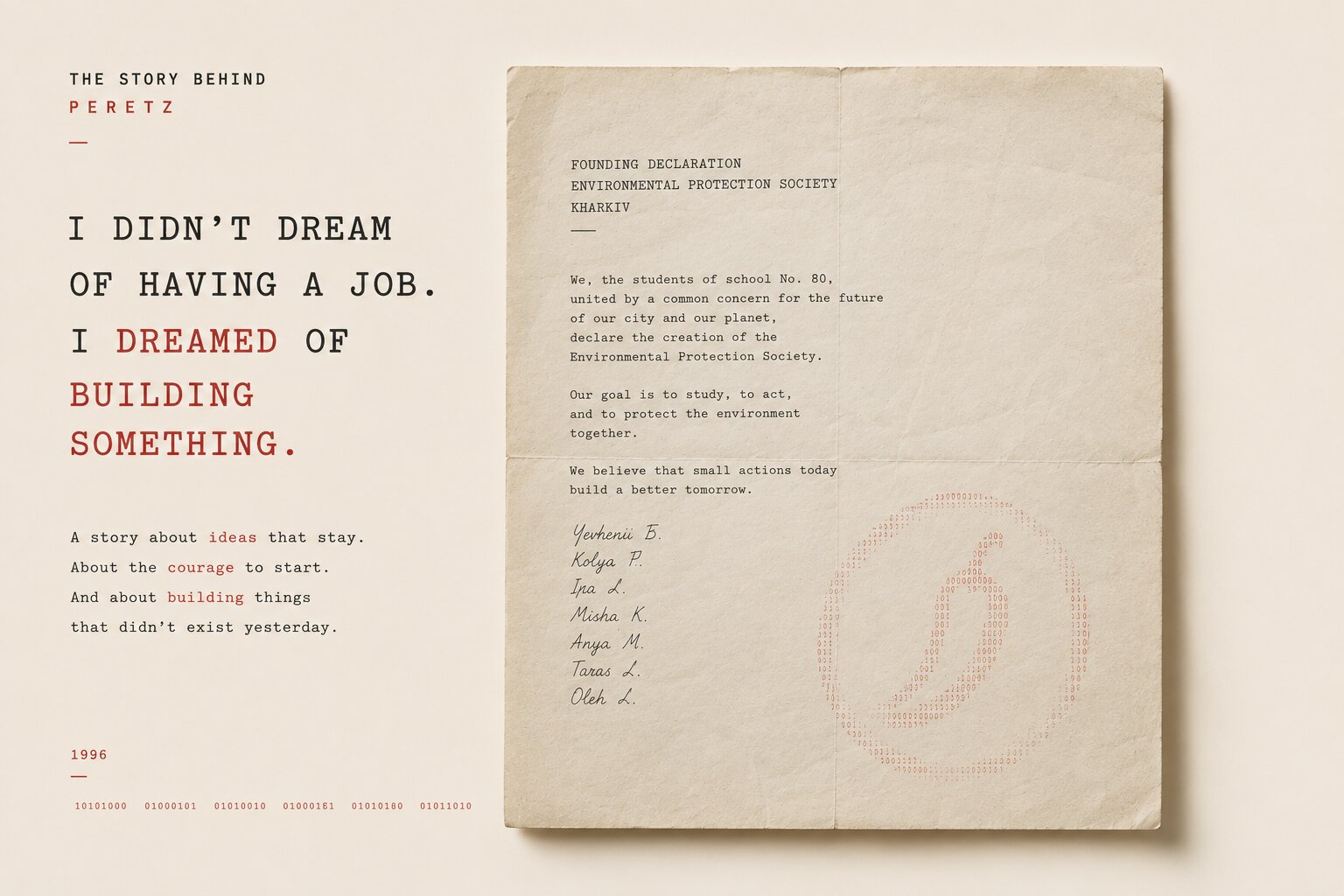
I was seven.
One of my friends came outside holding a single sheet of paper.
It had been typed on an old typewriter.
It announced the creation of an environmental organization.
I don’t even remember what it was called.
I remember the paper.
To everyone else…
it was just a typed page.
To me…
it looked like a corporation.
A real one.
Looking back, it still makes me smile.
There wasn’t a company.
There wasn’t an office.
There wasn’t even a plan.
Just one sheet of paper.
But somehow…
I saw IBM.
My friend forgot about the idea almost immediately.
I didn’t.
I found old computer punch cards.
Wrote invitations by hand.
Signed every one of them myself.
Then I started putting them into mailboxes all over our neighborhood.
Some neighbors chased me away.
Seven children joined.
Everyone contributed ten kopecks.
Probably no more than a couple of dollars in today’s money.
Not because we needed the money.
I wanted everyone to feel responsible for what we were building.
Looking back…
I sometimes smile again.
I was seven years old.
And I was already trying to raise what today I’d probably call our first investment round.
We cleaned dirty courtyards.
Built bird feeders.
Tried to organize ourselves.
Nothing extraordinary happened.
The organization disappeared.
The feeling didn’t.
That was probably the first time I discovered something that never left me.
Building something together feels fundamentally different from joining something someone else has already built. Why finding those people turned out to be harder than finding money is the subject of Finding the Right Person Is Harder Than Finding an Investor.
I WAS NEVER INTERESTED IN THE JOB
I Was Interested in the Business.
People sometimes ask what I did before PERETZ.
The honest answer is…
almost everything.
I was an aerospace engineer.
A financial consultant.
An entrepreneur in different industries.
A creative director.
A carpenter.
A handyman.
An architect.
An HR recruiter.
A salesman.
Probably a few other things I’ve already forgotten.
Every one of those jobs taught me something.
None of them became my identity.
I was never studying the profession.
I was studying the business behind it.
How decisions were made.
Why customers trusted one company but ignored another.
Where money came from.
Where it quietly disappeared.
Why one business kept evolving…
while another slowly stopped moving.
I never wanted to become the best engineer.
Or the best salesman.
Or the best architect.
I wanted to understand how businesses were built.
EMPTY SQUARES
Long before I started my own company, I developed another habit.
Whenever I listened to sales calls that ended without a deal, I wasn’t interested in who made the mistake.
I wanted to know something much more specific.
Exactly where did the deal die?
At what moment did trust disappear?
Which question was never asked?
What problem did the client have that nobody had noticed?
Years later, while working on projects like MDC LUX, I realized I was still asking exactly the same questions.
Different company.
Same process.
When I eventually started looking for my own clients, I never began with,
“How do I sell them a website?”
My first question was always different.
“Should I even be talking to this company?”
Before the first conversation, I studied the business.
After the conversation…
the real work began.
I studied competitors.
Not to copy them.
To understand the business.
I looked at websites.
Products.
Business models.
I looked at details most people ignored.
The thickness of a line.
Whether a sentence ended with a period.
Or an ellipsis.
Those details weren’t really about design.
They revealed discipline.
Whether someone worked systematically.
Or only in occasional bursts.
Then I looked further.
Europe.
America.
How were companies there solving the same problem?
What had already become standard?
What hadn’t reached our market yet?
And then I asked myself one more question.
Was the website actually the problem?
Or was everyone trying to solve the wrong one?
I wasn’t looking for inspiration.
I wasn’t looking for trends.
I was looking for empty squares on the chessboard.
Places where nobody was standing yet.
Because that’s usually where the game changes.
FREEDOM
Eventually I decided to stop looking for clients through other companies.
If I wanted to build something of my own…
I had to start finding them myself.
One day I came across a company called Freedom.
They sold premium Italian furniture.
Beautiful brands.
Beautiful showrooms.
Beautiful standards.
At the time, I had no portfolio that could impress them.
No famous clients.
No reputation.
Just preparation.
The people around me were talented, but young.
I had worked in one of Ukraine’s best design studios, not as a designer, but in sales.
I wanted to understand how products were created.
How they were sold.
How trust was built.
I knew I couldn’t compete on reputation.
So I had to compete somewhere else.
Preparation.
I found the contact.
Her name was Daria.
I called her.
I told her honestly how I had found her number.
I told her I had prepared something before asking for a meeting.
She agreed.
The First Meeting
I arrived with my partner.
We presented our first concept.
I genuinely thought it was good.
It wasn’t.
Daria was there.
So was their designer, Yulia.
She was exceptional.
Demanding.
Direct.
Every criticism had a reason behind it.
They explained that what we were showing was ordinary.
They weren’t looking for ordinary.
By the end of the meeting they politely asked us not to contact them again.
Driving home…
I wasn’t offended.
Because they were right.
The Second Meeting
I didn’t redesign the homepage.
I rebuilt my understanding.
For almost two weeks I kept calling.
Eventually they agreed to meet again.
This time I understood much more.
Still…
not enough.
Again they dismantled everything.
Again they explained why.
Again they asked me not to come back.
The Third Meeting
Something changed.
Not in them.
In me.
I stopped trying to convince them.
I started trying to understand them.
How they spoke.
Why they chose certain brands.
Why luxury felt effortless in some companies…
and forced in others.
Another rejection.
Another notebook full of observations.
Another version.
The Fourth Meeting
By now I could feel the coldness.
Every new phone call probably sounded like,
“Him again.”
But every meeting gave me something the previous one couldn’t.
Another missing piece.
Another blind spot.
Another wrong assumption removed.
I wasn’t repeating the same attempt.
I was testing another hypothesis.
The Fifth Meeting
By then we weren’t designing another homepage.
We were building an experience.
Something I hadn’t seen anywhere else.
Not in Ukraine.
Not among the brands they represented.
We stopped thinking in static mockups.
We built the homepage.
For real.
Animation.
Motion.
Video.
Everything worked.
Then came the music.
I listened to hundreds of tracks.
Nothing felt right.
Until one evening I found one.
Should've Brought an Umbrella
I didn’t choose it because it matched the website.
I chose it because…
it matched them.
That was the difference.
Getting the fifth meeting took almost as much effort as building the homepage itself.
Eventually Daria agreed.
One last meeting.
We arrived.
I opened my MacBook.
No presentation.
No sales pitch.
The page started loading.
The music began.
Paum.
Paum.
Paum.
I didn’t say a word.
I simply scrolled.
When I reached the footer…
I looked up.
Silence.
Then Daria quietly said,
“Let’s sign the contract.”
I heard her.
But the contract was no longer the most important thing in that room.
I looked at Yulia.
For the first time…
I saw respect.
Even if they had decided not to sign that day…
I already knew we had won.
Not because they approved the project.
Because I knew this version was fundamentally different.
It was a Bugatti in its class.
Even today…
I would put my signature under that work without changing a thing.
We stood up.
I put on my coat.
We were already walking toward the exit.
Yulia smiled.
Then she looked at me and said,
«Да назовитесь вы уже так — перцы, вы реально крутые. Моё уважение.»
(“Just call yourselves that already — Peretsy. You’re genuinely cool. My respect.”)
She was talking about us.
Not about a company.
She had no idea what happened next.
Neither did anyone else in that room.
It happened before I had time to think.
Like lightning.
One second…
I didn’t have a name.
The next…
I did.
Not “Перцы.”
PERETZ.
That spelling was mine.
Everything else came later.
Years later I became curious about the name itself.
I started digging.
That’s when I discovered something I had never known.
Peretz already existed.
In Hebrew it means breakthrough.
To break through.
To force a way forward.
I didn’t choose the name because of its meaning.
I discovered its meaning years after I had already chosen it.
Sometimes…
life writes stories better than we do.
EPILOGUE
People sometimes ask me why I built PERETZ.
The answer has never really been about websites.
Or branding.
Or software.
I simply enjoy building things.
Companies.
Teams.
Ideas.
Systems.
I’ve realized that most ideas don’t disappear because they’re bad.
They disappear because life gets louder.
People become busy.
Careful.
Comfortable.
Or simply tired.
The idea stays exactly where it was.
Waiting.
Looking back…
I don’t think I’ve changed very much.
The boy who saw a corporation in a single typewritten page…
The teenager who studied failed sales calls to understand where trust disappeared…
The designer who kept returning after being told not to come back…
They’re the same person.
The projects became bigger.
The questions became more difficult.
But the reason never really changed.
I still wake up wanting to build something that didn’t exist yesterday.
Because time is the only thing that never slows down.
And if an idea stays with you long enough…
Maybe it deserves more than another year inside a drawer.
Maybe…
it deserves to be built.
Quick Facts
What does the name PERETZ mean? In Hebrew, Peretz means “breakthrough.”
Who founded PERETZ Agency? Yevhen Borovoi, after five rejected pitches for a Ukrainian furniture retailer called Freedom.
Where did the name come from? A designer at that company jokingly told the founders to “just call yourselves Peretz” — the name stuck immediately, and its meaning was discovered only years later.
Continue Reading
If this story resonated with you, these essays tell the rest of it. They are not case studies. They are chapters of the same journey.
The Story Behind MDC LUX — Why the first partner matters more than the first client.
The Story Behind SV Group — Building a company that outlives its founder.
The Story Behind Medpresso — How one idea survived war and became a medical education platform.
The Story Behind SHTAYER — Why heritage is something you build, not inherit.
Perhaps they are different stories. I don’t think they are. They’re all trying to answer the same question.
What is actually worth building?
How the agency works today, who we work with and what our services cost is described in How Peretz Agency Works.
- Share
-

-

-

-

Related Reading
-
08. 07. 2026
Everyone Wants the Prestige. We Study the Turn.

-
05. 07. 2026
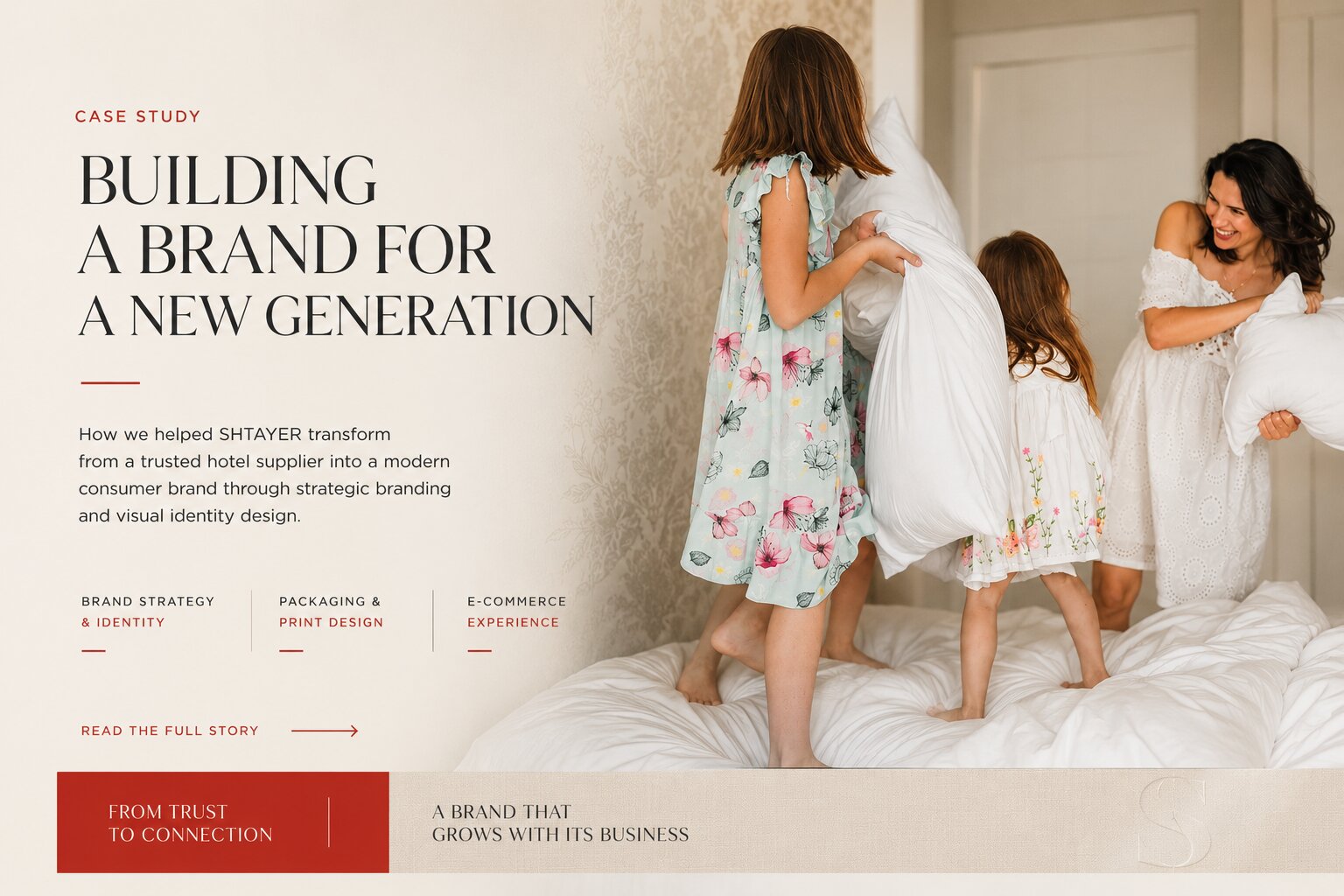
SHTAYER: Building a Brand for a New Generation
-
06. 07. 2026

Some Clients Change Your Business. MDC LUX Changed Ours.
-
26. 06. 2026
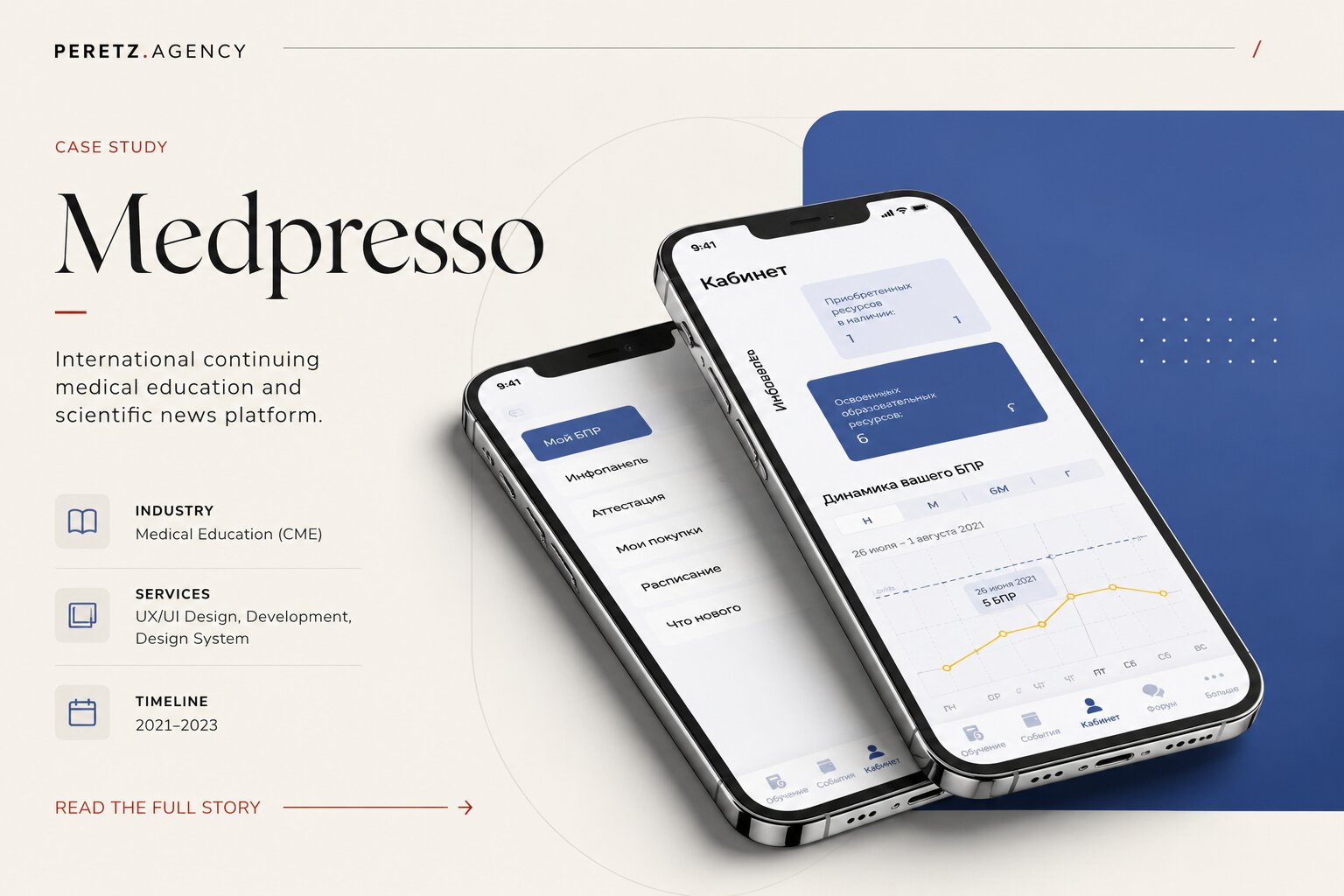
The Story We Never Planned to Tell - Case MEDPRESSO
-
01. 07. 2026
THE STORY BEHIND SV GROUP
-
09. 07. 2026
Traffic But No Leads? Your Customer Is Doing Math You Never See
-
10. 07. 2026
Before You Sell, Retire, or Hand It Down
-
22. 07. 2026
A Place to Build
-
09. 08. 2026
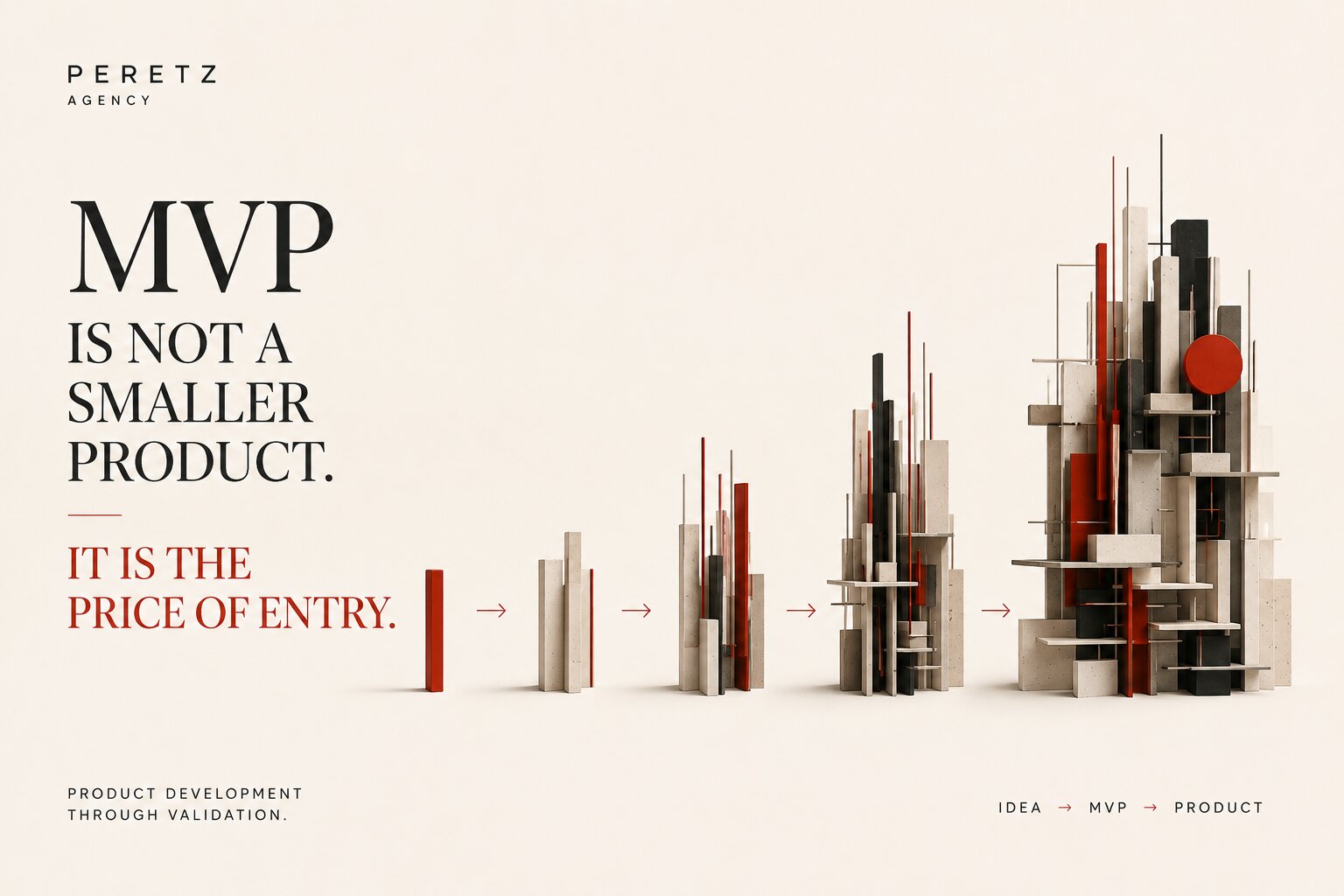
MVP Isn't a Minimal Product. It's the Cost of Entry.
-
12. 07. 2026

How to Build a Community, Not Just an Audience
-
12. 07. 2026

The Number Nobody Tells You: 70%
-
13. 07. 2026
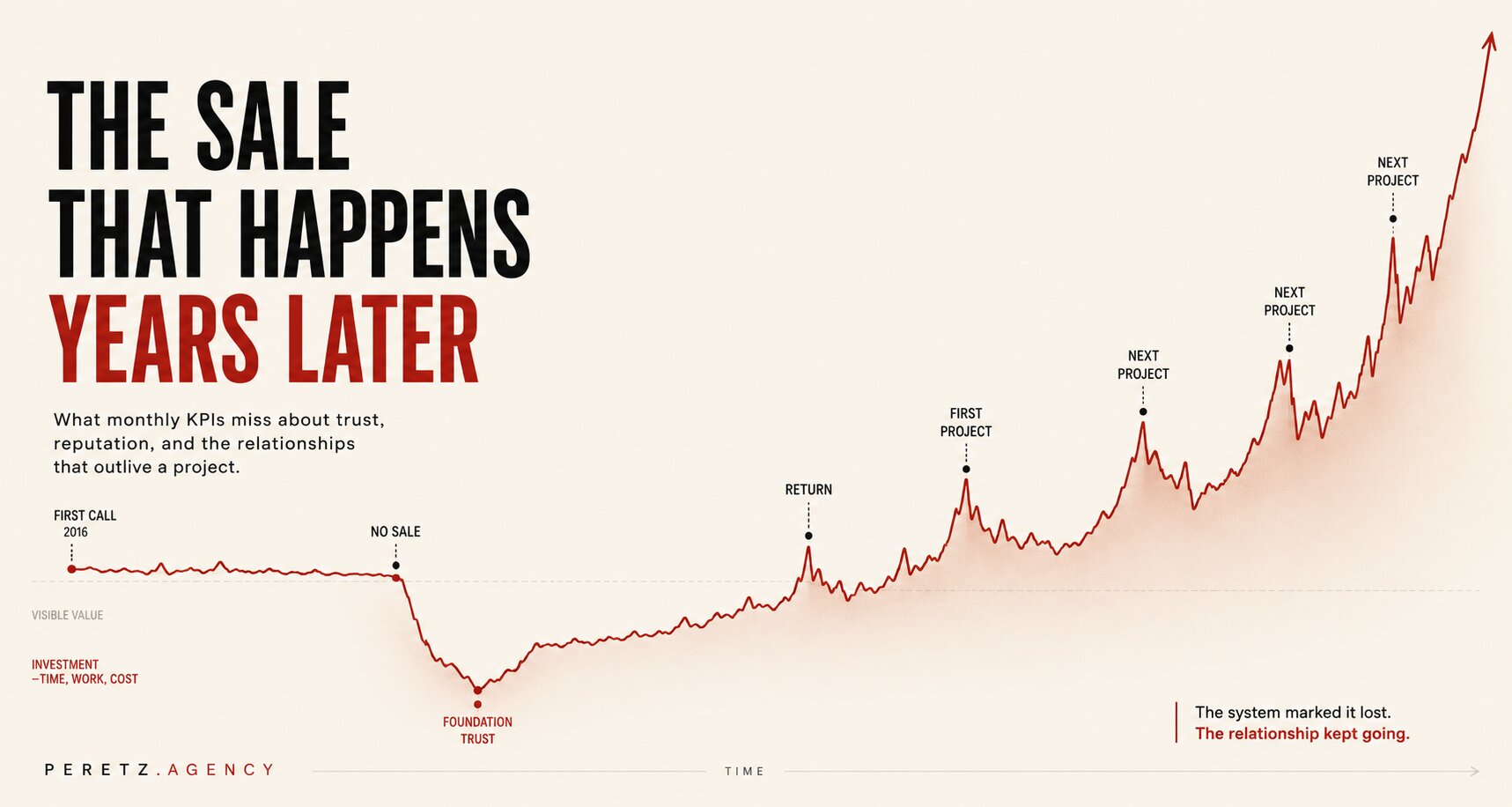
The Sale That Happens Years Later
-
14. 07. 2026

Wrong Move. Right Move. Too Late.
-
15. 07. 2026
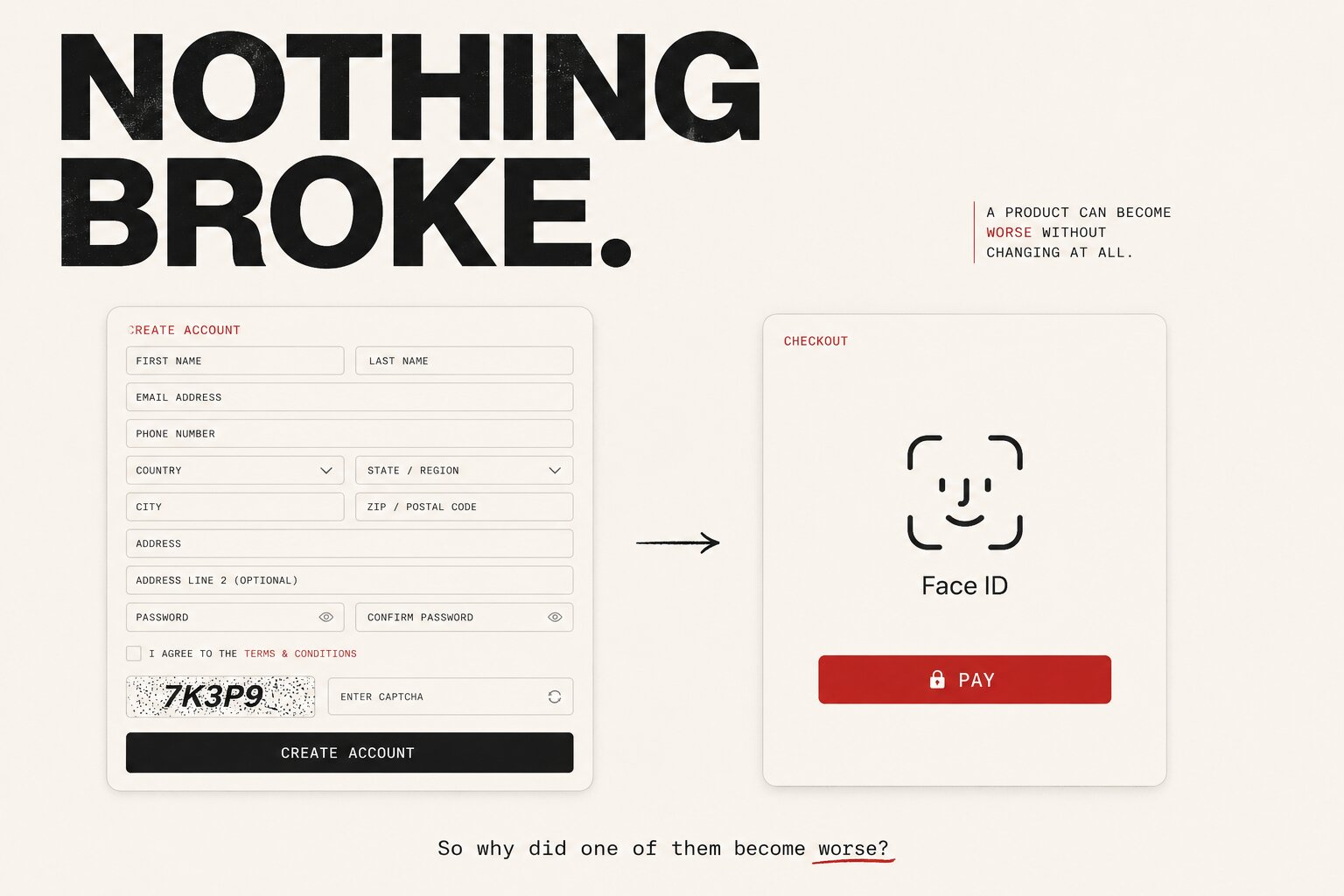
Everything You Build Starts Aging the Day You Finish It
-
25. 07. 2026
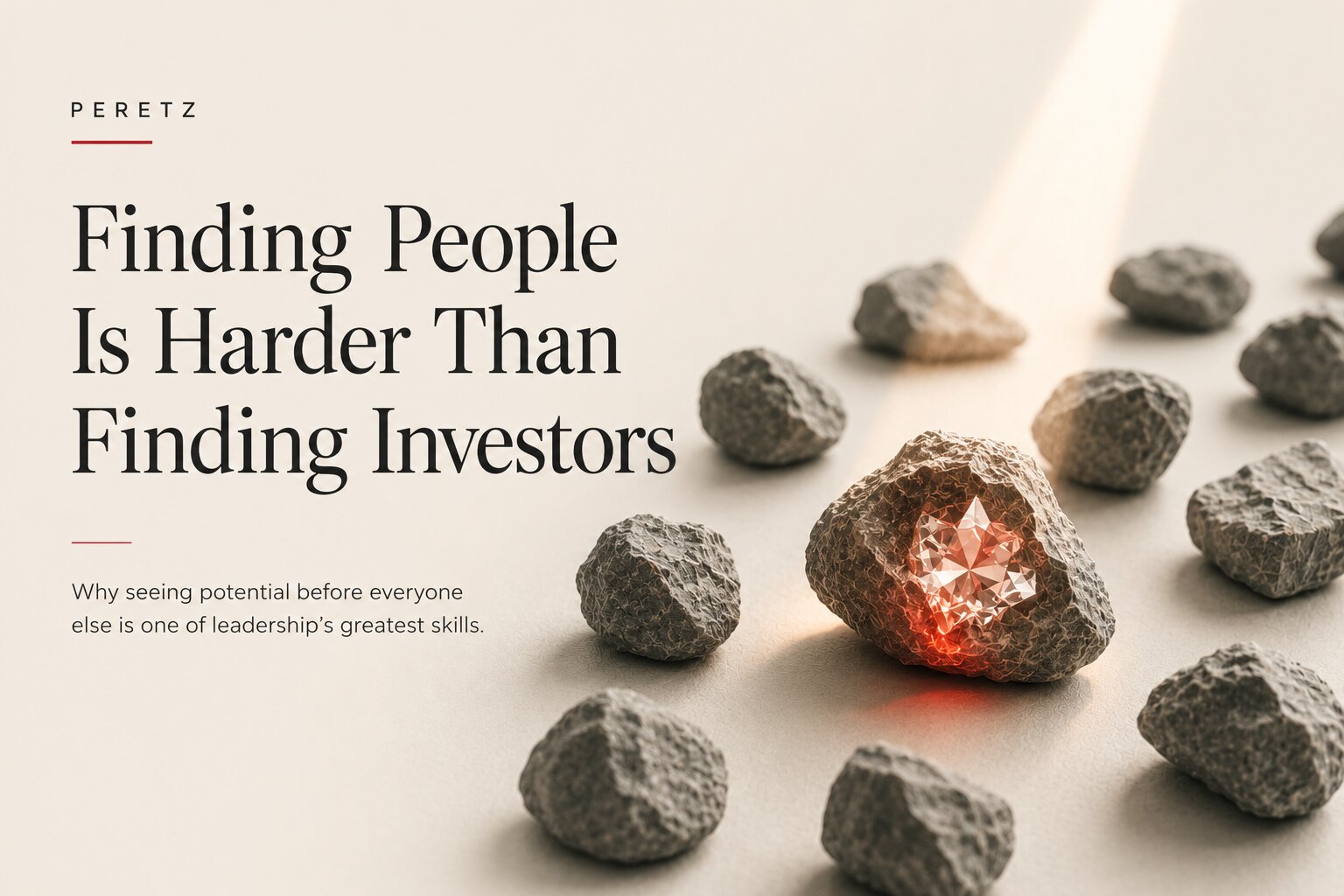
Finding the Right Person Is Harder Than Finding an Investor
-
02. 10. 2026

SEO, AEO and GEO Are Amplifiers, Not Engines
-
04. 10. 2026
When Not to Rebrand: What to Change and What to Leave Alone
-
06. 10. 2026
How Peretz Agency Works: Services, Process and Prices