



Every year or two, I have some version of the same conversation.
It usually starts casually - over coffee, sometimes at the end of an unrelated meeting, sometimes because someone's accountant happened to mention my name. The person across the table has usually spent twenty, thirty, sometimes forty years building something. A practice. A distributor. A manufacturer. A family business that started in a garage and now occupies a building they own outright.
And somewhere in the conversation, almost always unprompted, they say some version of the same sentence.
“I don’t know what happens next.”
Not because they haven’t thought about it. Usually they’ve thought about little else for the past year or two. They’ve talked to their accountant. Maybe a business broker. Maybe their kids, carefully, at Thanksgiving, in a way that didn’t quite become a real conversation. What they haven’t done - what almost nobody does - is step back and actually look at the business itself, structurally, before deciding what to do with it.
I understand why. When you’ve built something for thirty years, examining it too closely can feel like an accusation. Like you’re being asked to grade your own life’s work.
But there’s a difference between judging a business and understanding it. And only the second one actually helps.
Most owners think of this moment as three separate questions. Should I sell? Should I retire? Should I hand it to my children?
They’re not three questions. They’re one question wearing three different outfits.
Underneath all three is the same thing: a business that has lived, for years, inside one person’s head - their instincts, their relationships, their unwritten rules for how things get done - is now being asked to survive without that person standing in the middle of it. Selling makes that visible immediately, because a buyer will ask, bluntly, what happens to this place without you. Succession makes it visible more slowly, and often more painfully, because the answer arrives one difficult year after the transition, not before it. Retirement is the quietest version - no buyer, no successor, just a business that keeps running on inertia until it doesn’t. Why every quick fix for that dependence breaks at the first real test is explored in the essay You Know Your Business Depends on You. Build It to Work Without You Anyway.
Three outfits. Same question.
I see this most often on the Eastside - in Bellevue, in Medina, in the neighborhoods where a first generation built something substantial and a second generation is now deciding what to do with it. It’s a specific kind of wealth: not sudden, not speculative, built slowly, over decades, often quietly. The kind that doesn’t advertise itself.
That quietness is a strength for thirty years. Then, at exactly the moment it matters most, it can become the opposite. A business that has never had to explain itself to an outsider is often the hardest business to sell, transfer, or modernize convincingly - not because it’s weak, but because its real value was never written down anywhere. It lived in a person, not in a system. And people, eventually, step back.
A few years ago, we worked with a company that had built a respected medical clinic - real patients, real outcomes, a reputation earned the hard way over years. Nobody involved was thinking about an exit. Nobody was retiring. If anything, the founder was more energized than ever. The question on the table was much simpler, and much harder.
What is this business actually good at?
In working through it honestly, it became clear that the deepest asset wasn’t the physical clinic at all. It was the expertise behind it - structured, refined over years, worth far more when taught at scale than when delivered one patient at a time inside one building. The company didn’t sell. Nobody retired. It became something else entirely: an online education platform, built on the same expertise, reaching people who would never once walk through the original clinic’s doors.
Not long after, we worked with a well-known European jewelry house preparing for a very different kind of transition - a business we helped bring into sharper focus ahead of a sale: its websites, its marketing, its visual identity, all refined for a buyer overseas. No transformation this time. The business was already exactly what it needed to be. The work was making sure a buyer on the other side of the world could see that clearly, quickly, and without having to take it on faith.
I bring these up not because a clinic becoming an education platform has much literally in common with a jewelry house preparing for sale, or a manufacturer here in Bellevue thinking about succession. It doesn’t, on the surface. But the thinking underneath all three is identical. Someone had to ask, honestly, what the business actually was - not what it had always been, not what it looked like on paper, not what everyone had quietly assumed for years - before anyone could decide what to do with it next.
That’s the part almost everyone skips. Not because they’re careless, but because it’s the hardest part, and the sale, the retirement, the succession plan feel like the real decisions. They’re not. They’re just what happens after the real decision, which is understanding what you actually built.
Technology moves whether or not a business is ready for it. Most owners feel this quietly, long before they say it out loud - a sense that the tools running underneath the business have started to age, that competitors move faster, that keeping pace would take an appetite for change they no longer have. Not because they’ve lost their edge, but because thirty years is a long time to keep reinventing your own tools. There’s no shame in that. But there is a cost to waiting too long to admit it. A business that’s fallen behind its own industry is worth meaningfully less to the right buyer than the same business caught in time - and the gap between those two numbers grows quietly, year by year, exactly while nobody’s watching.
Knowing when to transform something and when to find it a new owner is, in a strange way, the same skill. Both start with the same honest look at what a business actually is, and where it actually stands.
When the honest answer is to sell, preparation matters more than most owners expect. Buyers don’t just acquire revenue - they acquire a story, and the quality of that story shapes the number on the offer as much as the numbers in the spreadsheet.
That preparation usually touches a handful of things. A clear, honest narrative of the business - the kind that lives in a pitch deck, not a filing cabinet - that shows a buyer not just what the company earns, but why it works. A brand and digital presence that reflects what the business actually is today, not what it looked like a decade ago; buyers quietly read a dated website as a dated operation, whether or not that’s fair. The technology underneath the business - systems, data, the tools that keep it running - brought current enough that a buyer sees momentum instead of maintenance. And the knowledge that only exists in one person’s head, written down somewhere else, so the business survives the transition instead of merely surviving its founder.
None of this changes what the business is worth doing. It changes how clearly a buyer can see that worth - and how much of it they’re willing to pay for.
This is usually where we come in - not to tell you what your company should be worth, but to sit down together and work through what would actually move that number: which parts of the story need to be told differently, which parts of the business need to look as current as they truly are, and which quiet gaps are worth closing before anyone outside the family ever sees the business up close.
If you’re sitting with some version of that sentence.
“I don’t know what happens next.”
The honest answer is: neither do we, not yet. Nobody can, from the outside, in a single conversation. But we’ve spent enough years sitting across the table from people in exactly this position to know the question is answerable, and that answering it honestly - before you sell, before you retire, before you hand anything down - changes what happens next more than almost any other decision you could make.
That’s what an Exit & Succession Readiness Session is, most days. Not a pitch. Not a sales process. Just the conversation you’d have with someone experienced enough to ask the questions you’ve been avoiding, and patient enough to actually sit with the answers.
If that’s where you are, we’d be glad to have that conversation.
Link: https://peretz.agency/services/exit-succession-readiness-session
Before any of that, see what you own vs what you're renting.
Whoever buys will be running exactly this process, see how to audit a digital product before you buy it.
The specific economics a buyer will actually price are covered in why tech companies get valued on different math.
Part of preparing for a sale is digital: the domain, hosting, code, analytics and advertising accounts should sit on company accounts before a buyer asks. What happens to all of it after the deal, and what sellers should fix in advance, is covered in What Happens to the Website After an Acquisition?
A sale, retirement or handover on the horizon? Better to know what a buyer or successor will see before they do.
- Share
-

-

-

-

Related Reading
-
07. 07. 2026
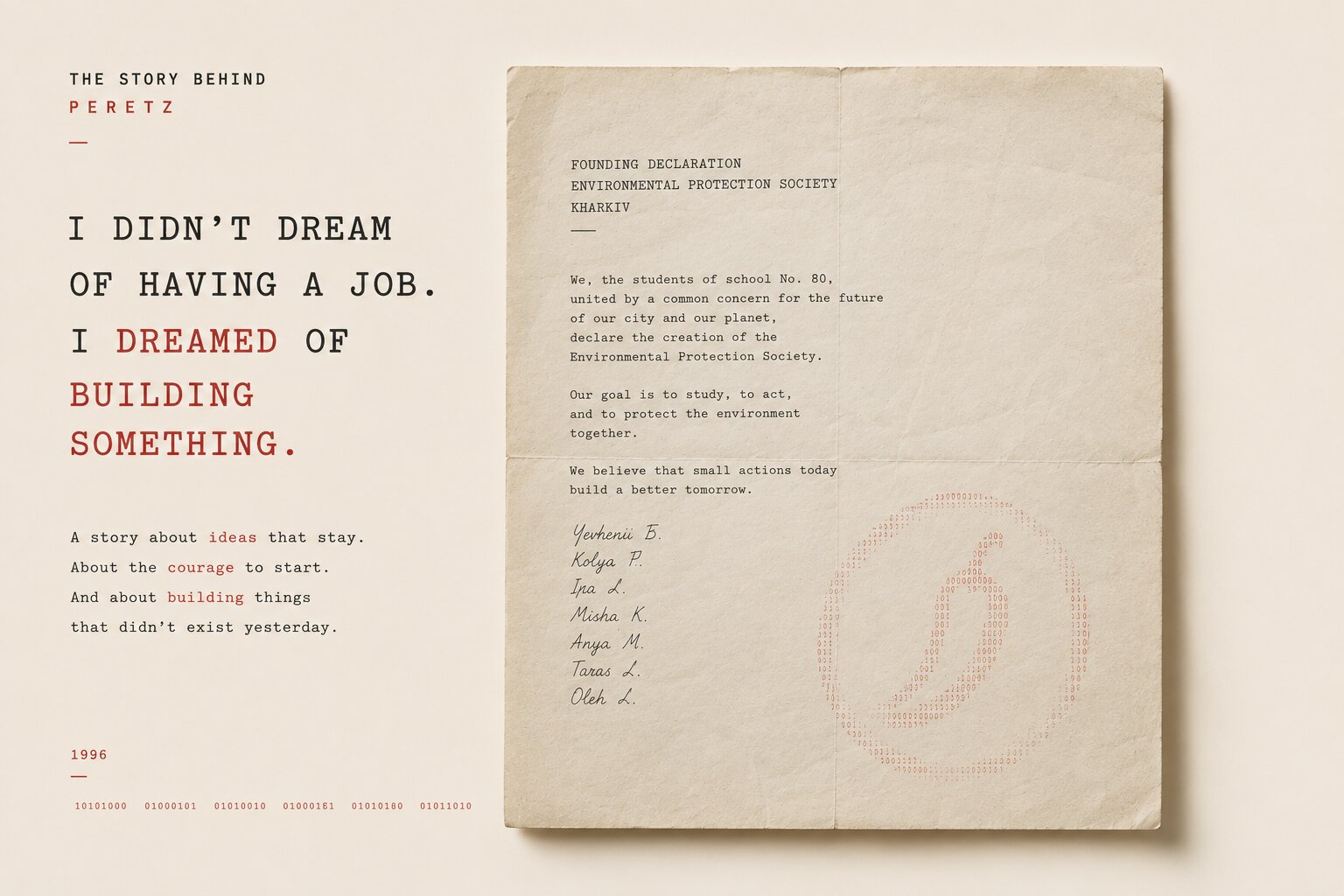
I Didn’t Dream of Having a Job. I Dreamed of Building Something.

-
08. 07. 2026
Everyone Wants the Prestige. We Study the Turn.
-
06. 07. 2026

Some Clients Change Your Business. MDC LUX Changed Ours.
-
26. 06. 2026

The Story We Never Planned to Tell - Case MEDPRESSO
-
29. 06. 2026

How AI Is Changing Product Development in 2026 (But Great Ideas Still Win)
-
01. 07. 2026

THE STORY BEHIND SV GROUP
-
10. 07. 2026

Nobody Wakes Up One Morning and Decides to Sell
-
30. 07. 2026

Most Companies Don't Own Their Website. They Own a Collection of Dependencies.
-
12. 07. 2026

The Number Nobody Tells You: 70%
-
15. 07. 2026

Four AIs Agreed. We Still Hadn't Verified Anything.
-
16. 09. 2026
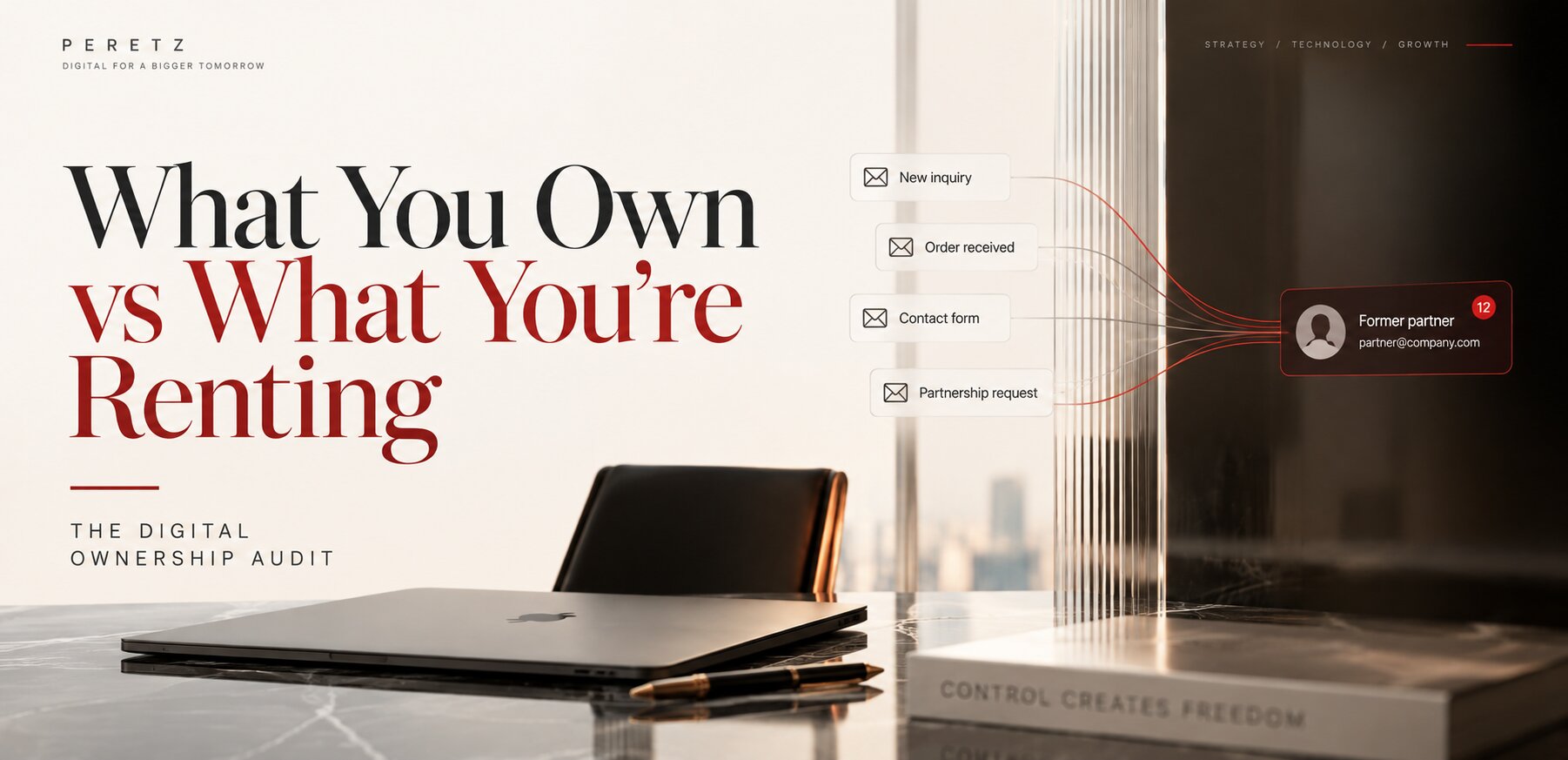
What You Own vs What You're Renting: The Digital Ownership Audit
-
18. 09. 2026

How to Audit a Website or Digital Product Before You Buy It
-
19. 09. 2026
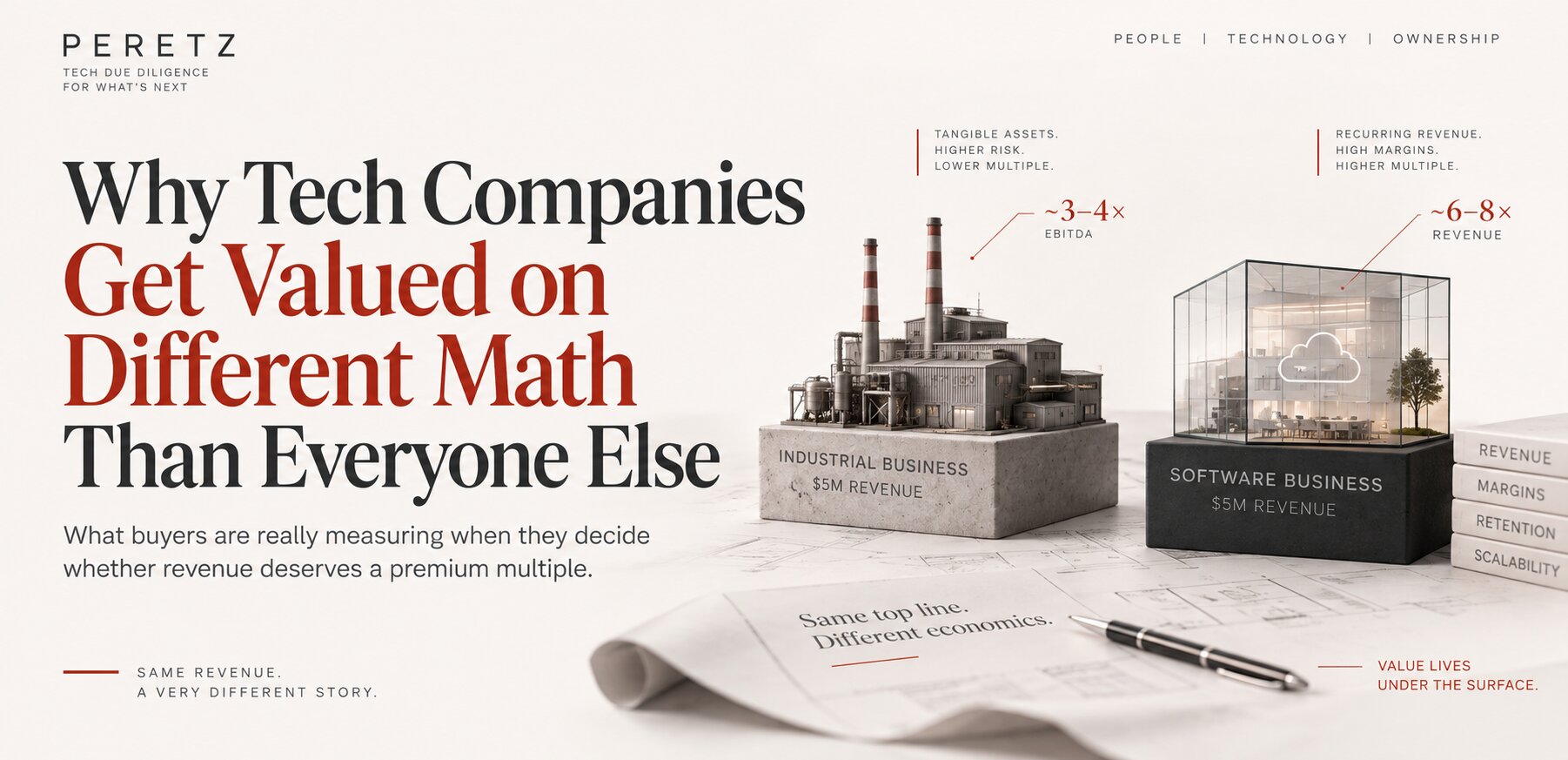
Why Tech Companies Get Valued on Different Math Than Everyone Else
-
07. 10. 2026

What Happens to the Website After an Acquisition?