


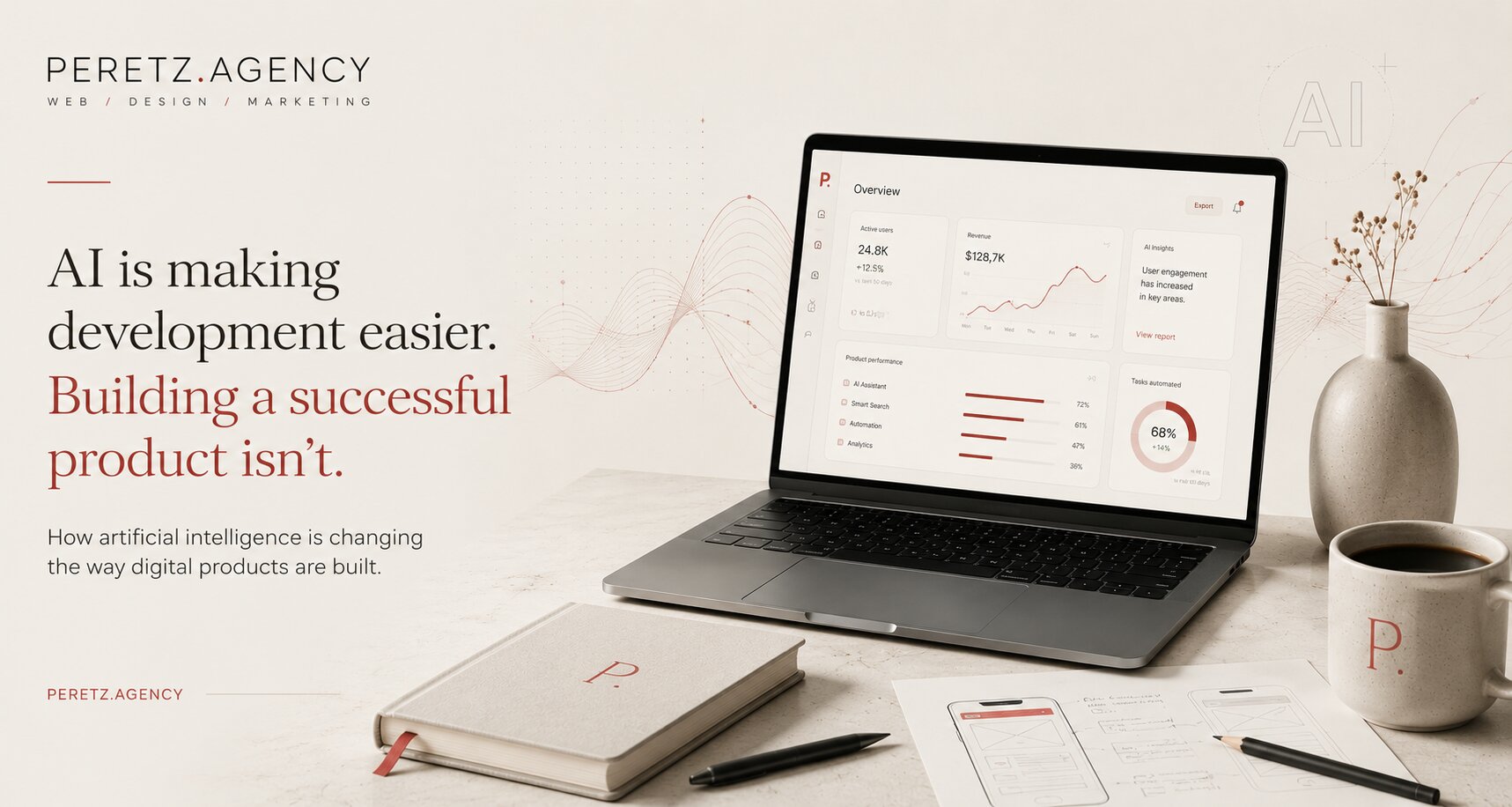
Not long ago, building a software product was considered one of the biggest barriers to starting a business. A founder needed investors, an engineering team, designers, project managers, infrastructure, and months—sometimes years—before the first customer could even test the product.
Today, that reality is changing.
Artificial intelligence has dramatically accelerated software development. A single experienced developer equipped with modern AI tools can now accomplish work that previously required an entire team. Wireframes can become interfaces within hours. Boilerplate code can be generated in minutes. Documentation, testing, and debugging are increasingly automated. For many startups, launching a functional MVP has become faster and more affordable than ever before.
This shift is significant. But it has also created one of the biggest misconceptions in today’s technology industry.
Many entrepreneurs have concluded that if software is easier to build, successful businesses must also be easier to build.
That assumption is wrong.
Artificial intelligence has lowered the cost of creating software. It has not lowered the cost of understanding customers, validating ideas, building trust, or creating demand. Those challenges remain just as difficult as they were ten years ago—and in many ways, they have become even more important.
As software becomes easier to produce, competition inevitably increases. More products reach the market. More startups launch. More founders compete for the same audience. In this new environment, writing code is no longer the primary competitive advantage.
Thinking is.
The companies that succeed over the next decade will not necessarily build software faster than everyone else. They will identify better problems, create clearer positioning, build stronger brands, and understand their customers more deeply.
Artificial intelligence changes how products are built.
It does not change why people choose one product over another.
Every Technological Revolution Removes a Bottleneck
History rarely repeats itself exactly, but technological progress follows recognizable patterns.
Every major innovation removes one obstacle while revealing another.
The Industrial Revolution reduced the cost of manufacturing. Machines allowed businesses to produce goods at a scale that manual labor could never achieve.
The Internet removed geographical barriers. Information became accessible from almost anywhere in the world, creating entirely new business models that were impossible only a decade earlier.
Cloud computing changed the economics of infrastructure. Companies no longer needed to purchase expensive servers before launching a digital product. Instead, computing power became available on demand, allowing startups to compete with organizations many times their size.
Artificial intelligence represents the next step in that evolution.
It is not replacing software development.
It is reducing the cost of software development.
That distinction matters.
Many headlines describe AI as if it were replacing engineers altogether. Reality is far more nuanced. AI excels at repetitive implementation, generating initial code, summarizing documentation, creating tests, and accelerating routine development tasks. It dramatically improves productivity, but productivity and expertise are not the same thing.
Experienced developers don’t become unnecessary because AI writes code.
They become capable of building more ambitious products in less time.
This is why AI should not be viewed as a replacement for engineering talent. It is better understood as a multiplier of engineering talent.
The same experienced architect who could successfully deliver three projects each year may now deliver five or six without compromising quality.
The same designer who once spent hours creating repetitive interface variations can now focus more attention on solving usability problems.
The same product manager can spend less time writing documentation and more time validating assumptions with customers.
AI changes where professionals invest their time.
That is where the real transformation begins.
The Economics of Software Development Have Changed
For decades, software development was expensive because every feature required human effort from beginning to end.
Every screen had to be designed.
Every component had to be coded.
Every API had to be documented.
Every bug had to be discovered manually.
As products became larger, engineering teams grew larger as well. Development costs increased almost linearly with product complexity.
Today, that relationship is changing.
AI can generate repetitive code almost instantly. Documentation can be created automatically. Unit tests can often be drafted before developers even begin writing production code. Refactoring, debugging, and code reviews increasingly benefit from intelligent automation.
This does not eliminate engineering work.
It changes the proportion of work that humans perform.
|
Product Development Activity |
AI Impact |
|
Boilerplate code generation |
Very High |
|
Documentation |
High |
|
Unit testing |
High |
|
Debugging assistance |
High |
|
Refactoring |
Medium to High |
|
UI implementation |
Medium |
|
Software architecture |
Low |
|
Product strategy |
Very Low |
|
Customer research |
Very Low |
|
Brand positioning |
Very Low |
The pattern is clear.
The more repetitive a task is, the more effectively AI can accelerate it.
The more strategic a task becomes, the more valuable human judgment remains.
This explains why experienced teams often benefit from AI far more than inexperienced ones.
AI can produce code.
It cannot evaluate whether that code represents the right business decision.
What Is Vibe Coding?
The phrase vibe coding has quickly become one of the most discussed concepts in software development.
Although definitions vary, the underlying idea is simple.
Instead of writing every line of code manually, developers describe functionality in natural language while AI generates much of the implementation.
A prompt might look like this:
“Create a CRM for a roofing company with lead management, appointment scheduling, customer notes, Stripe integration, and an admin dashboard.”
Within minutes, AI can generate the foundation of that application.
This workflow fundamentally changes how developers interact with software.
Instead of spending most of their time typing syntax, they increasingly spend time reviewing architecture, refining business logic, improving user experience, and validating outputs.
In other words, programming is gradually shifting from manual implementation toward technical decision-making.
However, vibe coding has also produced unrealistic expectations.
Some founders now believe they no longer need experienced engineers because AI can generate code automatically.
That assumption ignores one important reality.
Generating software is not the same as engineering software.
Large applications require consistent architecture, security, scalability, performance optimization, deployment strategies, integration planning, and long-term maintenance.
These decisions cannot simply be delegated to AI.
At least not today.
Why Great Products Are Still Expensive
One of the biggest myths surrounding AI is that software has become almost free to build.
That assumption usually comes from watching short demonstrations online.
Someone opens an AI coding assistant, types a prompt, waits a few minutes, and suddenly a working application appears on the screen. The conclusion seems obvious: if AI can build an app in an afternoon, why would anyone still spend tens of thousands of dollars developing software?
Because what you are watching is usually a demonstration—not a product.
There is an enormous difference between generating code and building software that real customers are willing to trust.
A production-ready digital product is far more than a collection of screens connected to a database.
It must solve a meaningful problem.
It must be intuitive enough that new users understand it without reading documentation.
It must be secure enough to protect customer data.
It must perform reliably under increasing traffic.
It must integrate with payment providers, CRMs, analytics platforms, authentication services, and third-party APIs.
It must be tested across browsers, mobile devices, operating systems, and countless edge cases.
Most importantly, it must generate enough value that someone is willing to pay for it.
None of these challenges disappear because AI can generate code.
If anything, they become more visible.
As development accelerates, businesses spend less time asking, “Can we build this?” and much more time asking, “Should we build this?” and “Will anyone actually use it?”
That shift changes where budgets are spent.
Instead of investing exclusively in engineering hours, successful companies increasingly invest in research, product strategy, user experience, branding, customer acquisition, and continuous iteration.
Ironically, these are precisely the areas where AI is least capable of replacing human expertise.
Building Software vs. Building a Business
Many founders still think of software development as the largest investment in launching a startup.
In reality, software is only one component of a much larger system.
|
Building Software |
Building a Business |
|
Writing code |
Identifying a real customer problem |
|
Designing interfaces |
Validating product-market fit |
|
Building APIs |
Creating a sustainable business model |
|
Database architecture |
Building trust |
|
Authentication |
Positioning against competitors |
|
Testing |
Customer acquisition |
|
Deployment |
Marketing and sales |
|
Maintenance |
Continuous product improvement |
The table illustrates a simple but important reality.
Software enables a business.
It does not automatically create one.
Many startups fail with technically impressive products because they invest almost all of their resources into development while neglecting customer research and market positioning.
The opposite is also true.
Some of the most successful digital products began with remarkably simple technology.
Their founders simply understood customer problems better than everyone else.
Technology scales solutions.
It rarely creates them.
Why Experienced Teams Become Even More Valuable
Another misconception is that AI reduces the value of experienced professionals.
The opposite is often true.
Imagine giving the same AI coding assistant to two people.
The first has been developing software for fifteen years.
The second started learning programming three months ago.
Both receive exactly the same tool.
Will they produce the same product?
Almost certainly not.
The experienced developer understands architecture, technical debt, security, maintainability, scalability, deployment, and business requirements.
AI simply accelerates their execution.
The beginner receives the same generated code but often lacks the experience required to evaluate whether that code is actually appropriate.
Knowing what to build remains far more valuable than simply generating something that appears to work.
This is why AI doesn’t replace expertise.
It amplifies it.
The gap between experienced professionals and inexperienced ones may actually become larger as AI adoption increases.
Experienced teams know which suggestions to accept.
More importantly, they know which suggestions to reject.
AI Doesn’t Make Expertise Cheaper
This may be the single most important idea in this article.
Artificial intelligence does not reduce the value of expertise.
It increases the amount of work that expertise can accomplish.
Twenty years ago, an experienced software architect spent much of the day writing repetitive implementation code.
Today, much of that repetitive work can be delegated to AI.
That doesn’t reduce the architect’s importance.
It allows them to spend more time solving the problems that actually determine whether a product succeeds.
Instead of manually writing CRUD operations, they think about system design.
Instead of documenting APIs line by line, they think about customer workflows.
Instead of formatting code, they think about long-term scalability.
The nature of engineering work changes.
The value of engineering judgment does not.
A useful way to think about AI is not as an automatic developer, but as an exceptionally fast assistant.
It can draft.
It can suggest.
It can automate.
It can accelerate.
But it still depends on someone to define direction.
Just as calculators did not eliminate mathematicians, AI will not eliminate software engineers.
It simply removes repetitive calculations so experts can focus on higher-level problems.
Where AI Creates the Greatest Value
Perhaps the easiest way to understand AI’s role is to examine where it creates the greatest leverage.
|
Activity |
AI Contribution |
Human Contribution |
|
Boilerplate coding |
Very High |
Low |
|
Code documentation |
High |
Medium |
|
Refactoring |
High |
Medium |
|
Unit testing |
High |
Medium |
|
UI implementation |
Medium |
High |
|
Product architecture |
Low |
Very High |
|
Product strategy |
Very Low |
Critical |
|
Customer interviews |
Very Low |
Critical |
|
Brand positioning |
Very Low |
Critical |
|
Business decisions |
Very Low |
Essential |
The further a task moves away from predictable patterns and toward human judgment, the less capable AI becomes.
That observation explains why businesses should view AI primarily as a productivity multiplier rather than a replacement for strategic thinking.
Technology has become dramatically more accessible.
Good judgment has not.
The Next Chapter
If AI has reduced the cost of creating software, another question naturally follows.
What becomes the new competitive advantage?
The answer isn’t faster coding.
It isn’t larger development teams.
It isn’t even access to AI itself.
Because sooner or later, everyone will have access to the same tools.
The next competitive advantage is something far more difficult to automate:
understanding people better than your competitors do.
Marketing Has Become the New Bottleneck
For decades, software companies competed primarily on technology.
The company with the better engineering team usually built the better product. More features, better performance, faster development, and stronger infrastructure often translated directly into a competitive advantage.
Artificial intelligence is beginning to change that equation.
When every company has access to the same AI tools, technology becomes less of a differentiator. The time required to build an application decreases, and the gap between competitors narrows.
This does not mean products become identical.
It means businesses must compete somewhere else.
That “somewhere else” is increasingly defined by customer understanding, positioning, branding, and marketing.
Imagine two companies building nearly identical software using the same AI tools.
Both launch within a few weeks.
Both have modern interfaces.
Both offer similar functionality.
One product gains traction while the other quietly disappears.
Why?
Not because one team wrote cleaner code.
Because one team understood its audience better.
It communicated value more clearly.
It solved a problem customers actually cared about.
It built trust.
It created a recognizable brand.
Technology opened the door.
Marketing convinced people to walk through it.
This is why product development and marketing can no longer be treated as separate disciplines.
Marketing should not begin after launch.
It should begin before the first line of code is written.
The questions that determine whether a product succeeds are not technical.
Who is the customer?
What problem are they trying to solve?
Why is the current solution not good enough?
Why should someone trust your company instead of an established competitor?
If these questions remain unanswered, even the most sophisticated AI-generated application will struggle to find an audience.
AI makes it easier to build products.
It does not make it easier to earn attention.
And in today’s digital economy, attention is often the scarcest resource of all.
Final Thoughts
Artificial intelligence is transforming software development faster than almost any previous technological innovation.
It enables smaller teams to accomplish more.
It reduces repetitive work.
It accelerates prototyping.
It shortens development cycles.
These are genuine and meaningful improvements.
But they should not distract us from an equally important reality.
Building software has never been the ultimate goal.
Building a successful business has always been the goal.
The companies that thrive over the next decade will not simply generate more code.
They will identify better opportunities.
Understand customers more deeply.
Communicate more clearly.
Design better experiences.
Build stronger brands.
And use AI where it creates the greatest value—not as a substitute for expertise, but as a force multiplier for it.
Perhaps that is the biggest lesson of the AI era.
The cost of building software is approaching zero.
The value of original thinking has never been higher. How the same shift is reshaping frontend work, from AI web design to AI video editing, is covered in AI-Powered Web Design and AI Video Editing.
FAQ
Frequently Asked Questions
Does AI replace software developers?
No. AI significantly improves developer productivity by automating repetitive tasks, but experienced engineers remain essential for software architecture, security, scalability, system design, and long-term product maintenance.
What is Vibe Coding?
Vibe Coding is an AI-assisted software development approach where developers describe functionality in natural language while AI generates much of the implementation. Human expertise is still required to review, refine, and maintain production-ready software.
Has AI made software development inexpensive?
AI has reduced development time and improved productivity, but professional digital products still require product strategy, UX/UI design, testing, security, integrations, infrastructure, and marketing. These remain major investments for any serious business.
What is the biggest competitive advantage after AI?
As AI becomes widely available, competitive advantage shifts away from writing code and toward product strategy, customer understanding, branding, marketing, user experience, and execution.
Should startups use AI to build MVPs?
Absolutely. AI can dramatically accelerate MVP development and reduce engineering effort. However, founders should remember that validating customer demand is often more important than accelerating development.
Conclusion
AI is not replacing businesses.
It is changing what businesses compete on.
The companies that understand this shift early will not simply build software faster.
They will build products people actually want.
Build More Than Software
At Peretz Agency, we help companies combine AI-assisted development with product strategy, UX/UI design, branding, SEO, and digital marketing to build products that generate real business value—not just working code.
Whether you’re launching a startup, validating an MVP, or redesigning an existing digital product, our goal is the same:
Build software people actually use. Build brands people remember.
What actually separates a working AI-built site from a demo is covered directly in Claude can build the website, it can't build the understanding.
What a real AI-powered analytics system actually requires, beyond a demo, is covered directly in AI can build your analytics system in two days.
- Share
-

-

-

-

Related Reading
-
25. 06. 2026
Website Redesign vs New Website: How to Make the Right Decision in 2026

-
18. 06. 2026

How Much Does a Website Cost in Bellevue WA in 2026?
-
26. 06. 2026

How to Build a Social Media Strategy That Actually Generates Leads
-
15. 06. 2026

How Much Does a Website Cost in Seattle in 2026?
-
19. 06. 2026

How Much Does Social Media Management Cost in the US in 2026?
-
20. 12. 2020

Why Your E-Commerce Store Needs a Blog in 2026 — And How to Start One That Actually Works
-
04. 07. 2026

What Working With a Kindergarten Taught Me About B2C Trust — And What Every Premium Brand Needs to Hear
-
07. 07. 2026

What Is AEO? Answer Engine Optimization Explained for Small Business in 2026
-
10. 07. 2026

Before You Sell, Retire, or Hand It Down
-
01. 08. 2026

The Hidden Cost of Choosing the Wrong Architecture
-
09. 08. 2026
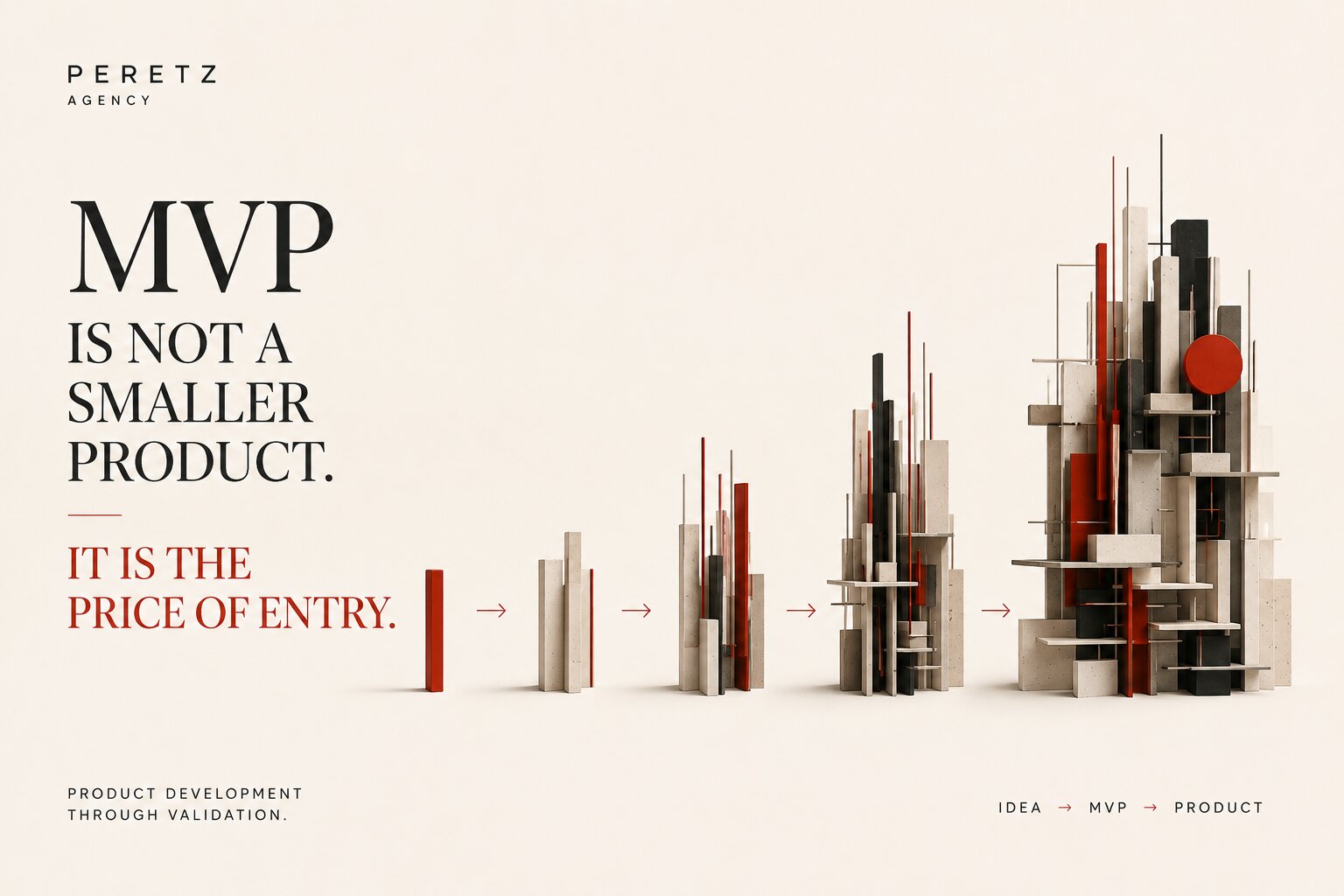
MVP Isn't a Minimal Product. It's the Cost of Entry.
-
23. 08. 2026

How Much Does a Custom Website Cost in 2026?
-
23. 08. 2026

How to Get Hired in 2026: The Job Interview Has Changed
-
22. 09. 2026

Claude Can Build the Website. It Can't Build the Understanding. Not Yet.
-
23. 09. 2026
AI Can Build Your Analytics System in Two Days. Here's What That Number Actually Describes.