

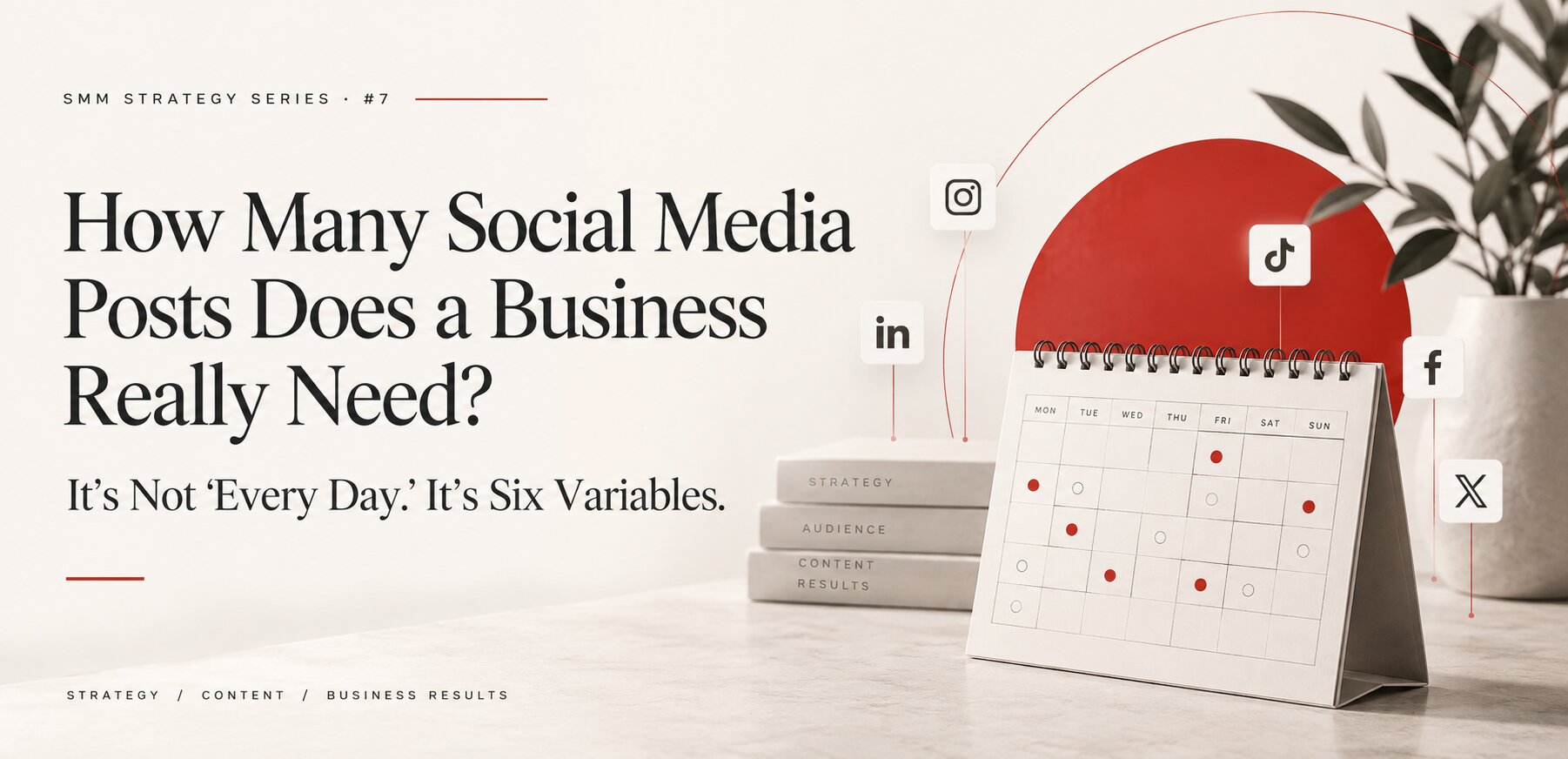
It's Not "Every Day." It's Six Variables.
Somewhere along the way, "post every day" became social media gospel. It shows up in course modules, agency pitch decks, and LinkedIn threads with the confidence of a law of physics. It isn't one. It's a rule of thumb that got mistaken for a rule, and for a lot of businesses, following it quietly burns budget and goodwill on content nobody was waiting for.
Frequency is not a strategy. It's a variable inside one.
Short answer: there is no universal number of social media posts a business should publish each week. For many businesses, the useful range may be anywhere from two highly focused posts to several posts per week, but the right cadence depends on six variables: business type, audience behavior, production capacity, funnel stage, platform mechanics, and business goal.
The honest answer to "how many posts do we need?" isn't a number. It's an equation with six moving parts, and a business that skips straight to a number without working through the parts usually ends up either overproducing content that erodes quality, or underposting and losing algorithmic visibility it actually needed. It's the same reason a social media strategy is not a content calendar: the calendar is where the answer gets written down, not where it comes from. Here is the equation, variable by variable.
BUSINESS TYPE
1. Business Type
A media publisher's product is content, so volume is the business model — daily or even hourly posting makes sense. A B2B consultancy, a law firm, or a boutique agency sells trust built over a handful of well-made touches, not volume; five strong posts a month can be more effective than thirty forgettable ones. An e-commerce brand sits in the middle: enough presence to stay top-of-mind, not so much that every product launch feels manufactured. A local business — a clinic, a studio, a restaurant — is talking to a small, repeat audience that doesn't need daily reminders it exists.
AUDIENCE
2. Audience Behavior
A frequency decision made from the brand's ambition, rather than the audience's actual checking behavior, is a decision made blind. A 19-year-old scrolling TikTok between classes expects near-constant refresh from accounts they follow. A procurement lead evaluating a $50,000 software contract might check that company's LinkedIn twice before a sales call — and would find a third post that week irrelevant, not impressive. The ceiling on frequency is set by how often the audience is actually looking, not by how often the brand wants to be seen.
CAPACITY
3. Production Capacity
This is the constraint nobody wants to name out loud: most teams can produce three genuinely good posts a week and are choosing, instead, to produce seven mediocre ones because a content calendar has seven days in it. Quality collapses past a team's real bandwidth. Across platforms, performance can depend on signals such as watch time, completion, saves, shares and meaningful interactions, not simply publishing frequency, which means a mediocre daily post is competing on metrics it is poorly placed to win. It's one of the most common reasons social media content isn't working even when the calendar is full.
FUNNEL STAGE
4. Funnel Stage
Awareness-stage content benefits from more frequent testing, because reaching new audiences through an algorithm is partly a numbers game — more attempts, more chances at distribution. Retention and conversion content, aimed at an audience that already knows the brand, works the opposite way: one precise, well-timed post to a warm audience can outperform five average ones in the right context, because the job of that content isn't discovery, it's decision support.
PLATFORMS
5. Platform Mechanics
This is the variable most articles treat as the whole answer, so it's worth being precise about what the benchmark data actually shows.
Socialinsider's 2026 benchmark report, based on 70 million posts published by international brands between January 2024 and December 2025, puts average monthly output at 20 posts on Instagram (about 5 a week), 24 on Facebook (about 5.5 a week, down from 47 the year before), 15 on TikTok (about 3.5 a week) and 70 on X (about 16 a week).
Hootsuite's own measurement of business accounts in the first quarter of 2025 shows higher averages across all industries: about 9.3 posts a week on Instagram, 14.2 on Facebook, 5.5 on LinkedIn and 3.7 on TikTok. Split by industry, the spread widens again: Instagram runs from about 4 posts a week in utilities and energy to about 12 in technology.
And Hootsuite's expert recommendations sit somewhere else entirely: 3–5 posts a week on Instagram and TikTok, 1–2 a day on Facebook and LinkedIn. Three sources, three different pictures of the same platforms.
BENCHMARK TRAP
The Benchmark Trap
It's tempting to read those differences as a contest over which number is right. None of them is a target. Different benchmark datasets can produce materially different frequency ranges because they sample different industries, account sizes, publishing behaviors, time periods and content mixes. That is exactly why a benchmark average should not be treated as a publishing target.
A benchmark average describes a population, not your business.
What the sources agree on is more useful than any single number: volume and results are not the same thing. Hootsuite's own Instagram data suggests that two good posts a week can produce more total engagement than twenty mediocre ones, and puts the sweet spot at six to seven great posts a week, not at maximum volume. On Facebook, the same source notes that two great posts a week can generate solid engagement. Socialinsider, describing Facebook specifically, reports brands deliberately cutting volume in favor of fewer, higher-value updates.
Frequency creates more opportunities for distribution. It does not, by itself, guarantee resonance.
What Benchmark Data Shows, and What It Doesn't
| Platform | What benchmark data shows | What it does NOT mean |
|---|---|---|
| 20 posts/month (Socialinsider, 2025 data); 9.3/week (Hootsuite, Q1 2025) | That 5 or 9 posts a week is the right target. In Hootsuite's data, a few great posts beat volume. | |
| 24 posts/month, down from 47 (Socialinsider); 14.2/week (Hootsuite) | That more posts buy more reach. Brands in one dataset halved their output. | |
| TikTok | 15 posts/month (Socialinsider); 3.7/week (Hootsuite) | That 3–4 videos a week is enough or too many. It depends on the production cost per video. |
| 5.5 posts/week across industries (Hootsuite, Q1 2025) | That a B2B brand needs daily posts. A few precise posts can matter more. |
A benchmark is not a recommendation, and an average is not an optimum. The right frequency is the output of the six business variables, not a number copied from a report.
BUSINESS GOAL
6. The Business Goal
This is where frequency meets the point this whole series keeps returning to: if the real KPI is leads and revenue rather than followers, then frequency has to be judged by what it does to qualified traffic and conversion, not by what it does to reach. It's the difference between a strategy built for visibility and a social media strategy that actually generates leads. A business chasing visibility and a business chasing twenty qualified sales conversations a month should not be running the same posting cadence, even if they're the same size.
IN PRACTICE
The Equation in Practice
A boutique wellness studio with a small, local, repeat audience and a founder who's a strong on-camera presence: 3–4 posts a week plus daily stories — enough to stay part of the routine, not so much that the founder burns out and the content thins.
An enterprise B2B software company selling a six-figure annual contract: 2 highly produced LinkedIn posts a week, each aimed at a specific buying-committee role, can be more effective in that B2B context than a daily posting habit that no procurement lead was checking anyway.
A fashion e-commerce brand with a young, fast-scrolling audience and cheap-to-produce UGC and reels: 5–6 posts a week is closer to right — because in that specific case, production cost per post really is low and the audience really does expect frequent refresh.
"One of my clients was posting daily out of anxiety, not strategy — the fear that a quiet week meant the algorithm would 'forget' them. We cut the schedule to three posts a week and used the time we freed up to actually develop a point of view instead of filling a calendar grid. Engagement went up. So did the quality of the leads coming through — which is the metric that mattered."
Iryna Nechaeva, on cutting a client's posting schedule by more than half
REAL QUESTION
The Real Question
The right number was never hiding in a benchmark table. It's the output of knowing exactly what job each post is doing for the business — and having the discipline to stop posting the moment a post stops having one.
OUR APPROACH
How We Set Cadence
- Map the funnel stage each channel is actually serving — awareness, consideration, or retention — before setting a number
- Audit the audience's real checking behavior on that platform, not the brand's ambition for how often it wants to be seen
- Set a production capacity ceiling the team can sustain at full quality, and treat it as fixed
- Assign every post a job — reach, trust, or conversion — and cut anything that doesn't have one
- Review cadence quarterly against leads and revenue, not against likes or follower count
If your current content calendar was built around a number someone picked because it felt safe, it's worth rebuilding it around the six variables instead. Our social media marketing team can audit your current cadence against your actual funnel and tell you, honestly, whether you're overposting, underposting, or simply posting the wrong things at the right frequency.
Sources: Socialinsider, Social Media Benchmarks for 2026 (70 million brand posts, January 2024 to December 2025); Hootsuite, How often should a business post on social media (business posting data for Q1 2025 and expert recommendations).
FAQ
How often should a business post on social media?
There is no universal number. For many businesses, the useful range may be anywhere from two highly focused posts to several posts per week, but the right cadence depends on six variables: business type, audience behavior, production capacity, funnel stage, platform mechanics, and business goal.
Is posting every day good for engagement?
Not necessarily. Daily posting makes sense where content is the product or where the production cost per post is close to zero. For most businesses, signals such as watch time, saves and shares matter more than volume, and a mediocre daily post competes poorly on them.
How many times a week should a business post on Instagram?
Benchmarks differ: Socialinsider's report shows brands averaging about 20 posts a month (2025 data), Hootsuite measured about 9.3 posts a week in Q1 2025 and recommends 3 to 5. Hootsuite's own data also suggests that a few great posts can outperform many mediocre ones, so capacity and quality should set the number.
How often should a B2B company post on LinkedIn?
Hootsuite measured businesses averaging about 5.5 LinkedIn posts a week in Q1 2025. For B2B companies with long sales cycles, a few precise posts aimed at specific buying-committee roles can matter more than daily volume.
Will posting less hurt us with the algorithm?
Not if what you publish becomes stronger. In one of our client cases, reducing frequency from daily to three posts a week coincided with higher engagement and better lead quality. Consistency matters more than volume.
Why do social media benchmark reports disagree?
Because they measure different populations: different industries, account sizes, publishing behaviors, time periods and content mixes. A benchmark average describes a group of accounts, not your business.
How do we find the right posting frequency for our business?
Work through the six variables: set a production ceiling your team can sustain at full quality, give every post a job (reach, trust or conversion), and review the cadence quarterly against leads and revenue rather than likes.
Can Peretz Agency audit our current posting cadence?
Yes. We map the funnel stage each channel serves, check your audience's real behavior, set a sustainable capacity ceiling, and tell you honestly whether you're overposting, underposting, or posting the wrong things at the right frequency.
Not sure whether you're overposting, underposting, or posting the wrong things?
- Share
-

-

-

-

Related Reading
-
24. 09. 2026
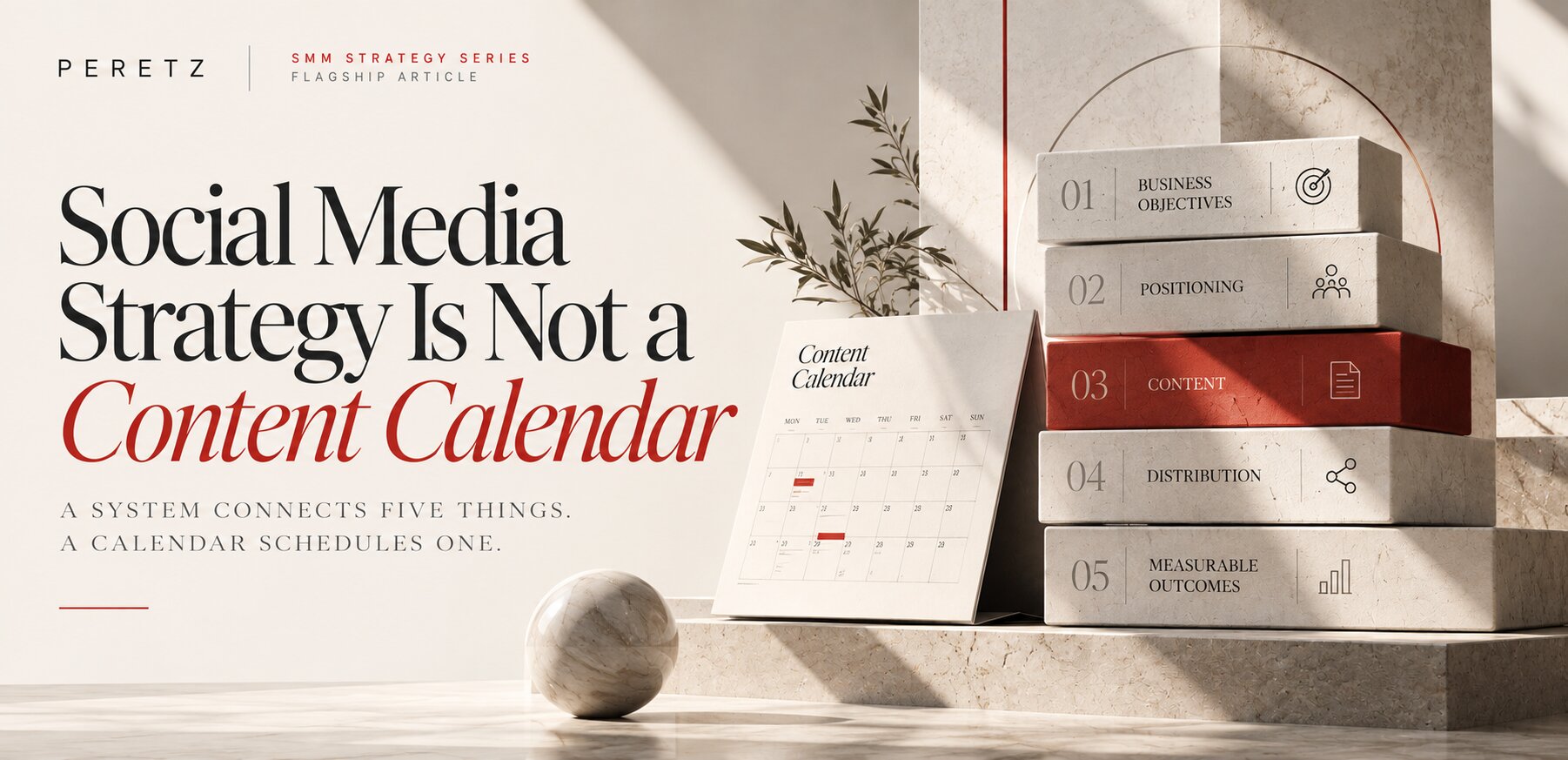
Social Media Strategy Is Not a Content Calendar

-
07. 09. 2026
What Is a Social Media Strategy and Why Does a Business Actually Need One?
-
08. 09. 2026
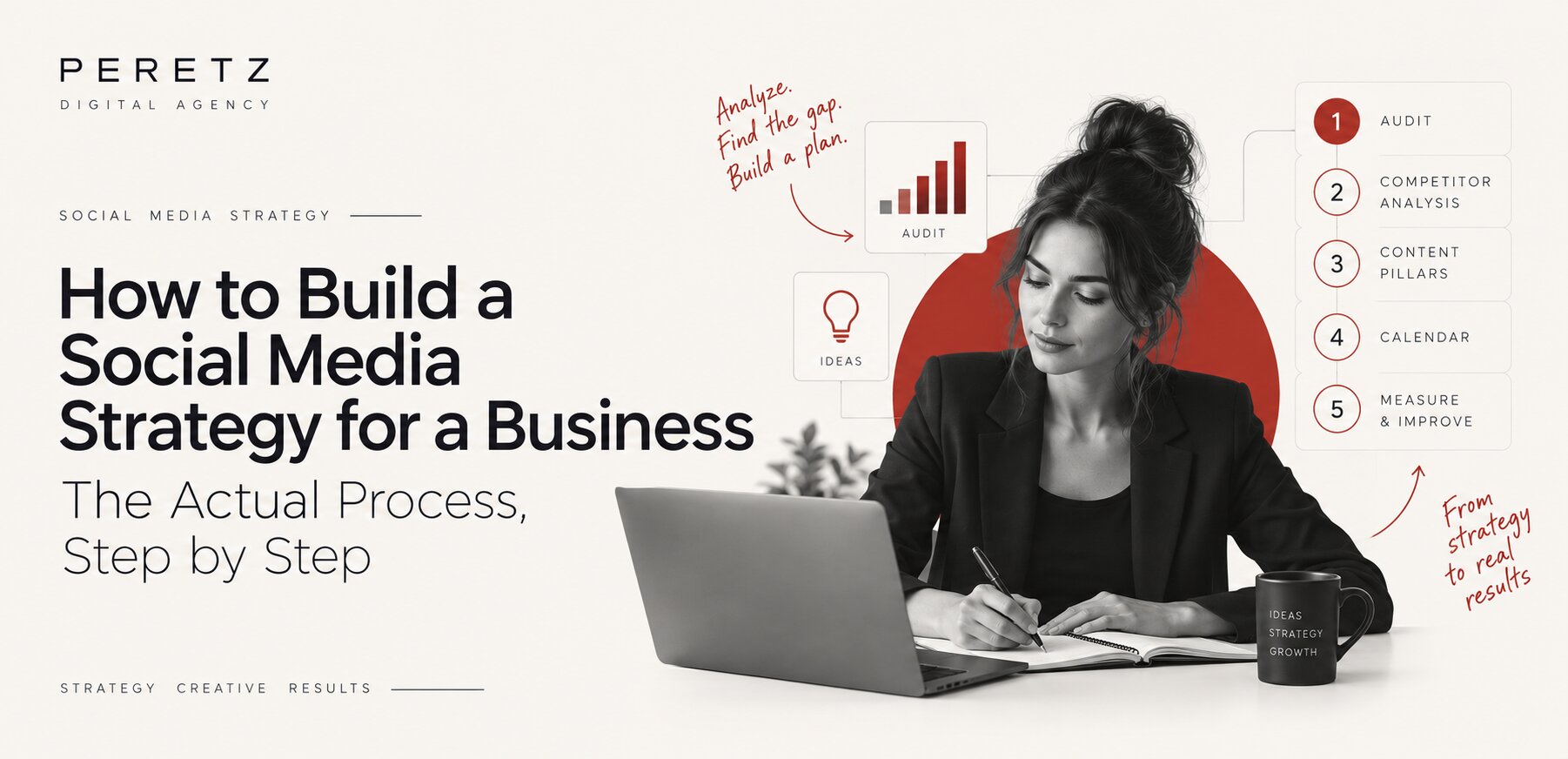
How to Build a Social Media Strategy for a Business, The Actual Process, Step by Step
-
08. 09. 2026
Why Your Social Media Content Isn't Working (7 Real Reasons, Not Algorithm Excuses)
-
26. 06. 2026
How to Build a Social Media Strategy That Actually Generates Leads
-
19. 06. 2026
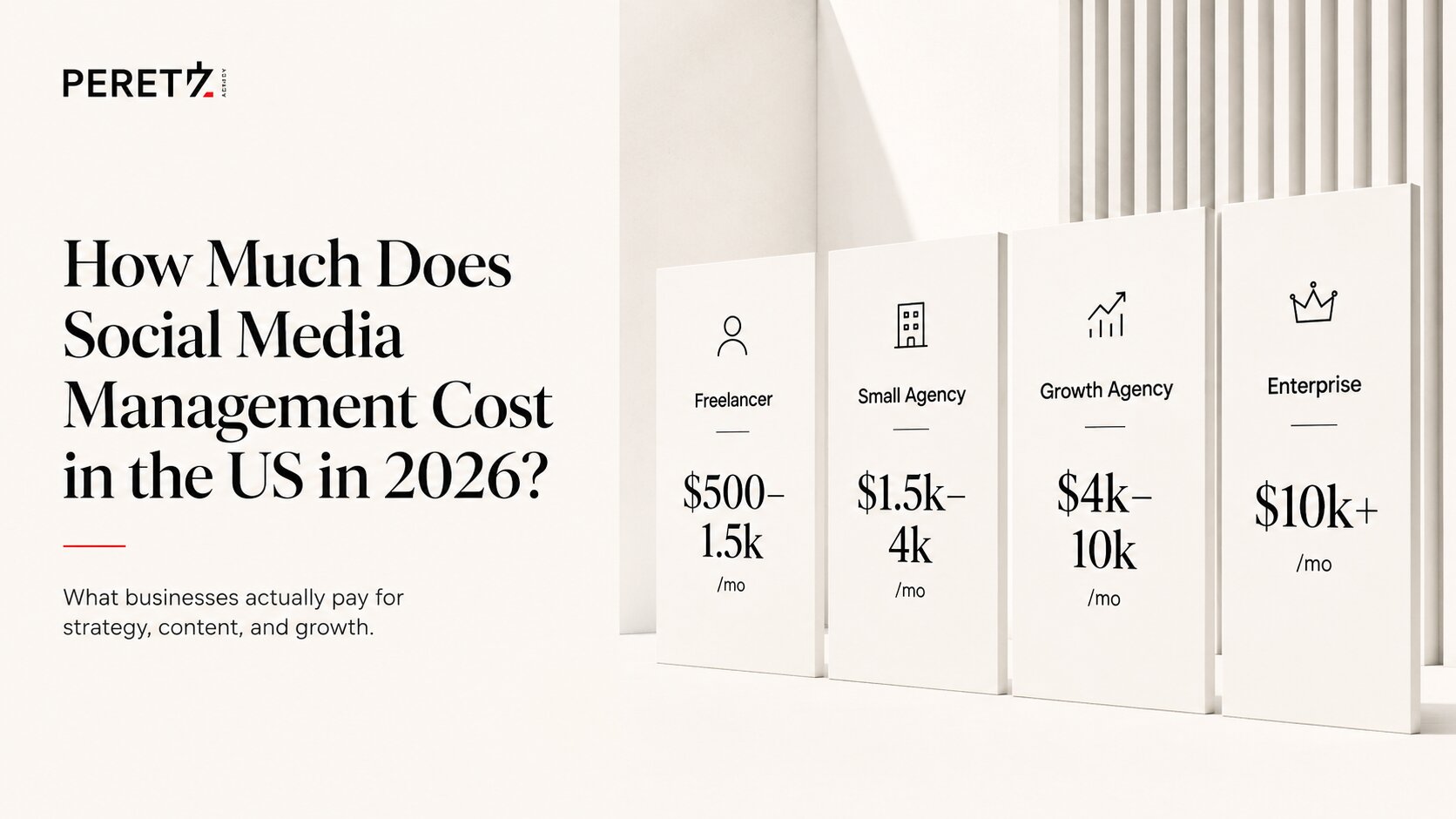
How Much Does Social Media Management Cost in the US in 2026?