Outsourcing, Outstaffing or a Dedicated Team: How to Choose in 2026


A business that needs more development capacity has three ways to get it without building a tech department: hand over a project with a fixed scope, add specialists to its own team, or take a whole team that works only on its product. The people can be exactly the same in all three. What changes is who sets the tasks every morning, who answers when a release slips, and where the knowledge sits when someone leaves. Here is how the formats really differ, what they cost in 2026, what goes wrong in each and when to move from one to another.
IN SHORT
Choose by who manages the work
Outsourcing gives a vendor a defined result for a fixed price, and the vendor carries the delivery risk. Outstaffing adds specialists to your team, and you manage them and carry the delivery risk yourself. A dedicated team is a complete group with its own project manager that works only on your product, while you set the priorities. Pick the format by two questions: do you have someone who can lead developers, and can the scope be written down today?
If the scope is known and stable, a fixed project is the simplest contract. If you have a tech lead and a working process and simply need more hands, outstaffing costs the least and keeps control with you. If the product keeps changing and nobody inside the company runs development, a dedicated team is the safer choice.
We run all three formats from the same pool of specialists we have vetted and know personally, and we often see one product move through all of them: built as a project, grown by a team after launch, later supported by a single developer. The format serves a stage of the business and should change when the stage does.
The people can be the same. The contract decides who answers for the result.
THREE FORMATS
What each one means in plain terms
Vendors call everything "outsourcing", and buyers ask for a "dedicated developer" when they mean one person in their own team. Here the terms mean the following.
Project outsourcing. You describe what has to be built, the vendor estimates it, and you agree on the scope, the price and the timeline before work starts. The vendor plans the work, tests it and hands it over; you approve stages and accept the result. Our fixed projects start, for example, from $20,000 for an MVP and from $25,000 for a web application, with payment in stages tied to milestones.
Outstaffing. One or several specialists join your team. They work in your repository, tracker and sprints and report to your tech lead. The vendor handles selection, contracts, equipment, HR support and replacements, but does not decide what the person works on today. In the United States the same arrangement is often called staff augmentation. You pay for the hours worked.
Dedicated team. A stable group assembled for your product alone: developers, a QA engineer, a designer when new features need one, DevOps as needed, and a project manager who runs the sprints and is your single point of contact. It works month after month on your roadmap: you set the priorities, the team plans and delivers. The monthly price is agreed before work starts.
A dedicated team sits between the other two: it takes the daily management off your hands, as a project does, yet needs no fixed scope, so it absorbs a changing roadmap, as outstaffing does.
Whether to keep development in-house at all is a separate question, which we cover in In-House vs Outsourcing in 2026. Which business functions are worth handing to a partner in the first place is in Which Business Functions Should You Outsource in 2026?
SIDE BY SIDE
Management, risk and money compared
Here are the three formats on the points that decide most choices:
| Question | Fixed project | Outstaffing | Dedicated team |
|---|---|---|---|
| Who sets the daily tasks | The vendor, inside the agreed scope | You or your tech lead, from your backlog | The team's project manager, from your priorities |
| Who carries delivery risk | The vendor: scope, price and deadline are agreed | You; the vendor answers for the person and replaces them | Shared: the team delivers, you decide what matters next |
| What you need on your side | Someone who can approve stages and accept the result | A lead who can set tasks and review code | A product owner who can set priorities every sprint |
| How you pay | A fixed price, in stages | By the hour, for hours worked | Monthly, for an agreed composition |
| When scope changes | A change request with a new estimate | You simply reprioritise | You reprioritise; a lasting change in workload changes the team and the price |
| Where knowledge builds up | In the vendor's team, then in the handover documents | In your team and your repository | In the team, its documents and your repository |
| Fits when | The scope is known and will not move much | You have a lead and a process and need hands | The product keeps changing and you have no tech department |
The row that matters most is delivery risk, because it explains the price of each format. In a fixed project the vendor promises a result for a set amount, so the estimate includes a margin for everything the brief did not say, and every change after signing is a new negotiation. Fair enough, since you are paying someone to carry the risk of being wrong about the scope.
With outstaffing nobody carries that risk for you. The vendor promises a qualified person, a working contract and a replacement if the fit is wrong. Whether the feature ships on time depends on how well your side plans, reviews and decides. Outstaffing is the cheapest format per hour precisely because the management and the risk stay with you.
A dedicated team shares the risk differently. The team and its project manager answer for planning, quality and steady delivery; you answer for choosing what to build. Prioritise the wrong feature, and the team will deliver it well and on time, at your cost.
Whoever sets the daily tasks carries the delivery risk.
KNOWLEDGE
How the code and the know-how stay with you
Every outside arrangement raises the same fear: what happens when the people leave? Two things have to stay with the business, the code and the knowledge, and each is protected differently.
The code is settled by the contract and by access. In all our formats the code, the intellectual property and everything the specialists build are handed over to you under the contract. A contract does not help if you cannot open your own repository, so we recommend the same rules everywhere: the repository lives in your company's organisation, each specialist has a personal account with only the rights the role needs, and keys sit in a password manager your company controls. The questions to ask a vendor before signing are in How to Hire a Remote Dev Team Without Getting Burned.
Knowledge is harder, because it lives in heads. With outstaffing the code has been in your repository from the first commit, so at the end there is nothing to transfer except context: the open tasks, the unfinished branches and the known problems, written down. When we build a product as a dedicated team or a fixed project, the handover is a set of documents: the code, the deployment commands, the server requirements, a rollback procedure and an AGENTS.md file that describes the structure, the rules and the commands. With them your own developers, another vendor or an AI coding agent can carry on without guessing. Why that file matters is explained in Your Codebase Needs a Manual for AI.
We learned how much this matters on our own work. During the development of MEDPRESSO, a medical education platform, two key developers left almost at the same time after offers from another company. Other specialists stepped in, the work moved to the interface and future features while they got up to speed, and the client saw no break. The lesson is written up in Your Website Doesn't Fail When Your Developer Leaves: on an undocumented codebase a new developer needs a month or two before being fully productive, on a documented one far less.
WHAT GOES WRONG
The typical failure of each format
Each format fails in its own way, and the failure is usually built into the contract from the first day. Here is what we see most often and how to avoid it.
Fixed project: the scope was written too early. A brief written before anyone understood the business turns into a contract, and the vendor delivers exactly what it says. Halfway through, the team learns that wholesale clients need their own prices, and each such discovery becomes a change request. The project ends on budget with a product that matches the paper and not the business. The cure is to describe the business rules before fixing the price, which is what a discovery phase or a strategic session is for, and to keep a fixed price only for work that really can be described up front.
Outstaffing: nobody reviews the code. A company hires a strong developer and has nobody who can judge the work, so the developer decides the architecture alone and the product becomes dependent on one person's habits. The second classic problem is management time: someone has to write tasks, answer questions and accept work, and owners underestimate those hours. If you have no technical lead, either take a dedicated team with its own project manager or keep outstaffing and add a fractional CTO, someone who reviews the code, the estimates and the hires on your side for about one day a week.
Dedicated team: nobody sets the direction. A team without a product owner on the client side starts filling its own backlog: it stays busy, the reports look fine, and the product drifts away from customers. The opposite mistake is a team assembled too big too early, five people paid every month while the roadmap has work for three. A third risk is a team with no senior or lead developer owning the architecture, so decisions are made by whoever writes the code that day. We compose a team around the roadmap, start compact and grow it when the backlog proves the need, and always put someone in charge of the architecture.
One failure is shared by all three formats, and it costs the most: accounts. A vendor that registered the hosting, the repository or the app store account in its own name can leave you owning a contract and not the system. Check where every account lives before the first payment, not after the last one.
WHEN TO SWITCH
Moving from one format to another
The right format today is rarely the right one in two years. A change pays off at these moments.
From a fixed project to a dedicated team. The product has launched, customers have started using it and the list of changes grows every week. A new fixed-price contract for each batch of changes costs more in estimates and negotiations than the work itself, so a team that already knows the code, working on monthly priorities, is cheaper from here. Startups usually reach this point after the MVP, before they can hire their own team.
From outstaffing to a dedicated team. Your tech lead leaves, or the company grows tired of managing developers and wants a result rather than hours. Keep the people who already know the product and add a project manager around them, so the knowledge stays and the management moves.
From a dedicated team to outstaffing or in-house. The company hires its own CTO or builds a department. The team hands over the documents, some of its members can stay as outstaffed specialists under your new lead, and the rest roll off with notice.
From anything to a takeover. The previous developer or agency has gone, and nobody knows what is on the servers. We start such cases with a project takeover: an audit that collects the access, checks the code, the infrastructure and the integrations, and ends with a written report and documentation that any team can continue from. The audit starts from $2,500 and is fixed before it begins.
COST
What each format costs in 2026
These are our prices as of October 2026. They are starting points, and the final price is set once the role or the team is agreed. All of them are on our pricing page.
| Format or role | Price | How it is billed |
|---|---|---|
| Developer in your team (outstaffing), Laravel, React, Vue, mobile and other stacks | $45 to $65 an hour, by seniority | Hours worked, one invoice a month |
| QA engineer | From $30 an hour | Hours worked, or a fixed monthly amount for full time |
| DevOps engineer | $50 to $70 an hour | Hours worked; on-call agreed separately |
| Dedicated team with a project manager | From $8,000 a month | Monthly, composition agreed first |
| Fractional CTO, about one day a week | From $3,500 a month | Monthly, month to month |
| Fixed project: MVP or web application | From $20,000 (MVP), from $25,000 (web app) | In stages tied to milestones |
The hourly rate moves with seniority (middle, senior or lead), full-time or part-time work and niche skills such as large legacy migrations. A team's price depends on its size, its roles and the seniority of each person. Rates and team prices cover selection, contracts, equipment, HR support, replacements and monthly reports; hosting, paid services and licences stay on your side. Payment is by bank transfer under the agreement.
The US benchmark. The median annual wage of a software developer in the United States was $135,980 in May 2025, and of a software QA analyst or tester $104,300, according to the U.S. Bureau of Labor Statistics Occupational Outlook Handbook (page updated August 2026). Wages are not the whole cost: in June 2026 wages and salaries made up 70% of private employers' compensation costs and benefits the other 30% (BLS, Employer Costs for Employee Compensation, released September 2026). By that ratio, one developer at the median wage costs an employer about $194,000 a year, and a team of three about $580,000, before recruiting, equipment and replacements. Against a local hire in the US or Western Europe, our rates usually come out 40 to 60% lower.
For leadership, the median wage of computer and information systems managers, the occupation that includes CTOs, was $175,140 in May 2025 (BLS), while our fractional CTO at the base price comes to $42,000 a year. A full-time CTO gives you five days a week, so the comparison is not like for like; at an early stage most companies need the judgment more than the hours.
Compare the cost of the outcome, not the hourly rate.
HIDDEN COSTS
What a hire costs before the first commit
A salary comparison flatters in-house hiring, because the most expensive part of a hire is time, and time does not appear on an invoice.
Recruiting time. In SHRM's 2025 recruiting benchmark the median time to fill a non-executive position was 44 calendar days, counted from the day the requisition opens to the day the candidate accepts the offer. A senior or niche engineering role often takes longer. The person usually has to leave a current job before starting, so the first working day comes later still. For those weeks the backlog waits, or the people you already have carry it.
Onboarding. A new developer needs access, a working local copy, an explanation of how the product is deployed, and time with the code. On an undocumented codebase a month or two passes before the person is fully productive, and the team loses some of its own speed answering questions.
Notice and replacement. When someone leaves, the clock restarts: another search, another onboarding and a gap in between, paid in full each time by a product that depends on one developer.
The money around the salary. Benefits, equipment, licences and recruiting fees. SHRM put the median direct cost per hire at $1,200 for non-executive roles in 2025: small next to two months of an empty seat, but real.
Outside formats move most of these costs to the vendor. In our model you get a shortlist of 2 to 4 vetted candidates usually within 1 to 3 weeks, and niche or very senior profiles take 4 to 6. The first month is a trial period, and if the specialist or the team does not suit you, you give at least two weeks' notice. Replacements and the handover of current tasks are included in the rate.
HOW WE WORK
Our pool, selection and rhythm
We work as outsourcing and outstaffing from a large pool of developers, QA engineers, designers and DevOps engineers in Ukraine and Eastern Europe whom we know personally. Our own projects are built by people from the same pool. We pick from people we have worked with, not from a bench of whoever is free this week, and we screen before you see anyone: a coding assessment, an architecture conversation and an English check.
Even for one developer, we start from what the business needs the role to do. A Laravel developer for queues and background AI calls is a different hire from one for small features in a tidy codebase; the Laravel hiring page shows what we check in each case. The same applies to other stacks, for example React and Next.js developers. On seniority our rule is plain: in a codebase with clear rules and a reviewer, a middle developer is often enough; with no tests, no documentation or a risky upgrade ahead, a senior pays off faster. We advise, you interview and you choose.
For companies in Seattle and on the Pacific coast, Kyiv is 10 hours ahead most of the year and 9 hours ahead for a few weeks in spring and autumn, when the US and Europe change their clocks on different dates (IANA time zone database). We agree the shared window when we define the role: a stand-up at the start of your day falls at the end of the developer's day, and a build deployed in your evening can be tested by your morning. With the US East Coast the overlap is 2 to 4 hours.
The details of each format are on their own pages: IT outsourcing and outstaffing for specialists in your team, and the dedicated development team for a full team with a project manager. Teams and fixed projects run in our client portal, where every approval is stored with who made it and when, and each month you get a report on the work and the fit. The founder, Yevhen Borovoi, takes part in the strategic session of every engagement. That session costs $500 and is credited toward a project or product we build for you, not toward a hired specialist's hours. Whatever the format, the work is shaped around the logic of your business rather than a template, and what gets built belongs to you.
FAQ
Frequently asked questions
What is outstaffing?
Outstaffing means a vendor provides specialists who join your own team and work under your management, in your repository, tracker and sprints. The vendor handles contracts, equipment, HR support and replacements; you carry the delivery risk and pay for the hours worked. In the US it is often called staff augmentation.
What is the difference between outsourcing and outstaffing?
With outsourcing the vendor takes the work itself, plans it and answers for the result, usually for a fixed scope and price. With outstaffing the vendor provides people and you direct their work. In short, outsourcing buys a result, and outstaffing buys capacity that you manage.
How much does a dedicated development team cost?
At Peretz Agency a dedicated team starts from $8,000 a month as of October 2026. The price depends on the size of the team, the roles, the seniority of each person and whether roles are full time. For comparison, one US software developer at the median wage of $135,980 (BLS, May 2025) costs an employer about $194,000 a year with benefits.
Who owns the code with outsourcing or outstaffing?
With us, the code, the intellectual property and everything the specialists build are handed over to you under the contract. Keep the repository in your company's organisation and give each specialist a personal account, so ownership on paper also means access in practice.
How fast can an outstaffed developer start?
We usually send a shortlist of 2 to 4 vetted candidates within 1 to 3 weeks; niche or very senior profiles take 4 to 6. For comparison, SHRM's 2025 benchmark puts the median time to fill a non-executive role in the US at 44 days, before onboarding even starts.
Can we switch from one format to another?
Yes. A fixed project often turns into a dedicated team after launch, and a team can shrink to one or two outstaffed specialists once you hire your own lead. With a team or an outstaffed specialist, the first month is a trial period, with at least two weeks' notice.
Sources
- U.S. Bureau of Labor Statistics: Software Developers, Quality Assurance Analysts, and Testers, Occupational Outlook Handbook
- U.S. Bureau of Labor Statistics: Computer and Information Systems Managers, Occupational Outlook Handbook
- U.S. Bureau of Labor Statistics: Employer Costs for Employee Compensation, June 2026
- SHRM: 2025 Recruiting Executives Benchmarking data brief
- IANA: Time Zone Database
A project, a team or one more developer? Let's look at your roadmap and pick the format.
- Share
-

-

-

-

One notification a week with the new PERETZ articles. Nothing else.
Related Reading
-
12. 03. 2021

In-House vs Outsourcing in 2026: What Business Owners Actually Need to Know

-
18. 06. 2026
How to Hire a Remote Dev Team Without Getting Burned
-
16. 03. 2021

Which Business Functions Should You Outsource in 2026?
-
31. 10. 2026

PERETZ Opens Teams and Launches New Development Services
-
31. 10. 2026
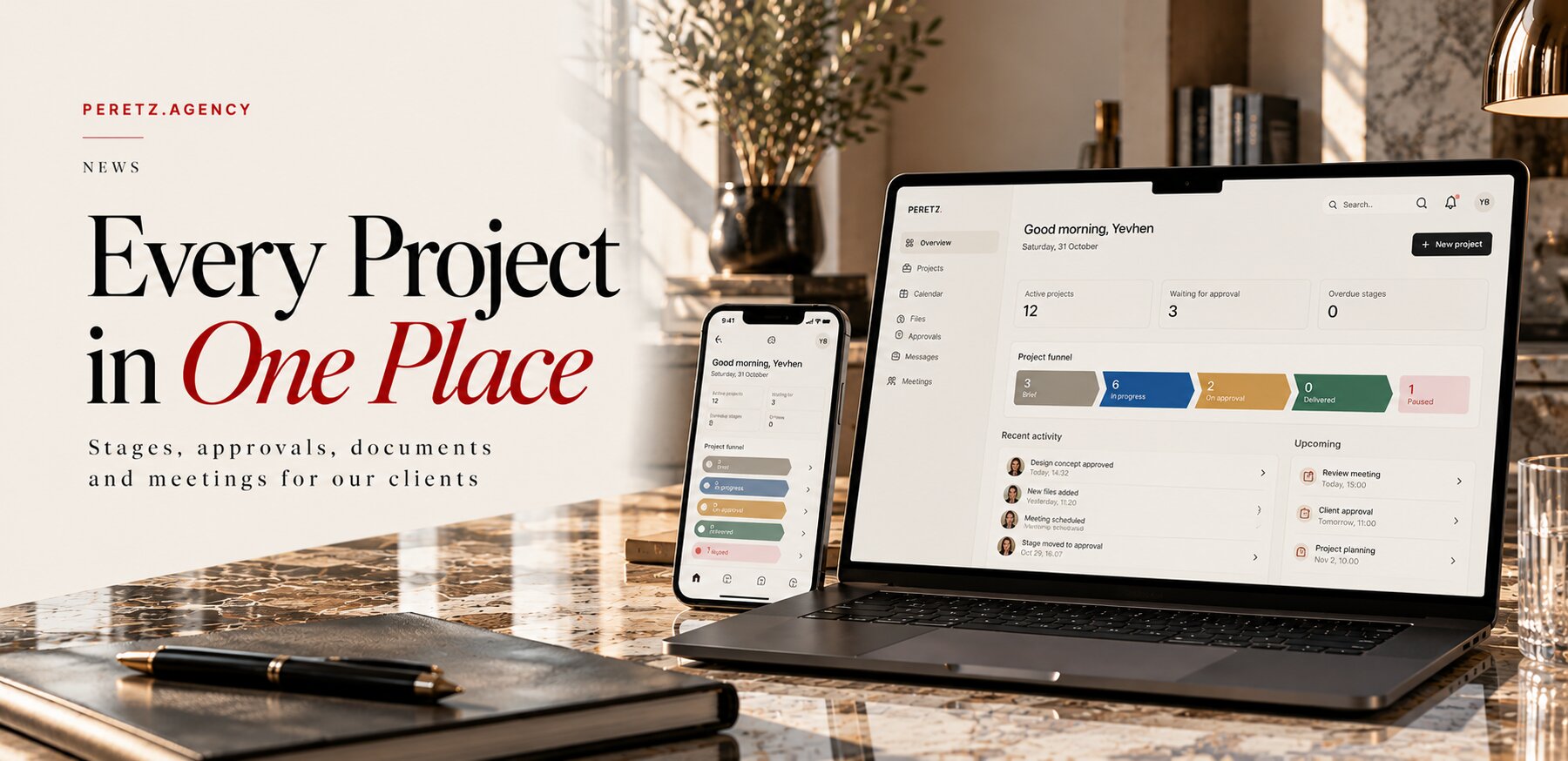
PERETZ Clients Now Have Their Own Portal