Website Design for Architecture Firms: What Clients Look For Before They Call




We design websites, and we also run an architecture and interior design studio of our own. This is what we learned from both sides about the sites that actually bring architecture projects.
SHORT ANSWER
What an Architecture Firm Website Has to Do
An architecture or interior design firm's website has to convince a client that this studio can handle a project like theirs, on a site and a budget like theirs, before the first call. In practice that means project pages that tell the story of each project rather than galleries of renders, floor plans and areas for the projects clients compare themselves with, clear information about licenses, insurance, timelines and fees, and real reviews. Most studio websites show beautiful images and very little else, and that is exactly why so many of them look the same.
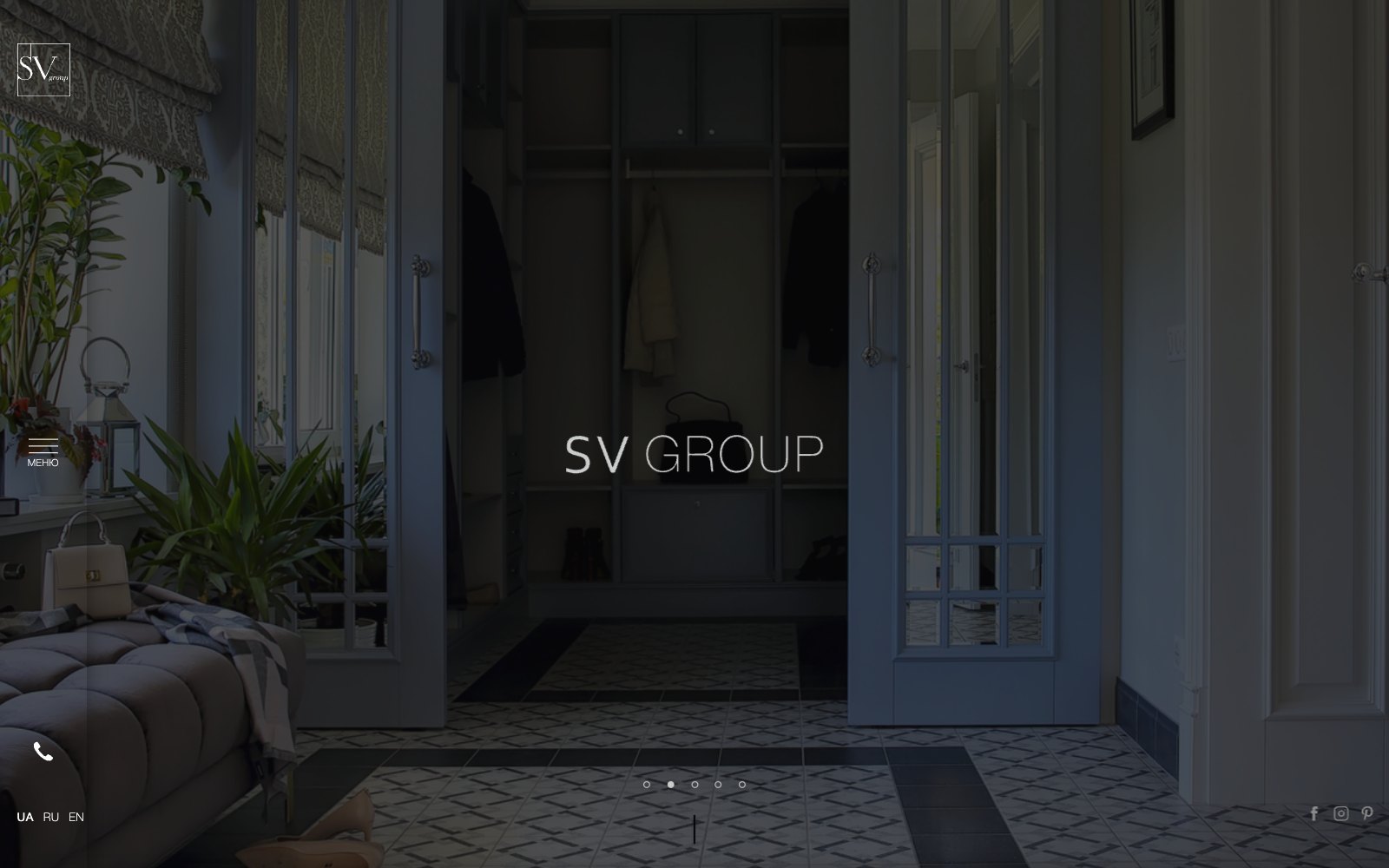
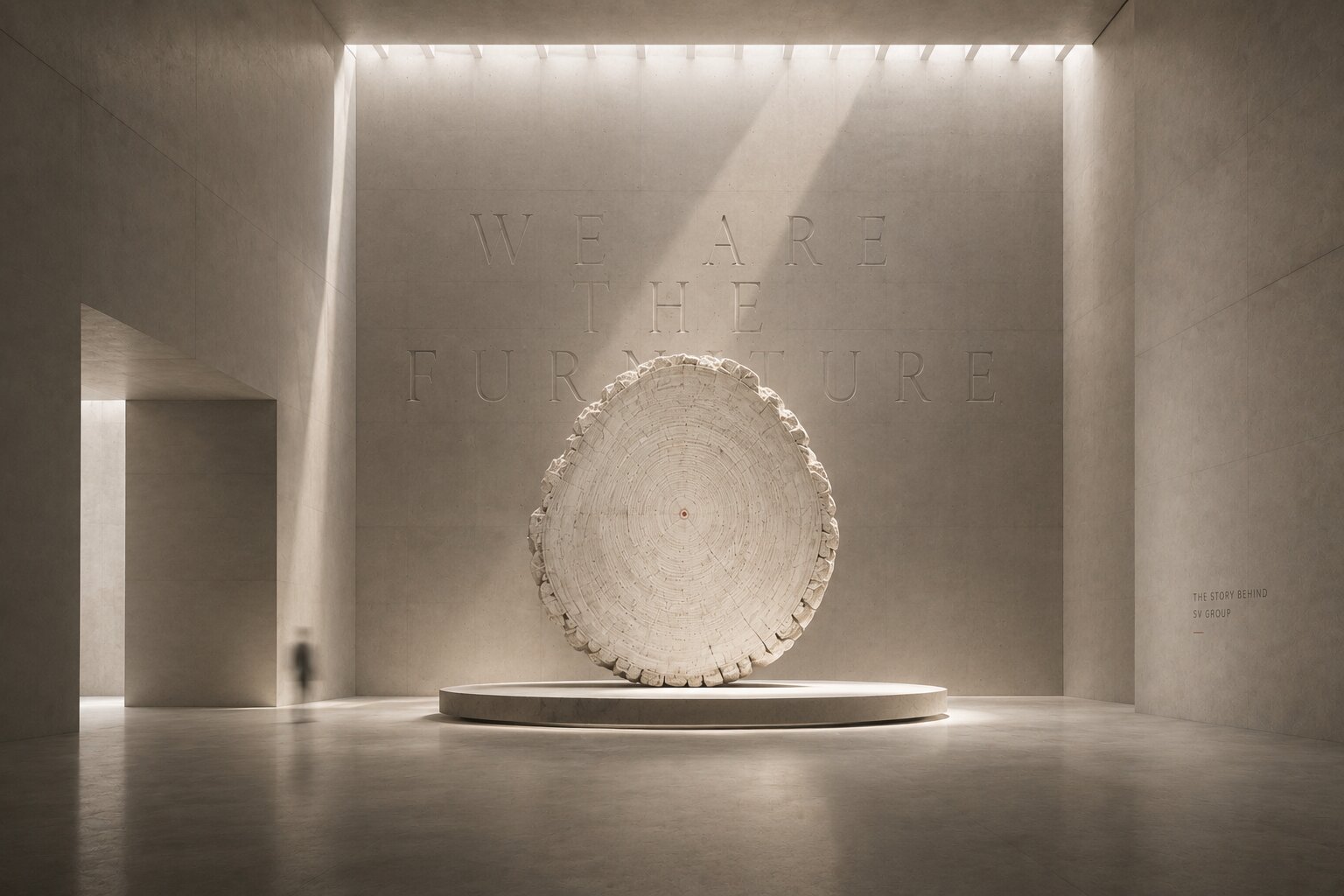
We see this from two sides. Peretz designs websites for architecture, interior and furniture companies, many of them in the luxury segment, among them The TSEKH, A10 and SV Group. Our own studio, DeZZign, designs interiors and buildings and has won projects through its own website for years; we described how its website was built and told the story behind SV Group on our blog.
WHAT CLIENTS READ
What Clients Look At on an Architect's Website
Watching how DeZZign's clients used the site taught us more than any analytics report. They spent a long time in the portfolio, and they went straight to the projects in their own niche. Someone planning a private house looked at private houses, stayed on the floor area of each one, studied the layouts and only then moved on to the renders.
After the portfolio, they read about the company and checked how many years the studio had been working. For a long time the site also had a partners section, and clients opened it and checked the partners one by one. When we moved to the United States, we stopped showing a long list of Ukrainian partners, because it means little to an American client. The habit behind it remains: a client spending hundreds of thousands of dollars wants proof that other serious people already trust this studio. In the US that proof comes mostly from reviews and word of mouth, which work here very strongly.
The projects that brought the most inquiries were private houses, clinic interiors and exteriors, with two clear pillars on the architecture side: the renovation of historic buildings in the city center and modern architecture. Each of those audiences looked for its own kind of project, which is why the portfolio has to be easy to filter by type.
PROJECT PAGES
An Architecture Portfolio Page Is a Story, Not a Gallery
On many studio websites a project is a title like "Project 05" or "PZ-01" and a set of renders. That tells the client almost nothing, and today it tells even less: AI produces convincing renders in minutes, so an image alone no longer proves that a studio can design and build. What proves it is context: what the task was, what stood in the way, what was decided and how it was built.
A good project page answers a few questions:
- what the client needed and what the site or building was like before;
- the constraints: budget, codes, structure, neighbours, timing;
- the key decisions, shown with plans and sections as well as renders;
- the area, the scope of work and who did what;
- the result, ideally with photographs of the finished project.
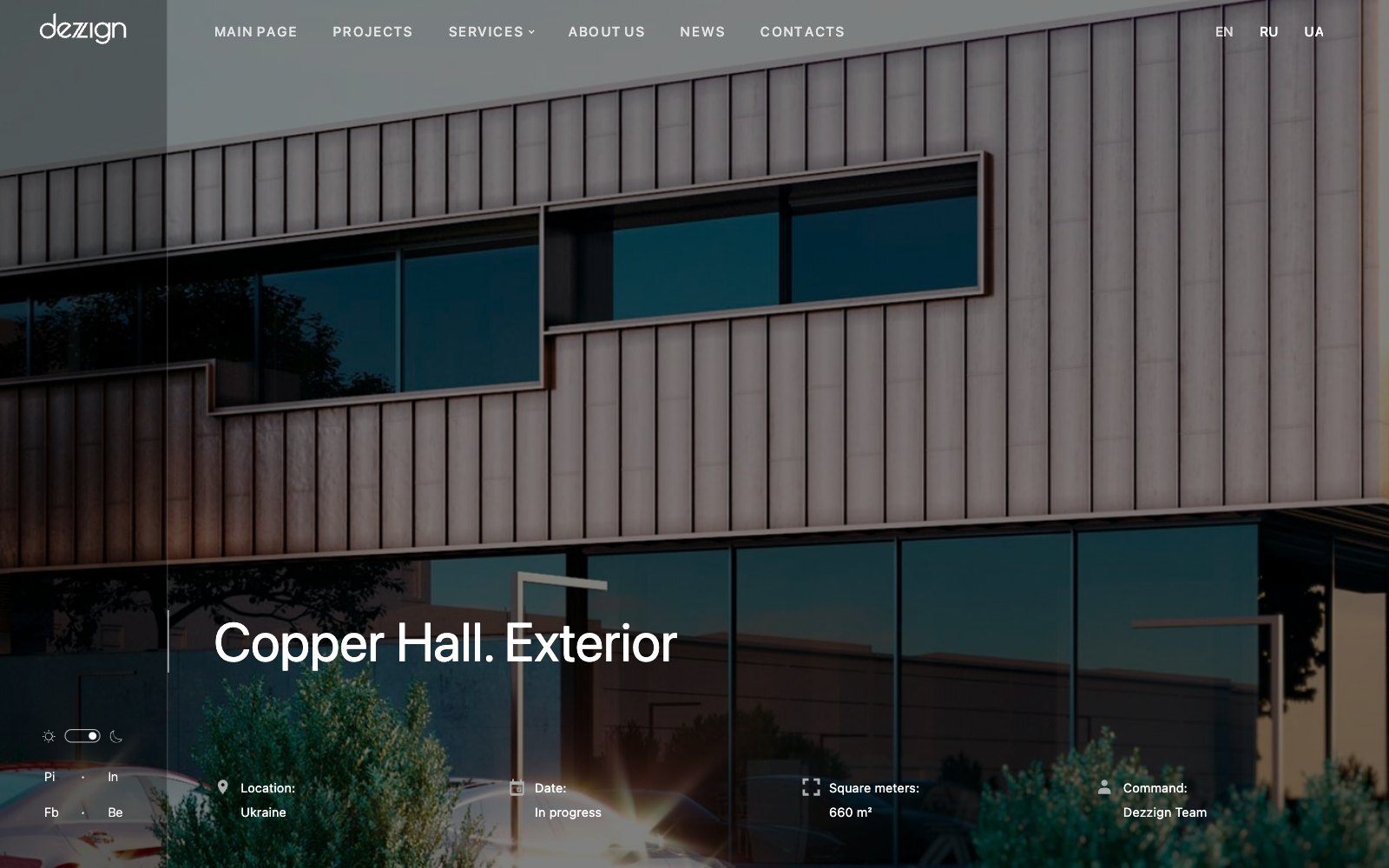
One of DeZZign's defining projects shows the difference. Copper Hall is the reconstruction of an abandoned 1990s building of 660 square meters in the center of Kharkiv into a techno-minimalist office for a strong IT team: a copper facade, a second floor cantilevered over the first, panoramic glazing, and an interior with a transformable event hall, a fitness zone and offices with living plant walls. The studio covered everything from the architecture and the interior design to the construction, and the building was completed in 2022. As a gallery it is a set of striking images. As a story, it shows a client that the studio can take a neglected building through every stage, which is exactly what someone with a similar building wants to know.
Renders are cheap now. Context is what proves you can build.
PAGES
What Pages an Architecture Firm Website Needs
The exact structure depends on the studio, but most architecture and interior design firms need the same core set of pages:
| Page | What it has to do |
|---|---|
| Portfolio with categories | Let a client find projects like theirs: private houses, interiors, commercial, renovation |
| Project pages | Tell the story of each project, with plans, area, scope and result |
| Services | Explain what the studio does itself and what it does with partners |
| Philosophy and styles | Show how the studio thinks and the styles it works in, so the right clients recognise themselves |
| About and team | Years in practice, the people behind the projects, licenses and insurance |
| Reviews | Real words from clients, which in the US often decide more than the portfolio |
| Prices | A range, a starting point or at least how the fee is formed |
| Markets and languages | A version for each market the studio works in, with its own language and search setup |
| Inquiry | A form that asks about project type, location, timing and budget |
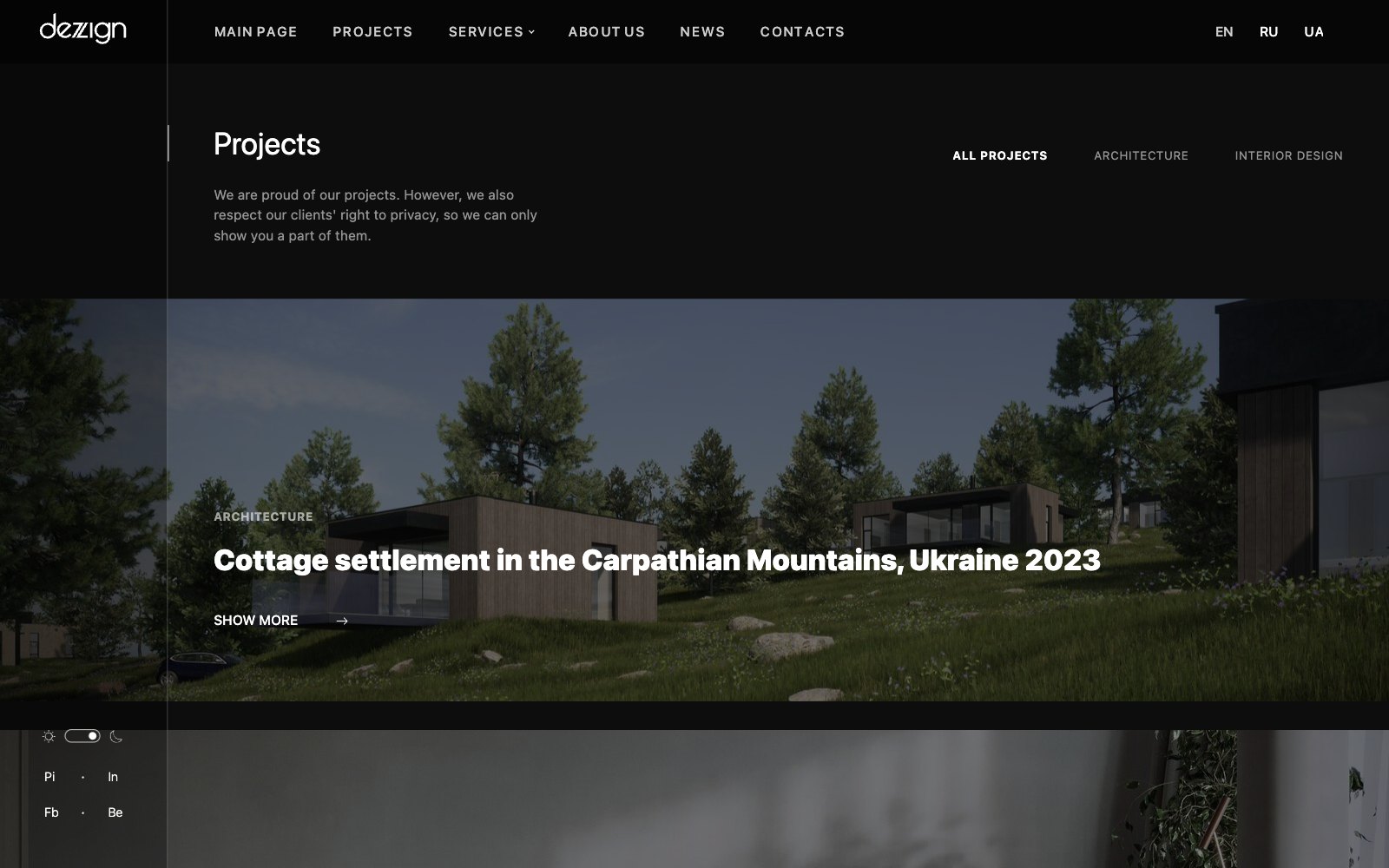
For a studio with many projects, search across the portfolio becomes a page in its own right. The philosophy page is the one most studios skip, and it is often the reason a client chooses one studio over another with similar projects.
CREDIBILITY
What American Clients Need to See
For a client in the United States, a few things matter as much as the design: licenses, permits, insurance, timelines and reviews. A site that answers these questions saves the first meeting for the project itself.
Honesty about licensing belongs on the site too. When we rebuilt DeZZign's website for the Seattle market, we were clear about what we do directly and what we do with partners. Our Ukrainian architectural licenses are not valid in the US, so interior design for homes and offices is the core of our work here. For facades and new buildings we work with licensed local contractors who review and sign the project, while our team designs it to local codes, whether the structure is timber framing or masonry. Saying this plainly builds more trust than hiding it, because an American client will ask about it anyway.
PRICE
Should Architects Show Prices on Their Website?
In our view, yes, at least as a range or a starting point. Even a luxury client wants a rough idea of the cost before calling: whether this is a project to finance or one that fits within the money already set aside. A price guide also filters out inquiries that would never become projects.
How to present it depends on the market. In Europe and Ukraine, design fees are often fixed per square meter. In the US, architectural fees are commonly set as a percentage of construction cost, typically 8 to 15 per cent for residential projects and sometimes more for complex remodels, while some architects charge by the square foot or by the hour. For the same house that leads to very different numbers. We see all of these models, and each studio presents its fees in its own way, but the site should always explain how the fee is formed and what it includes.
WHY THEY LOOK ALIKE
Why So Many Architecture Websites Look the Same
When we look at architecture and design firms' websites, most of them fall into a few groups. The largest is template sites on WordPress, Squarespace or even Shopify, which a studio usually does not need at all, with very little text because nobody had time to write it. A newer group is sites generated from a couple of prompts copied from Instagram: the same layout produced for thousands of people in different industries, published as raw HTML with no admin panel, and it shows. The third group goes the other way, with heavy experimental effects such as an old Three.js scene that loads slowly and breaks on a phone, often on an outdated server stack.
There are excellent studio websites too, and in our experience they are more often European than American. In Europe and in Eastern Europe custom work became the norm later, and a custom site never cost what it costs in the US. The goal is the same everywhere: a website that sets the studio apart rather than one that looks like its neighbours.
The common cause is the order of work. Many sites are built around a design idea and filled with content afterwards. A studio site has to start from what the studio actually has: its projects, plans, photographs, process and people.
IMAGES
Heavy Renders Kill the Portfolio
A typical studio portfolio is an endless column of high-resolution renders, one after another, at full size. On a phone that page takes long enough to load that the client leaves before seeing the second project, and search engines rank slow pages lower.
Quality and speed are not in conflict if the images are prepared properly: modern formats such as WebP or AVIF, several sizes so a phone never downloads a desktop file, loading images as the visitor scrolls, and a careful selection instead of every render the studio has. Each image also needs a real description in its alt text, such as "living room of a private house in Bellevue with a glass wall to the garden", because image search is a real source of visitors for architecture and interiors.
CUSTOM SITE
A Custom Site Is No Longer Out of Reach
For years a custom website seemed reserved for large firms, because custom development in the US typically costs $100 to $150 an hour. That has changed. With AI tools, a good designer and a good developer can build a custom site for a reasonable budget, and the result includes an admin panel designed for the studio rather than a long list of tabs nobody understands.
That admin panel matters more than it seems. If adding a new project or writing an article takes an architect an evening of struggling with the system, the site will stop being updated within months. A studio needs a few clear sections: projects with their plans and data, articles, reviews and inquiries, set up for the people who will actually use them.
If adding a project takes an evening, the site will stop growing.
MARKETS
Local Search, Markets and the Domain
Most clients find an architect or interior designer through local search: "interior designer Seattle", "residential architect near me". For that, the studio needs a Google Business Profile with real reviews in every market where it works, pages for its types of projects and the areas it serves, and structured data that tells search engines what the business is and where it operates.
The markets also decide the languages of the site, and each language version needs its own search setup, not just a translation. The domain matters here too. A .com or another neutral domain works best for a studio that works in several countries. DeZZign shows the other side of this: its .com.ua domain has years of authority and still brings orders, so we are not giving it up while we build the international version and its domain. Changing a domain with history is a project of its own, and it should be planned rather than done on a whim.
WRITING
Write About Your Decisions
Very few architecture firms write. Most publish only images, while clients, search engines and AI assistants all look for text: why a layout was chosen, how a historic facade was restored, what a renovation of an old building involves, how long permits take in a given city.
A studio that explains its decisions becomes visible in search for the questions clients actually ask, and it gives an AI assistant something to quote when a homeowner asks it for an interior designer in Seattle. It also shows the client how the studio thinks, which a render never does. We explain what matters for Google and AI answers in 2026 in SEO, AEO and GEO: What Matters for Google.
MISTAKES
Mistakes We See Most Often
- Projects without context: a name, a few renders and no task, area, plan or result.
- No text on the site: nothing for a client, a search engine or an AI assistant to read.
- A template the competitor also uses: the studio's own style disappears behind someone else's layout.
- Silence about licenses, insurance and fees: the questions American clients ask first go unanswered.
- An admin panel nobody can use: the site freezes on the day of launch.
- Effects over speed: heavy animation and an endless column of full-size renders that make the portfolio unusable on a phone.
- One version for every market: no language versions, no local search setup, no Google Business Profile where the clients are.
FAQ
Frequently Asked Questions
What should an architecture firm website include?
Project pages with the task, constraints, plans, area and result; information about the studio and its experience; licenses, insurance and how fees are formed; reviews; and a clear inquiry form. Text about the studio's decisions helps both clients and search.
Should architects show prices on their website?
It helps to show at least a range or a starting point and to explain how the fee is formed. In the US fees are often 8 to 15 per cent of construction cost for residential work, while in Europe they are often fixed per square meter.
What is the best website platform for an architecture firm?
The one that lets the studio show its projects properly and update them easily. WordPress and Squarespace are fine for a start; a custom site with an admin panel designed for the studio gives more control over the portfolio, speed and markets, and has become much more affordable.
Is a template website enough for an architecture firm?
It can work for a start, but most competitors use the same templates, and the studio's own style gets lost. A custom site with a simple admin panel has become much more affordable with AI tools.
Do AI-generated renders change what clients expect from a portfolio?
Yes. Renders alone prove less than before, so clients look for context: plans, construction stages, photographs of finished projects and the story behind each decision.
Sources
- DeZZign, architecture and interior design studio
- HomeAdvisor: How much does an architect cost
- Dribbble: Web development agency costs in 2026
Your studio's projects deserve a website that explains them? Start with a strategic session on what your clients need to see.
- Share
-

-

-

-

One notification a week with the new PERETZ articles. Nothing else.
Related Reading
-
01. 07. 2026
THE STORY BEHIND SV GROUP

-
21. 06. 2026
Website Design for Architecture Firms: Proof Beyond the Portfolio
-
15. 10. 2026
Multilingual Website Design: What Changes Beyond Translation
-
17. 08. 2026

SEO, AEO, and GEO in 2026: What Actually Matters to Google, and What Your Marketer's Report Should Show