The Internet Has Enough Content. Where Is the Meat?



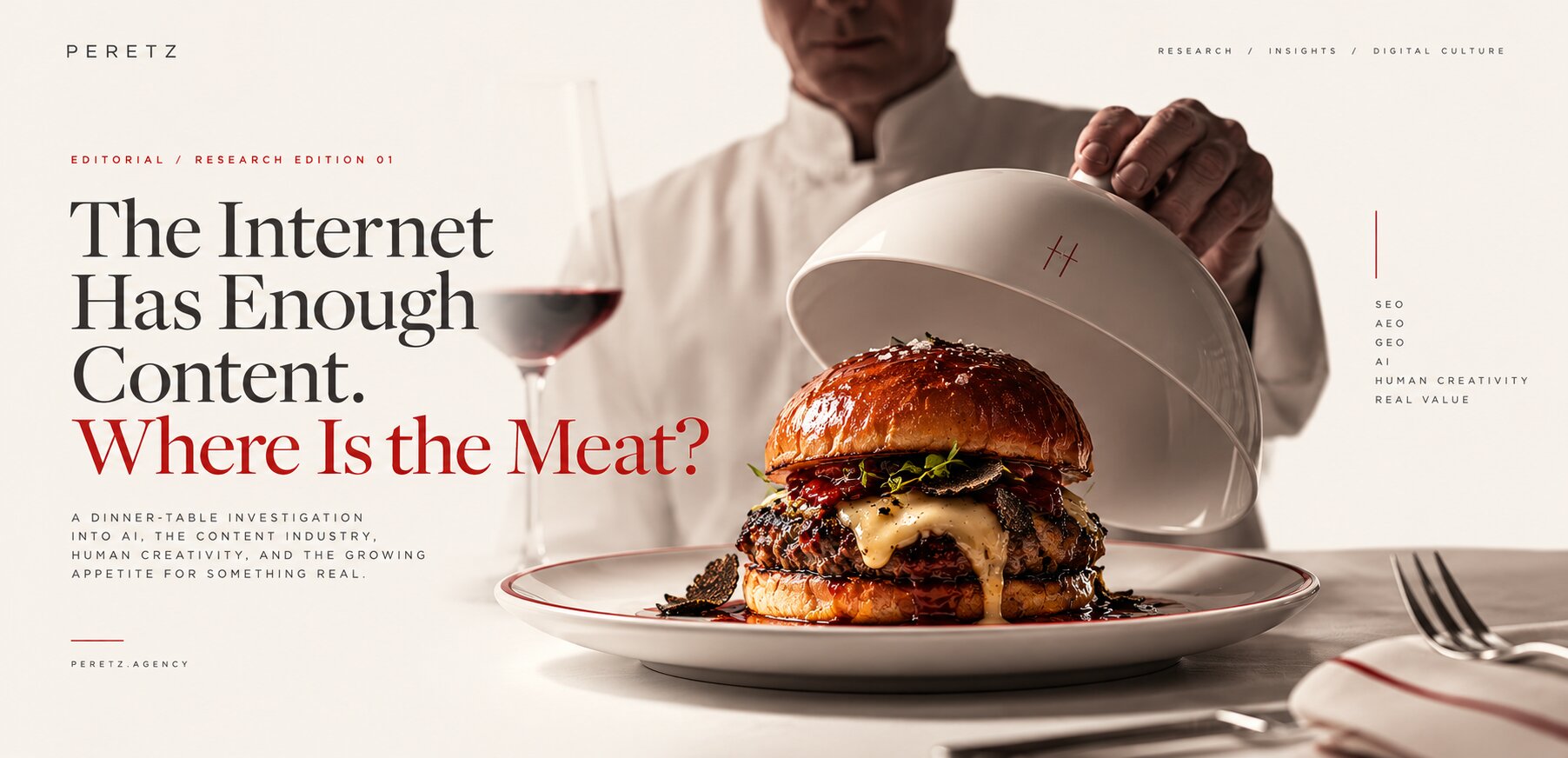
A dinner-table investigation into AI, the content industry, human creativity, and the growing appetite for something real. Peretz Editorial, Research Edition 01, October 30, 2026.
The kitchen is full. The tables are occupied. The machines are working around the clock. There is just one question: does anybody still remember what good food tastes like?
THE ARRIVAL
Everyone Has a Reservation
Welcome. Your table is ready.
The restaurant is doing exceptionally well. Reservations are fully booked, the kitchen works around the clock, and the menu has grown beyond anything the old regulars remember. Thousands of dishes, every variation, every dietary preference, every combination you could think of and several you would not.
Some guests came through Google. Others booked through ChatGPT, Perplexity or whichever discovery system opened its doors this season. They all want the same thing: to be seen.
The restaurant has an impressive reputation. The kitchen runs on the latest equipment, and the staff can now prepare more dishes in an hour than the previous generation managed in a week.
There is only one small problem. Nobody seems particularly interested in tasting anything.
Not because the food is bad. Some dishes are excellent, many are perfectly acceptable. But there is a growing feeling that we have seen this menu before. And perhaps we have.
THE KITCHEN
A Brief History of Making More
For two decades the digital economy ran on a simple idea: if people search for something, businesses should publish content that helps them find it. Search engine optimization made that measurable. We learned to research keywords, read search intent, structure pages, build internal links and plan content calendars. Businesses hired editorial teams, agencies, copywriters and SEO specialists. If a competitor published ten useful articles, you published twenty. Content became an industry of its own.
Then generative AI arrived, and the economics of production changed almost overnight. Research, drafting, translation, images, video and localization became dramatically cheaper. A small team could suddenly do what used to take a department.
We are not complaining. At Peretz we use AI every day, in research, design, development and writing, and we would not go back. But cheaper production has a predictable side effect. The competitive answer to cheap is more. One company publishes fifty articles, another publishes two hundred, someone connects AI agents to keyword research, drafting and publishing and lets the machine run through the night.
The kitchen gets bigger. The menu gets longer. Does the dinner get better?
Before we look at anyone else's plate, a word about our own kitchen. Peretz publishes several articles a week in three languages, and AI helps us research, draft and translate them. An agency with a busy blog complaining about too much content is an easy target, so here are the house rules we cook by. Every new piece needs two or three real stories from our work, an opinion somebody could argue with, and at least one number from practice. Every new piece gets a separate pass to strip out the patterns that make text read as generated.
We also keep track of which dishes people actually come back for, and the answer surprised us. In search, our practical how-to pieces on Meta Ads and social media bring most of the visitors. At the real table, in meetings with clients, it is the long essays that get quoted back to us: on technical debt, on preparing a business for sale, on AI search, on how a strategy session works. Traffic and trust are fed by different dishes.
THE TASTING
Tyler's Bullshit
In the 2022 film The Menu there is a guest named Tyler. He knows every technique, every term, every famous chef. He photographs the courses and explains each one to his date before the staff can. Then the chef hands him a jacket and invites him into the kitchen to cook, and he cannot. Everything he knew was about food, and none of it was food.
It is an uncomfortable mirror for parts of today's content industry. We can produce material with every expected ingredient:
- Correct semantic structure and carefully researched keywords.
- The right search intent, structured headings and entity relationships.
- Supporting references, optimized metadata and clean answers for generative search.
And after all of that, what is left on the plate? An original observation? A real experience? A piece of information that did not exist before? A conclusion you could not find in twenty other articles? Or another technically competent version of something that already exists?
This is not an argument against AI-generated content. AI can produce excellent work, and human writers can be just as superficial and repetitive. The line does not run between a machine and a person. It runs between producing something that looks complete and producing something that adds value.
A perfectly presented dish still disappoints if there is nothing on the plate.
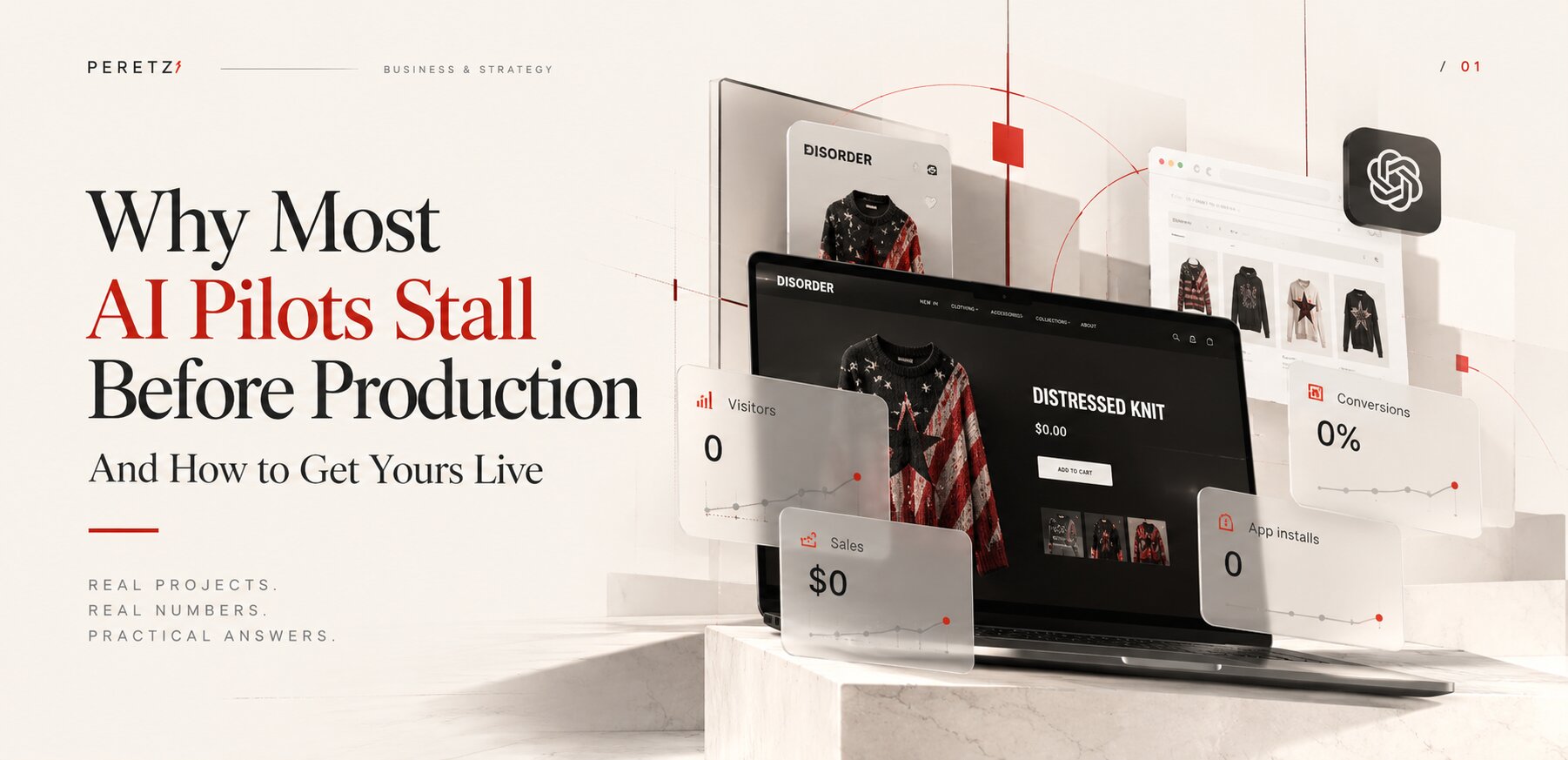
There is a newer kind of Tyler, too: the AI critic who loves every dish. We recently launched an MVP Review service, and in its first six weeks four founders came to us, each convinced they had an idea fresh enough to patent. Several brought screenshots of an AI chat that had "researched the market", found nothing similar and called the idea excellent. In all four cases similar products were already live and doing fine. We wrote about it in Why Most AI Pilots Stall Before Production.
A model that praises every dish is not a critic. It is a mirror.
THE CHEF'S PHILOSOPHY
We Built the Machines. Then We Started Cooking for Them
There is something ironic about the way search has evolved. We built search engines to help people find information. Businesses learned to shape information for search engines. Then the engines learned to read context, intent and meaning. Now we are learning to write so that large language models can extract, summarize and cite us.
The vocabulary moved on. Keywords became entities, topical authority, semantic relevance and structured data, and SEO grew two cousins, AEO and GEO. The temptation stayed exactly where it was: cook for whoever hands out the attention. AI simply made that easier to do at scale.
Our own reading is that keywords stopped working the way people were used to, and the work moved to meaning: what a page actually says, who stands behind it, and whether it holds up when somebody checks. That is good news for anyone with real experience to share, and bad news for anyone whose only asset was volume.
The people in the kitchen are part of this system as well. Writers, designers, marketers, SEO specialists and owners are expected to keep up with an ever faster pace: more research, more channels, more formats, more tests. AI was supposed to give us time back. In some workflows it does. In competitive ones, the time saved quickly becomes an expectation to produce even more.
On the other side of the pass sits the audience, served more articles, videos, summaries and generated images every day than any person can eat. We should be careful with the popular claim that everyone is tired of AI content; there is no solid universal evidence for it. A more honest version is narrower: in a room this crowded, the distinctive dish is easier to notice.
Perhaps the problem is not that we have too much information. Perhaps we have too little worth remembering.
THE UNEXPECTED DISH
When Prada Decides to Draw
And then something unexpected happens. In a year when almost anything can be generated, some of the most recognizable brands in the world choose a far more labor-intensive route, and make the route part of the story. Let's look at the tables they set.
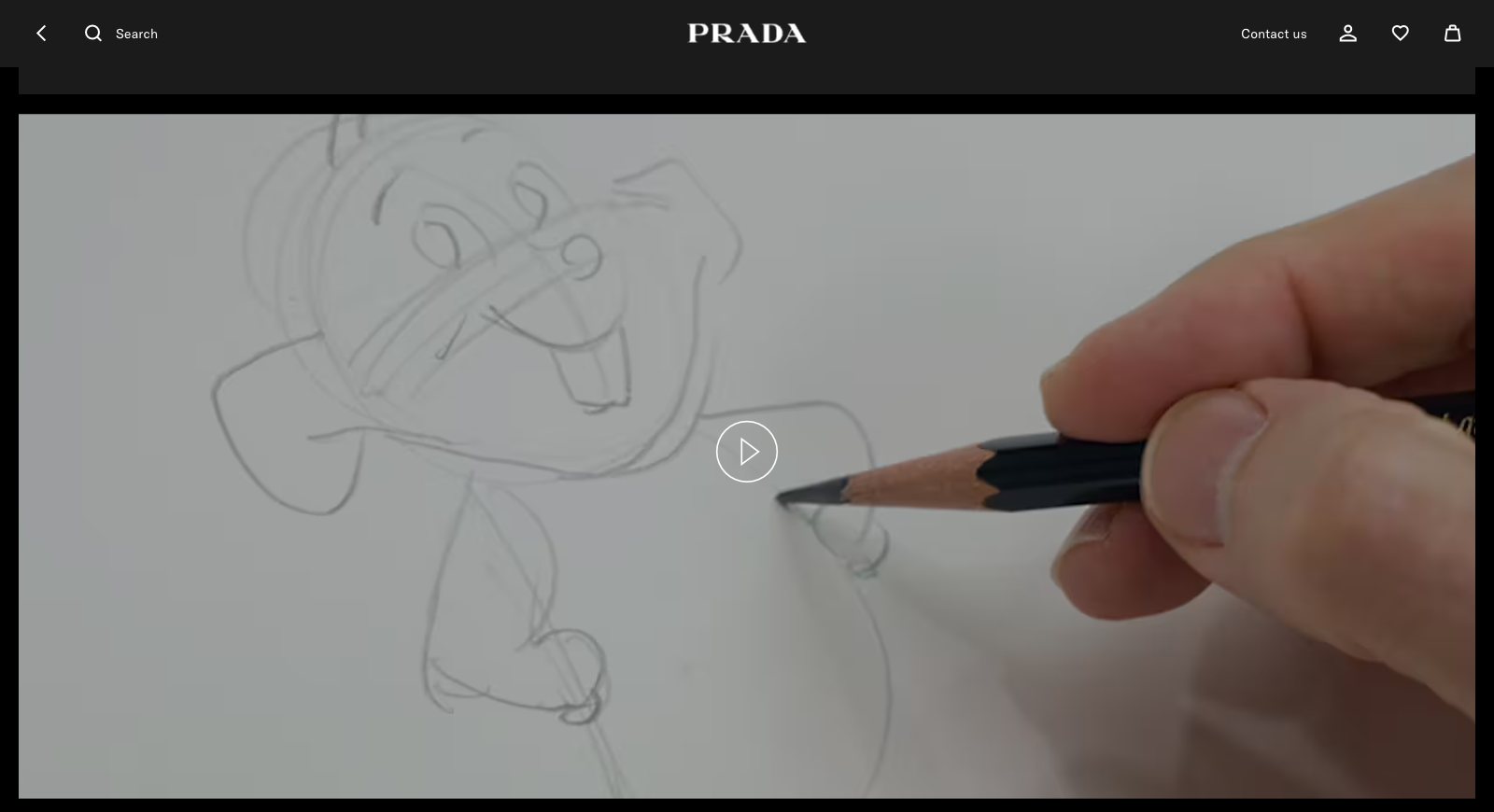
Prada. The Holiday 2026 campaign, Drawing Prada: Animated by Hand, combines live-action photography by Glen Luchford with traditional hand-drawn animation led by John Pomeroy, the animator behind An American Tail and The Land Before Time. Sadie Sink, Maya Hawke, Chen Haoyu, Luther Ford and Kelvin Harrison Jr. appear in a winter fantasy among illustrated forest creatures.

What matters is not that it looks like an old Disney film. It is the decision to use the actual craft: individual drawings, character work, movement, light and composition, woven into live photography. Prada could have reached a similar look with digital production. It chose a process where the human hand is essential, and then showed that hand: the accompanying film follows an artist drawing on paper. The audience is invited to look at the campaign and at the work behind it.
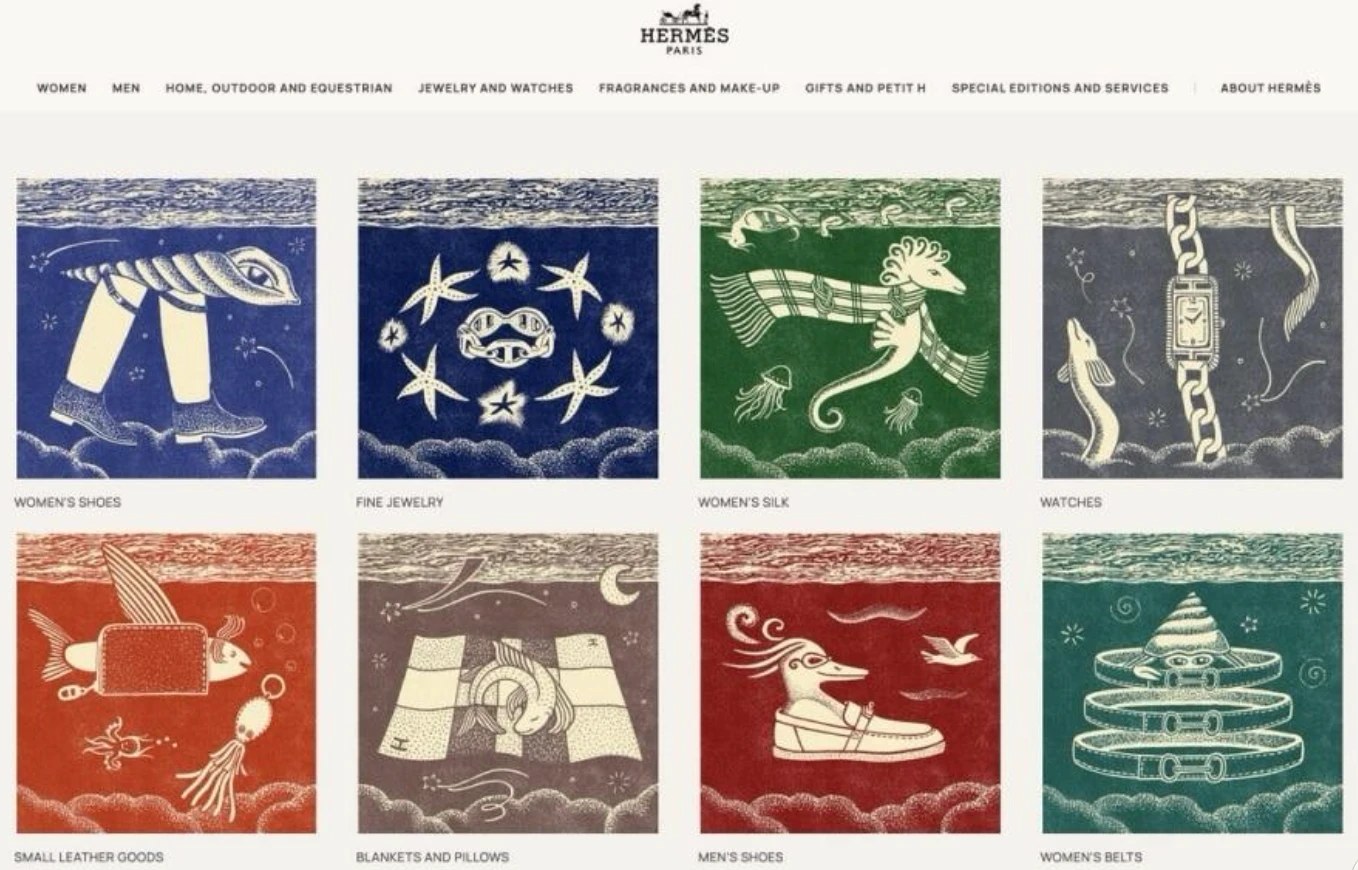
Hermès. In January 2026, for two weeks, Hermès replaced its usual homepage with twelve hand-drawn illustrations by the French artist Linda Merad, one for each section of the site, tied to the house's marine theme for the year. Design press read it as a quiet statement against the generated look. It was a temporary takeover rather than a permanent redesign, and it still made a point worth remembering: an illustration can live inside the interface itself, not only in an advertisement placed in front of it. A campaign holds attention for seconds. An illustrated digital environment shapes the whole experience of exploring a brand.
H&M. H&M is the useful counterpoint, because it does both. In 2025 it announced AI-generated digital twins of its models and used them in campaign imagery. In September 2026 it returned to London Fashion Week with a show directed with Nick Knight and SHOWstudio, where models walked through interactive digital visuals, among them illustrations by the artist Cliff Warner. One brand, two kitchens, each chosen for a different job. The interesting question is not which tool wins. It is why a brand picks a particular tool for a particular experience.
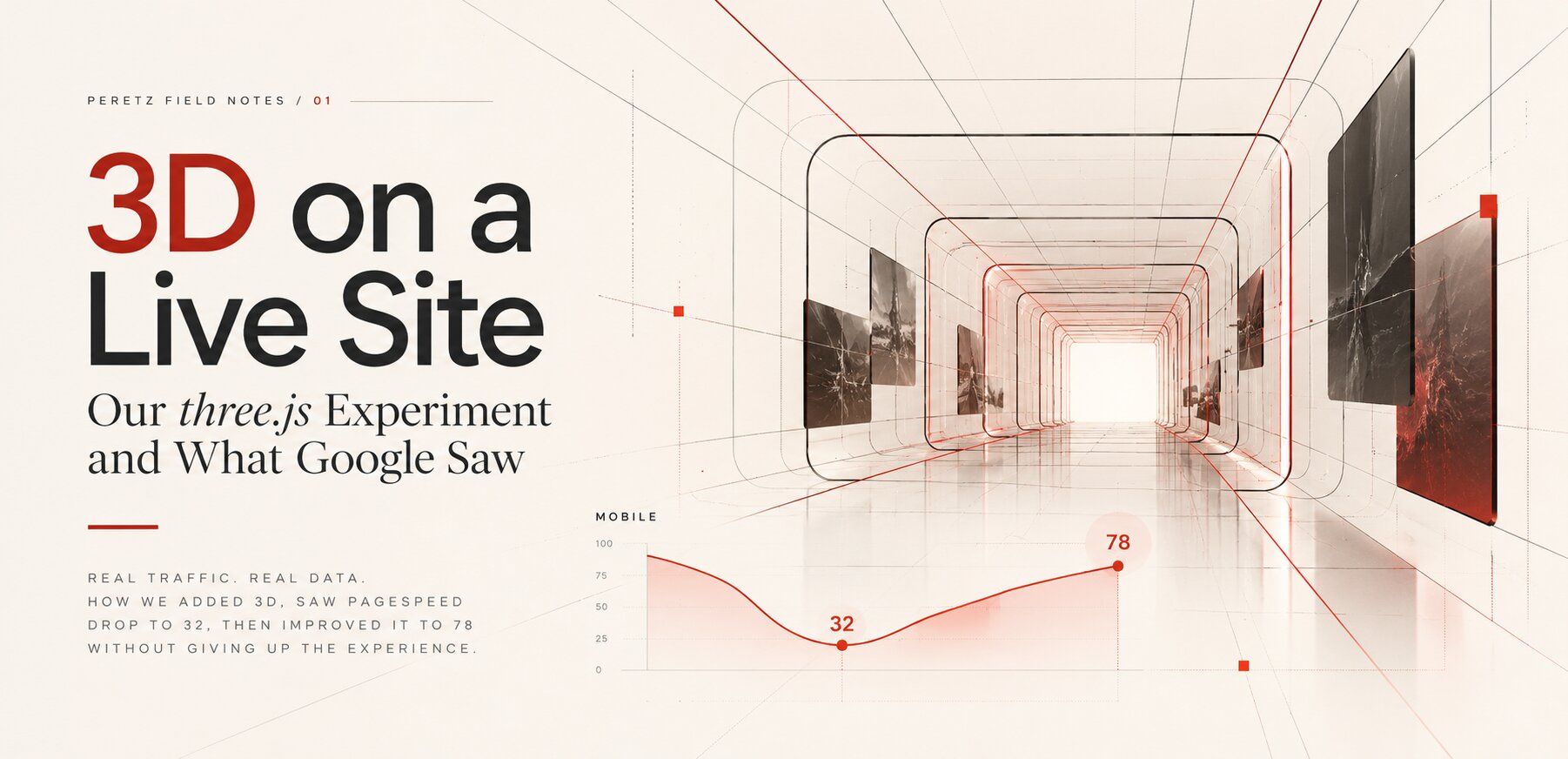
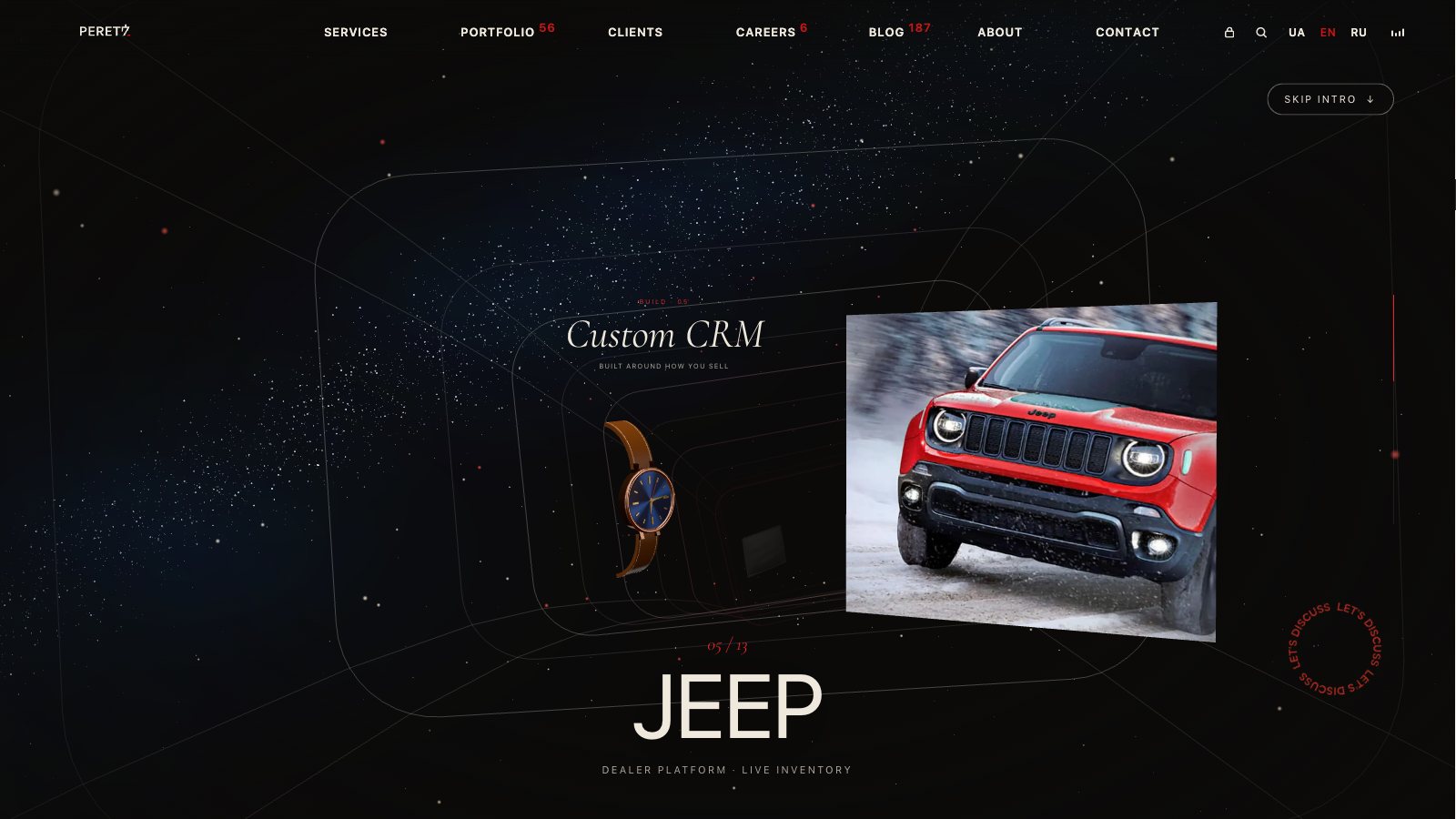
And one smaller table: ours. In October 2026 we put a hand-built three.js scene on the first screen of our own website, a tunnel of our projects, and spread custom 3D across the site, from a small city diorama on the contact page to a toy rocket on the careers page. A template would have been faster and lighter. The craft had a price, and we paid it in public: mobile PageSpeed fell to 32 and our average position in Search Console slid. We kept the 3D, fixed what was actually broken and wrote up every step in 3D on a Live Site: Our three.js Experiment.
Disorder, a concept store we built for an invented punk and rave clothing brand, taught us the other half. AI built three working versions of it in three days from three different prompts. Only one worked like a store, the one built on a human brief: a day of research into how the strongest stores in that niche handle filters and product pages, and a day of decisions about why. The machine cooked fast. Choosing the dish was still our job.

THE REAL COST
Why Choose the More Expensive Way?
There is an obvious economic question. Why invest in a long, labor-intensive creative process when AI can produce dozens of visual options for a fraction of the cost?
For a brand with real resources the answer is fairly simple: production cost is only one line on the bill. The finished work still has to compete for attention, and attention is not shared out evenly. A technically perfect image is easy to make and just as easy to forget.
An artist's work, or a team's genuinely original idea, brings things a generic asset rarely does. A recognizable visual signature and a point of view. A story behind the production that press and audiences can retell. Behind-the-scenes material, and a reason for editors to write about the project. A visual language the brand can actually own, in a feed full of images that could belong to anyone.
There is also what we would call the value of visible effort. When people can see the paper, the pencil lines and the individual decisions, the making becomes part of the experience. The brand communicates not only what it made, but how. Luxury has always sold this, because craftsmanship is part of what the customer pays for. It is not limited to luxury. Every business can benefit from having something to show that nobody else has. This is how we have always thought about design at Peretz: everything starts with design crafted so carefully that you do not notice it, you simply find what you came for.
And every business can also waste money on something expensive that nobody remembers. Human effort guarantees nothing by itself. The idea still matters, the execution still matters, and so does the audience it is cooked for. But in a room filling up with interchangeable dishes, originality may become one of the few reasons left to look up from the plate.
THE BILL
SEO, AEO, GEO. Who Is Actually Eating?
Now the part that interests us most as a digital agency. Does genuinely original content do better in search and in AI answers? It is an attractive hypothesis, so it is worth separating what we know, what the research suggests and what we still have to test.
What Google actually says. Google does not ban AI-generated content. Its guidance says generative AI can be useful for research and for structuring original work. The problem it names is producing large numbers of pages without adding value, mainly to manipulate rankings, which its spam policies call scaled content abuse. Its people-first content guidance asks publishers directly whether a page offers original information, reporting, research or analysis, and whether it adds something beyond what is already out there. For its AI features in Search, Google says the usual SEO fundamentals still apply and recommends focusing on unique, valuable content instead of special tricks. In other words, the official advice is not to stop using AI. It is to stop confusing the ability to produce content with the ability to produce something useful.
What the data suggests. Two observational studies are quoted often, and both deserve their caveats.
| Study | What it found | Caveats |
|---|---|---|
| Semrush, April 2026 | Among 42,000 blog posts ranking for 20,000 keywords, the first position was held by content classified as human-written about 80% of the time, and by purely AI-generated content about 9 to 10% of the time | Classified with an AI detector (GPTZero); data collected in November 2025; correlation, not cause |
| Graphite, October 2025 | 86% of articles ranking in Google were classified as human-written; so were 82% of articles cited by ChatGPT and by Perplexity | Detector-based; did not evaluate AI-assisted content with heavy human editing |
Neither study proves that human authorship causes better rankings. Detectors read the finished text, not the process, and the page classified as human may simply be the one with more original substance. Both are consistent with Google's own message: the pages that win tend to have something on the plate.
What about GEO? The foundations of visibility have not suddenly become irrelevant. A useful, technically accessible, distinctive source still matters. But we should not confuse that with proof that a hand-drawn campaign or an illustrated website will automatically earn more AI citations. We currently have no reliable evidence for that direct link, and we do not intend to invent one.
THE AFTERTASTE
Attention Is Not the Same as Revenue
There is one more distinction worth making. The campaigns we have been discussing clearly won attention: design publications, marketing media, creative communities and fashion audiences talked about them. Attention, though, is not a sale: a campaign can collect millions of views and move very little, while another reaches a small audience and shifts real purchasing decisions. Without comparable first-party data, nobody outside these companies can honestly say which of them paid off, and we will not pretend otherwise.
For this research we separate three outcomes:
| Outcome | What it looks like |
|---|---|
| Attention | Views, reach, shares, saves, comments, editorial coverage |
| Engagement | Time spent, repeat visits, depth of exploration, product discovery |
| Commercial value | Qualified leads, product enquiries, add-to-cart, purchases, revenue that can be attributed |
Our current observation is that distinctive creative projects are powerful attention assets. Their commercial impact needs a separate investigation, case by case.
THE CHEESEBURGER
Back to Something Real
There is a reason we built this story around The Menu. After all the elaborate courses, the philosophy, the carefully staged experience and the rising dread, Margot asks for something remarkably simple. A cheeseburger. Not another concept, not another explanation, not another chance for the kitchen to show how sophisticated it has become. Just something she actually wants to eat.
And the chef makes it, carefully and with visible pleasure.
There is something beautiful in that scene. It reminds us that a restaurant does not exist to demonstrate how complicated its kitchen is. It exists to feed people. The same may be true of the internet. Content does not exist to prove how efficiently a business can produce information. It exists to give people something worth their attention: something useful, something unexpected, something that makes them think, feel, learn or simply enjoy the time spent.
For a business website the cheeseburger is usually less glamorous than a Prada film. A straight answer to the question the client actually came with. Real work, shown honestly, including what went wrong. A real price. A founder's opinion, signed. Sometimes that takes advanced technology, sometimes a person with a pencil and a very good idea, often both.
One confession belongs here. The first draft of this essay was cooked by a machine. Our founder gave it the idea, and it came back with everything a dish is supposed to have: the menu, the courses, the examples, the caveats. It looked finished. It had nothing of ours on the plate. This version is the one we cooked ourselves.
AI did not take our work. It took away our excuse to be boring.
THE KITCHEN REMAINS OPEN
An Ongoing Investigation by Peretz
We are not against AI: we use it, build with it and keep exploring what it can do. It makes creative production more accessible, speeds up research, improves workflows and lets businesses do things that used to be too slow or too expensive.
But we also see a growing tension between the ability to produce more and the need to make something worth experiencing. That tension is what we want to investigate. We are watching brands that choose distinctive, human-led creative work alongside companies exploring generative production. We are looking at their digital experiences, the attention they attract and the way their work travels across the internet. And we are testing how original content, first-hand expertise, distinctive visual experiences and genuinely useful information relate to SEO, AEO and GEO, starting with our own site.
Not every observation will become a conclusion, and not every hypothesis will survive. Some experiments will contradict what we expect, which is exactly why this is an ongoing research project and not a finished manifesto. We will publish new findings, comparisons and experiments as the evidence develops.
The question is no longer whether AI will keep changing how content is made; it certainly will. The more interesting question is what businesses will choose to make once the cost of producing almost anything is no longer the main limit.
This essay is also a second film at the same table. In the summer we wrote Everyone Wants the Prestige. We Study the Turn., about the part of the trick the audience never sees. The Menu tells the same story from the dining room: everyone wants the plated dish, and we keep walking back into the kitchen to see how it was made.
The kitchen is still open. Perhaps it is time to put something worth eating on the table.
RESEARCH NOTES
Research Edition 01, October 30, 2026
This first edition sets out the observations, examples and hypotheses that will guide the investigation.
What we currently observe:
- AI has sharply lowered the cost and time of producing most kinds of digital content.
- Some major brands now invest in visibly handmade, artist-led work and make the process part of the story.
- These projects attract editorial attention and wider cultural discussion.
- Search engines do not penalize content simply because AI helped produce it, and they ask for original value.
- Observational studies find human-classified content heavily represented in top rankings and in AI citations.
What remains unproven:
- Whether artist-led campaigns consistently win more attention than comparable AI-assisted ones.
- Whether that attention turns into engagement or commercial results.
- Whether original creative assets improve organic visibility by themselves.
- Whether distinctive human-led content is more likely to be cited by AI answer engines, and whether any of these effects last.
What comes next: a wider sample of brands, more documented campaigns, comparisons between creative approaches, and practical experiments on our own site that test the link between originality, attention and visibility. This page will be updated as the evidence develops.
Sources
- Google Search Central: Creating helpful, reliable, people-first content
- Google Search Central: Spam policies for Google web search (scaled content abuse)
- Google Search Central: Top ways to ensure your content performs well in Google's AI experiences on Search
- Semrush: Does AI content rank in search? A data study
- Graphite: How does AI-generated content perform in search and answer engines?
- Prada: Holiday 2026 campaign
- The Impression: Prada Holiday 2026 ad campaign
- Domus: Hermès launches a different kind of website
- It's Nice That: Linda Merad's illustration project for Hermès
- FashionUnited: H&M to create AI twins of models
- TheIndustry.fashion: H&M unites fashion and technology at LFW SS27
Is your website serving content, or something worth tasting? Let's look at what only your business can put on the plate.
- Share
-

-

-

-

One notification a week with the new PERETZ articles. Nothing else.