Businesses in ChatGPT: What the New Business Hub Shows and What It Does Not

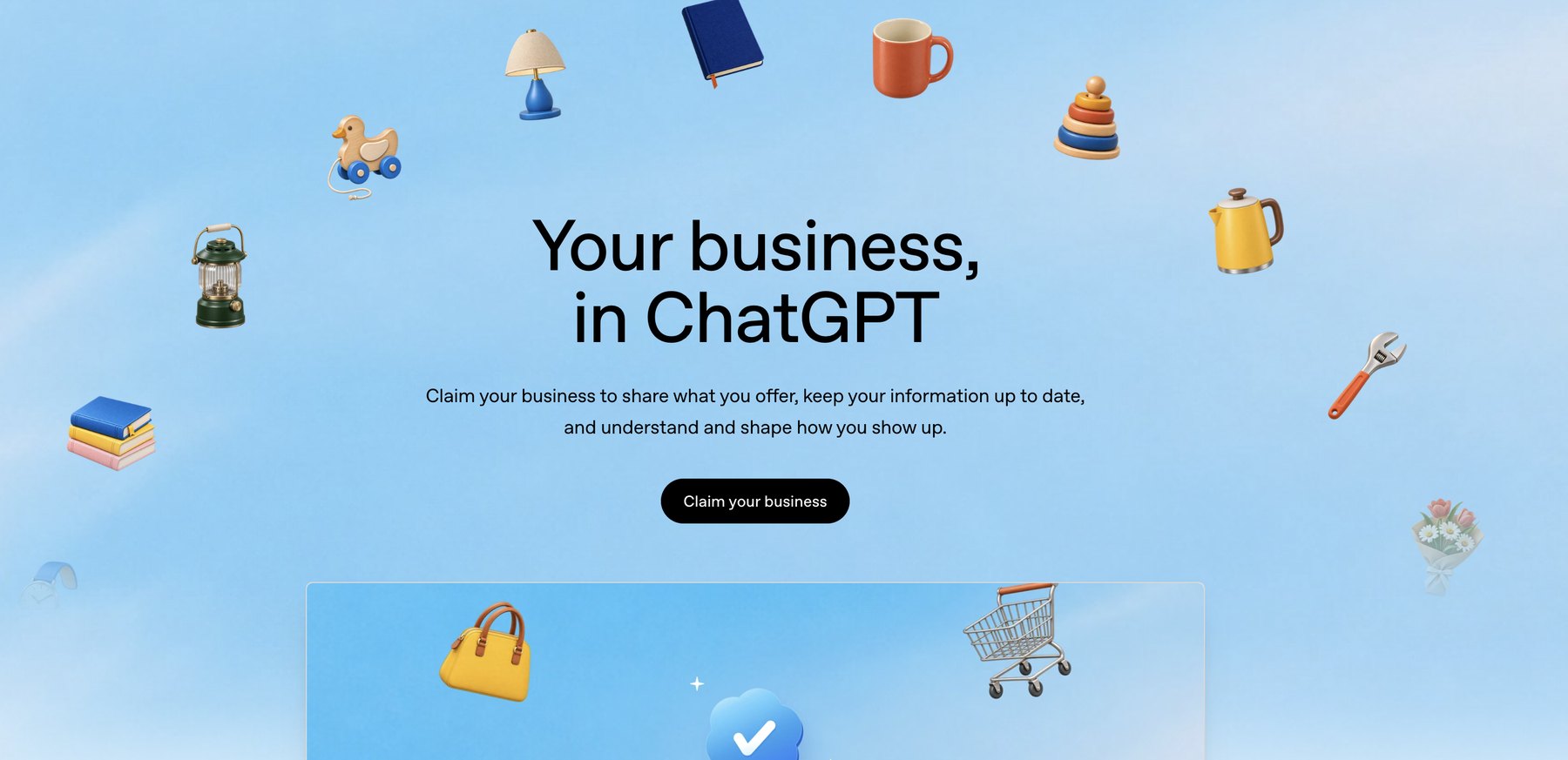
On November 10, 2026 OpenAI opened Businesses in ChatGPT in beta: a place to claim your company, keep its details current and see how ChatGPT talks about it. It is useful, with four caveats worth knowing first.
In short
What OpenAI launched
OpenAI has opened Businesses in ChatGPT, for now in beta. Its centre is Business Hub (chatgpt.com/business-hub), where a company can claim its listing, edit its website, description, logo and policies, connect a product feed and see insights on how people meet it in ChatGPT. Eligible US online stores and online services can also launch a Business Agent: an AI assistant that answers a customer's questions about the company right inside ChatGPT.
The SEO community quickly called it ChatGPT's answer to Google Business Profile, and the comparison holds. Until now the visibility of a company in AI answers could only be measured from the outside, with tools that run prompts and count mentions. Now the platform itself starts to share part of that data. Before you sign up, though, four details change what you can expect from it.
Verification
Claiming is not verifying
A claim is confirmed through the main business phone number (a text or an automated call) or a DNS record on your domain, and early reviews also mention a business email and a Shopify store. An approved claim only puts the company into Business Hub. To publish changes, connect a feed, see insights or create an agent, the person who manages the profile also passes identity verification with Persona, which may ask for a government ID, registration details and proof that they represent the business. The blue check, early reviews say, comes after Persona, not after the claim.
So plan it as an owner's task. An agency or a contractor can prepare the DNS record and the texts for the profile, but the identity check is done by the person who represents the company.
Insights
Not a Search Console yet
The insights show how often ChatGPT mentions the business, how many clicks go to its website and the discovery topics: the common themes of conversations in which the site is cited. OpenAI does not share prompts or chats with businesses, including the chats with the company's own agent. The tooltip on clicks says it plainly: a click does not confirm a website visit or a conversion. Early users also report that the data covers the last 28 days and appears only after activity passes a threshold, so an empty metric is not the same as zero.
Mentions and clicks, yes. The questions people actually asked, no.
That is a real step, and still far from a search console. Tools that analyse prompts and share of voice keep their job for now. On our own site we log every visit of AI crawlers next to the Search Console data, and Business Hub adds the part we could not see before: what happens inside the answer.
Agents
Agents: US only, and a door to ads
Business Agents open first to eligible ecommerce and online service businesses in the United States, and verification alone does not make a company eligible. OpenAI reviews each agent before publication and again after every update. An agent must say that it is an AI, keep prices accurate and avoid pressure; it cannot complete purchases or bookings, and for now buyers are sent to the company's own website.
The same agent can be sponsored as the landing point of ChatGPT Ads. Reports say that paying does not change how often ChatGPT recommends a business, and OpenAI says that claiming does not guarantee higher placement or sales. A claimed profile, an agent and advertising are three separate things, and none of them buys a recommendation.
What to do
What we suggest
For a company in the United States the first step is clear: claim the profile, check the website, description and category, and watch the insights for a month. For an online store a clean product feed now matters even more, because the feed makes products available to ChatGPT, although it does not decide what gets recommended. An agent makes sense when a business already has accurate product data and answers a customer can trust without a human.
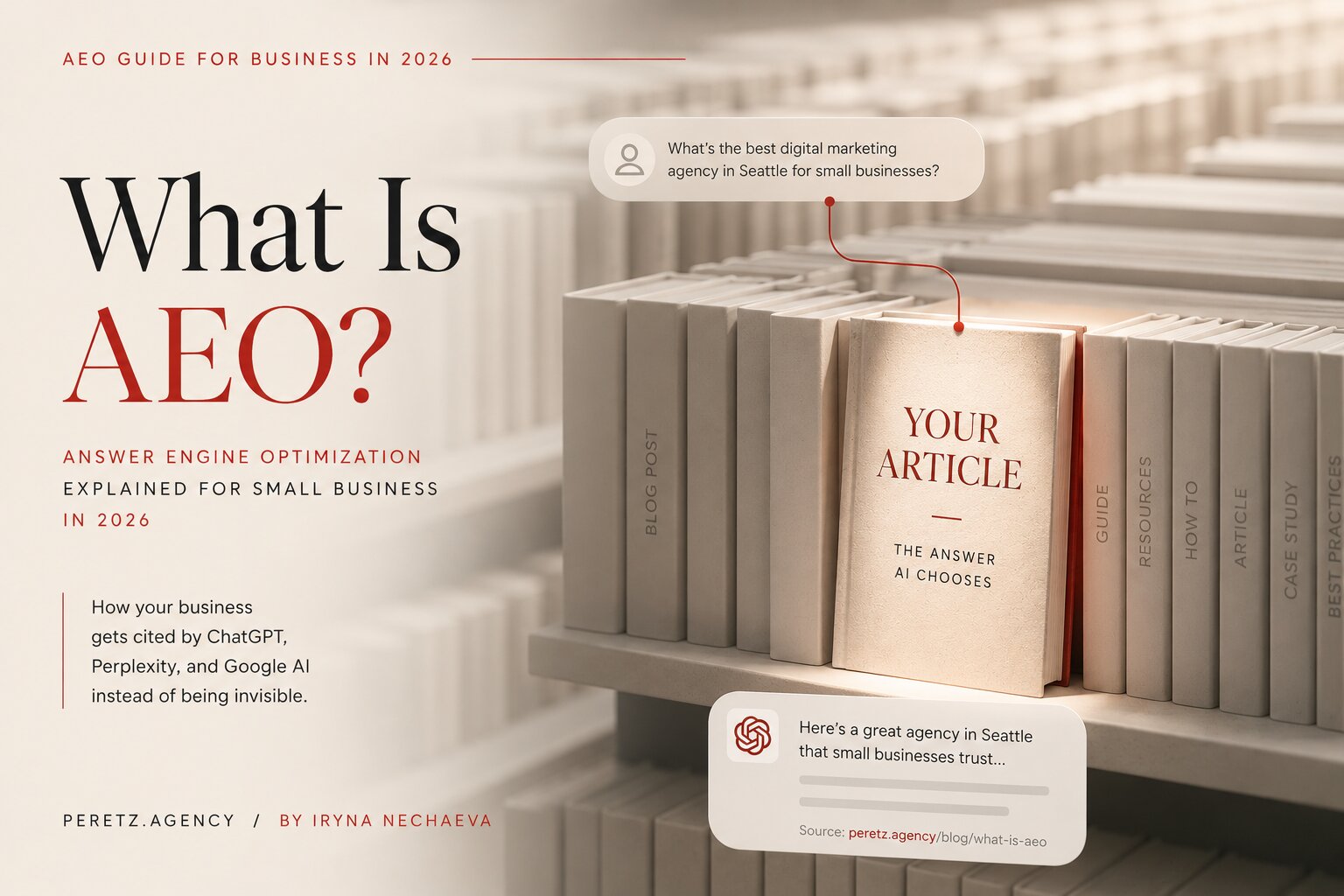
ChatGPT still builds its answers from what it can read and cite: the pages, the articles, the structured data on the website. How to count a conversion when a customer chooses without visiting the site is an open question. For services with a long decision, such as development or design, the website remains the place where trust is built. We wrote about this shift in growth when organic search shrinks, about the basics in what AEO is, and about what an AI agent sees in a store in our test of US stores.
FAQ
Questions about Businesses in ChatGPT
Is Business Hub available outside the United States?
According to early reviews, claiming is open to eligible businesses wherever ChatGPT is available, while Business Agents start only in the US. A standard product feed upload also targets the US for now.
Will claiming my business make ChatGPT recommend it more often?
No. OpenAI says that claiming does not guarantee higher placement or sales, and ChatGPT shows information about a business whether it is claimed or not.
Will we see the questions people ask about our company?
No. OpenAI does not share prompts or chats with businesses. You see mentions, clicks to your website and grouped discovery topics.
Sources
- Setting up your business on ChatGPT, OpenAI Help Center
- Businesses in ChatGPT Business Hub Live With Click Data, Search Engine Roundtable
- OpenAI lets businesses claim ChatGPT profiles and launch their own agents, The Next Web
- A deep dive into Businesses in ChatGPT, Flavio Copes
Not sure how ChatGPT describes your company? Let's check what it cites and what is missing.
- Share
-

-

-

-

One notification a week with the new PERETZ articles. Nothing else.