


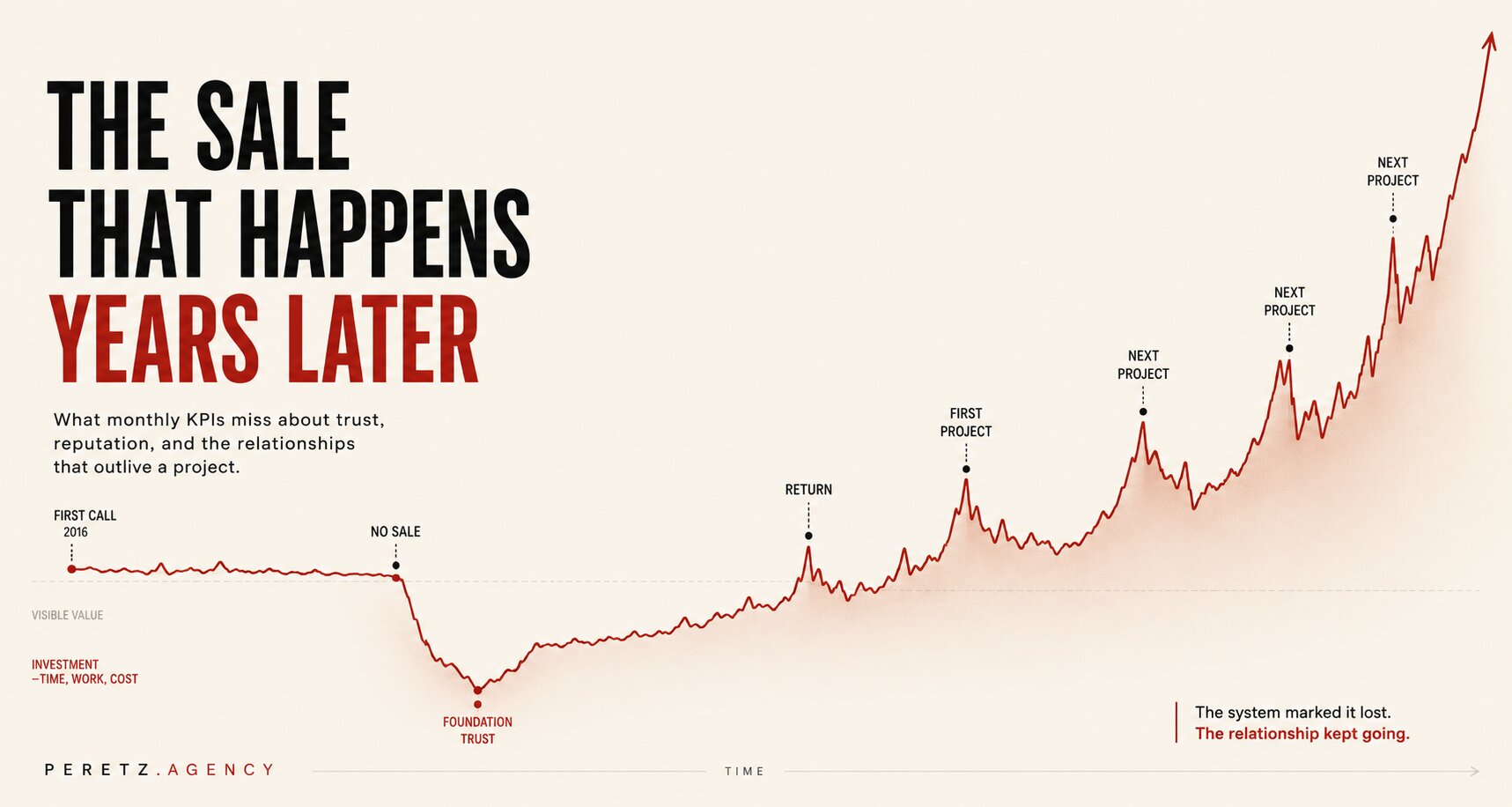
For Stas — the way you sold shaped how Peretz was built, and it’s still in the bones of how we structure every service we offer. Thank you.
THE CALLS AT NIGHT
About ten years ago, I worked for one of the strongest web development companies in Ukraine. My position was called business development, though in practice, much of the job was sales. The company built websites, handled digital marketing and SEO, and worked through a constant flow of incoming inquiries.
The calls were wildly different. A typical corporate website might cost around $5,000. At the same time, someone could call asking for a full e-commerce platform and expect it to cost $100. There were many calls like that, and regardless of whether the budget was realistic, we had to listen.
At night, I would go back through recorded sales calls. Nobody asked me to. I was trying to understand how the whole system worked. Why did one conversation turn into a project while another did not? Why did a client trust one person and resist another? At what point was a deal actually lost? I listened for patterns, partly because I wanted to get better at my job, and partly because I already knew that sooner or later, I wanted to build something of my own.
That was where I met Stas. He was also in business development. He was also, in practical terms, a salesman. And he had a problem: he was not particularly good at the way the company measured sales.
THE BAD KPI
Our KPI was straightforward. There was a monthly target, expectations around revenue, and clear categories of what counted: websites sold, SEO packages closed, how close you were to the number.
Stas understood all of that. He simply found it difficult to sell something when he was not convinced the person actually needed it. He listened. He asked questions. He explained risks. Sometimes he spent too much time with people who were unlikely to buy anything. From the perspective of a monthly spreadsheet, that could look inefficient.
And yet, listening to his calls, I noticed something different. He was not trying to move the person toward the contract as quickly as possible. He was trying to understand whether the contract made sense. Those two objectives can occasionally lead to the same place. But they are not the same objective.
A salesperson focused entirely on the monthly target has a clear incentive: if the client is willing to buy, close the deal. Stas seemed to carry another question with him. What happens after I sell this?
That question became important to him because he had already experienced the answer.
THE PROMISE HE SOLD
I remember one project in particular. The company had built a website for a client. Stas had sold it. The client trusted him. Then the website started having problems: it would break, the front-end implementation had issues, and from the client's side, something they had paid for simply wasn't working the way it should.
But the contract was already signed. The project was already delivered. And fixing what came next was no longer treated with the same urgency as selling what came before it.
The client kept calling Stas. Technically, none of it was his responsibility anymore. He wasn't the developer. He wasn't the project manager. But the client did not experience the company through an organizational chart. The client remembered the person who had been on the other end of the conversation and effectively said: you can trust us.
A salesperson may close the deal. But the company has to fulfill the promise. And when the company fails to fulfill it, the customer often remembers the person who asked them to trust it.
For Stas, this became personal. He had created the expectation. Someone had believed him. He couldn't make the problem disappear by pointing to a contract or transferring the call to another department. The company could consider the sale completed. For him, it wasn't. After that, he became more careful, explained more, checked more. His monthly KPI could go down. But the quality of his judgment was going up.
THEY REMEMBERED HIS NAME
Several years passed. By then, I was speaking with a company that had contacted my former employer years earlier. I remembered them. I remembered the original conversation, because I had listened to that call. At some point, I mentioned they had previously spoken with Stas.
The reaction was immediate.
“Oh, yes. We remember Stas.”
They told me they had really wanted to work with him. The reason the project never happened was simple. The proposed budget had been around $8,000. They had around $4,000. They were not ready. No dramatic failure, no objection that needed to be overcome, no clever closing technique would have magically created the missing $4,000. The timing and the economics simply didn't work.
But years later, they still remembered the salesman by name.
Think about what the systems of that time would have recorded. Lead status: lost. Revenue: $0. Contribution to KPI: $0. And yet, years later: name remembered, trust retained, conversation still valuable.
I don't think the lesson is that KPI is bad. It answered exactly the question it was designed to answer: how much did we sell this period? The problem was that we were asking it to answer a much larger question: how much value did this person create? Some value appears immediately. Some appears in six months. Some returns years later. And some never becomes your revenue at all.
A person may never buy from you and still remember that, when they were confused, you did not take advantage of them. For a monthly sales report, that memory is almost impossible to value. For a reputation, it may be one of the most valuable things you can create.
I DON'T KNOW HOW TO SELL
I still say that I do not know how to sell. People sometimes find that strange. I worked in business development. I had good KPIs. Clients trusted me. Still, I've never thought of myself as a salesman.
Maybe the problem isn't sales itself. Maybe it's what we've come to associate with the word. For many companies, selling is inseparable from the target: a number that needs to be reached this month, a pipeline that needs to move. None of that is inherently wrong. A business needs revenue. People need salaries.
But the closer sales becomes tied to a short measurement period, the easier it becomes to confuse two very different questions: can we sell this, and should this person buy it. Those questions sometimes have the same answer. Sometimes they don't. If someone is ready to pay me for something I don't believe will help them, I find it hard to call that a successful sale, even when the money arrives and the KPI improves. The consequences just arrive later, usually after the salesperson has already moved on to the next target.
WHAT THEY SHOULDN'T BUY
A client comes to us and says, “we need a new website.” It's a very convenient request for a web agency. We build websites. The budget works. The proposal can be prepared. Everyone should be happy.
Except there's another question: what happens after the website launches? So I ask. What's your marketing budget? How will people find the website? Do you already have organic traffic? Are you investing in SEO, running ads, do you have someone responsible for content? Sometimes the answer is: “we don't really have a marketing budget yet, we thought we'd launch first and figure that out later.”
At that point the conversation changes. Because the client may technically afford the website, but not afford the system required to make it useful. A new website with no distribution strategy can become a very expensive object that almost nobody sees. Beautifully designed, technically excellent, fast, responsive, award-worthy, and commercially irrelevant.
So sometimes the right answer is uncomfortable for both sides. You may not need a new website right now. Maybe the existing one should be improved instead of replaced. Maybe the budget belongs in SEO for a domain that already has history. Maybe the business isn't ready yet. For an agency, that can look like a lost project. For the client, it may be the first genuinely useful thing you've done.
Selling someone a website they cannot afford to make visible is not necessarily a successful sale. Sometimes it's simply revenue recognized before the consequences arrive.
THE GREEN DASHBOARD
The difficult thing about a bad sale is that it can look very good at first. The contract is signed, revenue goes up, the dashboard is green. The consequences don't show up for six months: the website launches with no traffic, the campaign brings leads the business can't process, the software gets built and the internal team never uses it. The project is delivered exactly to the contract, and still fails to create meaningful value.
Who owns that failure? Legally, perhaps nobody. The client asked for something, the supplier delivered it, the invoice was paid. But I've never been able to look at a project only through the scope of work. If a client trusted us to help build something, I want to know what happened to it. Did people use it? Did the business grow? What did we misunderstand?
Once you start asking those questions, you're no longer interested only in delivering your part. You're interested in what happens to the whole thing. And that changes what you're willing to sell.
INCOMPLETE, NOT WRONG
Looking back at Stas now, I don't think the company was wrong to measure his sales. Of course it had to. The problem was never the existence of the KPI. It was the assumption that the KPI described the entire value of the person.
It didn't measure whether a client felt heard. It didn't measure whether someone avoided spending money on the wrong solution. It didn't measure whether the delivery team could realistically fulfill what had been promised, or whether a person would remember the salesperson five years later. It certainly didn't measure whether one project would become five more.
Most metrics become dangerous not when they're wrong, but when we forget what they don't measure.
Monthly revenue measures monthly revenue. Conversion measures conversion. None of them, by themselves, measure trust. And trust has a very inconvenient characteristic: it often takes too long to fit inside a reporting period.
ONE PROJECT, THEN ANOTHER
The strange thing about the best client relationships is that, after a while, nobody really remembers where one sale ended and the next one began. There was simply another problem worth solving together.
This pattern has repeated across many of the businesses we've worked with. A client comes for a website. The website forces a conversation about positioning. Positioning raises questions about the brand. The brand raises questions about the physical space. The physical space reveals problems in the customer journey. Growth creates the need for new technology. New technology changes internal processes. And suddenly what began as one project has become a five-year conversation about the business itself.
Not because we successfully cross-sold more services. I dislike that explanation; it reduces a relationship to a technique. The next project happens because, during the previous one, you learned how to think together. You argued. You tested assumptions. You made mistakes. And eventually something appears that's much harder to replace than a completed project: shared context. A new vendor may be talented, cheaper, even better at a specific task. But they haven't lived through the previous decisions. They don't know why something was built a particular way, or which compromises were temporary and which principles were never supposed to move. To understand all of that, they have to start again. With the right long-term partner, you don't start again. You continue.
THE SADNESS AT THE END
There's a feeling that's difficult to explain unless you've experienced it. A long project finally ends. For months, sometimes years, you've been speaking constantly: calls, messages, problems, arguments, ideas at inconvenient hours. Something broke. Something worked better than expected. You got used to solving problems together. And then one day, the project is finished.
Everyone should be happy. And everyone is. But there's also a strange sadness. Not because the project failed. Almost the opposite: the collaboration worked. The client became part of your thinking, one of the problems your brain kept working on even when nobody had asked you to.
So after the celebration and the final delivery, there's often an unspoken question: what do we build next? That's not dependency, and it should never become one, a good partner makes a company stronger, not incapable of functioning without them. But there's a kind of intellectual hunger that appears between people who enjoy building together. At that point, the next project doesn't feel like another sale. It feels like the continuation of a conversation.
LET'S START THE NEXT ONE
We recently told one of those stories in The Story Behind Hair. It began years ago with Yulia Sergeevna Ovcharenko, in a field we still had a great deal to learn about at the time. Over the years there were different projects, different stages, disagreements, changes in direction, moments when something took longer than expected. The relationship wasn’t built on the absence of arguments. Long-term relationships rarely are. It was built on the ability to keep moving after them.
At the end of that story, after everything that had happened over the years, the question wasn't “are we going to work together again.” It was essentially:
“Why did it take you so long? Let's start the next one.”
That sentence says more about a long-term business relationship than any testimonial we could ask for. Nobody had to sell the next project. The previous years had already done that work.
The same pattern shows up elsewhere. With Medpresso, one project didn’t stay one project. A redesign of a diagnostic center became years of hypotheses, marketing decisions, architecture, identity, and eventually a multilingual educational platform with thousands of pages of medical content. If you only looked at the first contract, you’d never see the real project, because the real project didn’t exist yet. It emerged over time. The same is true of SV Group and other businesses we’ve worked with over long periods. The first task is rarely the whole story. Sometimes it isn’t even the most important part of it. It’s simply the point where two sides begin learning whether they can build together.
YEARS TO HAPPEN
Years ago, a company spoke with Stas and didn't buy. The budget was wrong. The timing was wrong. The sale didn't happen. Years later, they still remembered his name. At the time, the CRM would have called that lead lost, and from the company's perspective, it probably was: no revenue, no delivered project. But for the person who had created that trust, something remained.
If I were managing that sales team today, I would still measure revenue. I would still care about the pipeline. But I'd want to know more. Why was the deal lost? Did we tell a client not to buy, and did they come back later? How many clients still answer the phone five years later?
The time horizon changes the decision. Thinking about this month, you ask: can I close this deal? Thinking about the project, you ask: can we deliver what we promised? Thinking about five years, you ask: will this decision still make sense for the client after we're gone? None of these questions replace the others. A business that never closes deals won't survive long enough to build five-year relationships. But a business that optimizes every decision for the fastest possible sale may never build them either.
A project has a delivery date. A relationship does not.
The first contract may last three months. The context built around it can last ten years. And sometimes, years later, what looked like a lost lead or a completed project turns out to have been neither. It was simply a relationship whose value had not finished appearing yet.
I don't know whether Stas ever thought about his calls this way. We're still friends, in different countries now, and I know that clients in his industry today value the same things I noticed years ago: his openness, his honesty, the feeling that he isn't trying to sell something simply because he can.
I still don't think I know how to sell, in the traditional sense. But I know this: if someone trusts you with a part of their business, the goal can't simply be to extract the maximum value from that moment. You've been invited into something that existed before you and, hopefully, will continue long after your project is complete. Your job is to leave it stronger. Sometimes that means building something. Sometimes it means changing the plan. Sometimes it means saying no. And sometimes it means having a conversation that produces no revenue at all, only for someone to remember your name years later.
Some sales take years to happen. The best ones may never really end.
If you’re trying to understand what you’re actually building, not simply what to buy next, that is usually the conversation worth having first. It is also the thinking behind our Strategic Sessions.
The same instinct, letting people see something rather than telling them, shows up again in I sometimes feel like I became Michael Scott by accident.
How search and AI fit into this long path, and what they cannot do for you, is the subject of SEO, AEO and GEO Are Amplifiers, Not Engines.
- Share
-

-

-

-

Related Reading
-
11. 07. 2026

The Story Behind Hair

-
26. 06. 2026
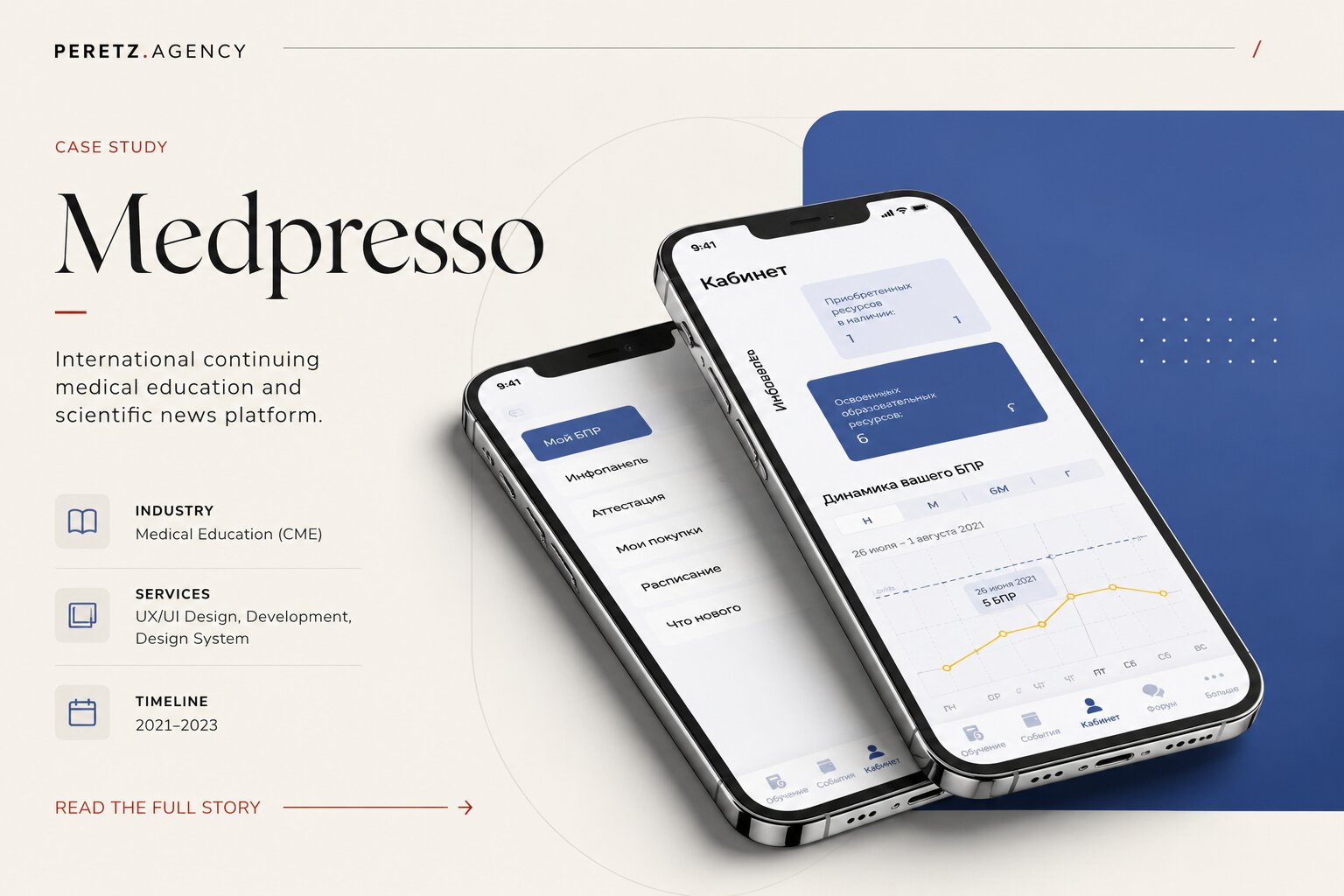
The Story We Never Planned to Tell - Case MEDPRESSO
-
01. 07. 2026

THE STORY BEHIND SV GROUP
-
06. 07. 2026

Some Clients Change Your Business. MDC LUX Changed Ours.
-
07. 07. 2026
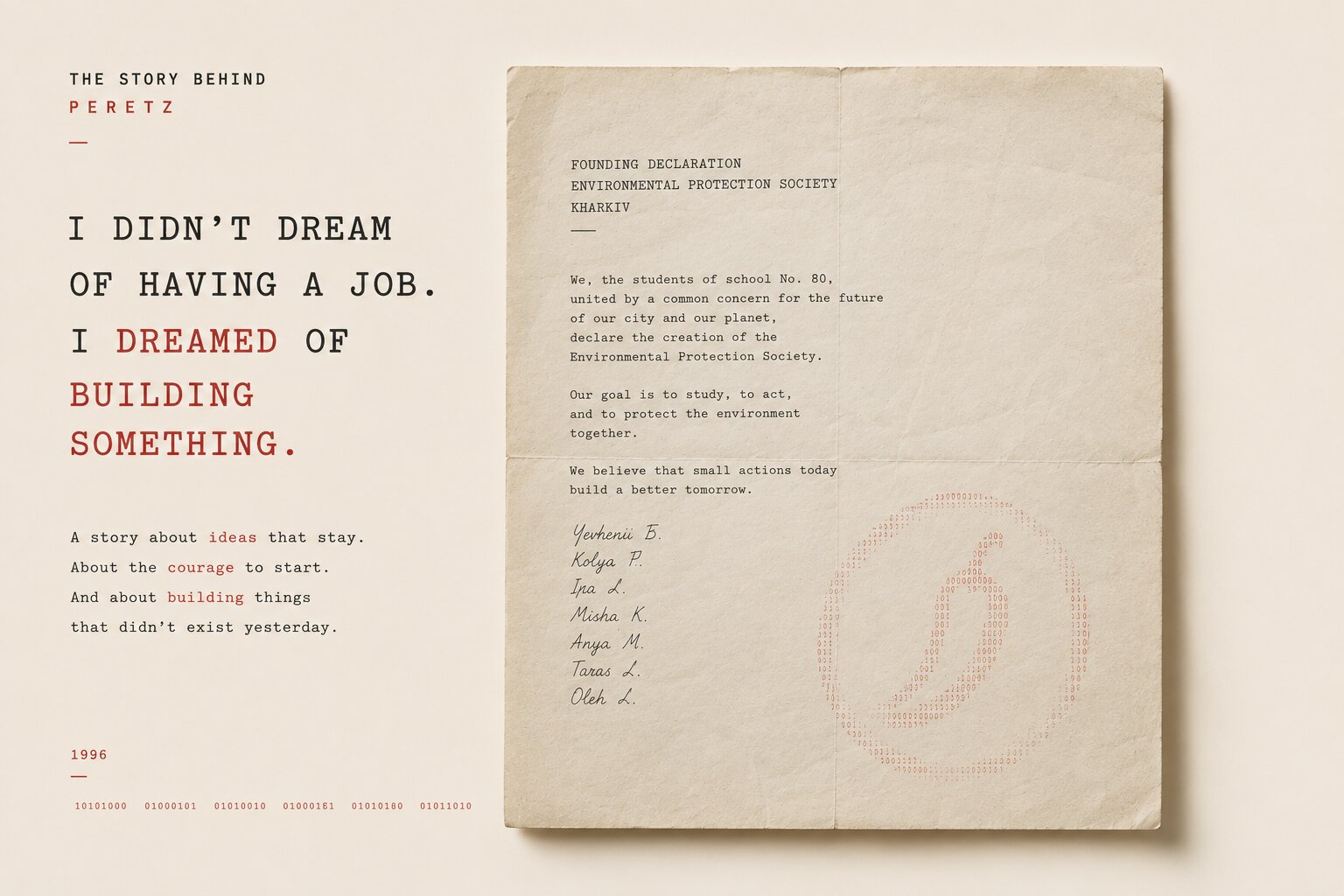
I Didn’t Dream of Having a Job. I Dreamed of Building Something.
-
12. 07. 2026

How to Build a Community, Not Just an Audience
-
19. 08. 2026
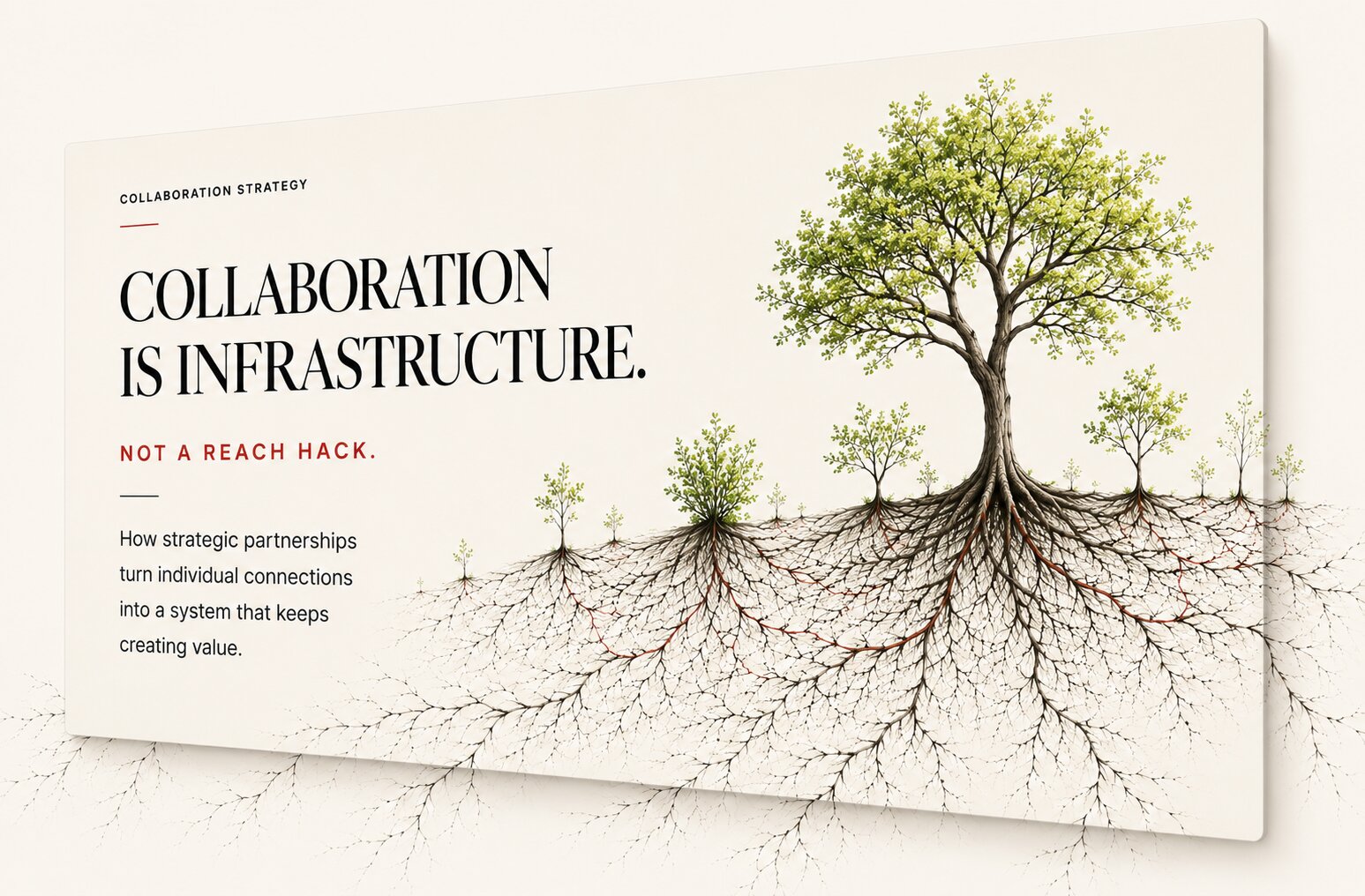
Collaboration Strategy: Why One-Off Partnerships Don't Build Lasting Growth
-
14. 07. 2026

You Know Your Business Depends on You. Build It to Work Without You Anyway.
-
19. 09. 2026

I Sometimes Feel Like I Became Michael Scott by Accident
-
02. 10. 2026

SEO, AEO and GEO Are Amplifiers, Not Engines