


Ask a product team what MVP stands for and they'll say it correctly: minimum viable product. Ask what it's minimum and viable at, and most will describe features. The smallest set of functions that lets a user do the core thing. Cut everything else. Ship it.
That definition has quietly become one of the most expensive assumptions in modern business, because it treats "viable" as a product question when it has always, actually, been a marketing question. A product can be perfectly functional and completely unviable, because nobody who needed it ever found out it existed, or found it and didn't understand why it mattered, or understood it and still didn't believe it was for them.
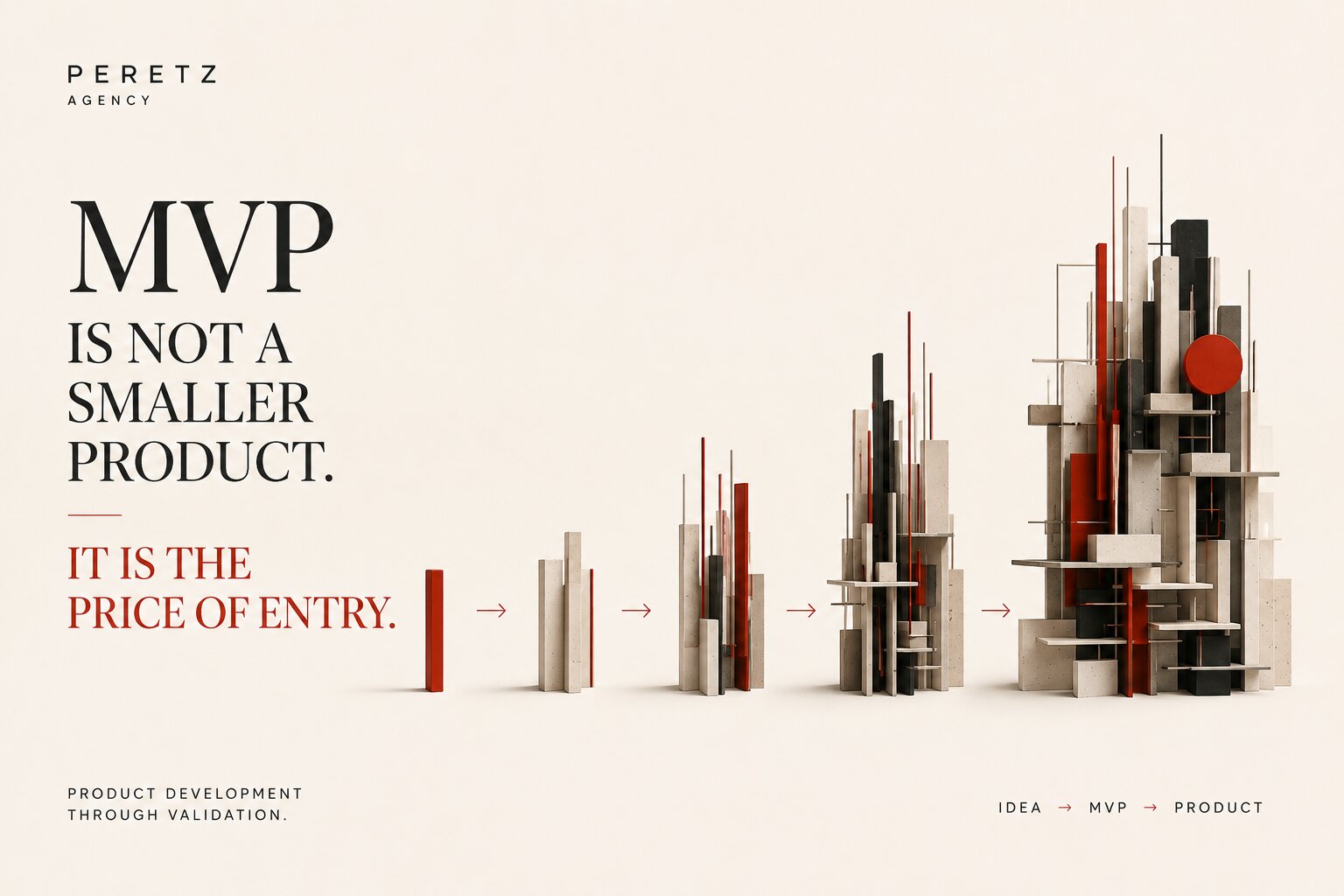
The MVP is not the smallest product you can ship.
It's the smallest business system that can tell you whether the product deserves to exist.
CB Insights has tracked startup failure post-mortems since 2014, and the single most common reason founders cite for shutting down isn't running out of money or a technical failure. It's "no market need," cited in 42% of post-mortems, more than any other cause. A 2024 update to that research reframes the same pattern as "poor product-market fit" at 43%. That statistic gets repeated constantly in product circles as a cautionary tale about building the wrong thing. It's often treated as a product failure. But many of the decisions that determine whether a market exists are marketing decisions made long before launch.
What follows are four decisions that get made in every launch regardless. The only question is whether they're made deliberately, before serious engineering starts, or by default, by whoever happened to be in the room when a deadline forced a choice.
Test The Problem First
Test The Problem First
Before a minimum viable product, there should be a minimum viable test, proof, gathered before serious engineering investment, that the problem you think you're solving is a problem a real person would pay to have solved. Not a problem the founder finds interesting. Not a problem that's technically solvable. A problem specific enough that a stranger, hearing it described, says "yes, that, exactly" without you having to explain it twice.
The test itself doesn't require a product at all. A landing page describing the offer in the customer's own words, with a real call to action, pre-order, waitlist, a deposit, measures actual intent instead of polite enthusiasm. "I'd definitely use that" in a conversation and a stranger typing their card number into a page are not the same signal, and confusing them is how founders spend a year building something eleven people were being nice about.
This is the validated problem statement, and it's the first thing marketing owes a product before a single feature gets prioritized: what specific problem, described in the customer's own language, not the founder's, not the industry's jargon, is this solving, and where's the evidence someone would pay to have it solved?
The minimum viable test checklist: the problem statement is written verbatim in customers' language, from interviews, comments, support threads, not invented in a meeting room. There's a landing page or offer with an irreversible action, money, a deposit, card details, not "leave your email." The success threshold is set in advance ("if fewer than N out of 100 visitors do X, the hypothesis fails"). And the result is recorded before the build decision is made, not fitted to justify it afterwards.
Track From Day One
Track From Day One
The second thing marketing owes an MVP, and the one most consistently skipped, is instrumentation. Teams launch, watch signups trickle in, and only start asking what to track once the trickle needs explaining, by which point the earliest, most honest behavioral data, from the users who mattered most because they had no relationship with the brand yet, is already gone. Permanently: those people no longer exist in a first-touch state.
Event tracking, attribution, and a defined activation metric aren't post-launch nice-to-haves. They're part of what makes an MVP viable in the first place, because a product nobody is measuring correctly is a product nobody can actually learn from. You're running the exact experiment a minimum viable product is supposed to be, without the instruments that would let you read the result.
This is the same principle that runs through nearly every serious conversation about performance marketing: you cannot optimize what you never measured accurately from day one. An MVP with broken or absent tracking isn't minimum and viable. It's minimum and unverifiable, which, for a business trying to learn something, is a different thing entirely.
The minimum that should exist before the first user arrives: events on the funnel's key steps, UTM discipline on every inbound link, one, exactly one, activation metric the team agreed on in advance, and a way to say where every signup came from. That's two or three days of work during the build, versus months of reconstructing blind afterwards.
The Channel Hypothesis
The Channel Hypothesis
A product team validates that a solution works. Almost nobody, at the same stage, validates that there's a repeatable, affordable way to reach the people who need it, and that second question determines the business's future at least as much as the first one does. A genuinely excellent product with no viable distribution path isn't an MVP. It's an expensive personal project with users.
This doesn't mean building a full go-to-market plan before writing code. It means testing, in parallel with the build, a specific hypothesis about where the target customer already spends attention, and whether that channel can be reached at a cost that makes the business's economics work. If the answer only shows up after the product ships, the business has already spent its most valuable early runway finding out something it could have tested for the price of a landing page and a small ad budget.
A channel hypothesis fits in one sentence: "our customer is [who], their attention lives in [channel], we can reach them for no more than [cost], and at that cost the economics work because [why]." If any bracket can't be filled in, that bracket is exactly what should be tested alongside the build, not after it.
Brand Foundation Compounds
Brand Foundation Compounds
Domain authority, a coherent name, consistent positioning, even the smallest social presence, these are the assets that behave like compound interest. Every month they don't exist is a month of accumulation the business never gets back, not a delay that simply catches up once someone finally gets around to it.
Treating brand foundation as pre-launch work buys months no competitor can purchase back.
This is usually the easiest of the four to fix and the most consistently ignored, because it doesn't feel urgent next to a feature backlog. It's also the one where the cost of delay is the hardest to see until a competitor who started their domain and their positioning six months earlier is simply, unfairly, ahead.
Answering The Objections
Answering The Objections
Every time these four points land on a product team's table, the objections sound the same. Worth answering them before they're raised.
"This will slow down development." It won't. The problem test and the channel hypothesis run in parallel with the build and use different hands. Tracking takes days, not weeks, when it's part of the architecture instead of bolted on later. Exactly one thing slows a launch down: three months of post-release silence nobody can explain.
"Product first, marketing later." Marketing decisions get made during the build anyway, what to call the product, which pain goes on the first screen, what counts as activation. The question isn't whether to do marketing before launch. It's whether those decisions get made deliberately or by default.
"We don't have budget for tests." A landing page and a small ad budget cost orders of magnitude less than a quarter of engineering work on a product that turns out to have no market. The test isn't an expense next to the build. It's insurance on the build's cost.
"Steve Jobs didn't ask users." An intent test isn't a "what do you want" survey. It checks whether a stranger pays for a specifically worded value. The vision stays with the founder; what's being tested is the wording and the demand, not the idea.
What Actually Changes
What Actually Changes
Before scoping features, write the validated problem statement in the customer's actual words, not the founder's translation of it, and have real evidence, not conversations, that someone would pay to solve it. Build tracking and a defined activation metric into the MVP's technical scope from the start, not the backlog for "after we see traction." Test a specific channel hypothesis in parallel with the build, not as a separate phase that starts once the product ships. Start brand foundation, domain, name, basic positioning, as early as legally and practically possible, treating every month of delay as a month of compounding the business will never get back.
None of this replaces good engineering, and none of it argues for building slower. It argues for building the marketing decisions into the MVP's actual architecture instead of discovering, three months post-launch, that a dozen of them got made anyway, badly, by default, by whoever happened to be in the room when a deadline forced a choice nobody had actually thought through.
We looked at a related confusion, treating MVP as a feature list instead of a cost-of-entry decision, in why MVP is not a minimal product, it's the cost of entry, and at what happens when the channel hypothesis never gets tested in traffic but no leads: the price of yes.
Why This Is Marketing's Job
Why This Is Marketing's Job
I'm not a product manager, and this isn't a product strategy piece pretending otherwise. It's what the view looks like from the other side of the table, from someone who has taken over marketing for products that were technically excellent and functionally invisible, because nobody validated the message, instrumented the launch, or built distribution into the plan until it was already the expensive kind of too late.
One client was convinced their product idea was self-evidently right and treated marketing as a cost to minimize, not a decision to architect before launch. There was no real market research behind the positioning, no validated channel, no tracking built in. They launched. Nobody read it. Fixing it meant rebuilding the paid content structure from scratch and building an organic layer to support it, four months of work that could have started before launch instead of after. The first real sales signals showed up about two months post-relaunch. By month six, the project had started paying for itself. That's exactly why we now start every engagement with research and analysis first, not just what the client believes they need.
The pattern is always the same. The product works. Nobody outside the founding team knows why they should care, the analytics can't say who's actually activating or why, and the channel that was supposed to bring users in turns out to cost more than the business can survive paying. Every one of those is a marketing failure that happened during the build, not after it, because nobody in the room was asking marketing's questions while the architecture was still being decided.
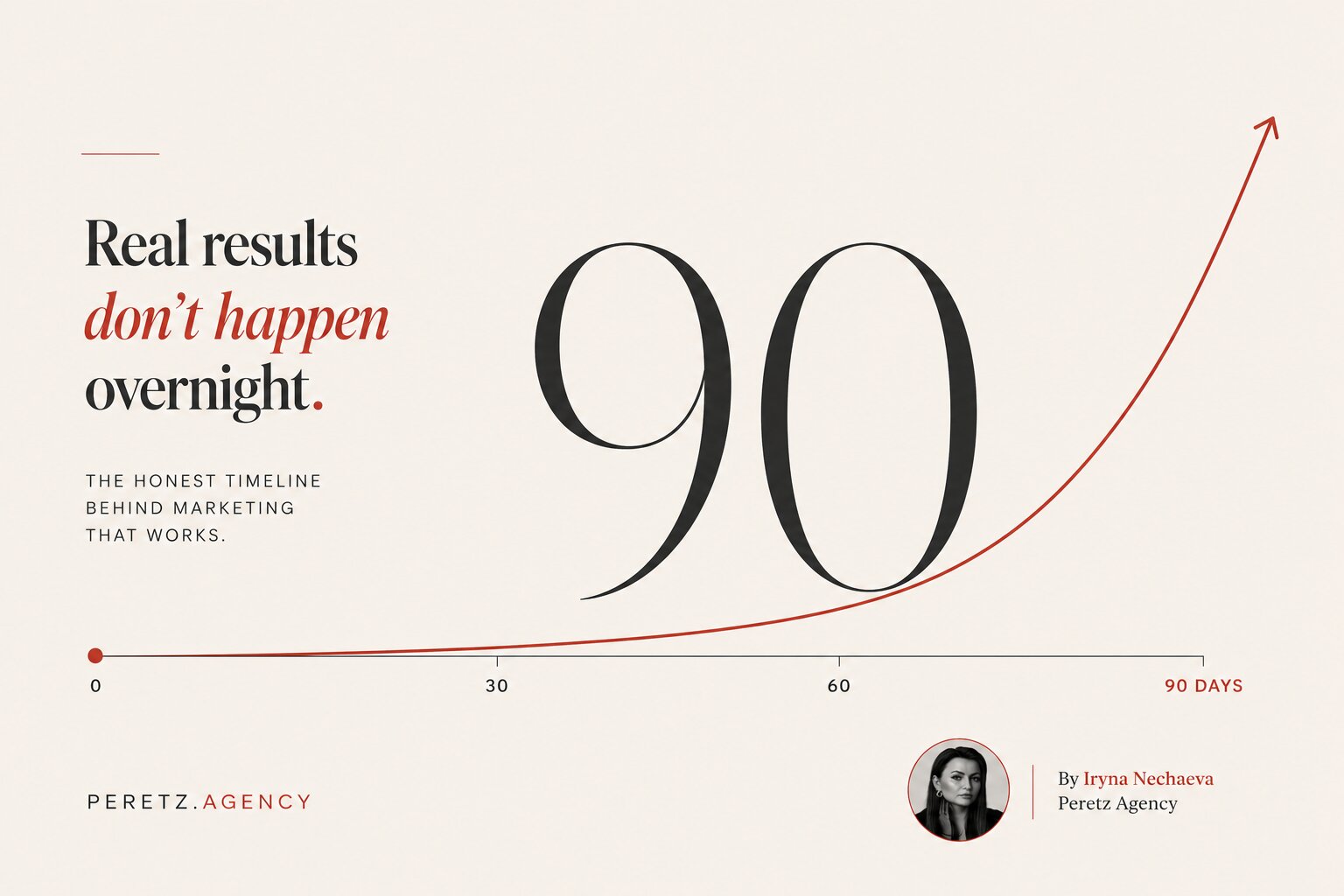
We wrote more about how long it realistically takes to see marketing results, and why "it's too early to tell" is often the wrong answer, in how long marketing results actually take.
FAQ
FAQ
When should marketing join an MVP?
Before the scope is locked. Not "by launch" and not "a month before," at the stage where what gets built, and for whom, is still being decided.
What is a minimum viable test?
A demand check before the build: an offer in the customer's own words plus an irreversible action (pre-order, deposit, committed waitlist) and a success threshold set in advance.
What's the minimum analytics an MVP needs?
Events on the funnel's key steps, source attribution, and one agreed activation metric, set up before the first user, not after the first hundred.
How is a channel hypothesis different from a go-to-market plan?
A plan is a post-launch document dozens of pages long. A hypothesis is one testable sentence about where the customer is and what a touch costs, tested in parallel with the build.
We wrote more about products worth building versus products worth reviving in What We Leave Behind: Heritage, Technology and the Things Worth Passing On.
Before you build the MVP, build the evidence that it deserves to be built.
Our Strategic Session examines the problem, the positioning, the acquisition path, and the measurement system before those decisions become expensive to change.
Need the go-to-market and channel testing built in from day one?
- Share
-

-

-

-

Related Reading
-
09. 08. 2026
MVP Isn't a Minimal Product. It's the Cost of Entry.

-
09. 07. 2026

Traffic But No Leads? Your Customer Is Doing Math You Never See
-
20. 07. 2026
How Long Does It Take to See Marketing Results? Why Agencies Promising Faster Are Lying to You
-
22. 08. 2026

What We Leave Behind: Heritage, Technology and the Things Worth Passing On