



THE ADVICE I AGREE WITH
There is a familiar piece of business advice that sounds increasingly reasonable as your company grows: build a business that can work without you.
Document the processes. Delegate. Develop management. Remove key-person dependency. Stop being the bottleneck.
I agree with all of it.
The problem is that every time I try to turn this advice into a universal solution, I remember a business, a person, or a situation that contradicts it.
So I started with my own companies.
NOTHING BREAKS
If I disappeared from my companies for a month, nothing critical would break.
Projects would continue. Designers would design. Developers would develop. Architects would keep moving through their projects. Deadlines would still exist, problems would still appear, and people would solve most of them without asking where I was.
That is good. It took years to get there.
But I know what would probably become worse. Communication with clients.
Not because my managers are incompetent. Some of them know their fields exceptionally well. They know what should be done, how it should be done, and often know the technical answer better than I do.
The problem is somewhere else.
People speak their own language. A developer speaks like a developer. A marketer speaks like a marketer. A designer speaks like a designer. A manager who wants to demonstrate professionalism often reaches for professional terminology.
I have always thought the opposite.
Professionalism is not proving that you know the language of your profession. It is being able to leave that language behind when the person in front of you does not need it.
Some clients want details. Some want the shortest possible answer. Some think aloud and need space to finish a thought. Some interrupt you to see whether you can defend your position. Some respond to directness with respect. Others hear the same directness as aggression.
The technical answer may remain exactly the same. The conversation cannot.
This is where my own founder dependency still lives. Not in approving invoices. Not in assigning tasks. Not in knowing where the files are. It lives in something much harder to put into a process document. It lives in what I have learned to notice.
FIFTY METERS BEFORE THE DOOR
For me, a client meeting often begins fifty meters before I walk through the door.
Usually, the work started much earlier. I study the client. I look at the history of the business, its social media, its competitors, the way the company has changed over time. I read what customers say. When possible, I try to understand why people left and where they went.
But the last fifty meters are different. You are no longer looking at a company through a screen. You are approaching its territory.
I look at the building. The street. The neighboring facades. The condition of the entrance. How carefully the space is maintained.
None of this proves anything. A dirty facade does not mean the company is badly managed. A beautiful office does not mean the business is healthy. But I look anyway.
Then I enter. How am I greeted? How does the staff speak? Does everyone suddenly become nervous when the owner appears? What is the rhythm of the place? How is the person dressed? How quickly do they speak? Do they answer immediately, or do they leave silence between thoughts?
Again, none of these signals gives me an answer. They are simply signals. I collect them.
Perhaps this comes from the fact that I have worked with businesses in different countries and spoken to clients from different cultures. I learned relatively early that the same behavior can mean completely different things in different rooms.
With one client, a direct challenge is almost part of the introduction. The conversation is sharp, fast, sometimes intentionally uncomfortable. If you avoid the confrontation, you may lose respect.
With another, the same style would destroy the conversation before it started. You listen longer. You leave space. You use a metaphor instead of a direct objection.
You remain yourself. But you learn where you have entered.
I think of it as diplomacy. If you arrive in another country, you should probably understand whether people bow or shake hands before deciding that your own greeting is the universal standard.
Adaptation is not submission. It is respect for the territory you have entered.
The strange thing is that I may have started learning this long before I had a business.
LEARN THE LANGUAGE BEFORE YOU SPEAK
When I was around twelve to fourteen, I studied French in a group where almost everyone was much older than me.
Some were university students. Others were already established professionals — journalists, engineers, people preparing seriously to move to France. I was still a schoolboy.
Because the group was older, the conversations were older too. I listened to people talk about work, professions, moving to another country, and the lives they were trying to build.
We also learned French through songs. At twelve, you can listen to a song and hear words. Then a teacher stops the class and explains that a line refers to a period of French history. Another line is a metaphor. A phrase that sounds simple carries a cultural meaning you would never understand through direct translation.
Suddenly, the song is no longer just the words. There is another layer underneath. Then another.
I think that changed the way I listen. Long before I learned to study businesses, I was being taught to listen for what was underneath the words.
Years later, a client says: “We need a website.”
Fine. But why now? What happened? Why did the existing website suddenly become a problem this year and not last year? Did a competitor reposition? Did sales slow down? Did the owner see another company and feel that their own business suddenly looked old? Did a major customer ask an uncomfortable question?
Is the website really the problem?
Sometimes, after studying the market, I have told a client who came to buy a website that I would not start with the website. There may be a cheaper communication channel their competitors are ignoring. There may be a marketing opportunity that can produce resources for a stronger digital product later.
The client asked for X. That does not mean X is the problem.
But you cannot hear the second problem if you are too busy preparing your answer to the first one.
Learning to speak is important. Learning to be quiet is harder.
WHAT YOU LEARNED TO NOTICE
There is a useful distinction in knowledge theory between explicit and tacit knowledge.
Explicit knowledge is the part we are comfortable with in business. Processes. Instructions. Checklists. Templates. “If X happens, do Y.”
Tacit knowledge is more difficult. It is the knowledge we use in action but often struggle to explain completely. The things years of repetition, observation, mistakes, and interaction have taught us to notice.
You can document a process. It is much harder to document what someone has learned to notice.
A CRM can record: Client requested website redesign. It may record the budget, the date of the call, the decision makers, and the next follow-up. All useful.
But what if the real context is this: the owner built the company personally. A major competitor recently repositioned. The owner is worried that his company now looks dated, but criticism of the brand feels personal because the brand and his own identity have been intertwined for twenty years. He says he wants a new website. What he actually needs first is enough trust to admit that the business he built may need to change.
Where do we store that? And even if we store it, will the next person understand why it matters?
I have an uncomfortable answer when I ask what remains only in my own head.
Almost everything.
Not the files or project statuses. Those are stored. I mean the wider context. What the client told me. What I noticed. What I researched. What their customers say. What former customers say. Why a particular decision was made two years ago. What was agreed formally. What was agreed informally. What the owner once mentioned in passing and probably forgot saying.
This is not necessarily good management. From an M&A perspective, it can be a risk.
A buyer is not only asking how much a business earns today. A buyer is trying to understand how much of that earning power survives the people who created it.
If difficult conversations are recovered because one person enters the room, what happens when that person leaves? If opportunities become projects because one person understands what the client is not saying, does that capability belong to the company? Or does it belong to the person?
That question is much harder than “Do you have SOPs?”
TAKE THE NEXT CEO FOR A WALK
Suppose someone bought Peretz tomorrow. I stay for three months to help with the transition. How would I teach the next CEO or manager what I do?
I do not think I would begin in a conference room. I would take them for a walk.
There is a scene in The Devil's Advocate where Al Pacino's character moves through New York with Keanu Reeves, talking, observing, interacting with the city around him. The movie is not important here. The movement is.
I would want to walk the last fifty meters together. Look there. Why? Do not answer yet. Watch how the staff meets us. Listen to how the owner describes the problem. Notice which words he repeats.
Now watch the meeting. Why did I not correct him when he said something technically wrong? Why did I explain this part without terminology? Why did I challenge him directly here? Why, when he came to buy a website, did I start talking about another marketing channel?
Then we would reverse the roles. I would be quiet. You lead. I watch what you notice.
This is closer to apprenticeship than corporate training. Watch. Do it together. Try. Make a mistake. Discuss why. Try again.
For thousands of years, humans transferred difficult knowledge this way. Masters worked with apprentices. Parents involved children in the family trade. A craft was not learned only by reading instructions. You spent time near someone who had already learned where to look.
Perhaps that is the answer to founder dependency. Find the person. Invest in them. Study them as carefully as you study the clients you expect them to understand.
Look for honesty. Responsibility. Analytical ability. Curiosity. The desire to outgrow their current self. Teach them your language. Let them watch. Let them try.
For a moment, this sounds like a solution.
The problem is that I may be completely wrong.
I MAY BE COMPLETELY WRONG
This happened several times while I was thinking through this article. I would find an answer. Then I would remember a case that broke it.
Document everything. But you cannot fully document what a person has learned to notice.
Fine. Transfer judgment through apprenticeship. But twenty years of experience cannot simply be uploaded from one person to another.
Then find the right person and grow them. But what if the person you grow becomes an excellent version of your methodology while someone you would never have chosen sees an entirely different future for the company?
I have met people who, at first glance, make you wonder how they could possibly lead anything. Then they do. And sometimes they build something so much bigger than what you built that, compared with them, you feel almost irrelevant.
That is uncomfortable for founders. We like the idea of succession as knowledge transfer because it leaves us in the position of teacher. I know. You learn. Eventually, you become ready to continue what I started.
But what if the company does not need another version of me? What if the person capable of taking it further is precisely the person who does not think like me?
If I accept that I cannot see every angle of a client's business, I also have to accept that I cannot see every possible future of my own.
At some point, I would have to stop walking in front of the person I am teaching. Maybe they continue straight. Maybe they turn onto a street I have never taken. Maybe I look at the decision and think it is a mistake.
And maybe, five years later, I have to admit: I would never have done it this way. Perhaps that is exactly why it worked.
There is another problem. Even transferring the same judgment does not guarantee the same result.
People experience leaders through more than their decisions. One founder may be tall, physically imposing, loud, and direct. For twenty years, customers and employees have associated that presence with the company.
Then another person arrives. They may understand the business equally well. They may share the same principles. But they speak quietly. They pause. They occupy a room differently.
The market may simply not perceive them the same way. It is not fair. It is not rational. It still happens.
You can transfer a decision-making model. You cannot transfer the way a person fills a room.
THE COMPANY YOU THINK YOU NEED TO PRESERVE
Everyone likes to use Steve Jobs as an example. Usually badly.
The simple version is familiar: Jobs was the visionary. Tim Cook was the operator. Apple lost its innovative soul.
I do not think the simple version is particularly useful. Apple did not collapse after Jobs. It became one of the most valuable companies in history. Calling that failure would require an impressive commitment to ignoring financial reality.
But that is exactly why Apple is interesting.
The iPhone 4S introduced Siri in 2011. At the time, speaking to your phone in that way felt like a glimpse of a different interaction model. Years later, as generative AI changed what people expected from digital assistants, Apple found itself working with Google's Gemini technology as part of the effort to move the next generation of Siri and its AI systems forward.
Again, this is not proof that Jobs would have done better. We do not know. Jobs may have made terrible decisions in a different technological environment. Tim Cook may have made decisions that created more value than almost anyone else could have created from the company he inherited.
That is the point.
What if a company survives its founder, grows enormously, creates extraordinary value — and still becomes a different company? Is that failure? I don't know.
What were you trying to preserve? Revenue? Margin? Market capitalization? Product appetite? Taste? Customer intimacy? The willingness to create a product people do not yet know how to ask for?
A different leader does not only make different decisions. Sometimes a different leader changes what the organization optimizes for.
This matters far beyond Apple. You can acquire a boutique company because of its customer intimacy and install management that optimizes utilization. The margins improve. The business becomes more predictable. Five years later, the intimacy you bought is gone.
Did you destroy the company? Or improve it? I don't know. Maybe the new company is worth three times more. Maybe the old one would have disappeared. Maybe the thing you tried to preserve was exactly the thing preventing the business from growing.
Founders are often comfortable telling clients that years inside a business can make certain problems invisible. We are much less comfortable when someone says the same thing about our own company.
The founder knows the company that exists. The right successor may see the company that does not exist yet. And the founder may be the least qualified person in the room to recognize them.
WHOSE EXPERIENCE ARE YOU BUYING?
At this point, the obvious response is to bring in experience. Hire people who have seen more.
A global advisory firm may tell you it has worked on 2,000 transactions. Impressive.
But firms do not sit in meetings. People do. The partner across from you may have personally lived through fifty of those deals. Or ten. Or five. The experience of the other 1,995 exists somewhere in the institution — in other partners, former employees, internal documents, methodologies, review systems, and presentations.
That institutional experience is real. Large firms can have enormous advantages: data, benchmarks, specialized teams, internal review, access to people who have worked through problems similar to yours.
But I still want to ask a simple question. How much of the institution's accumulated experience has actually become the judgment of the person advising you?
I have always been slightly amused by the confidence we attach to titles. Partner sounds experienced. Global sounds capable. Boutique sounds small. None of those words tells me how many difficult business situations the person sitting across from me has actually lived through.
For all I know, the doorman downstairs has watched more dealmakers walk into that building confident and leave three months later looking ten years older than the partner advising you.
Does that make the doorman an M&A advisor? Of course not. But it should make us slightly more careful with the word experience.
Now consider a boutique firm. It has not seen 2,000 cases. It has seen 100. But perhaps seventy of those cases passed through one manager. That person joined the first conversation. Heard the founder describe the business. Watched the model break. Saw the conflict. Saw what happened after the decision. Spoke to the client again three years later.
Who has more experience? I don't know.
The boutique manager may have spent twenty years repeating the same mistake.
Twenty years of experience and one year of experience repeated twenty times are not the same thing.
So perhaps the question is not: who has more experience? Perhaps it is: experience for what?
I have lived in different countries. I have built and worked with businesses in different environments. I have spoken to clients in different languages and across different cultural expectations. That does not make me the right advisor for every problem.
If you are executing a highly specific cross-border transaction that another person has completed a hundred times, you may want that person. But if the problem is understanding a founder who cannot explain why the business has stopped growing, perhaps another kind of experience matters.
The most experienced person in the room depends on what the room needs.
And there is another uncomfortable thought. We assume that the person with the best answer is somewhere in the market selling it. Why?
Perhaps the person who would understand your problem best has no website, no thought leadership strategy, no partner title, and absolutely no interest in taking your call. Maybe they are running a small logistics company. Maybe they are taking care of their health. Maybe they are sitting quietly inside the company you are about to acquire, three levels below the person whose title attracted your attention.
I don't know. That phrase keeps appearing. I am beginning to think it should.
SOMEWHERE THERE HAD TO BE AN ADULT
For years, uncertainty could be passed up the hierarchy. An employee asked a manager. The manager asked a director. The director asked the CEO. The CEO asked the board. The board hired an advisory firm.
Somewhere up there, we assumed, there had to be an adult who knew. Someone had seen this before. Someone had the framework. Someone had the answer.
Today, AI makes that assumption slightly more uncomfortable.
The cost of collecting information, comparing ideas, challenging assumptions, and synthesizing large amounts of material has fallen dramatically. You can ask a model to show you competing strategic frameworks. Find contradictions. Build scenarios. Challenge your acquisition thesis. Argue against your preferred decision. Compare patterns across cases.
That does not mean the model is right. It means information is becoming less effective as a hiding place.
You can collect more. Compare more. Analyze more. And after all of that, the answer may still be: it depends.
That answer irritates people. We paid for research. We hired advisors. We built the model. We reviewed the cases. We used AI. What do you mean, it depends?
Because information was never the final problem.
At some point, uncertainty stops being a research problem and becomes a decision. Buy or do not buy. Sell or do not sell. Hire this person or do not hire them. Trust her or do not trust her. Build internally or acquire.
You can improve the quality of the decision. You can improve the odds. You can remove obvious mistakes. You can expose assumptions that do not survive contact with evidence. You should do all of that.
But eventually the decision comes back to a person.
There is no if/else statement for this. Honesty equals true. Experience greater than ten years. Analytical ability above eight. Leadership presence strong. Ideological alignment confirmed. Successor equals correct.
No. We spent the entire article finding cases that break every version of that logic.
Perhaps AI will solve more of this than I currently believe. At least as I write this in 2026, I still see a person at the end of the framework.
Ask me again next year.
OPEN THE DOOR
I started this article with a simple question. How do you build a business that can work without you?
I thought the answer would be systems. Then I thought it was knowledge transfer. Then people. Then apprenticeship. Then finding someone who shares your principles. Then accepting that the right person may not share your methods. Then experience. Then I had to ask whose experience we were actually buying.
Every answer improved the previous one. None became universal.
Maybe that is what years of working with businesses eventually do to you. The more cases you see, the harder it becomes to believe in universal business advice.
At first, patterns become clearer. Then you see more cases. And exceptions begin to appear. Then exceptions to the exceptions. The system becomes less orderly.
Perhaps that should not surprise us. Businesses are systems made of people. And people are remarkably efficient producers of disorder.
Still, you have to decide.
If you are building, you need people. If you are buying, you need to understand which people inside the acquired company actually carry the business you think you are buying. If you are selling, the buyer will eventually ask what remains when you leave. If you hire an advisor, you still have to decide whose judgment you trust.
A global firm? A boutique? A person who has seen a hundred similar cases? A person who has never seen your exact case but asks the first question that makes everyone in the room uncomfortable?
I don't know. And if you are waiting for me to give you a formula, you have probably missed the point.
Look at the person. Ask what they have actually seen. Listen to the questions they ask before they start giving you answers. Notice whether they are curious about your business or simply matching it to a case they already know.
Look for the eyes that are still alive. Not motivational passion. Curiosity. Ownership. The desire to understand why.
Then research. Document. Build systems. Develop people. Talk to advisors. Use AI. Challenge your assumptions. Improve the odds.
But do not confuse a framework with an answer. And do not confuse more research with the ability to postpone a decision forever. You cannot spend your life in due diligence of your own life.
Maybe that is why I keep returning to the last fifty meters before the door.
You can spend an entire career learning to read them better. Walk slower. Look at the building. Watch the people. Listen before you speak. Notice what others walk past. Collect every signal you can. Then open the door.
I have seen enough businesses to distrust universal answers. Not enough to stop looking.
So look. Research. Listen. Walk the last fifty meters slowly. Notice what other people walk past.
Then open the door. You never know. Build it anyway.
You probably don’t need a strategic session.
We may spend hours studying your business and tell you nothing you have not already thought about. A larger advisory firm may arrive with better data, a deeper bench, and two thousand cases behind its name. A boutique may give you more attention. Someone you meet by accident may ask the question none of us thought to ask.
I don’t know who will be right.
Neither do they.
What we can do is look with you. Research what you may be too close to see. Listen to what you have stopped hearing. Challenge the answer you arrived with. Stay in the uncomfortable part of the conversation a little longer, before everyone rushes to put a framework on the screen.
Maybe we find something. Maybe we don’t. And then you still have to decide.
So no, you probably don’t need a strategic session.
But if you have reached the point where uncertainty is no longer a research problem and has become a decision, perhaps we should talk.
Or don’t. You never know. Build it anyway.
- Share
-

-

-

-

Related Reading
-
14. 07. 2026

Wrong Move. Right Move. Too Late.

-
13. 07. 2026
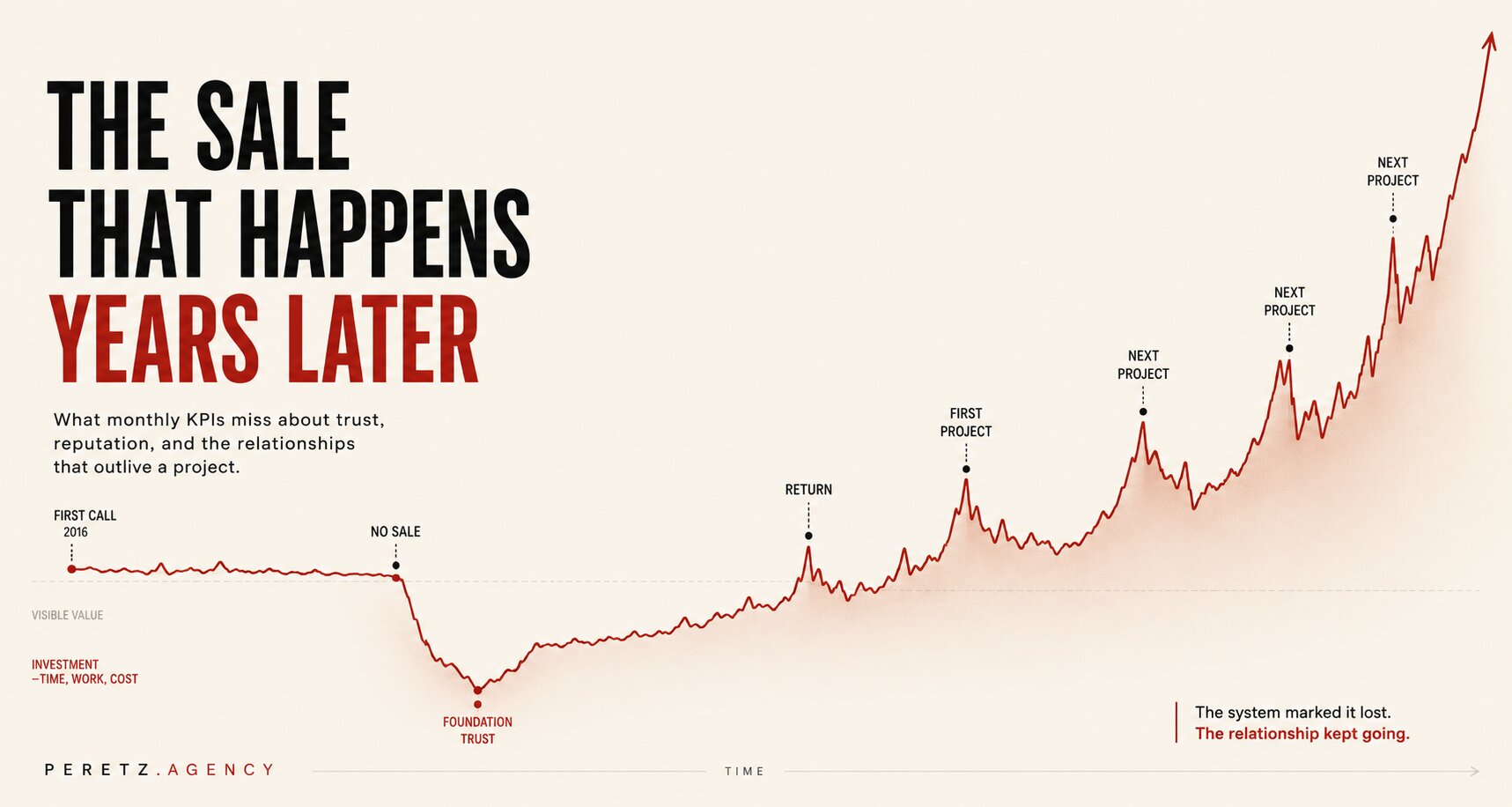
The Sale That Happens Years Later
-
15. 07. 2026

Four AIs Agreed. We Still Hadn't Verified Anything.
-
19. 07. 2026

The Cost of AI Isn't Generation. It's Verification.
-
19. 07. 2026

Before You Hire Bankers, Diagnose the Business
-
25. 07. 2026
Finding the Right Person Is Harder Than Finding an Investor