



THE NUMBER
Seventy percent.
That’s how many small businesses that go looking for a buyer never actually find one. Not “sell for less than hoped.” Not “settle for a mediocre deal.” Never sell. The owner spends months, sometimes years, telling themselves a story about an exit, and the story just stops. No buyer. No transition. The business winds down, quietly, the way most things end: not with a decision, but with the absence of one.
Seventy-five percent of business owners admit that if they had to step away tomorrow, they’re not actually sure the business would survive them. And fifty-six percent don’t have a formal plan at all, not a bad plan, not a rough plan, nothing. Just a business, and a person who built it, and a gap where a plan should be.
I’m not telling you this to scare you. I’m telling you because it means the checklist that follows isn’t theoretical. It’s the difference between the thirty percent who actually get somewhere and the seventy who spend years walking toward a door that was never open.
WHAT WE CHECK
People imagine an assessment like this involves a stranger in a suit asking for three years of financials before they’ll shake your hand. It doesn’t start there. It starts with one question, and the question isn’t about money.
What happens to this business if you’re not in the room?
Not dramatically. Practically. Who signs the check when something breaks. Which vendor calls you directly instead of the office line. Whether the answer to “who else knows how this actually runs” is a name, or a shrug.
Almost everyone starts in the same place: everything runs through them. That’s not a failure. Thirty years ago, “everything runs through me” was probably the reason the business survived its first five years at all. The problem isn’t that it was true once. The problem is when it’s still true on the day someone finally asks to buy the business, and the answer hasn’t changed since year one.
ON PAPER
Buyers don’t buy what’s in your head. They buy what’s written down. This is the part nobody enjoys, so I’ll say it plainly: if the only place your business exists is your memory, you don’t own a business. You own a very demanding job.
| What we check | Lives in your head | Lives on paper |
|---|---|---|
| Core operating processes | Most owners, honestly | The businesses that actually sell |
| Vendor relationships & terms | “I just call Dave” | Contract, terms, backup contact |
| Pricing logic | “I know what to charge” | Documented pricing model |
| Who does what when you’re out | Nobody’s sure | Named, written, tested |
| Why the CRM is set up this way | You, and only you | Onboarding doc for a stranger |
If your row is mostly on the left, that’s not a diagnosis. It’s Tuesday, for most owners we talk to. It’s just not sellable yet, and there’s a difference between those two things.
THE HONEST NUMBERS
We’re not accountants. We don’t pretend to be. What we’re checking is simpler and, honestly, more uncomfortable: does the story your financials tell match the story you’d tell a buyer out loud, to their face.
Revenue that depends on two or three clients. Margins that only work because you haven’t paid yourself properly in years. Growth that’s really just you working more hours, dressed up as the business getting stronger. None of this disqualifies you. It just tells us what has to change before anyone pays full price for what you’ve built.
FROM OUTSIDE
Here’s where our own background actually earns its keep. We look at your business the way a stranger meets it for the first time: the website, the first Google result, the thirty seconds before anyone decides whether you’re current or a fossil.
A dated website doesn’t just look bad. It quietly tells a buyer the whole operation might be dated too, whether that’s fair or not.
We’ve watched genuinely excellent businesses get lowballed because nothing on the outside told the truth about what was happening on the inside. Reality doesn’t care that it’s unfair. It just prices accordingly.
TIMING
Every industry moves. Some slowly enough that you don’t notice. Some fast enough that a two-year-old advantage is now the baseline everyone has. Part of what we’re checking, quietly, is whether your business has been moving with its industry, or standing still while pretending the ground hasn’t shifted.
This is usually the question owners answer wrong to themselves first, before they ever answer it wrong to a buyer.
THE SELF-CHECK
Run this yourself, honestly, before you talk to us or anyone else. Answer yes, no, or unsure. Don’t perform for the page.
| Question | Yes | No | Unsure |
|---|---|---|---|
| Could someone else run this for 90 days without you, and would it survive? | |||
| Are your core processes written down anywhere besides your memory? | |||
| Would your financials tell a buyer the same story you’d tell them out loud? | |||
| Does your online presence reflect the business as it is today, not five years ago? | |||
| Has your technology kept pace with your industry, or fallen quietly behind? | |||
| Do you know, specifically, what a buyer would pay less for, and by how much? |
Two honest “yes” answers is normal. Four is rare. Six, we haven’t seen yet, and if you’re the first, I genuinely want to meet you.
SEVENTY PERCENT
The seventy percent who never sell aren’t failures. Most of them built something real. What they didn’t do is close the gap between what the business actually was and what a stranger, meeting it cold, would believe it was worth. That gap is closeable. It just isn’t closed by hoping, and it isn’t closed in the three months after you’ve already decided to sell.
None of this requires a decision today. Recognizing where you stand doesn’t mean you’re selling next quarter, any more than reading why the decision rarely happens in a single moment means you’ve already made yours.
That’s what an Exit & Succession Readiness Session actually is. Not a pitch. Not three hours of someone telling you what you want to hear. Just an honest look at your row in that table, before a stranger decides it for you.
Before that number becomes real, see what you own vs what you're renting.
Before that number becomes real, a buyer will be running the audit covered in how to audit a digital product before you buy it.
The buyer's side of that same math, why revenue alone rarely predicts the number, is covered in why tech companies get valued on different math.
- Share
-

-

-

-

Related Reading
-
10. 07. 2026

Nobody Wakes Up One Morning and Decides to Sell

-
10. 07. 2026

Before You Sell, Retire, or Hand It Down
-
07. 07. 2026
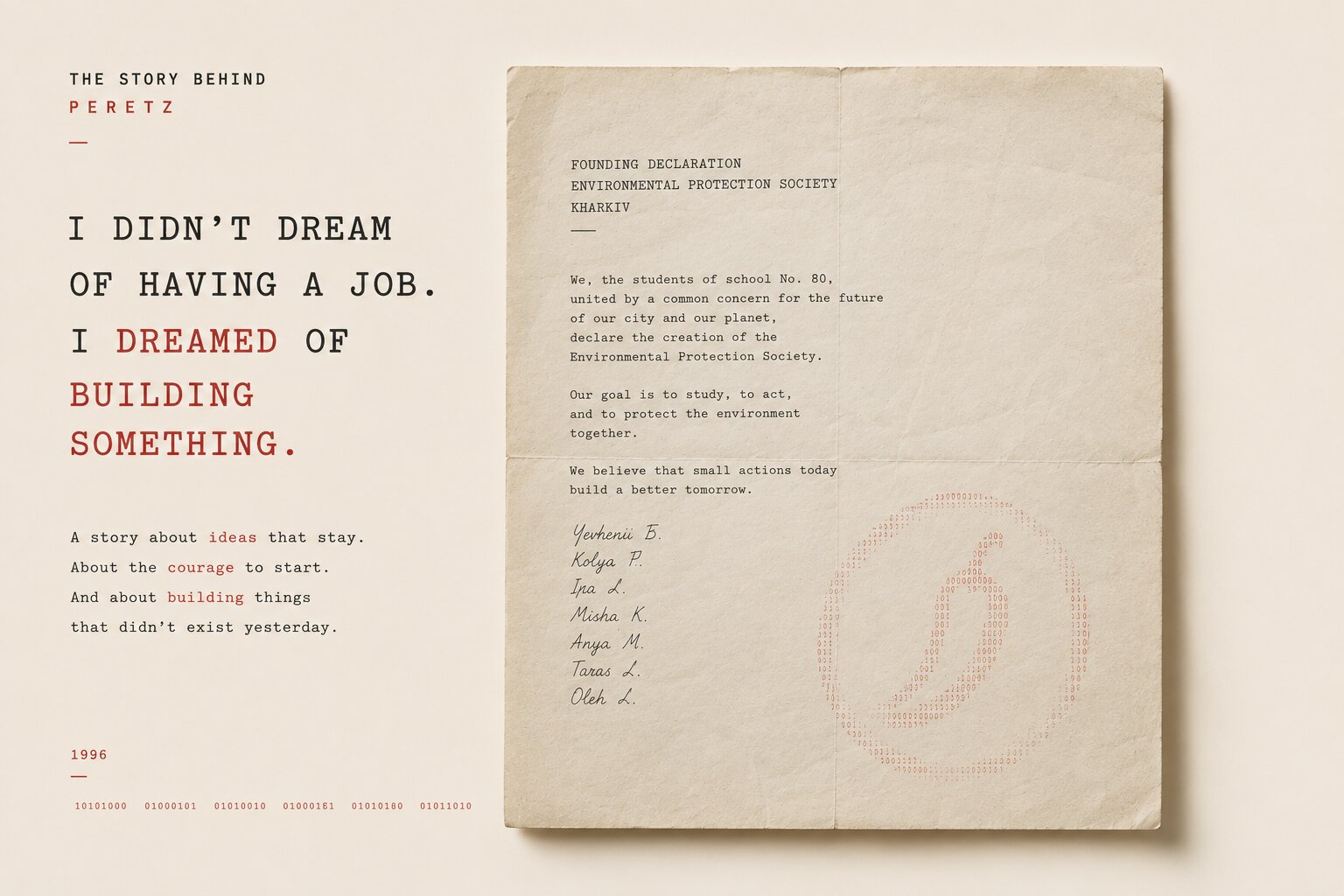
I Didn’t Dream of Having a Job. I Dreamed of Building Something.
-
30. 07. 2026

Most Companies Don't Own Their Website. They Own a Collection of Dependencies.
-
15. 07. 2026

Four AIs Agreed. We Still Hadn't Verified Anything.
-
16. 09. 2026
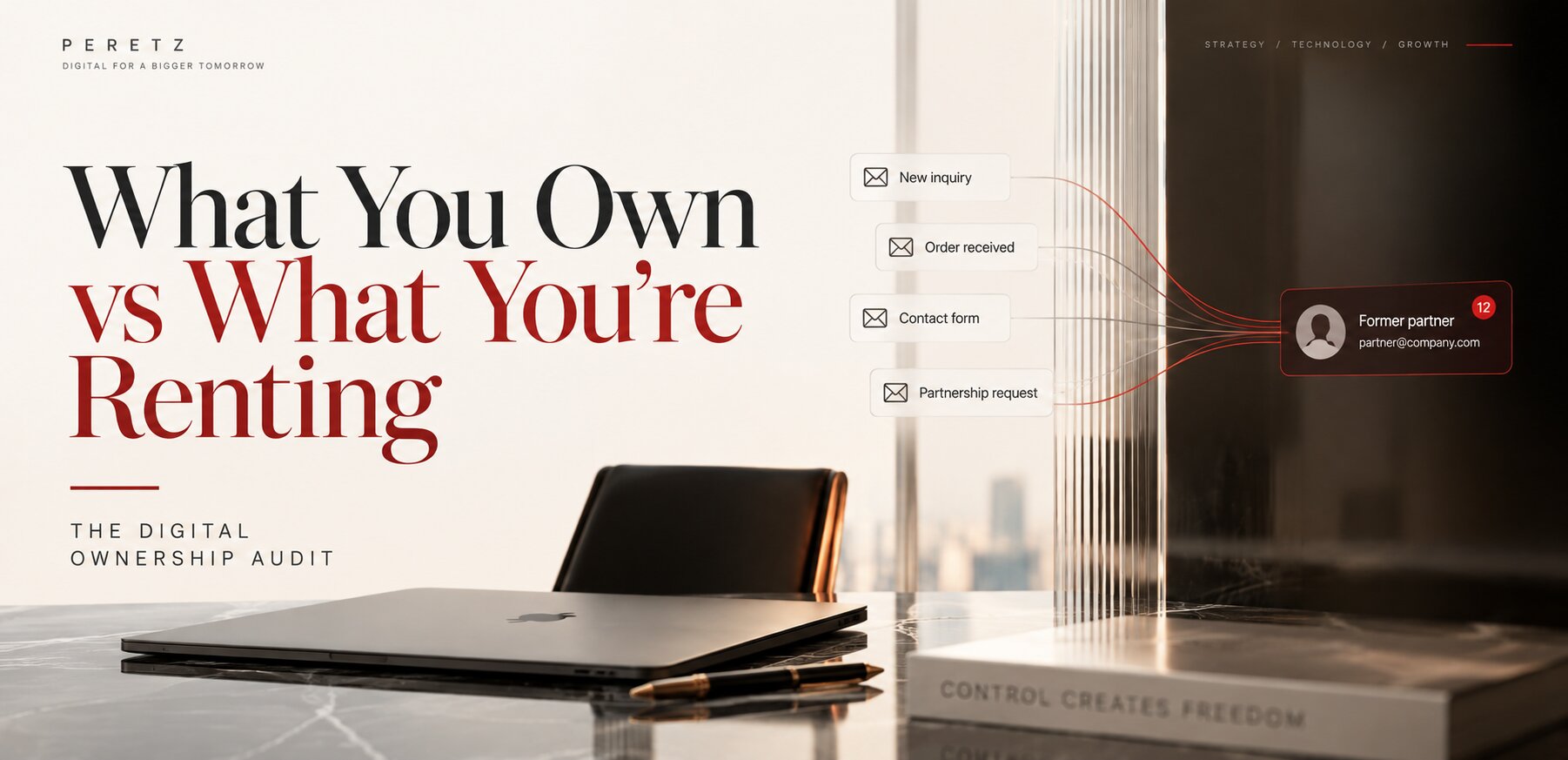
What You Own vs What You're Renting: The Digital Ownership Audit
-
18. 09. 2026

How to Audit a Website or Digital Product Before You Buy It
-
19. 09. 2026
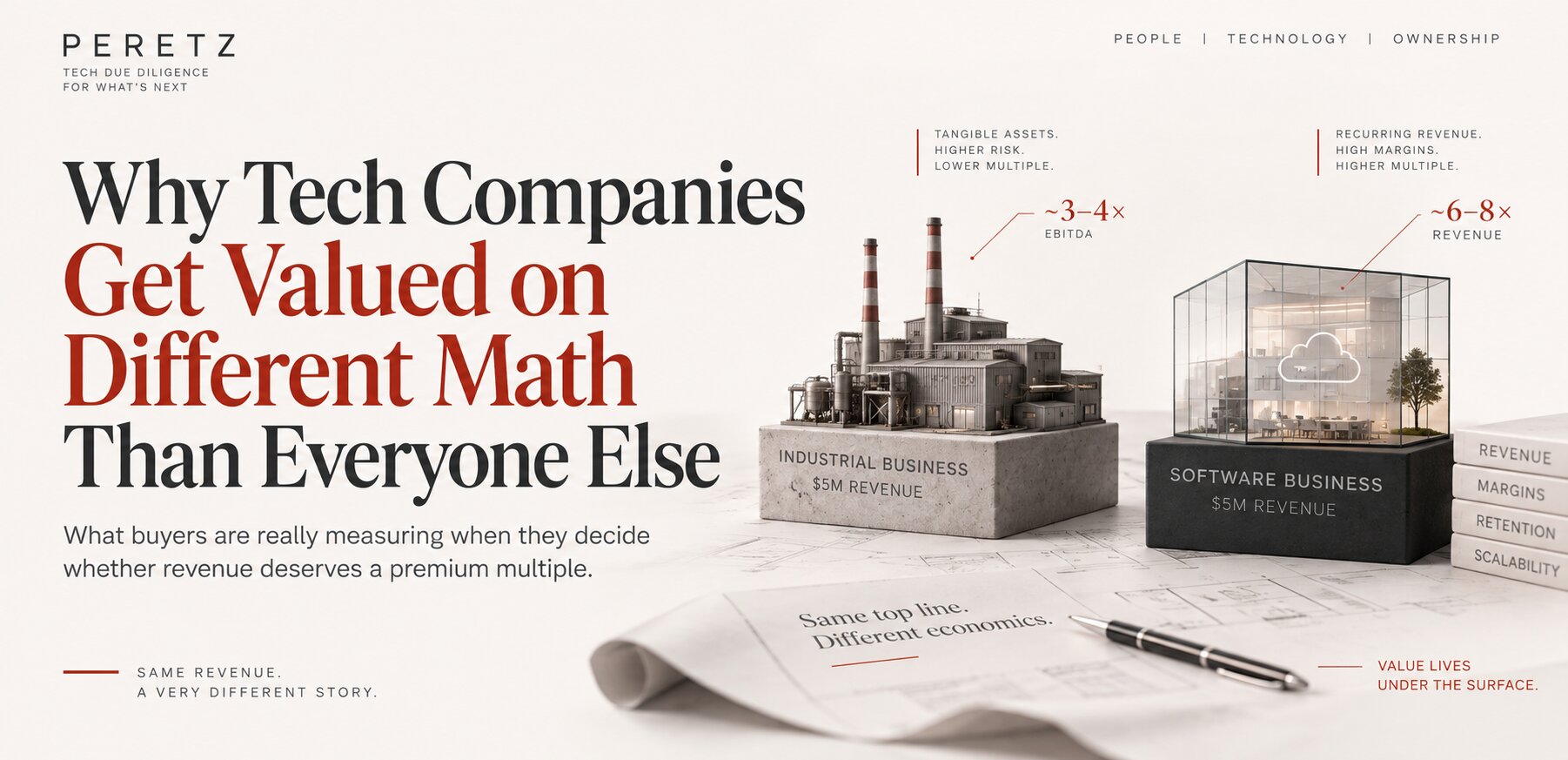
Why Tech Companies Get Valued on Different Math Than Everyone Else