Marketing Agency Burnout Is a Business Risk, Not Just a Personal One
71% of agency employees report burnout. 45% quit over workload. Here's why burnout is a P&L problem, not an HR one.


71% of agency employees report experiencing burnout. 45% of the people who quit an agency name unmanageable workload as the top reason. 68% of account managers say fear of losing a client is what drives their burnout specifically. And 28% of clients who leave an agency cite poor communication as the reason: precisely the first thing to go when the person managing their account is drowning.
Read those four numbers together and you don't have four separate HR statistics. You have a supply chain. Burnout produces bad communication, bad communication produces client churn, and client churn is a line on a P&L statement, not a wellness metric. Most businesses evaluating a marketing agency never ask about any of this. They should, because it's one of the most reliable predictors of whether the relationship will actually hold up.
The Numbers That Should Concern Any Client, Not Just Any Employee
| Metric | 2026 figure |
|---|---|
| Agency employees reporting burnout | 71% |
| Agency leavers citing unmanageable workload as top reason | 45% |
| Account managers whose burnout is driven by fear of losing a client | 68% |
| Clients citing poor communication as reason for leaving an agency | 28% |
| Agency leaders admitting their teams are understaffed | 80% |
| Annual agency employee turnover rate | 25-35% |
| Unpaid overtime worked per week, agency average | 5.5 hours |
The connection that matters most for a business hiring an agency: 80% of agency leaders admit their teams are understaffed relative to workload. That's not an isolated HR problem inside the agency. It's the direct explanation for late deliverables, generic strategy, and the specialist who was excited about your account in month one and unreachable by month four.
Why This Isn't Just the Agency's Problem. It's Yours Too
When a client hires an agency, they're evaluating creative samples, case studies, and pricing. They almost never ask the question that predicts long-term relationship quality better than any of those things: is the team that will actually work on my account operating at a sustainable capacity, or are they already stretched past it?
I've watched this pattern from both sides. A specialist juggling too many accounts doesn't produce visibly worse work at first, and that's what makes it dangerous for a client to spot. What happens first is smaller: slower replies, less proactive thinking, fewer of the small judgment calls that separate strategic work from just executing a checklist. By the time a client notices the drop in quality, the burnout has usually been building for months, and the account is already at risk of exactly the churn the data describes.
The Business Model Behind the Burnout. And Why It Predicts Churn Rate
Not all agency structures carry the same burnout risk, and this is genuinely useful information for a business choosing who to work with. Retainer-based agencies with recurring revenue keep client relationships nearly three times longer than project-based ones, with average client lifespans of 56 months versus 24 months. Large full-service agencies with dedicated account teams achieve the industry's best retention, around 12 to 15% annual churn, largely because no single overloaded person is the sole point of failure for a client relationship.
Small agencies, under 10 employees, show the highest churn at roughly 32% annually, and the data ties this directly to founder capacity constraints. When the agency's growth outpaces its ability to add real support, the person closest to every client is also the person closest to burning out, and those two things happen on the same timeline.
A specific 2026 shift worth naming: agencies positioning themselves purely as execution providers are losing clients faster to in-house teams now equipped with AI tools for the mechanical parts of the work. Agencies leading with strategic direction and judgment are retaining significantly better, which tracks with something the burnout data also shows: burnout erodes judgment and strategic thinking first, long before it erodes basic execution. The agencies most vulnerable to both AI replacement and client churn are, structurally, the same agencies.
What to Actually Ask an Agency Before You Sign
- Who specifically will be working on my account day to day, and how many other accounts do they currently manage? A vague answer here is itself informative.
- What happens if that person leaves or is out for an extended period? Is there real continuity, or does the relationship reset from zero?
- What's your team's average tenure? An agency with most specialists under a year isn't necessarily bad, but it changes what "expertise on your account" actually means in practice.
- How many active accounts does a single strategist or account manager typically carry? There's no universal right number, but an agency that can't answer this specifically usually hasn't thought about it, which is its own answer.
The businesses that get the best long-term results from an agency relationship aren't the ones who negotiated the lowest price. They're the ones who asked enough about team capacity upfront to end up with a specialist who isn't already at 45% quit-risk before the contract is even signed.
Why We Talk About This Openly at Peretz Agency
This matters to me specifically because I've felt the version of this that the data describes. Not at Peretz, but earlier, managing more accounts than one person reasonably should, watching the quality of my own thinking narrow under the weight of it. The lesson that stuck: burnout doesn't announce itself as a crisis. It shows up first as slightly slower responses and slightly less ambitious ideas, and by the time it's visible from outside, it's already been costing the client something for weeks.
What we do differently: we keep account loads deliberately smaller than what would maximize short-term revenue, because a strategist thinking clearly about four accounts produces more value than the same person spread thin across ten. We say no to work that would push capacity past what sustains real strategic thinking, even when saying yes would be more profitable in the short term. Who we bring onto the team in the first place matters just as much, which is the subject of Finding the Right Person Is Harder Than Finding an Investor.
If you want to see what this looks like in practice, we wrote about the pattern behind agencies that overpromise timelines in How Long Does It Take to See Marketing Results?, and about the specific tradeoffs of hiring an in-house SMM team versus an agency in SMM Agency vs Freelancer.
If you're earlier in the process, before you've even shortlisted anyone, it's worth reading The Most Expensive Mistake Business Owners Make Before Hiring a Digital Agency first.
Evaluating agencies and want to know what questions actually predict whether the relationship holds up past month six? That's exactly what a Strategic Session is built to answer, before you sign anything.
Looking specifically for a social media team that isn't already stretched thin?
- Share
-

-

-

-

One notification a week with the new PERETZ articles. Nothing else.
Related Reading
-
20. 06. 2026
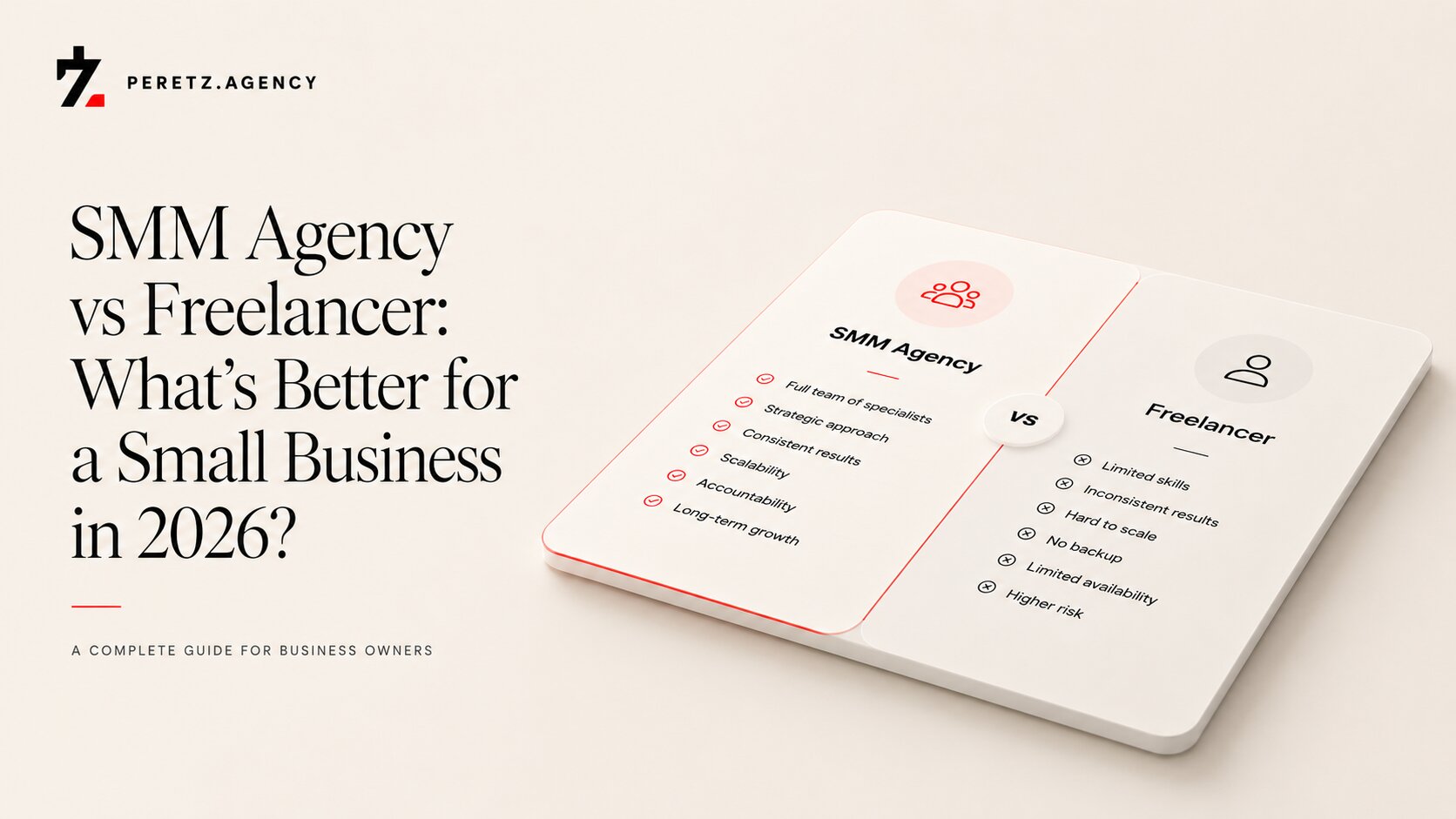
SMM Agency vs Freelancer: What's Better for a Small Business in 2026?

-
20. 07. 2026
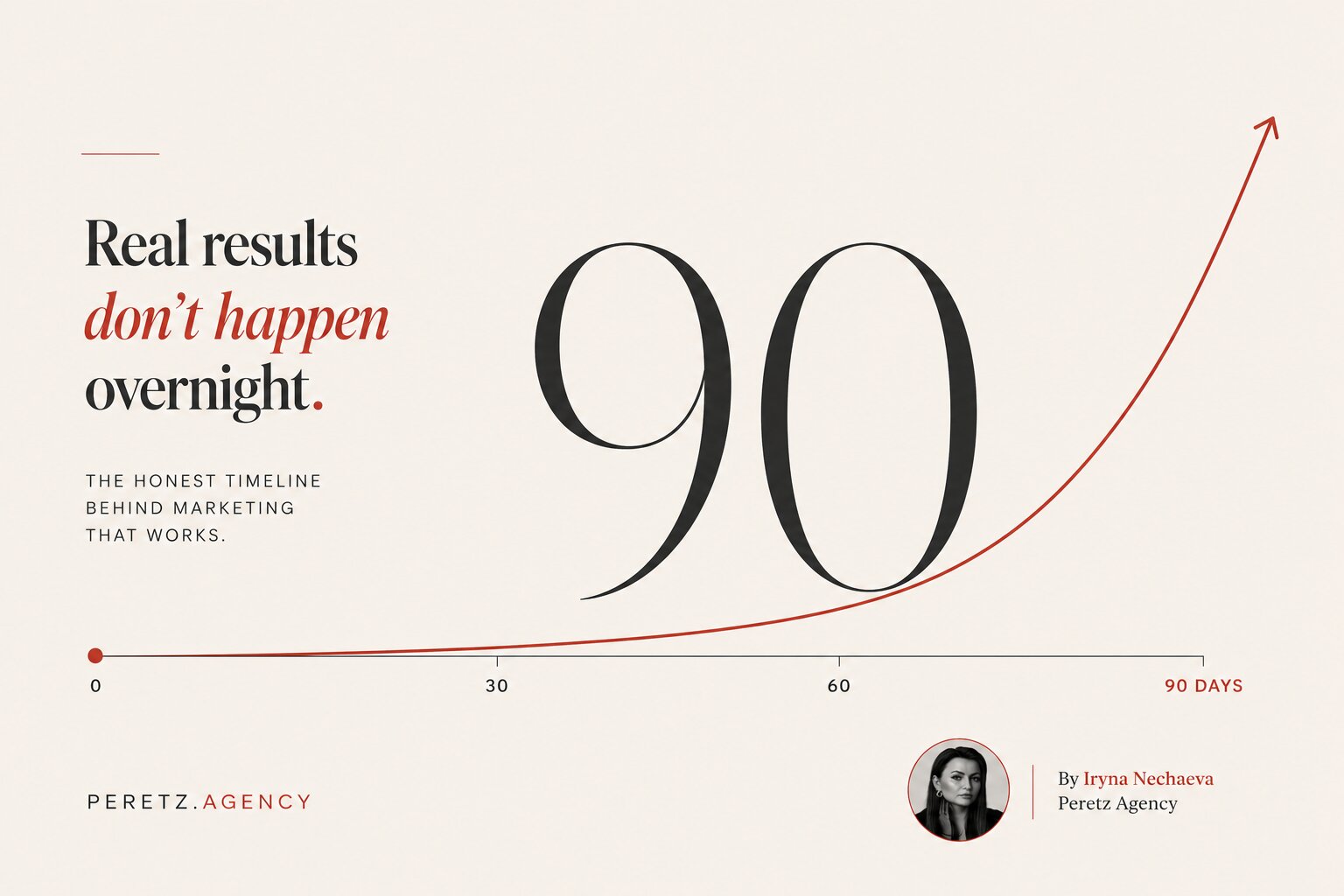
How Long Does It Take to See Marketing Results? Why Agencies Promising Faster Are Lying to You
-
02. 07. 2026
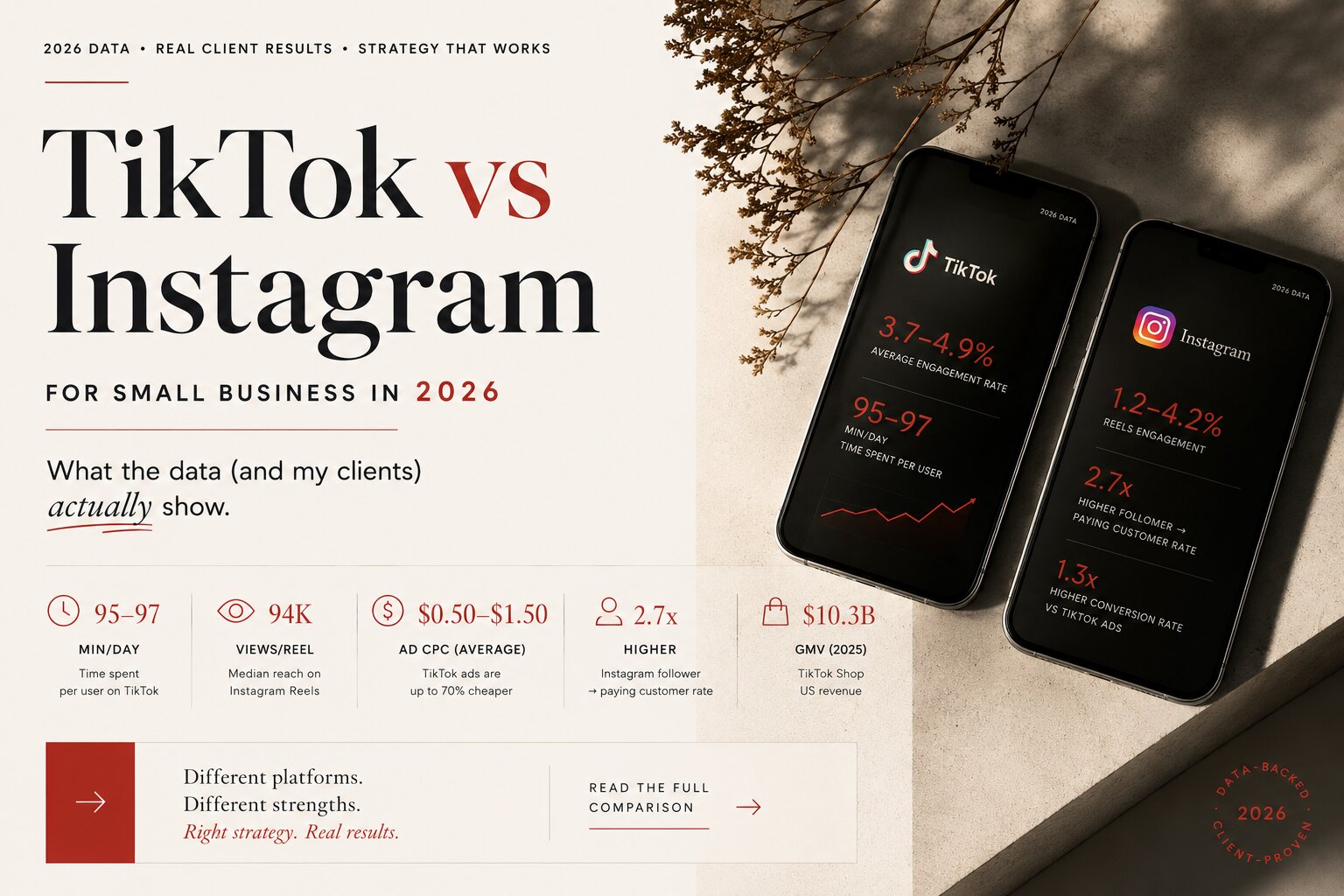
TikTok vs Instagram for Small Business in 2026: What the Data (and My Clients) Actually Show
-
30. 06. 2026
The Most Expensive Mistake Business Owners Make Before Hiring a Digital Agency